
🔍 The Short Answer
Yes and no. Duolingo is the world's most popular language app for a reason — it's free, fun, and addictive. But "addictive" isn't the same as "effective." After months of daily use across three languages, here's my honest take on whether Duolingo actually teaches you to speak a language in 2026.
🦉 What Is Duolingo?
Duolingo is a free, gamified language learning app launched in 2011. It offers courses in 40+ languages through short, game-like lessons (3-5 minutes each) built around translation exercises, multiple choice, and word-matching.
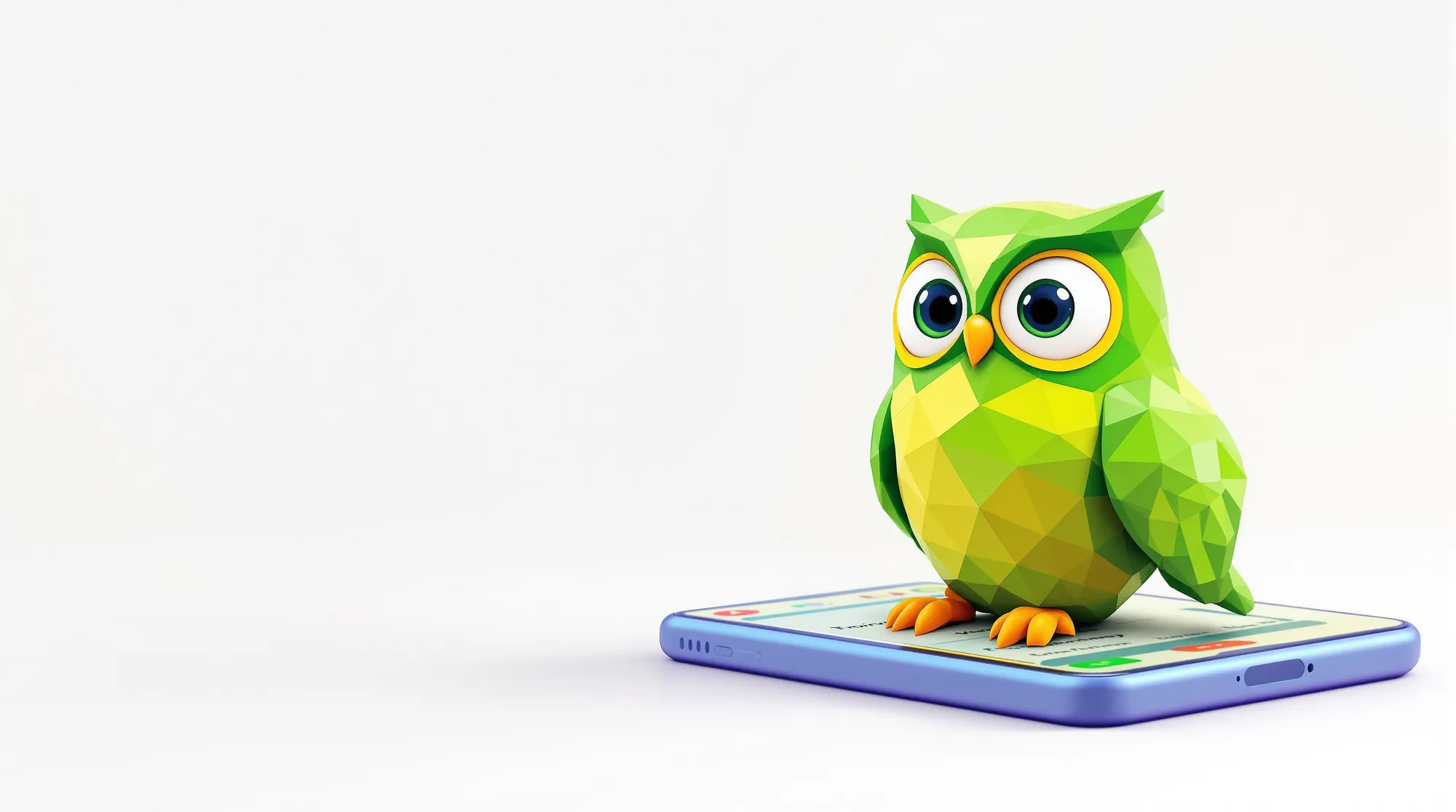
The app is designed around streaks, XP points, leaderboards, and a mascot owl that sends passive-aggressive notifications when you skip a day. It's essentially turned language learning into a mobile game — and that strategy made it the most downloaded education app in the world.
Languages available: 40+ including Spanish, French, German, Japanese, Korean, Italian, Portuguese, Russian, Chinese, Arabic, and many more.
Pricing:
- Free tier (with ads and hearts system)
- Super Duolingo: ~$7.99/month (ad-free, unlimited hearts)
- Duolingo Max: ~$13.99/month (adds AI features, limited languages)
Become bilingual in 30 days with Univext!
Start a lesson with our teacher for free and become bilingual like our 100,000 students!
✅ What Duolingo Does Well
Credit where it's due — Duolingo nailed several things that traditional learning tools didn't:
It's Actually Free
This is the biggest advantage, full stop. You can use Duolingo every day without paying a cent. The free tier has ads and limits on mistakes (hearts system), but the core content is accessible. No other major language app offers this level of free content.
Gamification That Works
Duolingo's streak system, XP leaderboards, and achievement badges are genuinely effective at building a daily habit. Many users who tried and failed with textbooks, Rosetta Stone, or Babbel find that Duolingo's game mechanics keep them coming back. Habit formation matters — the best app is the one you actually use.
Huge Language Selection
40+ languages, including less common options like Hawaiian, Yiddish, Scottish Gaelic, and even fictional languages like High Valyrian and Klingon. If you want to learn Welsh or Swahili, Duolingo might be your only app-based option.
Low-Pressure Start
For absolute beginners who feel intimidated by language learning, Duolingo's bite-sized lessons remove the barrier. There's no test, no commitment, no setup. You just tap "Start" and begin matching words with pictures. This matters — millions of people started learning a language because Duolingo made it feel easy.
Duolingo Max (AI Features)
In 2024-2025, Duolingo added AI-powered features through "Duolingo Max" — including "Explain My Answer" (grammar explanations) and "Roleplay" (short scripted conversations with AI characters). These are real improvements, but they're only available in a handful of languages and cost extra.





Join more than 100,000 students learning on Univext
❌ Where Duolingo Falls Short
After months of daily use (Diamond League, 200+ day streak), these are the problems I kept running into:
You Don't Actually Learn to Speak
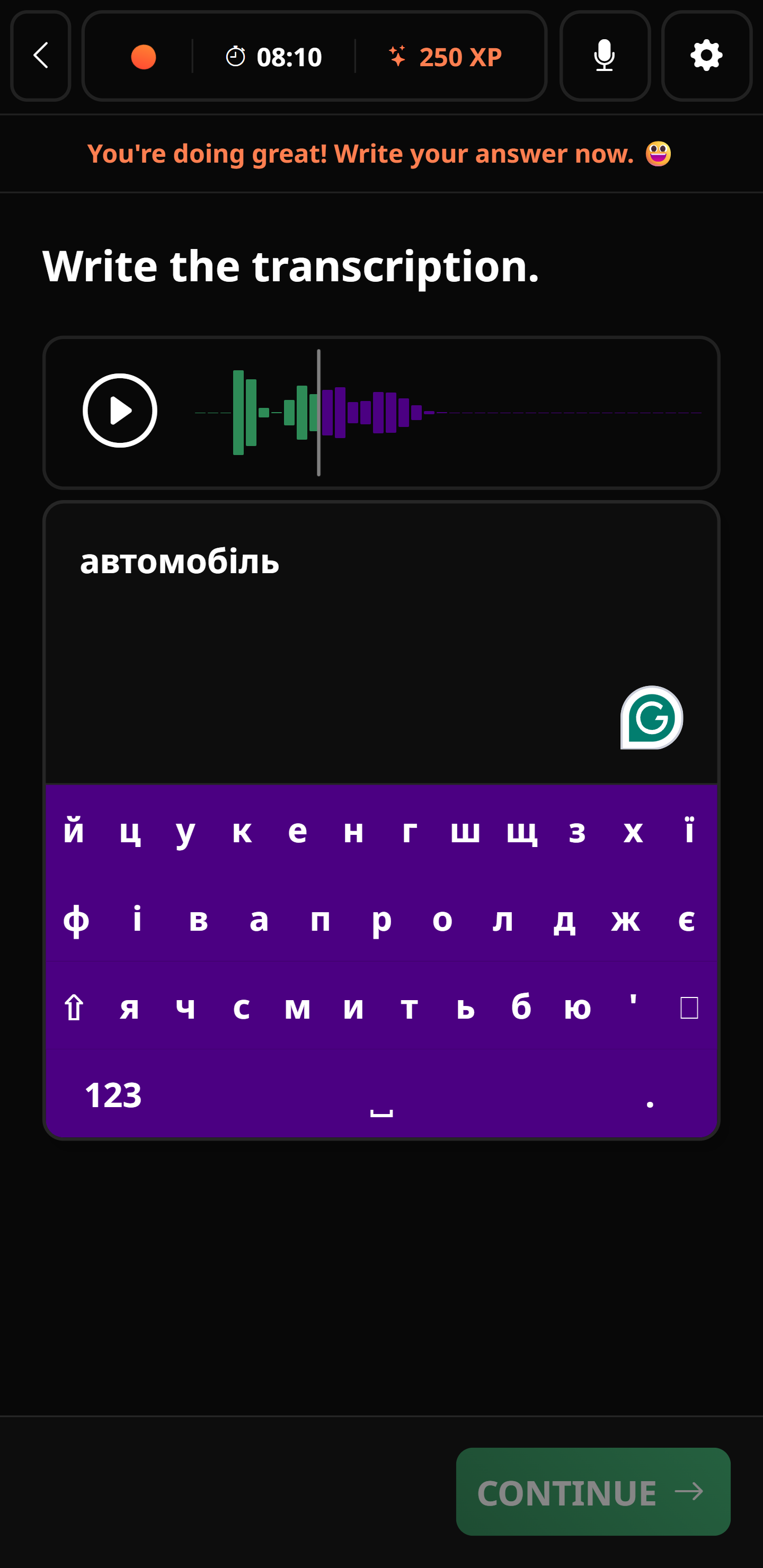
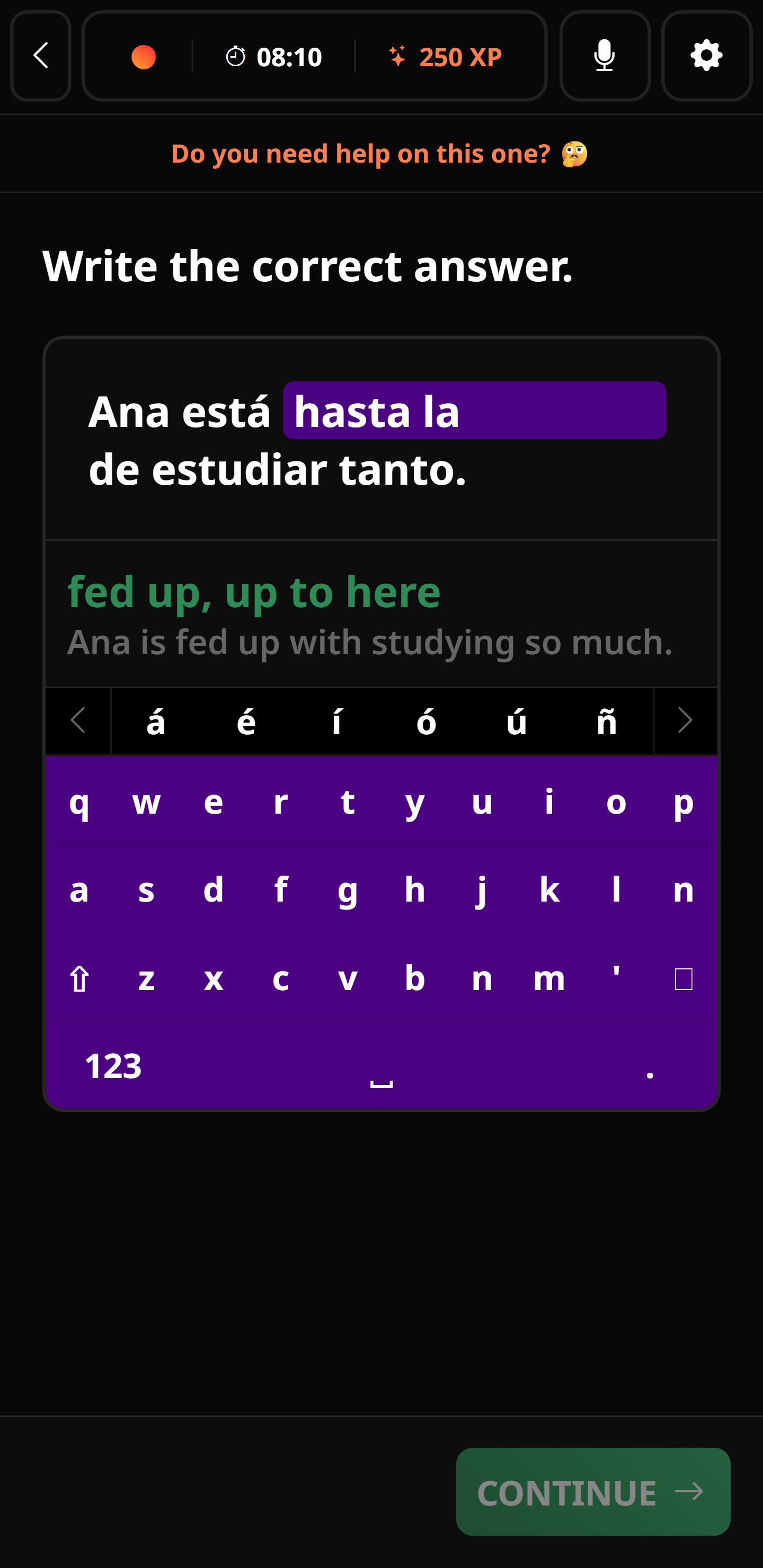
This is the fundamental issue. Duolingo teaches you to translate — not to speak. The vast majority of exercises are tap-to-translate, multiple choice, or word-matching. You're selecting correct answers from options, not producing language from memory.
Real language use requires you to think of the right word, construct a sentence, and say it — with no options to choose from. Duolingo almost never asks you to do this.
Important
If your goal is to have a conversation in another language, Duolingo alone won't get you there. You'll recognize vocabulary when you see it written down, but you won't be able to produce it when someone talks to you.
Shallow Content
Each lesson takes 3-5 minutes and covers a handful of words or phrases. After completing a unit, you've been exposed to the content — but you haven't learned it deeply. The sentences are often bizarre ("The elephant drinks beer," "My cat is a lawyer") because they're optimized for engagement and shareability, not for real-world usefulness.
Compare this to even 15 minutes of focused conversation practice, where you're forced to recall vocabulary, conjugate verbs, and construct real sentences on the spot. The depth difference is enormous.
No Real Grammar Instruction
Duolingo's philosophy is "learn grammar through exposure" — do exercises and hopefully figure out the rules yourself. For some learners this works at the very beginning. But once you reach intermediate content (B1+), you genuinely need explanations of why things work the way they do.
Why is it "je suis allé" but "j'ai mangé"? Why does German word order flip in subordinate clauses? Duolingo won't tell you. You're left to guess — or Google it yourself.
The Streak Trap
Here's the uncomfortable truth: Duolingo's streak mechanics optimize for app engagement, not learning outcomes. A 365-day streak feels incredible. But if each session was 3-5 minutes of multiple choice, you've spent about 25 hours total over an entire year — and most of that time was spent tapping on screens, not speaking or thinking in the language.
Many long-streak users report the same experience: they feel like they should be fluent after a year of "daily practice," but they can barely order coffee abroad. The streak gave them a false sense of progress.
Limited Feedback
When you make a mistake, Duolingo shows the correct answer. That's it. There's no explanation of why you were wrong, how the grammar works, or what pattern you're missing. For pronunciation, the speech recognition is binary — pass or fail — with no guidance on what sounds to fix.
One-Size-Fits-All
Every learner gets essentially the same path through the same content. If you already know basic greetings but struggle with verb tenses, Duolingo still makes you go through "Hello" and "Thank you" first. The adaptive technology is minimal — your path doesn't meaningfully change based on your actual weaknesses.
📊 Duolingo vs The Competition
Here's how Duolingo compares to the most popular alternatives in 2026:
Notes
Duolingo and Babbel share the same core limitation: no real conversation practice. They teach you about a language through exercises. AI tutors like Univext teach you to speak a language through actual conversations.
Become bilingual in 30 days with Univext!
Start a lesson with our teacher for free and become bilingual like our 100,000 students!
🤖 The AI Alternative That Actually Makes You Speak
The reason Duolingo feels limited in 2026 isn't because it got worse — it's because AI tutors raised the bar. You can now have a real conversation with an AI teacher that listens, responds, and corrects you — something Duolingo still can't do properly.
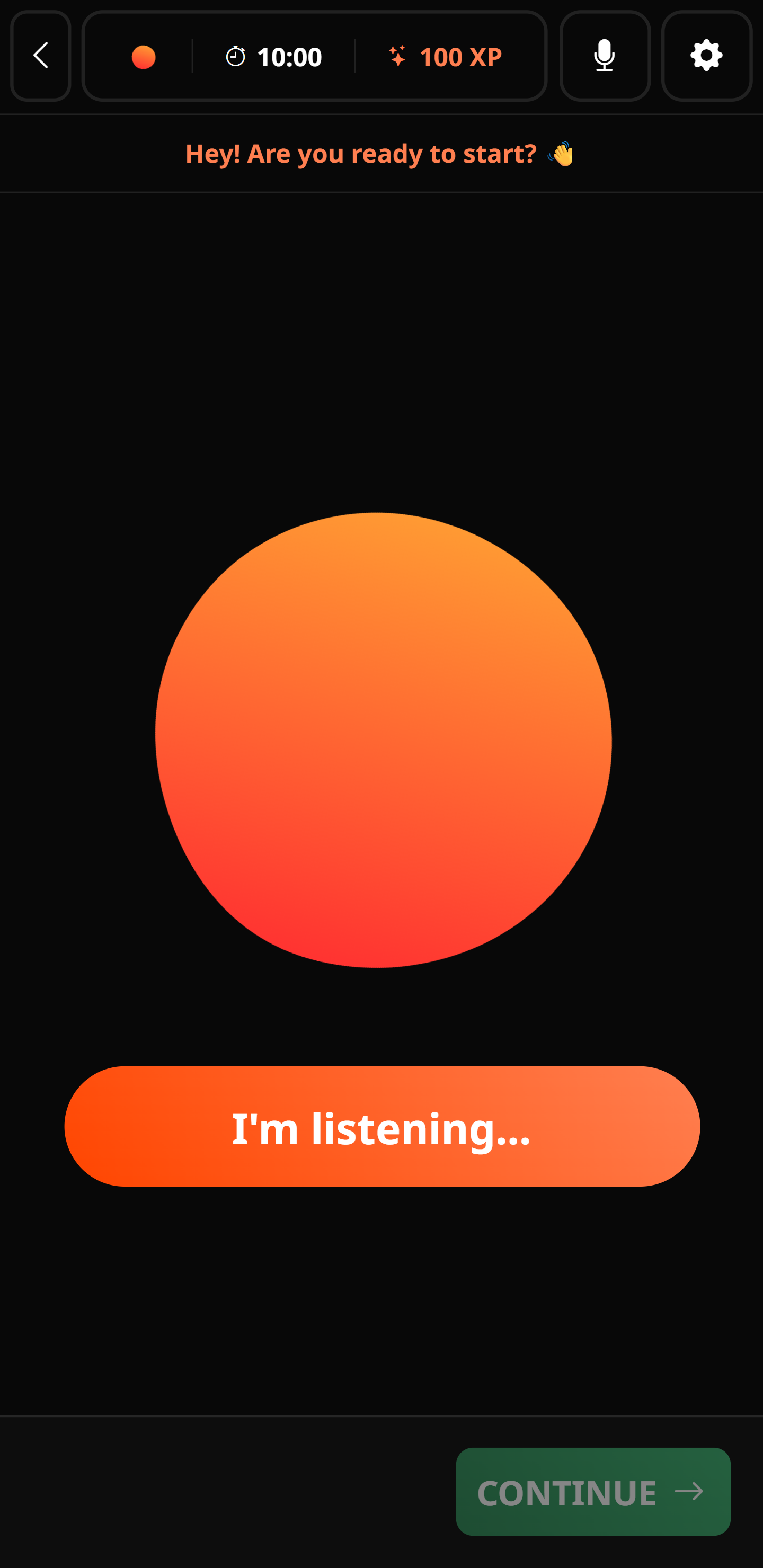
Univext takes a completely different approach. Instead of tapping on translations, you talk to Umi — an AI teacher who has actual conversations with you, corrects your mistakes in real time, and adjusts to your level automatically.
What makes this different from Duolingo:
- You speak from day one. Every session is a real conversation with Umi. No multiple choice, no word matching — you actually produce language.
- Mistakes become lessons. When you say something wrong, Umi doesn't just show a red X. It explains what happened and teaches you the correct form, right in the conversation.
- It adapts to you. Umi tracks what you know and what you struggle with. If you keep making the same error with past tense, Umi will naturally work more of those into your conversations.
- 14-day free trial, 30 minutes per day. That's 7 hours of real conversation practice — more actual speaking than most Duolingo users get in an entire year.
Univext currently offers 12 languages: French, Spanish, English, German, Italian, Russian, Portuguese, Polish, Greek, Japanese, Korean and Ukrainian.
If you've been doing Duolingo for months and still can't hold a conversation, this is why. You've been training to recognize language, not to produce it. Umi fixes that.
💰 Is Duolingo Worth It in 2026?
It depends on your goals:
Duolingo IS worth it if you:
- Want a completely free way to get started with a language
- Need something low-pressure and habit-forming to build consistency
- Are learning a less common language only available on Duolingo
- Enjoy gamified learning and leaderboard competition
- Just want casual exposure without serious commitment
Duolingo is NOT worth it if you:
- Actually want to speak and hold conversations
- Need real grammar explanations beyond the basics
- Want personalized feedback on pronunciation and mistakes
- Have been using it for months and feel stuck at the same level
- Are paying for Super or Max — better alternatives exist at that price point
The honest verdict: Duolingo is the best free language app that exists, but "best free" and "best" aren't the same thing. It's a great way to build a daily habit and pick up basic vocabulary. It's a poor way to learn to actually speak a language.
Important
Ready to move beyond tapping screens? Try Univext's 14-day free trial and have a real conversation with AI teacher Umi. If Duolingo got you started, Umi will get you speaking: Start your free trial →
Join more than 100,000 students learning on Univext
🏆 The Bottom Line
Duolingo deserves credit for making language learning accessible to millions of people who never would have tried otherwise. The gamification works, the free tier is generous, and for casual learners it's perfectly fine.
But Duolingo has a ceiling. Once you've tapped through enough multiple-choice questions, you realize you can recognize words but can't use them. You've been playing a language game, not learning a language. And in 2026, when AI tutors can have actual conversations with you and correct your mistakes in real time, that ceiling feels lower than ever.
If Duolingo is all you've tried, you don't know what you're missing. Try speaking.
Related reads: