
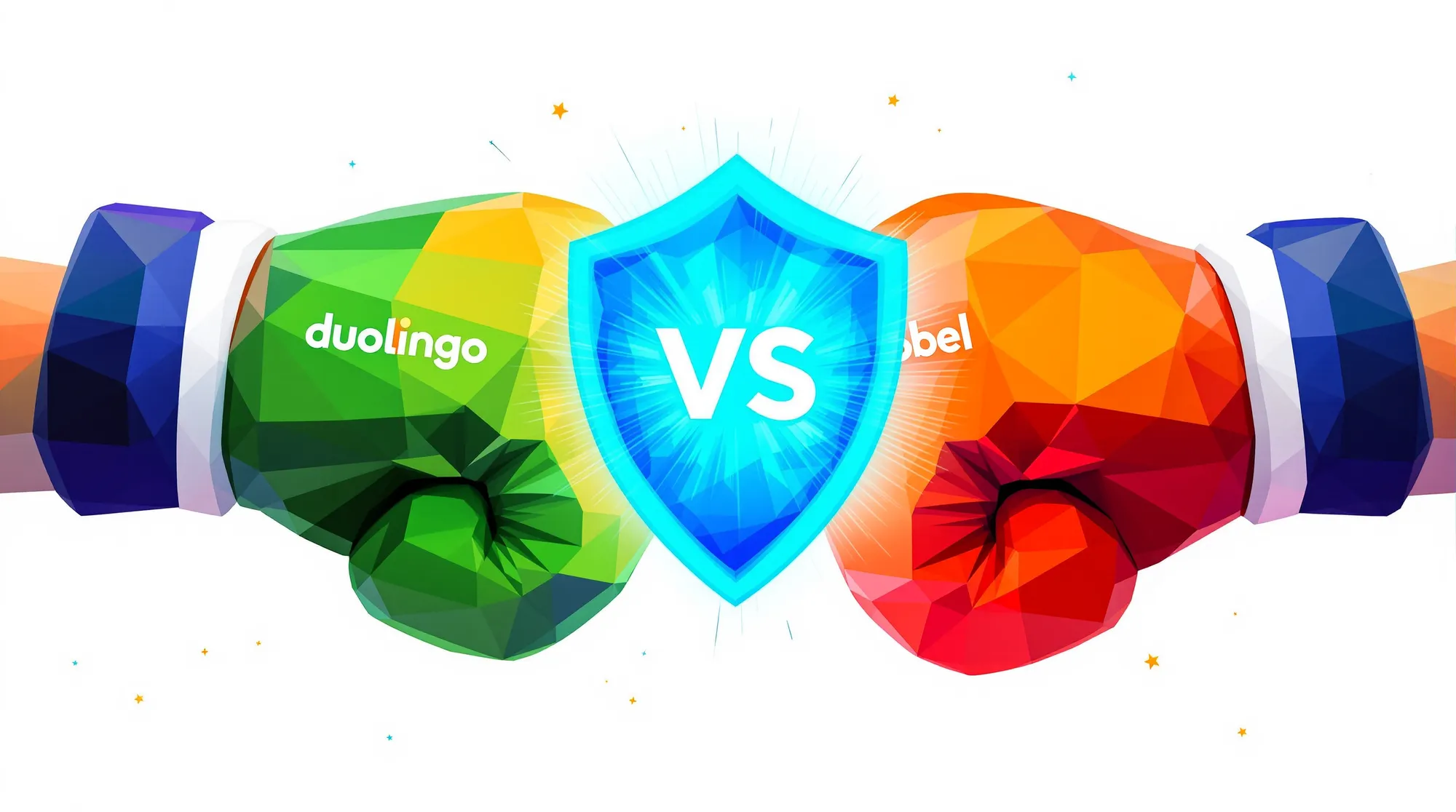
🔍 Babbel vs Duolingo: The Quick Verdict
If you've been going back and forth between Babbel and Duolingo, you're not alone — "babbel vs duolingo" is one of the most searched language-learning queries on Google, with nearly 15,000 people comparing them every month. Both are household names, but they take fundamentally different approaches to teaching languages.
The short answer: Duolingo is better for casual learners who want a free, gamified experience. Babbel is better for serious learners willing to pay for structured lessons. But neither teaches you to actually speak — and that's where a newer AI-powered option like Univext changes everything.
Let's break down the full comparison.
📊 Feature-by-Feature Comparison
Become bilingual in 30 days with Univext!
Start a lesson with our teacher for free and become bilingual like our 100,000 students!
🟢 What Duolingo Does Well
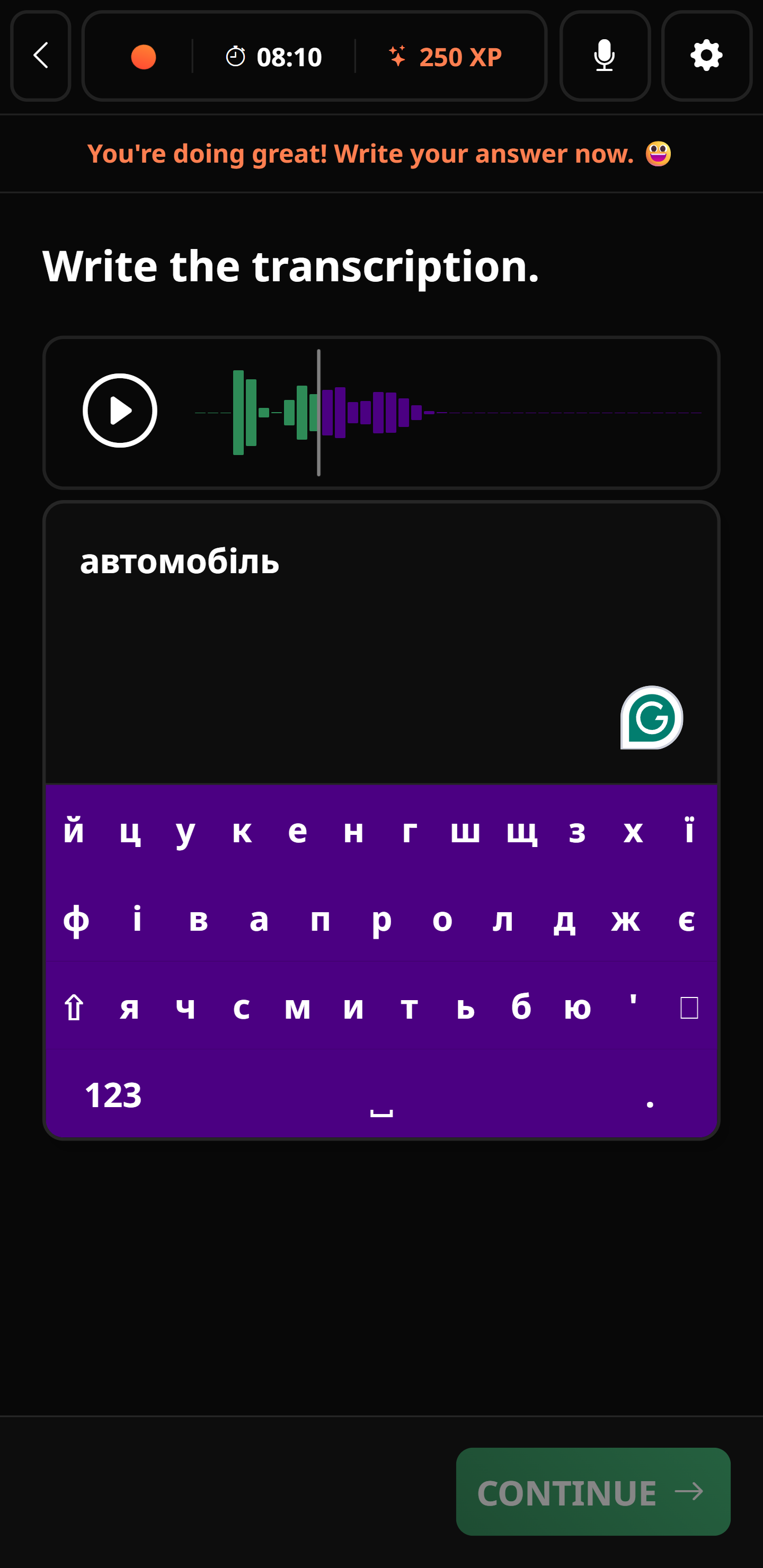
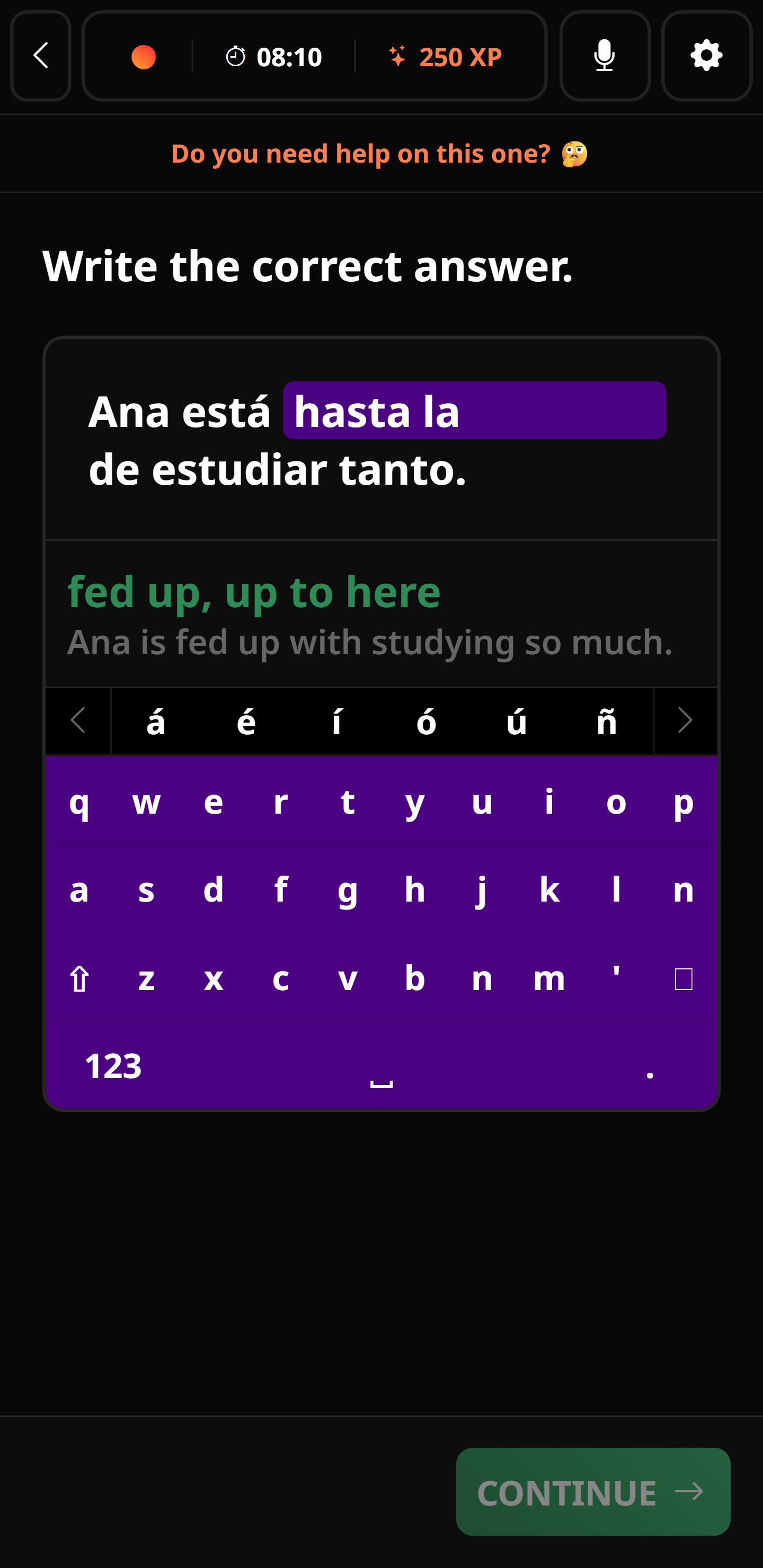
Duolingo's biggest strength is accessibility. It's free, it's everywhere, and the gamification — streaks, leaderboards, hearts — keeps millions of people coming back daily. For absolute beginners who want to dip their toes into a new language without committing money, Duolingo is a solid starting point.
Duolingo pros:
- Free tier that covers basic vocabulary and grammar
- 40+ languages including less common ones like Hawaiian and High Valyrian
- Gamification that builds habit through daily streaks and XP
- Large community and social features
- Polished app with great UX on every device
But there's a well-documented ceiling. After a few months on Duolingo, most learners plateau at an A2 level and realize they still can't hold a basic conversation. The app teaches you to translate sentences and tap word tiles — not to think in your target language or produce speech spontaneously. Studies and user reports consistently confirm this: Duolingo builds vocabulary recognition, but it doesn't build fluency.
Important
If your goal is to actually speak a language — to order food in Rome, chat with locals in Moscow, or negotiate in São Paulo — Duolingo alone won't get you there. Read our full analysis: Why Duolingo Doesn't Teach You to Actually Speak.




Join more than 100,000 students learning on Univext
🔵 What Babbel Does Well
Babbel takes a more traditional, classroom-inspired approach. Lessons are structured around real-world topics — ordering food, asking for directions, workplace conversations — and they include actual grammar explanations, something Duolingo deliberately avoids.
Babbel pros:
- Structured curriculum designed by linguists
- Grammar explanations built into every lesson
- Real-world scenarios rather than abstract sentence drills
- Review system that reinforces weak areas
- Offline access for learning on the go
Babbel is the better choice for learners who want to understand why a language works a certain way, not just memorize patterns. The lessons feel more like a textbook that talks to you, which many adult learners prefer over Duolingo's game-like approach.
However, Babbel's lessons are pre-scripted and linear — every user gets the same content in the same order, regardless of their strengths or weaknesses. And critically, like Duolingo, Babbel doesn't offer real conversation practice. You'll learn the phrases, but you won't practice using them in a dynamic, unpredictable exchange with another speaker.
❌ The Problem Both Share: No Real Speaking Practice
Here's the uncomfortable truth about both Babbel and Duolingo:
Neither app teaches you to speak.
Both offer "speaking exercises" that amount to repeating pre-written phrases into your microphone. The app checks your pronunciation and moves on. That's not a conversation — that's a pronunciation drill.
Real conversation requires:
- Listening to unpredictable input and understanding it on the fly
- Formulating responses on the spot without a word bank
- Handling follow-up questions you didn't prepare for
- Making mistakes and learning to recover gracefully
- Thinking in the language rather than translating from your native tongue
This is the single biggest gap in traditional language apps, and it's why so many Duolingo and Babbel users report feeling "stuck" after months of daily practice. You can ace every lesson and still freeze when a native speaker asks you a simple question. The skills these apps build — pattern recognition, vocabulary recall, grammar rules — are necessary but not sufficient. Without real practice producing language under pressure, fluency remains out of reach.
Become bilingual in 30 days with Univext!
Start a lesson with our teacher for free and become bilingual like our 100,000 students!
🚀 Univext: The AI Alternative That Actually Teaches You to Speak
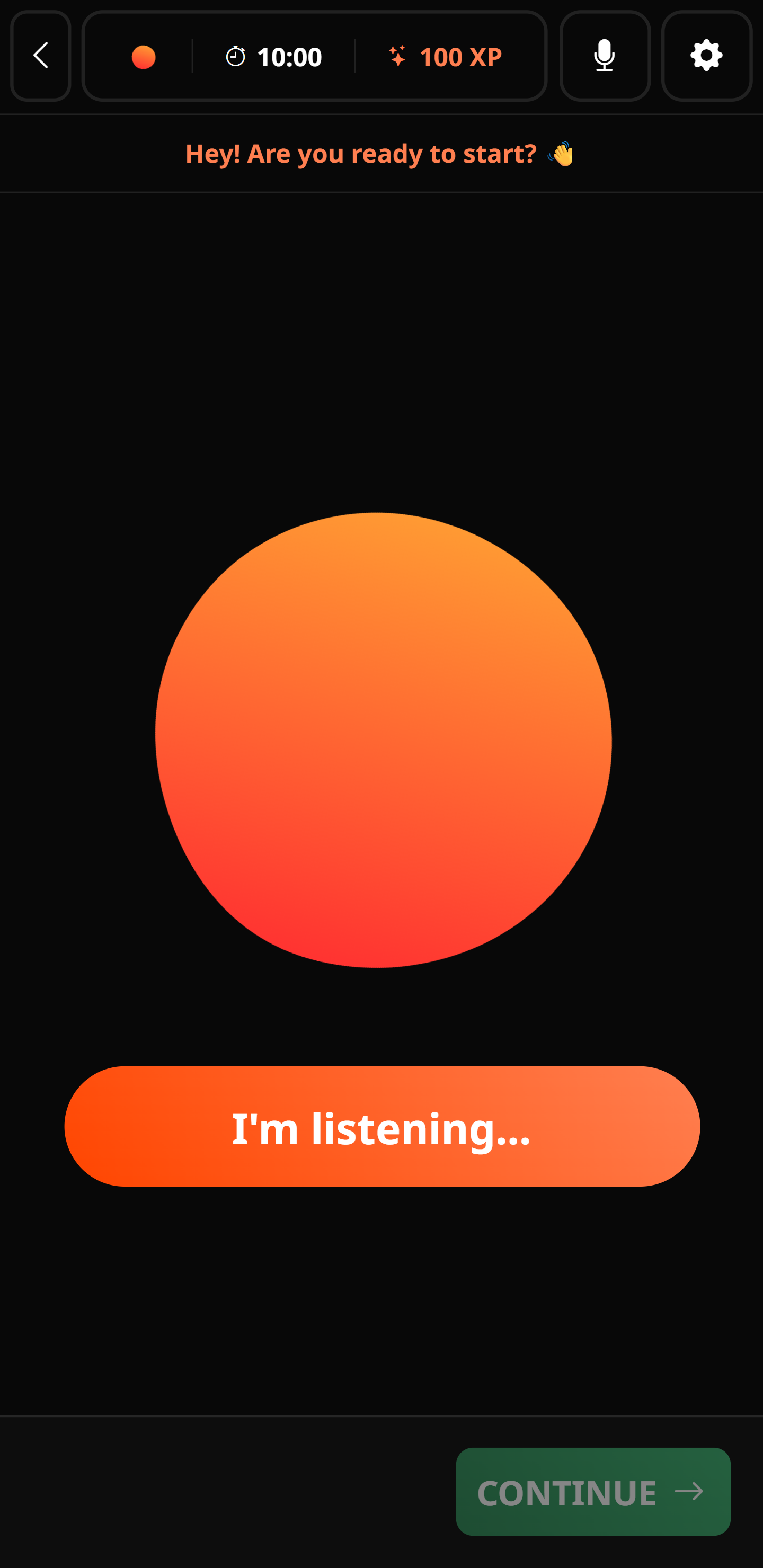
Univext takes a fundamentally different approach. Instead of pre-scripted lessons and gamified drills, Univext pairs you with Umi, an AI language tutor that holds real-time conversations with you — by voice or text.
How it works:
- You choose your target language and proficiency level
- Umi starts a conversation on a topic matched to your level
- You respond naturally by speaking or typing
- Umi adapts in real-time: corrects your mistakes, introduces new vocabulary, adjusts difficulty based on your performance
It's the closest thing to having a private language tutor available 24/7, at a fraction of the cost of human tutoring.
What makes Univext different from Babbel and Duolingo:
- Real AI conversations, not repeat-after-me drills — Umi responds to what you say, not a script
- Adaptive difficulty — the lesson shapes itself around your actual level, not a fixed curriculum
- Instant corrections with explanations in your native language, so you learn from every mistake
- 12 languages with native-quality AI voices: English, French, German, Italian, Polish, Portuguese, Russian, Spanish, Greek, Japanese, Korean and Ukrainian
- 14-day free trial with 30 minutes per day of conversation — enough to see real progress
Important
Try Univext free for 14 days — start your first AI conversation with Umi and experience the difference real speaking practice makes.
📈 When to Use Each App
The best app depends on what you're trying to achieve:
Many successful language learners find that combining approaches produces the best results: use Duolingo or Babbel to build vocabulary and grammar foundations, then practice actually speaking with Univext's AI tutor Umi. The combination of structured learning plus real conversation practice is what produces actual fluency.
Join more than 100,000 students learning on Univext
💰 Pricing Comparison (2026)
Notes
Pricing varies by country. Univext uses purchasing-power-adjusted pricing, making it more affordable in many markets compared to US-priced competitors. All prices shown are approximate US pricing as of early 2026.
Become bilingual in 30 days with Univext!
Start a lesson with our teacher for free and become bilingual like our 100,000 students!
❓ Frequently Asked Questions
Is Babbel worth it over free Duolingo?
If you're serious about learning — not just maintaining a streak — yes. Babbel's grammar explanations and structured curriculum are significantly better than Duolingo's gamified approach. But if speaking is your ultimate goal, neither is enough on its own. You'll need real conversation practice, which is exactly what Univext provides.
Can I become fluent with Duolingo alone?
No. Even Duolingo's own research suggests their app is most effective for building foundational skills up to roughly A2/B1 level. Fluency — the ability to hold spontaneous conversations — requires extensive speaking practice that Duolingo simply doesn't offer.
What's the best Duolingo alternative in 2026?
For conversation and speaking skills, Univext is the strongest alternative. For structured grammar learning, Babbel is excellent. For a detailed breakdown, read our guide to the best Duolingo alternatives in 2026.
Is Babbel better than Duolingo for Spanish?
Babbel is better for understanding Spanish grammar and learning practical phrases. Duolingo is better for building a daily habit with zero cost. But for actually speaking Spanish conversationally, try Univext's AI Spanish tutor — it's the only option that holds real, adaptive conversations with you.
How is Univext different from Duolingo and Babbel?
Univext uses an AI teacher called Umi that has real-time conversations with you, adapting to your level as you speak. Duolingo and Babbel use pre-scripted exercises where every user follows the same path. Think of it as the difference between a textbook and a private tutor — both have value, but only one teaches you to actually talk.
Can I use all three apps together?
Absolutely — and many learners do. A strong combination is Duolingo for daily vocabulary streaks (free), Babbel for grammar deep-dives (structured), and Univext for speaking practice (conversational). Each fills a gap the others leave.
✅ The Bottom Line
Duolingo is great for getting started — it's free, fun, and builds a daily learning habit. Babbel is better for serious learners who want structured grammar instruction and real-world lesson topics. But neither app teaches you to actually speak a language.
If your goal is real conversation ability — whether for travel, work, relationships, or personal growth — Univext fills the gap that both Duolingo and Babbel leave wide open. Umi adapts to your level, corrects your mistakes in real time, and gives you the speaking practice that no amount of word-tile tapping can replace.
Start your free 14-day trial and have your first real AI conversation in your target language today.