

🔄 Why People Are Looking for Duolingo Alternatives in 2026
It is the year 2026, and the landscape of language learning has shifted dramatically. For over a decade, the green owl has dominated the industry. We have all seen the memes, received the persistent push notifications, and felt the crushing guilt of a losing a 300-day streak. But as we move further into the decade, a growing sentiment is echoing through the language-learning community: popularity does not equal effectiveness.
Millions of users worldwide are hitting a frustrating, invisible ceiling. You might be one of them. You’ve dutifully matched pairs of words, translated "The apple is red" a thousand times, and climbed to the Diamond League. Yet, when you actually step off a plane in Madrid or Paris, or when a native speaker asks you a simple question in a cafe, you freeze. The gamification that kept you coming back every day failed to prepare you for the raw, unpredictable nature of a real human conversation.
The "Duolingo Plateau" is a documented phenomenon in 2026. You reach a level where you are great at playing a game, but your brain hasn't actually built the neural pathways required for spontaneous speech production. You are learning about the language, but you aren't learning how to use it. If you’re searching for a Duolingo alternative today, it’s because you’ve realized that a 500-day streak is just a number if you still can't order dinner without stuttering.
In 2026, AI has changed everything. We no longer have to settle for static flashcards or repetitive translation drills. We now have access to hyper-personalized, intelligent systems that can simulate real human interaction. The era of clicking buttons is ending; the era of actual communication is here. This guide will walk you through the absolute best Duolingo alternatives available today that prioritize real fluency over digital trophies.
🏆 The 5 Best Duolingo Alternatives in 2026
1. Univext — Best Overall Alternative (AI-Powered Conversations)
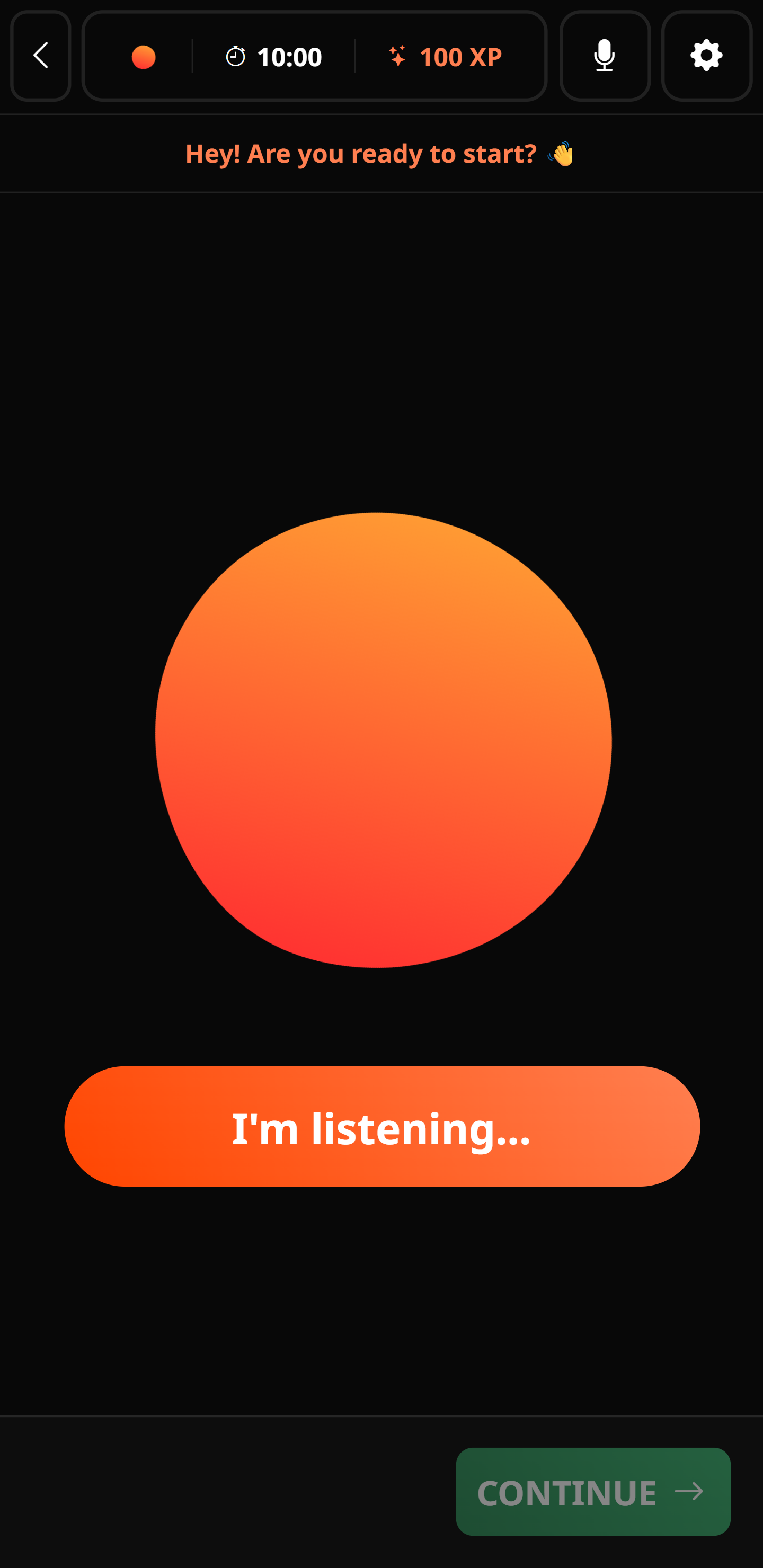
If you are tired of clicking on bubbles and want to actually start speaking, Univext is the definitive answer in 2026. While other apps are still trying to figure out how to integrate AI, Univext was built from the ground up with a proprietary AI teacher named Umi. Umi isn't just a chatbot; she is a sophisticated language tutor that understands context, nuance, and your specific learning pace.
The core philosophy of Univext is simple: you learn to speak by speaking. Instead of translating "The boy eats bread" for the tenth time, Umi engages you in real, dynamic conversations. She might ask you about your day, debate a current event, or role-play a situation like checking into a hotel or interviewing for a job. The beauty of Univext lies in its real-time adaptation. If you make a mistake with a verb conjugation, Umi doesn’t just give you a red "X." She explains why it was wrong in a way that feels like a natural part of the conversation, then gently circles back later to ensure you've mastered the concept.
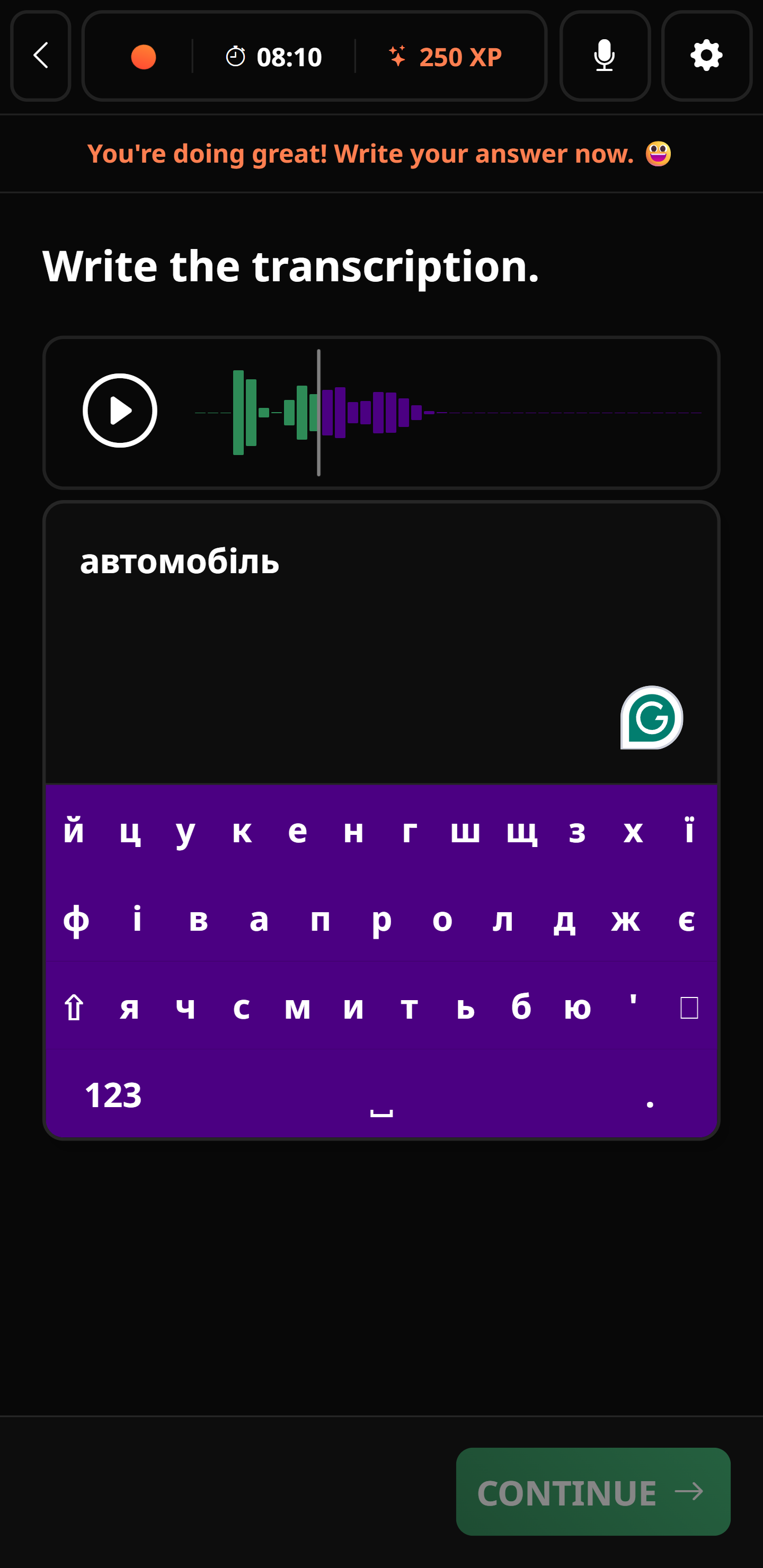
Univext offers comprehensive support for 9 major languages, each with specialized content tailored to the culture and linguistic nuances of the region. Whether you are looking for the 5 best AI apps to learn French or searching for the 5 best AI apps to learn Spanish, Univext consistently ranks at the top. The platform also offers deep dives into Russian, Italian, German, Portuguese, Polish, Ukrainian, and English.
What sets Univext apart is the "Umi Feedback Loop." While you speak, the AI analyzes your pronunciation, your syntax, and your vocabulary range. You receive instant, non-judgmental feedback that helps you refine your accent and sound more like a native speaker. It bridges the gap between "learning" and "doing." Instead of boring grammar charts, you get grammar explanations in the context of things you actually want to talk about.
Univext is designed for the serious learner who values their time. With a 14-day free trial that allows for 30 minutes of conversation per day, you can experience more linguistic growth in a week than you might in three months of "playing" other apps. It is the bridge to true fluency that the industry has been waiting for.
2. Babbel — Best for Structured Grammar Lessons
Babbel has long been the "grown-up" alternative to Duolingo. In 2026, it remains a powerhouse for those who crave a classroom-style structure without the physical classroom. Babbel’s strength lies in its curriculum design. Each lesson is built around real-life dialogues, ensuring that the vocabulary you learn is actually relevant to everyday situations.
The lessons are short, typically 10 to 15 minutes, making them easy to fit into a busy schedule. Babbel does an excellent job of explaining the "rules" of a language. If you want to understand the intricate differences between the pretérito perfecto and the imperfecto in Spanish, Babbel will give you a clear, concise explanation that makes sense.
However, Babbel’s primary weakness in 2026 is its lack of true AI-driven spontaneity. While it has introduced some speech recognition features, they are mostly "repeat after me" exercises. There is no real generative conversation. It can feel a bit like a digital textbook—effective for building a foundation, but lacking the "live" element required to overcome the fear of speaking. It is a fantastic tool for building a structural base, but it often requires a conversational supplement like Univext to achieve true fluency.
3. Rosetta Stone — Best for Immersion Purists
Rosetta Stone is the "Old Guard" of language learning, and in 2026, it still sticks to its guns with the Dynamic Immersion method. The premise is simple: no English (or your native language) allowed. You learn by associating images with sounds and words, mimicking the way a child learns their first language.
For purists who want to avoid the "crutch" of translation, Rosetta Stone is an excellent choice. It forces your brain to stop translating in your head and start thinking directly in your target language. The interface is clean, professional, and devoid of the distracting gamification found in Duolingo.
The downside? The progress can feel excruciatingly slow. Because there are no explicit grammar explanations, you are left to deduce the rules yourself. This can be incredibly frustrating for adult learners who want to know why a sentence is structured a certain way. Furthermore, the methodology hasn't evolved significantly in years; it remains a very linear, expensive path that lacks the adaptive, conversational power of modern AI teachers like Umi.
4. Busuu — Best for Community Feedback
Busuu’s unique selling point in 2026 continues to be its social component. While it offers structured lessons and CEFR-aligned courses, the real magic happens in the community section. When you complete a writing or speaking exercise, you can send it to a native speaker of that language for correction. In return, you correct the exercises of people learning your native language.
This peer-to-peer feedback is invaluable for learning slang, idioms, and natural-sounding phrasing that an algorithm might miss. Busuu also offers a "Study Plan" feature that helps you set goals and stay on track based on your desired timeline for fluency.
However, relying on a community means the quality of feedback can be inconsistent. Sometimes you get a detailed linguistic breakdown; other times, you get a simple "looks good!" Furthermore, the wait time for feedback can break your learning momentum. While Busuu has integrated some AI features to speed up the process, it still lacks the instant, 24/7 conversational availability that makes Univext so much more efficient for daily practice.
5. Pimsleur — Best for Audio Learners
For those who spend a lot of time commuting or want to learn while exercising, Pimsleur remains the gold standard for audio-based learning. Based on the Pimsleur Method of graduated interval recall, the app focuses heavily on listening and speaking from the very first minute.
Pimsleur is designed to program the language into your brain through carefully timed repetition. You listen to a conversation, participate in it through prompts, and are forced to recall words just as you are about to forget them. It is incredibly effective for developing a near-perfect accent because you are constantly mimicking native speakers.
The drawback is the complete lack of visual stimulation. There is no reading or writing practice involved in the core method, which can be a problem for languages with difficult scripts like Russian or Japanese. It is also one of the more expensive options on the market. While Pimsleur is great for getting your "tongue around the sounds," it is best used as a secondary tool alongside a more comprehensive platform like Univext that handles the reading, writing, and complex grammar explanations.
Become bilingual in 30 days with Univext!
Start a lesson with our teacher for free and become bilingual like our 100,000 students!
📊 Comparison Table: Duolingo vs the Best Alternatives





Join more than 100,000 students learning on Univext
❌ What's Actually Wrong with Duolingo?
By 2026, the cracks in the Duolingo model have become impossible to ignore. While the app is a masterpiece of engagement engineering, it is often a failure of educational engineering. Here is why serious learners are migrating to alternatives:
1. The Gamification Trap
Duolingo is designed to keep you on the app, not to get you off the app and into the real world. The XP, the leagues, and the streaks trigger dopamine hits similar to mobile games like Candy Crush. However, maintaining a streak is not the same as maintaining a language. Many users find themselves doing "easy" lessons just to keep their streak alive, rather than challenging themselves with new, difficult material.
2. Translation vs. Production
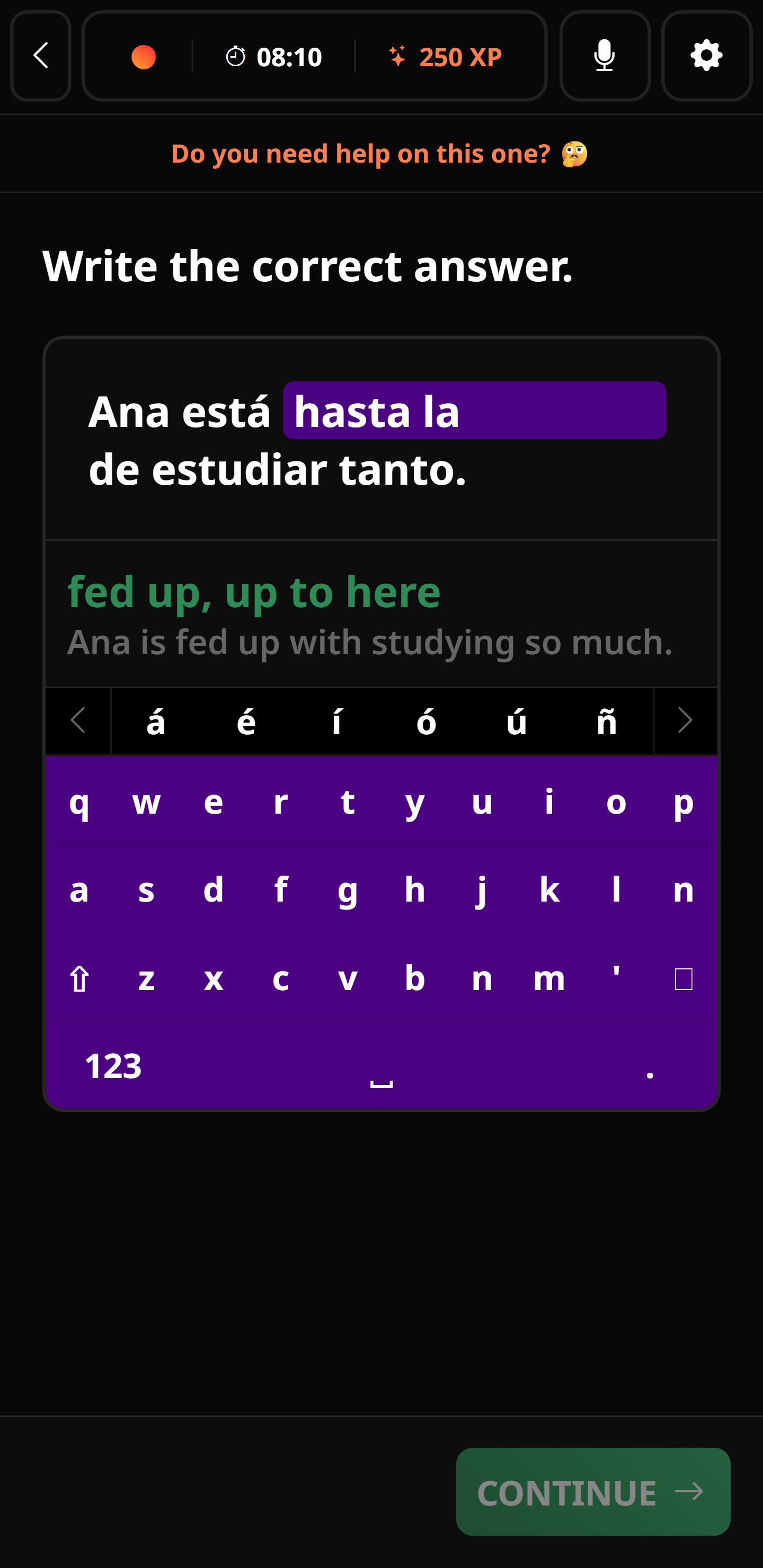
Most Duolingo exercises involve translating a sentence from your target language into English or vice versa. This teaches your brain to be a "translator," not a "speaker." In a real conversation, you don't have time to translate. You need to produce thoughts directly in the target language. Univext solves this by removing the translation middle-man and forcing direct communication.
3. Lack of Real Conversation
You can finish the entire Spanish tree on Duolingo and never once have to come up with an original sentence. Since the exercises are multiple-choice or "word bank" based, you aren't training your brain to retrieve words from memory—you're just training it to recognize them on a screen. For a deeper dive into this specific issue, see our post: Why Duolingo Doesn't Teach You to Actually Speak.
4. One-Size-Fits-All
Duolingo follows a rigid path. Whether you are a fast learner or a slow one, whether you care about business or travel, everyone follows the same "tree." Modern learners in 2026 expect personalization. If you already know how to introduce yourself, you shouldn't have to spend three days proving it.
5. The "Super" Illusion
Premium versions of Duolingo (like Super Duolingo) remove ads and give you unlimited hearts, but they don't change the underlying methodology. You are paying for a more comfortable version of an ineffective system. If the core teaching method doesn't lead to speaking fluency, no amount of "unlimited hearts" will fix it.
🎯 How to Choose the Right Duolingo Alternative
Selecting the right app depends entirely on your specific goals for 2026. Use this guide to find your perfect match:
- Your Goal: To actually speak and have conversations.
- The Choice: Univext. There is no substitute for speaking practice. Umi is the only AI teacher that provides the safe, adaptive environment needed to build speaking confidence. Start your free trial →
- Your Goal: To understand the "how" and "why" of grammar.
- The Choice: Babbel. It is excellent for logical thinkers who want a structured syllabus. Pro tip: Combine Babbel with Univext for speaking practice to get the best of both worlds.
- Your Goal: Total immersion without English explanations.
- The Choice: Rosetta Stone. If you have a lot of patience and want to learn through pictures, this is the one. Pro tip: Use Univext once you reach an intermediate level to start applying what you've intuited.
- Your Goal: To get feedback from real human beings.
- The Choice: Busuu. The community aspect is great for cultural nuances. Pro tip: Use Univext for your daily 30-minute drills, and use Busuu once a week for community interaction.
- Your Goal: To learn while driving or multitasking.
- The Choice: Pimsleur. It’s the best hands-free option available. Pro tip: Supplement with Univext in the evenings to practice the writing and reading skills Pimsleur misses.
Become bilingual in 30 days with Univext!
Start a lesson with our teacher for free and become bilingual like our 100,000 students!
🚀 Why Univext is Our #1 Pick
In the crowded market of 2026, Univext stands out because it solves the "Fluency Gap." Most apps get you to 20% fluency and then leave you stranded. Univext is designed to take you the rest of the way.
Real-Time Adaptation with Umi: Umi is not a static program. If she notices you are struggling with the past tense, she won't just tell you that you're wrong. She will adjust the conversation to give you more opportunities to practice that specific tense in different contexts. This is "Active Learning" at its finest.
Real Conversation from Day 1: We don't believe in waiting until you've "unlocked" enough levels to speak. With Univext, you start talking immediately. Even if you only know three words, Umi will help you use those three words to communicate a thought. This builds the muscle memory of speech that is missing from almost every other platform.
Efficiency Over Gamification: We value your time. The 30-minute daily limit for the trial is designed because research shows that 30 minutes of intense conversation is more effective than three hours of passive clicking. We want you to spend less time on your phone and more time speaking your new language in the real world.
Language Coverage: Univext offers deep, high-quality support for:
Try Univext free for 14 days →
❓ Frequently Asked Questions
What is the best free alternative to Duolingo?
While Duolingo is famous for its free tier, the "best" free alternative is often a combination of resources. However, if you want free conversational AI, Univext offers a generous 14-day free trial that provides 30 minutes of speaking time per day—enough to see more progress than months on a free app.
Is Babbel better than Duolingo?
In 2026, yes. Babbel offers much better grammar explanations and uses real-life dialogues rather than nonsensical sentences. However, Babbel still lacks the generative AI conversation features that make Univext the superior choice for those who want to speak fluently.
Can you become fluent with Duolingo?
The short answer is: almost never. Duolingo is great for learning vocabulary and basic syntax, but fluency requires "output"—the ability to create your own sentences and respond to others. Duolingo focuses almost entirely on "input," which is only half the battle.
What app is better than Duolingo for speaking?
Univext is specifically designed to be better than Duolingo for speaking. While Duolingo uses speech recognition for "repeat after me" tasks, Univext’s AI teacher, Umi, engages you in actual, unscripted conversations.
Is Rosetta Stone worth it in 2026?
Rosetta Stone is worth it if you are a "visual-spatial" learner who hates grammar rules and has plenty of time. If you are looking for fast results or need to understand the structure of the language, you will likely find more value in Univext or Babbel.
How is Univext different from Duolingo?
Univext replaces the "game" with a "teacher." Instead of translating sentences, you are talking to Umi. Instead of losing "hearts," you are receiving constructive feedback. Univext focuses on conversation and production, while Duolingo focuses on recognition and translation.
Join more than 100,000 students learning on Univext
✅ Conclusion
The "Duolingo Era" was a great start for digital language learning, but in 2026, we deserve better. We deserve tools that respect our time, adapt to our needs, and actually teach us to speak. Whether you choose the structured lessons of Babbel, the audio focus of Pimsleur, or the community of Busuu, ensure you are supplementing your learning with real conversation.
If you are ready to stop playing games and start speaking, Univext is waiting for you. Experience what it’s like to have a 24/7 AI tutor who is dedicated entirely to your success.
Don't just keep a streak. Start a conversation.