


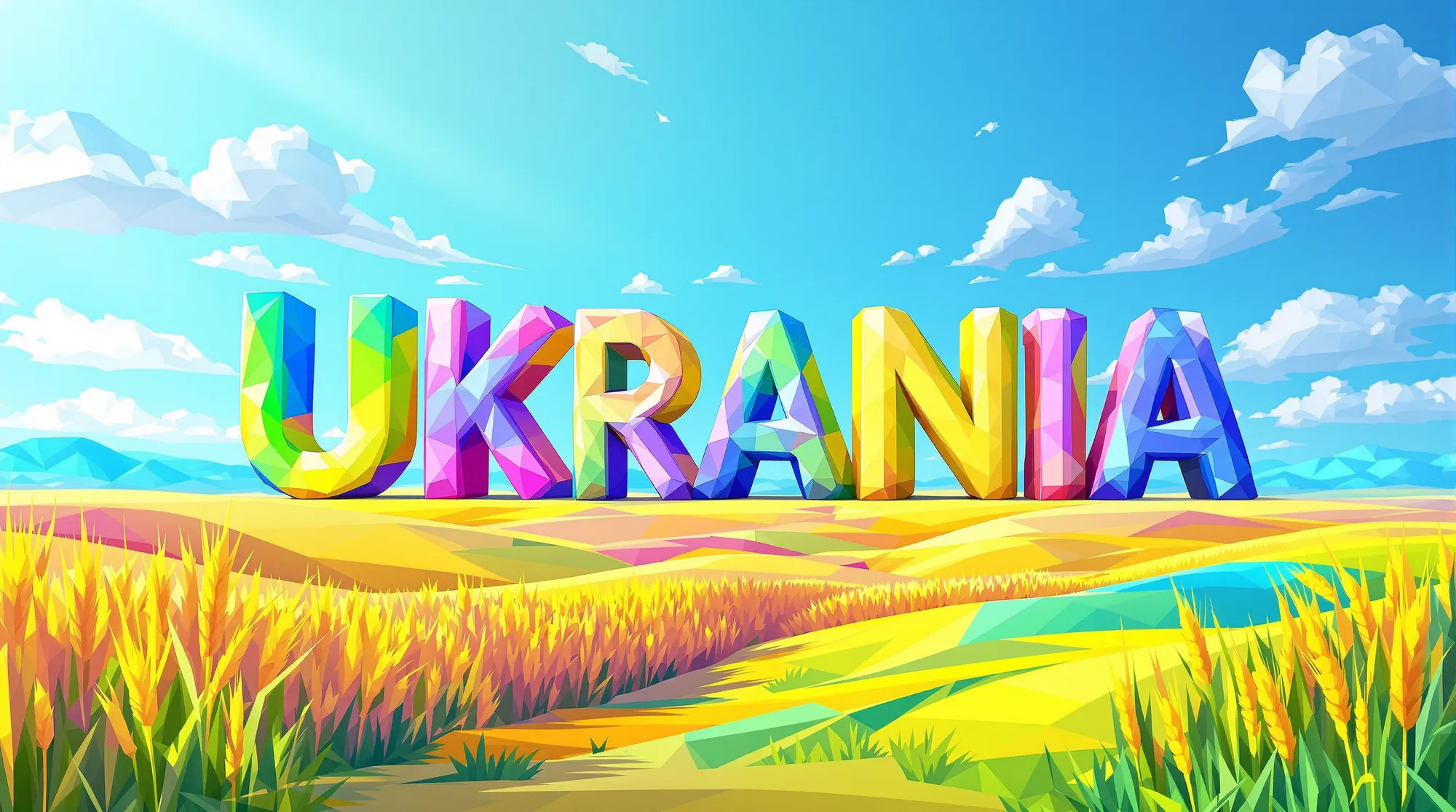
Every Ukrainian learner makes the same mistakes. Not because they are careless — because two other languages quietly lie to them. English tells them a letter shaped like a p is a p. Russian, if they ever touched it, tells them there is a vowel called ы and that г is a hard g.
Neither is true in Ukrainian, and the gap between what your brain expects and what Ukrainian actually does is where almost every beginner error lives.
Below are the 15 mistakes that show up in nearly every learner's first year — the letters that betray you, the two vowels English can't hear apart, the seven cases, the aspect pairs, and the case nobody warns you about. Each one gets the wrong version, the right version, and a one-line reason so it actually sticks.
Fix these fifteen and you'll sound less like someone decoding and more like someone speaking.
🔤 1. Reading Cyrillic Letters as Latin Ones
The first week of Ukrainian is mostly your eyes lying to you. Five letters do the damage.
Why: Cyrillic and Latin share ancestors and shapes, but not sound values. The overlap is a trap, not a shortcut.
👀 2. Collapsing і and и Into One Vowel
The single most expensive pronunciation mistake in Ukrainian. English has no reliable contrast here, so learners flatten both to "ee" and change words without noticing.
- ❌ ліс said for a fox
- ✅ — a fox
- ✅ — a forest
Why: і is a clean "ee". и is pulled back and down, closer to the vowel in "bit". They are separate phonemes, and dozens of word pairs live on the difference.
Become bilingual in 30 days with Univext!
Start a lesson with our teacher for free and become bilingual like our 100,000 students!

🚫 3. Assuming ы Exists in Ukrainian
It does not. There is no ы in the Ukrainian alphabet — not one word, not one exception.
- ❌ мы, ты, сын
- ✅ — we
- ✅ — you
- ✅ — son
Why: Ukrainian uses и where Russian uses ы, and і where Russian often uses и. Typing ы into a Ukrainian sentence is the fastest way to tell a reader you learned the language through Russian.
Notes
The reverse trap is just as common: Ukrainian has three letters Russian lacks entirely — і, ї and є. If your keyboard can't type them, it's the wrong keyboard.





Join more than 100,000 students learning on Univext
✏️ 4. Writing и or е Where Ukrainian Wants ї or є
These two letters carry a hidden y sound at the front, and dropping them quietly Russifies the word.
- ❌ Украина, Европа, мое
- ✅
- ✅
- ✅ — mine
Why: ї is "yi" and є is "ye". They are full letters with their own place in the alphabet, not decorated versions of і and е.
🎤 5. Pronouncing г as a Hard G
г is a soft, breathy sound made in the throat — much closer to the h in "aha" than to the g in "go".
- ❌ goh-vo-ryty
- ✅ — to speak
- ✅ — a porch, with a real hard g
Why: Ukrainian has a separate letter for the hard g: ґ. It appears in a small set of borrowed words like and . Everything else with г is breathy.
Become bilingual in 30 days with Univext!
Start a lesson with our teacher for free and become bilingual like our 100,000 students!
🪶 6. Ignoring the Soft Sign ь
It makes no sound of its own, so beginners skip it. It changes the word anyway.
- ❌ сіл for salt
- ✅ — salt
- ✅ — day
- ✅ — shadow
Why: ь softens the consonant before it, and that softness is phonemic. тин is a fence; is a shadow. Leave the soft sign out and you have written a different word.
🧩 7. Leaving Nouns in the Dictionary Form After a Preposition
The most common structural error, and it happens in your first sentence.
- ❌ Я живу в Київ.
- ✅ — "I live in Kyiv."
- ✅ — "I'm going to Kyiv."
Why: Ukrainian has seven cases, and prepositions choose one. в for location takes the locative; до takes the genitive. The noun ending is doing the work English does with word order.
Join more than 100,000 students learning on Univext
🐈 8. Treating All Direct Objects the Same
The accusative splits in two, depending on whether the object is alive.
- ❌ Я бачу брат.
- ✅ — "I see my brother." Animate: looks like the genitive.
- ✅ — "I see a table." Inanimate masculine: unchanged.
Why: animate masculine nouns borrow the genitive ending in the accusative. It's not an exception list — it's a rule about living things.
Become bilingual in 30 days with Univext!
Start a lesson with our teacher for free and become bilingual like our 100,000 students!
🔁 9. Picking the Wrong Half of an Aspect Pair
Ukrainian makes you choose something English never asks about: is this finished, or is it a process?
- ✅ — I was reading a book. Ongoing, no ending implied.
- ✅ — I read the book. Finished it.
- ✅ versus
Why: almost every verb comes in two forms, and the prefix usually marks completion. Pick the wrong one and you've said you spent all evening on a task you actually finished in ten minutes.
📣 10. Never Using the Vocative
Ukrainian has a whole case just for addressing someone, and learners skip it because English doesn't have one.
- ❌ Олена, привіт!
- ✅
- ✅
- ✅ — Mum
Why: using the nominative to call someone sounds abrupt and foreign, the way "Hey, human" would in English. The vocative is standard, expected and easy: most feminine names swap the final vowel for -о.
🙅 11. Forgetting That Negation Takes the Genitive
Negate a sentence in Ukrainian and the object changes case underneath you.
- ❌ Я не маю час.
- ✅ — "I don't have time."
- ✅ — "There's no water here."
Why: немає and negated verbs govern the genitive. The object of a negative sentence is not the same shape as the object of a positive one.
Become bilingual in 30 days with Univext!
Start a lesson with our teacher for free and become bilingual like our 100,000 students!
🤲 12. Saying "I Have" the English Way
Both forms exist, but only one sounds natural in everyday speech.
- ⚠️ Я маю книгу. — grammatical, but stiff and bookish
- ✅ — "I have a book." Literally: at me there is a book.
- ✅ — "Do you have time?"
Why: Ukrainian prefers the possession-as-location construction. The thing you own is the subject; you are a place it sits.
🔢 13. Using One Noun Form With Every Number
Numbers in Ukrainian drag the noun into three different shapes.
- ❌ п'ять брат
- ✅ — 1
- ✅ — 2, 3, 4
- ✅ — 5 and up
Why: the number decides the case. One takes the nominative singular, two through four take a plural-looking form, and five upward takes the genitive plural. It resets every hundred, so 22 behaves like 2.
🗺️ 14. Carrying Russian Words and Calques Into Ukrainian
This is surzhyk, and it's the mistake native speakers notice fastest — because half of them are working on it too.
Why: these are word-for-word imports that follow Russian idiom, not Ukrainian. Each has a native equivalent that sounds ordinary rather than translated. Learn the right one first and you never have to unlearn the other.
Become bilingual in 30 days with Univext!
Start a lesson with our teacher for free and become bilingual like our 100,000 students!
🗣️ 15. Learning Ukrainian Without Ever Saying It Out Loud
The mistake that causes all the others to stick.
The і/и contrast, the breathy г, aspect pairs, the vocative — none of these are knowledge problems. You can recite the rule for брати участь and still say приймати участь the second someone asks about your weekend. They are reflex problems, and reflexes only build in real time, under mild pressure, with someone correcting you the instant you slip.
Reading this article will not fix your Ukrainian. Saying these fifteen sentences out loud, badly, to something that answers back — that will.
Join more than 100,000 students learning on Univext
🚀 How to Actually Fix These
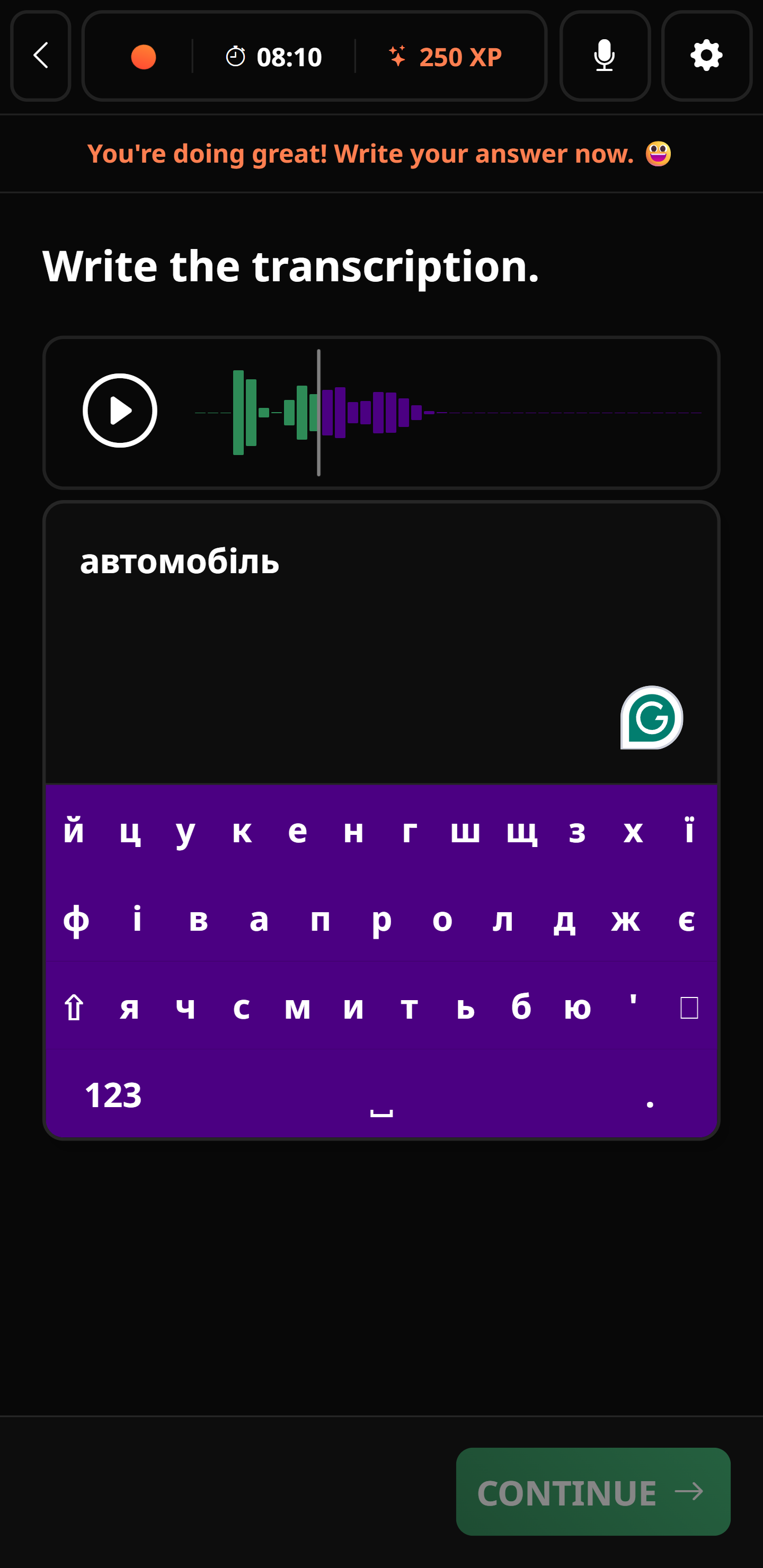
Umi is Univext's AI tutor. You speak Ukrainian, out loud, and Umi corrects you the moment you flatten лис into ліс or leave a noun in the nominative after до — the same second a native speaker would notice and politely say nothing.
Important
Start a free Ukrainian lesson with Umi — 14-day free trial, 30 minutes a day. Say у мене є час out loud once, correctly, and it's yours forever. Try a free Ukrainian lesson →
🎓 Keep Going
- Best Apps to Learn Ukrainian in 2026 (Tested & Ranked)
- Is Ukrainian Hard to Learn? The Honest Answer
- Ukrainian Cases: A Step by Step Guide To Master Them
- Ukrainian Alphabet: The Complete Guide
- Ukrainian Grammar Basics: A Beginner's Guide
The learners who stop making these mistakes aren't the ones who studied them hardest. They're the ones who made them out loud, early, and got corrected fast.