

😤 Is Ukrainian Hard to Learn? Let's Be Honest
Maybe you have Ukrainian roots, a partner from Kyiv, or you simply fell for the sound of the language and want to stand with the people who speak it. Then you googled it: — and the internet warned you about a strange alphabet and seven grammatical cases. Cue the doubt.
Important
Here's the honest answer: Ukrainian is hard in some very specific ways, and surprisingly easy in others. Most people quit because they're scared of the wrong things (the Cyrillic alphabet) and blindsided by the real challenges (cases, verb aspect). Know what's actually coming, and it stops being scary.
Let's break down exactly what's hard, what's easy, and how long it really takes — no sugarcoating, no fear-mongering.
🧗 The 4 Things That Make Ukrainian Genuinely Hard
1. The Cyrillic Alphabet (The Scary One That Isn't)
Ukrainian is written in Cyrillic — 33 letters that look alien at first glance. This is the thing beginners fear most, and it's the thing that matters least.
Notes
The good news buried in here: most learners read Cyrillic comfortably within a week or two. It's phonetic — one letter, one sound, almost always. Several letters even look and sound like their Latin cousins. It's the grammar that's the real work, not the alphabet.
2. Seven Grammatical Cases — The Real Boss
This is the genuine challenge. Ukrainian nouns, adjectives, and pronouns change their endings depending on their role in the sentence. There are seven cases, and the word for the same thing shifts form each time.
Notes
Cases scare textbook learners because they try to memorize endless tables. But native speakers don't think in tables — they feel which ending sounds right. You get that feel from hearing and using the language, not from grinding charts in silence.
3. Verb Aspect — Perfective vs Imperfective
Ukrainian verbs come in pairs. One form describes an ongoing or repeated action, the other a completed one. English handles this with extra words; Ukrainian bakes it into the verb itself.
Notes
Aspect feels foreign at first, but it follows patterns you absorb through conversation. Pick the wrong one and you'll still be understood — this is a "get corrected and move on" skill, not a wall.
4. Pronunciation: Rolled R and Soft Consonants
Ukrainian has a rolled and "soft" (palatalized) consonants marked by the soft sign. English speakers need a little practice for the roll and the softness — but Ukrainian pronunciation is remarkably consistent once you learn the sounds.
Become bilingual in 30 days with Univext!
Start a lesson with our teacher for free and become bilingual like our 100,000 students!
🎉 The Good News: What Makes Ukrainian EASIER Than You'd Expect
Everyone talks about cases. Almost nobody tells you Ukrainian is genuinely easy in ways English and Western European languages are not.
Example
Think about it: an English speaker learning French has to memorize the gender of every noun AND juggle a/an/the AND untangle a dozen tenses. Ukrainian drops the articles entirely, spells words exactly as they sound, and keeps just three tenses. You trade case endings for a lot of simplicity elsewhere.





Join more than 100,000 students learning on Univext
⏱️ So How Long Does It Actually Take?
The honest number: Ukrainian takes English speakers longer than Spanish or French — the U.S. Foreign Service Institute puts Slavic languages in a higher time bracket, mostly because of the case system. But "longer" doesn't mean "impossible," and conversational ability comes far sooner than perfect case endings.
We broke the real, honest timeline down — from your first survival phrases to genuine fluency — in a separate guide: How Long Does It Take to Learn Ukrainian? (Realistic Timeline). Read it before you set expectations.
Notes
The learners who succeed aren't the ones with more talent. They're the ones who practiced speaking a little every day instead of memorizing case tables in silence for six months and burning out.
💡 How to Make the Hard Parts Manageable
The reason Ukrainian feels impossible is usually the method, not the language. Silent apps and grammar textbooks leave you unable to speak, buried in case charts, and terrified of the alphabet. Here's what actually works:
- Learn Cyrillic first, fast. A week or two of focus and reading stops being a barrier forever.
- Meet cases in real sentences, not tables. Endings stick when they mean something you're actually saying.
- Speak from day one. Aspect and pronunciation only improve through conversation with feedback.
- Don't wait until you're "ready." You never will be. Start talking badly, get corrected, improve.
Important
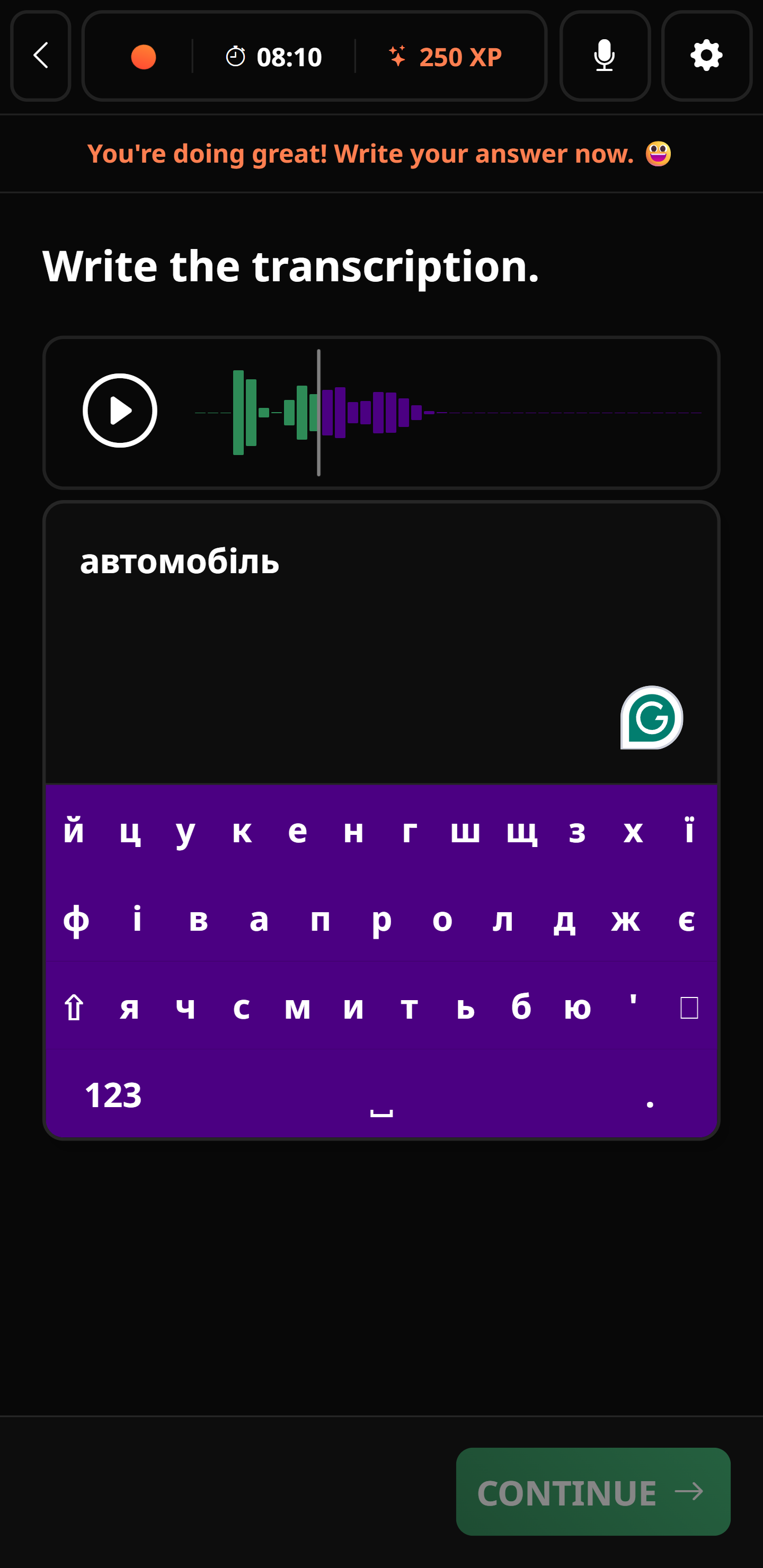
This is exactly where an AI tutor changes the game. With Univext's Umi, you practice speaking real Ukrainian from your very first lesson — Umi corrects your case endings gently, explains the alphabet when you're stuck, adapts to your pace, and never once judges you for a mistake. It's available 24/7 for a fraction of a private tutor. Try it free for 14 days, 30 minutes a day.
Become bilingual in 30 days with Univext!
Start a lesson with our teacher for free and become bilingual like our 100,000 students!
📊 Ukrainian vs Other Languages: The Honest Comparison
Notes
Ukrainian trades one hard thing (cases) for several easy ones (no articles, phonetic spelling, no tones, simple tenses). It's not "one of the hardest languages" — it's a language that's hard in a narrow, learnable set of ways.
❓ Frequently Asked Questions
Is Ukrainian harder than Russian? They're close in difficulty — both are East Slavic with cases and Cyrillic. Ukrainian spelling is actually more phonetic than Russian, so reading comes a little easier once you know the alphabet. If you know one, the other becomes dramatically faster to pick up.
Do I really need to learn all seven cases? Eventually, for polished speech — but you can hold real conversations, travel, and be understood long before you've mastered every ending. Start speaking early; the cases settle in through use, not memorization.
How long until I can hold a conversation in Ukrainian? With consistent daily speaking practice, basic conversations come within a few months. Full fluency takes longer — see our realistic Ukrainian timeline for honest numbers.
What's the best way to learn Ukrainian in 2026? Daily speaking practice with instant feedback beats silent flashcard grinding every time. See our guide to the Best Apps to Learn Ukrainian in 2026 for a tested comparison.
Join more than 100,000 students learning on Univext
✅ Conclusion: Hard, Yes. Impossible, No.
Ukrainian is hard — but hard in specific, knowable ways: a new alphabet, seven cases, verb aspect, a rolled R. And it's genuinely easy in ways that will surprise you: no articles, spelling that matches sound, no tones, and just three tenses.
The people who succeed aren't smarter. They stopped fearing the alphabet, started speaking early, and practiced a little every day.
Important
You don't have to figure this out alone. Try Univext free for 14 days — practice real Ukrainian with Umi, get your cases and pronunciation corrected gently, and turn "Is Ukrainian hard?" into "I'm actually doing this." Start your first lesson now →