



Every Korean learner makes the same mistakes. Not similar ones — the same ones. The particle coin-flip between 은/는 and 이/가. The verb that keeps escaping to the middle of the sentence because English put it there. The moment you use casual speech with someone's grandmother and watch the room cool by ten degrees.
The good news: none of this is random. Korean is extremely regular — it just organises meaning in a place English never looks. Word order, politeness, and counting are all grammatical in Korean, not stylistic, so an English brain skips them entirely and produces sentences that are perfectly understandable and unmistakably foreign.
Below are the 15 mistakes that show up in almost every English speaker's Korean, each with the wrong version, the right version, and one line on why — so the fix actually sticks.
🎯 1. 은/는 vs 이/가: The Particle Coin-Flip
❌ 제가 학생는 이에요. ✅ — jeoneun haksaeng-ieyo ("I'm a student")
Why: 은/는 (eun/neun) marks the topic — what the sentence is about, often with a hint of contrast. 이/가 (i/ga) marks the subject — new information, the answer to "who?". Both translate to nothing in English, which is exactly why learners guess.
The quick tell: 누가 왔어요? (nuga wasseoyo? — "who came?") is answered with 가: (chinguga wasseoyo). The question asked who, so the answer is new information.
Notes
Rough heuristic that gets you most of the way: 은/는 for "as for X, ...", 이/가 for "it is X that ...". Native speakers do not think about this — they hear it wrong the way you hear "a" vs "the" wrong.
🔚 2. Putting the Verb in the Middle
❌ 저는 먹어요 김치를. ✅ — jeoneun kimchireul meogeoyo ("I eat kimchi")
Why: Korean is Subject – Object – Verb. The verb is always last, no exceptions, and everything else stacks in front of it. English speakers write the verb where English wants it and the sentence becomes unparseable.
The consequence nobody warns you about: you cannot start speaking until you know how the sentence ends. That's not a grammar problem, it's a listening-and-planning problem — and it only fixes itself with live practice.
Become bilingual in 30 days with Univext!
Start a lesson with our teacher for free and become bilingual like our 100,000 students!
🙇 3. Using 반말 With the Wrong Person
❌ To your friend's mother: 어디 가? (eodi ga?) ✅ — eodi gaseyo ("Where are you going?")
Why: Korean speech levels are grammar, not tone. Three you actually need:
Important
The safe rule: live in 해요체. It is polite enough for a stranger and warm enough for a colleague. Being slightly too polite costs nothing; 반말 to someone older reads as rude and nobody will correct you to your face.



Join more than 100,000 students learning on Univext
👑 4. Ignoring Honorifics: 있다 vs 계시다
❌ 할머니가 집에 있어요. ✅ — halmeoniga jibe gyeseyo ("Grandmother is at home")
Why: Korean has a second layer on top of politeness: the subject honorific, which raises the person you're talking about. Some verbs have entirely separate honorific forms.
Say (masitge deuseyo — "enjoy your meal") to an elder, never 먹어.
🔢 5. Using the Wrong Number System
❌ 일 개 주세요. ✅ — han gae juseyo ("one, please")
Why: Korean has two complete number systems and they are not interchangeable.
So 3 o'clock 15 minutes is (se si sibo bun) — native for the hour, Sino for the minutes, in the same breath. This one sentence is where most learners realise they have to learn both.
Become bilingual in 30 days with Univext!
Start a lesson with our teacher for free and become bilingual like our 100,000 students!
🧮 6. Skipping Counters Entirely
❌ 고양이 세 주세요. ✅ — keopi du jan juseyo ("two coffees, please")
Why: You cannot count a bare noun in Korean. Every noun needs a counter word between the number and the thing, like English "two sheets of paper" — except Korean does it for everything.
- 명 (myeong) — people
- 개 (gae) — general objects
- 잔 (jan) — cups, glasses
- 마리 (mari) — animals
- 병 (byeong) — bottles
And the numbers shorten before a counter: 하나 → 한, 둘 → 두, 셋 → 세, 넷 → 네.
🗣️ 7. Overusing 저는 / 나는
❌ 저는 배고파요. 저는 밥을 먹을 거예요. 저는 피곤해요. ✅ — baegopayo ("I'm hungry")
Why: Korean drops any subject the listener can infer, which is most of them. Repeating 저는 sounds like a robot announcing itself, or like you're drawing a contrast that isn't there. Say it once to set the topic, then let it go.
Join more than 100,000 students learning on Univext
🚫 8. Translating "You" Directly
❌ 당신은 어디에 살아요? ✅ — seonsaengnimeun eodie saseyo ("Where do you live, teacher?")
Why: 당신 (dangsin) is textbook "you" and is almost never used in real speech — it appears in songs, in arguments, and between married couples. Korean uses the person's name, title, or role instead: 선생님, 사장님, 민수 씨. Or, most often, nothing at all.
Become bilingual in 30 days with Univext!
Start a lesson with our teacher for free and become bilingual like our 100,000 students!
🎵 9. Not Hearing the Difference Between ㄱ, ㄲ and ㅋ
❌ Reading all three as an English "k" ✅ (gada — to go) · (kkada — to peel) · (kadeu — card)
Why: Korean consonants come in threes: plain, tense and aspirated. English has only one of those distinctions, so learners flatten all three into one sound and get corrected constantly without knowing what changed.
Same pattern for ㄷ/ㄸ/ㅌ, ㅂ/ㅃ/ㅍ, ㅈ/ㅉ/ㅊ, ㅅ/ㅆ. It's a listening skill before it's a speaking one.
🔄 10. Ignoring Sound Change Rules
❌ Reading 감사합니다 as "gam-sa-hap-ni-da" ✅ — pronounced gamsahamnida
Why: Hangul is beautifully phonetic on the page, then Korean applies assimilation rules when you speak. ㅂ before ㄴ becomes ㅁ. 좋아요 is read (joayo), not "jo-ha-yo" — the ㅎ vanishes between vowels.
This is why learners who only read Hangul get blank stares out loud. The letters are the easy part; the rules on top of them are the real alphabet.
📍 11. Mixing Up 에 and 에서
❌ 학교에 공부해요. ✅ — hakgyoeseo gongbuhaeyo ("I study at school") ✅ — hakgyoe gayo ("I go to school")
Why: 에 (e) is a destination or a static location. 에서 (eseo) is where an action happens, or where something comes from. Studying is an action, so it takes 에서. Going is a direction, so it takes 에.
Become bilingual in 30 days with Univext!
Start a lesson with our teacher for free and become bilingual like our 100,000 students!
🙏 12. Using 감사합니다 and 고마워 Interchangeably
❌ Saying 고마워 to a shop assistant ✅ — gamsahamnida ("thank you", formal)
Why: 고마워 (gomawo) is casual — friends only. 고마워요 is the polite middle. 감사합니다 is the one that is never wrong with a stranger. Same ladder exists for sorry: 미안해 / 미안해요 / (joesonghamnida).
❓ 13. Raising Your Voice Instead of Ending the Question Properly
❌ Saying 밥 먹어 with English question intonation and hoping ✅ — bap meogeosseoyo? ("Did you eat?")
Why: In 해요체 the statement and the question share the same ending — the rise in pitch really does carry it. But in formal speech they split: 갑니다 is a statement, (gamnikka) is a question. Learners who never learn the 까 form sound permanently informal in formal settings.
And yes — literally asks "did you eat rice?" and functions as "how are you?". Answer it as a greeting, not a survey.
🧊 14. Word-for-Word Translating English Idioms
❌ 저는 지루해요. to mean "this is boring" ✅ — jaemieopseoyo ("it's not interesting")
Why: Korean builds a lot of meaning by negating the positive rather than importing a separate adjective: 맛없어요 (not tasty), 재미없어요 (not fun), 상관없어요 (doesn't matter). Reaching for a direct equivalent produces sentences that are grammatical and that nobody says.
Become bilingual in 30 days with Univext!
Start a lesson with our teacher for free and become bilingual like our 100,000 students!
🧠 15. Learning Korean Without Ever Saying It Out Loud
The mistake that makes all fourteen above permanent.
Particles, speech levels, counters, the final verb — none of these are knowledge problems. You can recite the 은/는 rule and still say 학생는 the second somebody asks what you do. They are reflex problems, and reflexes only build in real time, under mild pressure, with someone correcting you the instant you slip.
Reading this article will not fix your Korean. Saying these fifteen sentences out loud, badly, to something that answers back — that will.
Join more than 100,000 students learning on Univext
🚀 How to Actually Fix These
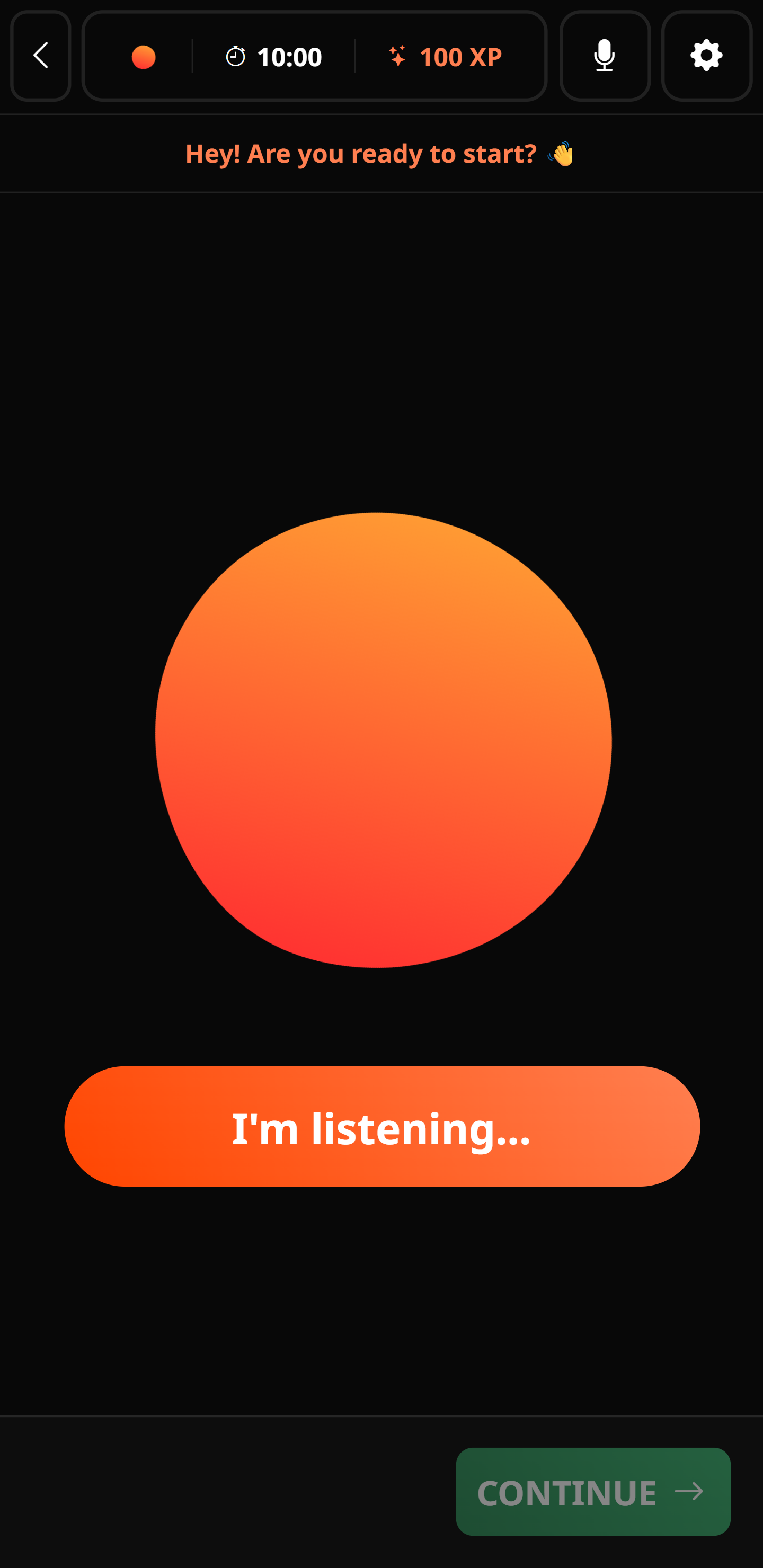
Umi is Univext's AI tutor. You speak Korean out loud, and Umi catches the particle slip, the missing counter, the 반말 you just used with a stranger — the same second a native speaker would wince and say nothing.
Important
Start a free Korean lesson with Umi — 14-day free trial, 30 minutes a day. Say 저는 김치를 먹어요 out loud once, correctly, and it's yours forever. Try a free Korean lesson →
🎓 Keep Going
- Best Apps to Learn Korean in 2026 (Tested & Ranked)
- Is Korean Hard to Learn? The Honest Answer
- Korean Alphabet (Hangul): Complete Beginner Guide
- Korean Grammar Basics: A Beginner's Guide
- How Long Does It Take to Learn Korean?
Mistakes aren't the problem. Mistakes that nobody catches are — they harden into habits in about three weeks, and then they take a year to undo.
Important
Practice with Umi so these get caught live, in the moment, before they set. 👉 Start your free lesson