

😰 Is Korean Hard to Learn? The Honest Answer
You've watched the K-dramas. You've had a favorite song stuck in your head for a week. And now you're lying awake wondering:
Here's the honest answer, no sugar-coating: Korean is hard in some ways and surprisingly easy in others. The parts everyone dreads — the alphabet, the "1,000 characters" myth — turn out to be the easy parts. The parts nobody warns you about — speech levels and word order — are where learners actually struggle.
Important
Good news first: Korean has NO tones (unlike Chinese), NO grammatical gender (unlike French or Spanish), and an alphabet you can genuinely learn in an afternoon. It is not Mandarin. It is not as scary as it looks.
Let's break down exactly what's hard, what's easy, and how long it really takes.
✅ Why Korean Is Easier Than You Think
Hangul: the smartest alphabet ever invented
Forget memorizing thousands of characters. Korean uses Hangul (한글) — a 24-letter alphabet a king literally designed in the 1400s to be easy for ordinary people to learn. It's phonetic: what you see is what you say.
Try it: (annyeonghaseyo — hello) and (gamsahamnida — thank you). Once you know the blocks, you can sound out almost any word.
No tones, no gender, no scary conjugation-by-person
- No tones. Say a word flat — meaning doesn't change. Chinese learners would kill for this.
- No gender. Nouns aren't masculine or feminine. No memorizing der/die/das.
- Verbs don't change by person. "I go," "you go," "they go" — the verb stem stays the same. You conjugate for politeness and tense, not for who's speaking.
Become bilingual in 30 days with Univext!
Start a lesson with our teacher for free and become bilingual like our 100,000 students!
😤 Why Korean Is Genuinely Hard
Now the honest part. This is where learners hit the wall — and where a real tutor matters most.
1. Speech levels and honorifics
Korean bakes social hierarchy right into the grammar. The same sentence changes depending on who you're talking to — a friend, a boss, a stranger, an elder.
Pick the wrong level and you sound rude — or oddly stiff. There's no shortcut here: you have to practice using them in real conversation until the right form comes automatically.
2. Word order is backwards (SOV)
English is Subject-Verb-Object: "I eat rice." Korean is Subject-Object-Verb: "I rice eat." literally reads I-rice-eat. Your brain has to rewire itself to hold the verb until the end.
3. Particles and verb endings
Little markers attached to words tell you their role in the sentence — subject, object, topic, location. And verbs stack endings for tense, politeness, mood, and connection. It's logical, but it's a lot to juggle in real time.
Notes
None of this is impossible — millions of non-Koreans speak fluently. But these are the parts that don't come from flashcards or a grammar chart. They come from speaking, getting corrected, and hearing the language used naturally.





Join more than 100,000 students learning on Univext
⏱️ So How Long Does It Actually Take?
Korean is officially a "Category IV" language for English speakers — one of the harder ones, alongside Japanese, Chinese, and Arabic. Realistic milestones:
Want the full breakdown? Read our honest guide: How Long Does It Take to Learn Korean? (Realistic Timeline).
🚀 How to Make the Hard Parts Easy
Here's the truth about why Korean feels so hard for most people: apps drill you on vocabulary but never make you speak. You can spend six months tapping multiple-choice answers and still freeze the moment a real Korean says to you.
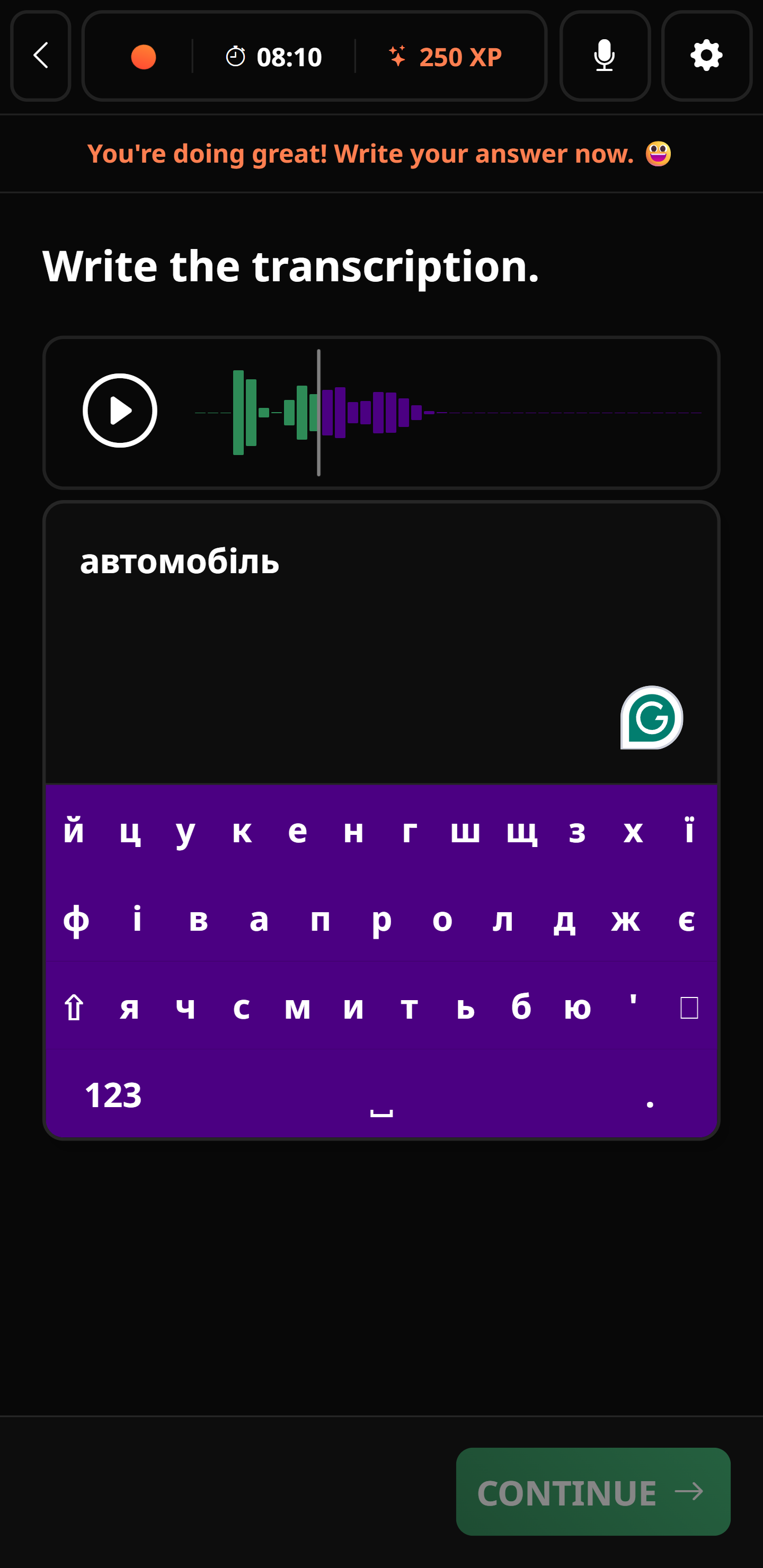
The hard parts of Korean — speech levels, word order, honorifics — are exactly the parts that only conversation can teach. That's what Univext's AI tutor, Umi, is built for.
- Umi talks with you in Korean from lesson one — the SOV word order and politeness levels become muscle memory, not memorized rules.
- It corrects you gently, in the moment — the way the honorific system actually gets internalized.
- It never judges you for getting a speech level wrong at 11pm — so you actually keep going.
Important
Stop wondering if Korean is too hard. Try one free Korean lesson with Umi right now — talk, make mistakes, and feel how fast the "hard" parts start clicking. Start your free lesson →
Compare the top tools first if you want: Best Apps to Learn Korean in 2026 (Tested & Ranked).
Become bilingual in 30 days with Univext!
Start a lesson with our teacher for free and become bilingual like our 100,000 students!
💬 The Honest Bottom Line
Is Korean hard to learn? The reading is easy. The grammar is logical. The speaking takes real practice — and that's the part most learners skip, which is exactly why they stall.
Learn Hangul this week. Then start talking — because the only way past honorifics and backwards word order is to use them out loud, get corrected, and try again. Do that consistently and Korean stops being "hard" and starts being just... a language you're learning.
Example
You already learned one impossibly hard language as a baby with zero grammar charts — just constant listening and speaking. Korean works the same way. Give Umi 10 minutes a day and let the hard parts become automatic.