

🇵🇹 Babbel vs Rosetta Stone for Portuguese: The Quick Verdict
Before you compare lesson formats, prices or speech engines, there is one question that decides this matchup for Portuguese and almost every review skips it: which Portuguese are you actually being taught?
Portuguese is not one target. Brazilian Portuguese and European Portuguese differ in pronunciation, pronoun placement, everyday vocabulary and even the tense people use to say "I'm doing something right now." A learner who studies for six months and then lands in Lisbon with Brazilian pronunciation in their ears will struggle to understand a single sentence at the airport counter.
Here is the honest answer for 2026: both Babbel and Rosetta Stone teach Brazilian Portuguese. Neither ships a European Portuguese course. If Brazil is your destination, the comparison is a real one — Babbel wins on grammar clarity and practical dialogue, Rosetta Stone wins on accent drilling and pure immersion. If Portugal is your destination, the correct answer is that neither of these apps is built for you, and no amount of feature comparison changes that.
Important
The single most common Portuguese learning mistake is spending months on an app that teaches a different variant than the country you are going to. Check the variant before you check the price.
🌍 Brazilian vs European Portuguese: Why This Decides Everything
Speakers of both variants understand each other — this is not Spanish vs Portuguese. But the gap is wide enough to derail a beginner, and it is widest exactly where beginners are weakest: listening.
Pronunciation is the real divide
European Portuguese reduces unstressed vowels heavily. Telefone sounds close to "tlefone." Brazilian Portuguese pronounces vowels fully and openly, which is why learners consistently describe Brazilian Portuguese as "easier to hear." A learner trained only on Brazilian audio typically understands very little spoken European Portuguese on first contact — and the reverse is much less true.
Grammar splits in everyday sentences
- Present continuous: Brazil says . Portugal says .
- "You": Brazil uses você almost universally. Portugal uses tu with its own verb forms, and reserves você for formal or awkward situations.
- Pronoun placement: Brazil fronts pronouns (Me diga). Portugal attaches them to the verb (Diga-me).
Vocabulary you will use on day one
Notes
None of these are "wrong" in the other country — they are simply not what people say. Ordering a sumo in São Paulo or an ônibus ticket in Porto marks you instantly as someone trained on the other variant.
Become bilingual in 30 days with Univext!
Start a lesson with our teacher for free and become bilingual like our 100,000 students!
📱 What Babbel Offers for Portuguese
Babbel's Portuguese course is Brazilian Portuguese, and Babbel is upfront about it — the course is labelled "Brazilian Portuguese" in the app. There is no European Portuguese track.
The lesson structure
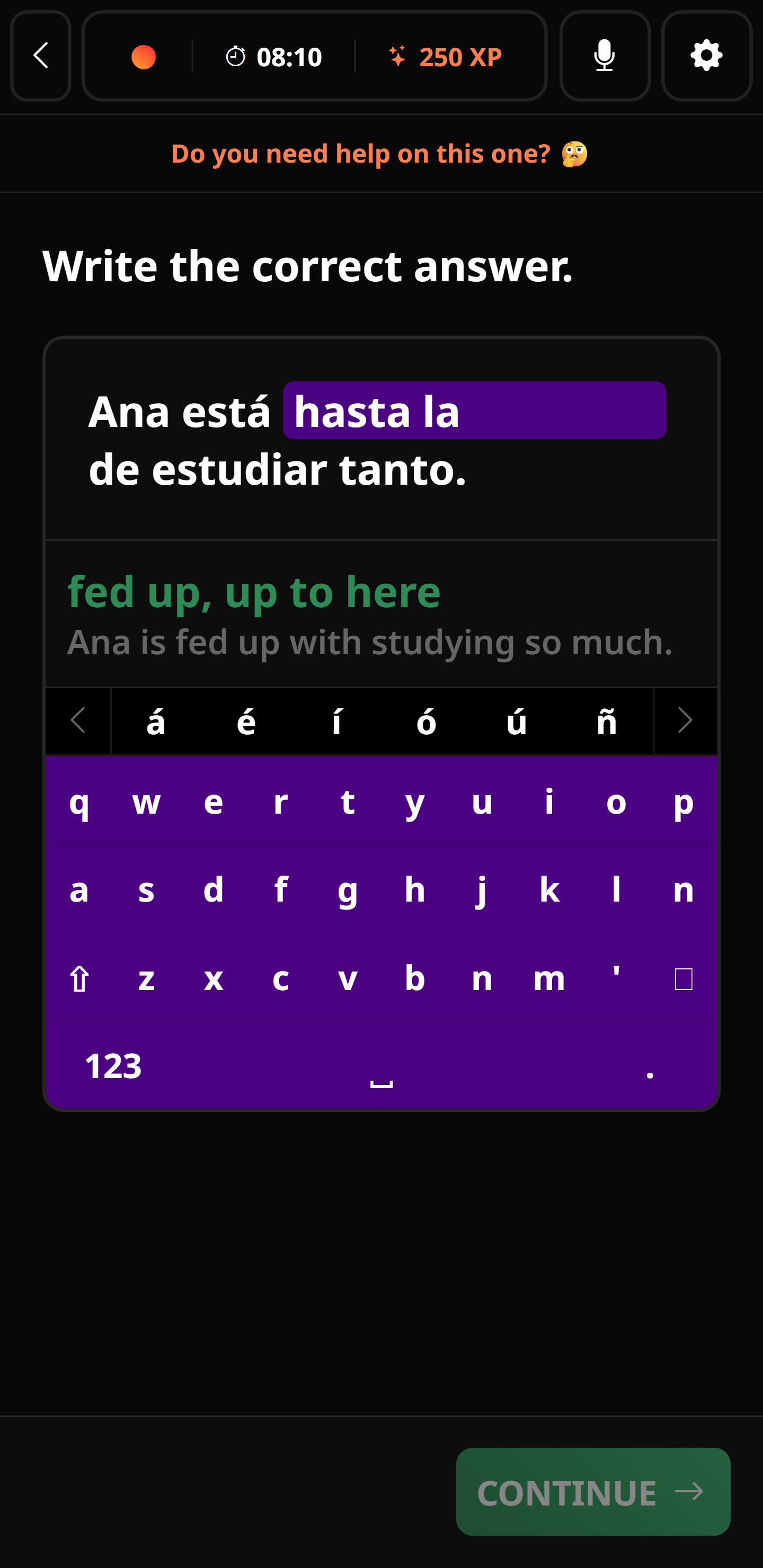
Babbel is the textbook of this pair. Lessons run 10–15 minutes and follow a fixed shape: vocabulary introduction, a dialogue between native speakers, an explicit grammar explanation, then spaced review.
Strengths
- Grammar is explained, not guessed. When Portuguese throws ser vs estar at you — two verbs both meaning "to be" — Babbel tells you the rule in English instead of making you infer it from photographs.
- Practical Brazilian dialogue. Ordering, checking in, small talk. The phrases are ones you will actually use in Rio or Belo Horizonte.
- Honest labelling. You know which variant you are learning from the first screen.
Weaknesses
- Repetition fatigue. The fill-in-the-blank format wears thin after a couple of months.
- Everything is scripted. You respond to prompts written for you; you never build a sentence from nothing.
- Nothing for Portugal. If you need European Portuguese, Babbel has no answer at all.





Join more than 100,000 students learning on Univext
🗿 What Rosetta Stone Offers for Portuguese
Rosetta Stone's Portuguese product is also Brazilian Portuguese, sold as "Portuguese (Brazil)." Its method is Dynamic Immersion: no English, no translations, no grammar tables. You see images, you hear Portuguese, you infer meaning.
TruAccent
Rosetta Stone's speech engine is the genuinely strong part of the product and it matters more in Portuguese than in most languages. Brazilian Portuguese has nasal vowels — pão, mãe, não — that English speakers systematically flatten. TruAccent is strict enough to keep making you repeat until the nasal actually lands.
Strengths
- Accent training that works. The nasal vowels and the Brazilian -ão ending get drilled properly.
- No translation habit. You stop routing every sentence through English.
- Good for visual learners who find grammar tables demoralising.
Weaknesses
- Grammar by guesswork. Portuguese has two verbs for "to be," a subjunctive that appears constantly, and personal infinitives that exist in almost no other language. Deducing those from pictures is slow and often simply fails.
- Slow going. A concept that one English sentence would settle takes several lessons of inference.
- Also nothing for Portugal. Same gap as Babbel.
Example
Example: Rosetta Stone shows you four photos and plays "Ela está cansada" and "Ela é professora." You are expected to work out from context why one uses está and the other é. Babbel simply tells you: estar for temporary states, ser for permanent ones — then drills the exception cases.
📊 Babbel vs Rosetta Stone for Portuguese: Side by Side
If you are heading to Brazil, this table is a genuine choice. If you are heading to Portugal, both columns are the wrong column.
Become bilingual in 30 days with Univext!
Start a lesson with our teacher for free and become bilingual like our 100,000 students!
🗣️ The Bigger Problem: Neither One Makes You Speak
Even for Brazilian Portuguese, there is a ceiling both apps hit. You can complete the whole Babbel Portuguese course and still freeze when a Brazilian asks you an unscripted question.
The reason is structural. Both platforms are input machines. You listen, you recognise, you tap, you repeat a sentence already written on screen. What they never ask you to do is the hard part: produce a sentence you have not seen, in real time, and survive being wrong.
Portuguese punishes this gap harder than most languages, because so much of what natives actually say is unscripted contraction — tá for está, pra for para, cê for você. None of that shows up in a lesson dialogue, and all of it shows up in the first minute of a real conversation. See also our breakdown of the best apps to learn Portuguese if you want the full landscape.
🚀 What Actually Works: Talking, From Day One
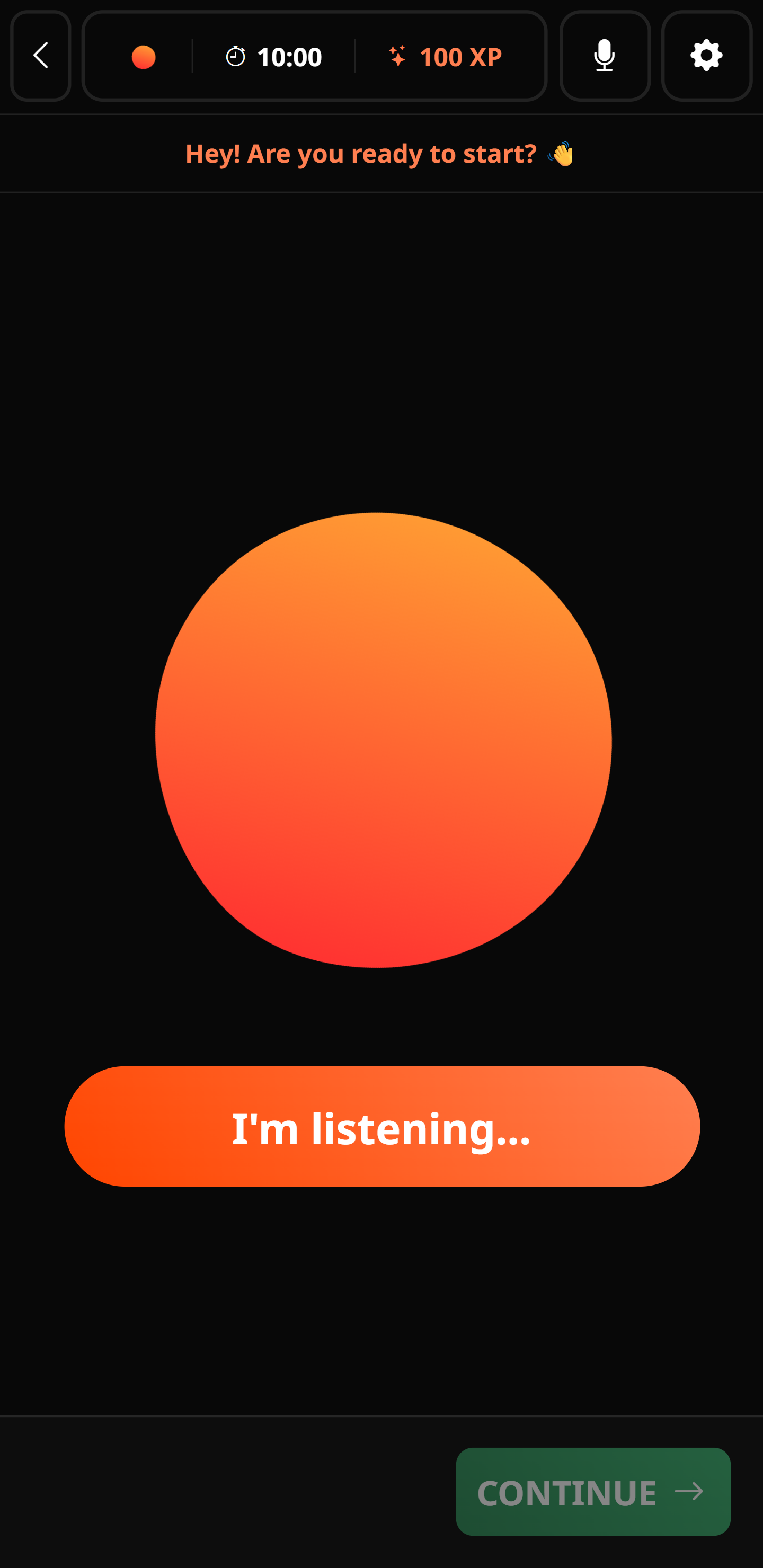
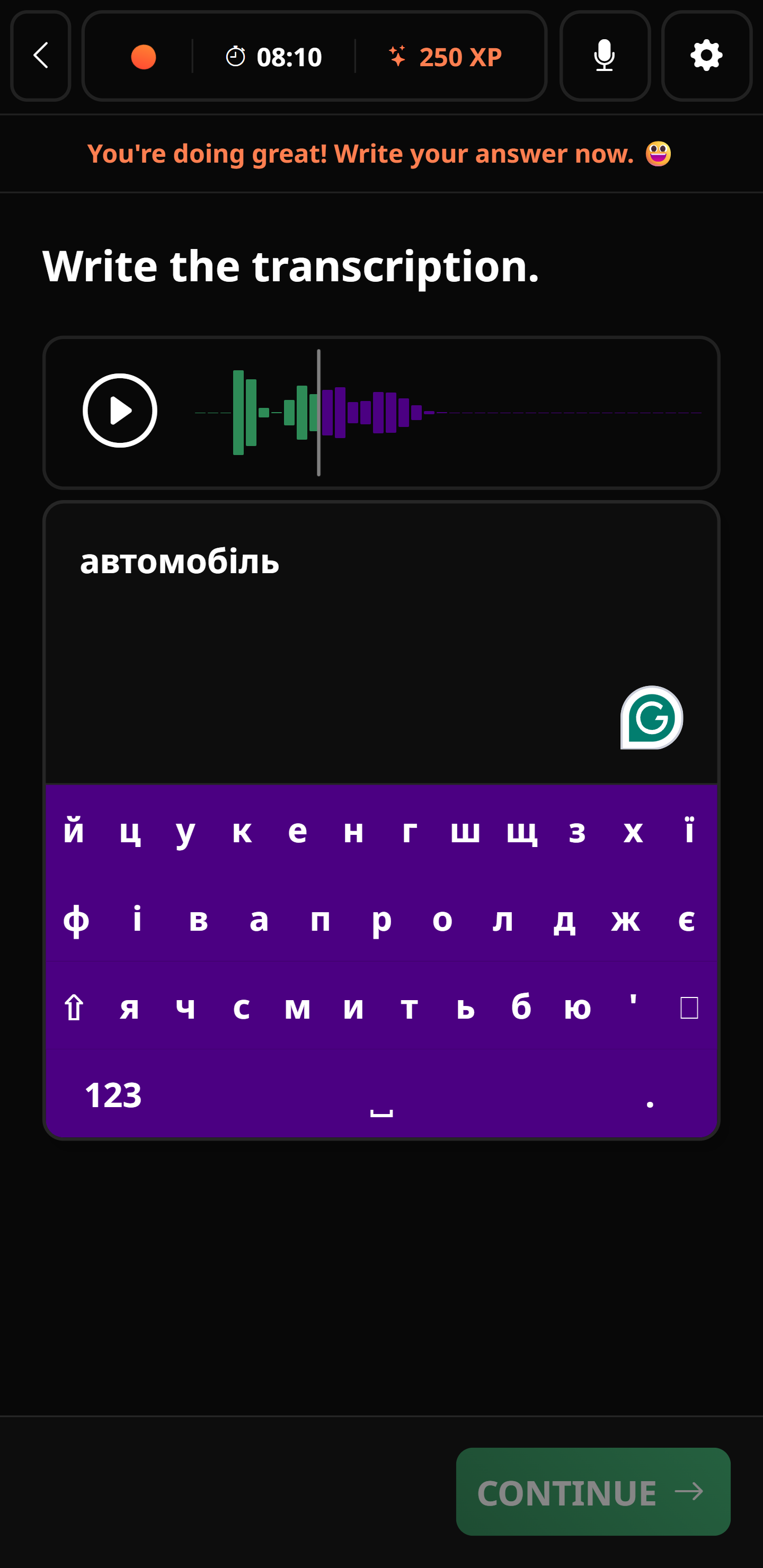
Univext takes the opposite approach. Instead of a fixed lesson track, you talk to Umi, an AI tutor that holds a real conversation with you in Portuguese and corrects you as you go.
- You pick the variant. Tell Umi you are moving to Lisbon and you get European Portuguese — estou a falar, telemóvel, pequeno-almoço, the vowel reduction and all. Tell Umi you are going to Salvador and you get Brazilian. This is the thing neither Babbel nor Rosetta Stone can do for you at all.
- Real-time correction. Say Eu vou na praia and Umi corrects you to Eu vou à praia and explains the contraction — in the moment, while you still remember what you were trying to say.
- Unscripted output. You build your own sentences from the first session, which is the exact skill both legacy apps skip.
- Zero judgment. Make the mistake fifty times. Umi never sighs.
Important
Try a free Portuguese lesson with Umi right now — Brazilian or European, your choice. 14-day free trial, 30 minutes of talking per day. Start speaking Portuguese.
Join more than 100,000 students learning on Univext
🎯 Which Should You Choose?
Choose Babbel if you are going to Brazil, you are a beginner, and you want someone to explain ser vs estar in plain English rather than making you infer it.
Choose Rosetta Stone if you are going to Brazil, your accent is your weak point, and you have the patience for discovery-based learning.
Choose neither if you are going to Portugal. Both will train your ear on the wrong variant, and retraining a trained ear is harder than starting clean. Read our guide to the best apps to learn European Portuguese instead — or the Brazilian Portuguese guide if Brazil is your target.
Choose Univext if you want to actually speak, you want to pick your variant, or you have hit the plateau where you know the words and still cannot hold a conversation.
Become bilingual in 30 days with Univext!
Start a lesson with our teacher for free and become bilingual like our 100,000 students!
❓ FAQ
Does Babbel teach European Portuguese? No. Babbel's Portuguese course is Brazilian Portuguese. There is no European Portuguese track, and the vocabulary, pronunciation and grammar taught reflect Brazilian usage throughout.
Does Rosetta Stone teach European Portuguese? No. Rosetta Stone sells "Portuguese (Brazil)" and that is its only Portuguese product. Its TruAccent engine is tuned to Brazilian pronunciation, so it will actively push your accent away from European Portuguese.
Is Babbel or Rosetta Stone better for Portuguese? For Brazilian Portuguese, Babbel is the better choice for most learners because Portuguese grammar — two verbs for "to be," a heavily used subjunctive, personal infinitives — is genuinely hard to infer from images alone. Rosetta Stone is the better choice if pronunciation is your specific weakness.
Can I learn European Portuguese with a Brazilian course and adjust later? It is possible but costly. The hardest part of European Portuguese is listening comprehension, and months of Brazilian audio trains your ear in the opposite direction. Starting with the right variant is much cheaper than correcting later.
Are the two variants really that different? In writing, they are close — a 1990 orthographic agreement narrowed the spelling gap. In speech, they are far apart. Brazilians frequently report needing subtitles for European Portuguese films; the reverse is rare.
💡 Bottom Line
Babbel vs Rosetta Stone for Portuguese is a real comparison — but only if you are going to Brazil. Babbel is the textbook, Rosetta Stone is the picture book, and both teach Brazilian Portuguese and nothing else.
For Portugal, the honest answer is that this entire matchup is the wrong question. And for either variant, both apps stop exactly where the difficult part begins: producing your own Portuguese, out loud, in real time, and being corrected while it still matters.
Important
Pick your Portuguese and start talking today. Univext gives you 14 days free with 30 minutes of daily conversation with Umi — Brazilian or European. Claim your free trial.