

Brazilian Portuguese is one of the most rewarding languages to learn — 215 million native speakers, the soundtrack of bossa nova, samba, and an internet culture that punches way above its weight. But picking the right app to learn it is harder than it should be. Most "language apps" treat Brazilian Portuguese as a side dish next to European Portuguese, throwing both dialects into the same lessons and leaving you sounding like nobody in particular.
We tested every major app on the market specifically for Brazilian Portuguese — the dialect actually spoken in São Paulo, Rio, and Belo Horizonte — and ranked them on what really matters: pronunciation feedback, real conversation practice, and whether you can actually order an açaí by the time you finish month one.
Here's what we found.
🇧🇷 Why Brazilian Portuguese Deserves Its Own App
Before we get to the rankings, a quick reality check. Brazilian Portuguese (PT-BR) and European Portuguese (PT-PT) are not the same language in practice. They diverge in:
- Pronunciation — open vowels in Brazil, closed and reduced in Portugal. "Lisboa" sounds like "Lzhboa" in Portugal but clearly "Liz-bo-a" in Brazil.
- Grammar — Brazilians use você almost exclusively; Portuguese keep tu. The gerund (estou falando) is normal in Brazil; rare in Portugal.
- Vocabulary — bus is ônibus in Brazil, autocarro in Portugal. Phone is celular vs telemóvel. The list goes on.
If you're learning Brazilian Portuguese to travel to Brazil, talk to Brazilian friends, or work with Brazilian colleagues, you need an app that commits to the Brazilian dialect — not one that hedges.
Notes
If you're still deciding between dialects, read our breakdown: Brazilian vs European Portuguese: What's the Difference? — and if you land on Portugal instead, we ranked the apps separately: Best Apps to Learn European Portuguese
The four things a real Brazilian Portuguese course must get right
- Open vowels and nasal diphthongs. Brazilian pão, mãe, não carry a full nasal glide. European Portuguese swallows unstressed vowels (p'r'guês), so a course recorded in Lisbon trains your ear on the wrong rhythm from lesson one.
- The você / tu split. Brazil conjugates almost everything in the third person: você fala, você tem, você vai. Portugal drills tu falas, tu tens, tu vais. Learn the wrong one and every sentence you build is subtly off.
- The gerund. Estou falando (Brazil) vs estou a falar (Portugal). This is not a stylistic preference — it is the default present-progressive in each country.
- Everyday vocabulary. ônibus not autocarro, celular not telemóvel, trem not comboio, geladeira not frigorífico, bala not rebuçado. A "Portuguese" course that mixes both leaves you sounding like nobody.
Any app that cannot tick all four is teaching you Portuguese, not Brazilian Portuguese.
📊 The Ranking (TL;DR)
Now let's break down each one.
Become bilingual in 30 days with Univext!
Start a lesson with our teacher for free and become bilingual like our 100,000 students!
🥇 1. Univext — Best Overall for Brazilian Portuguese
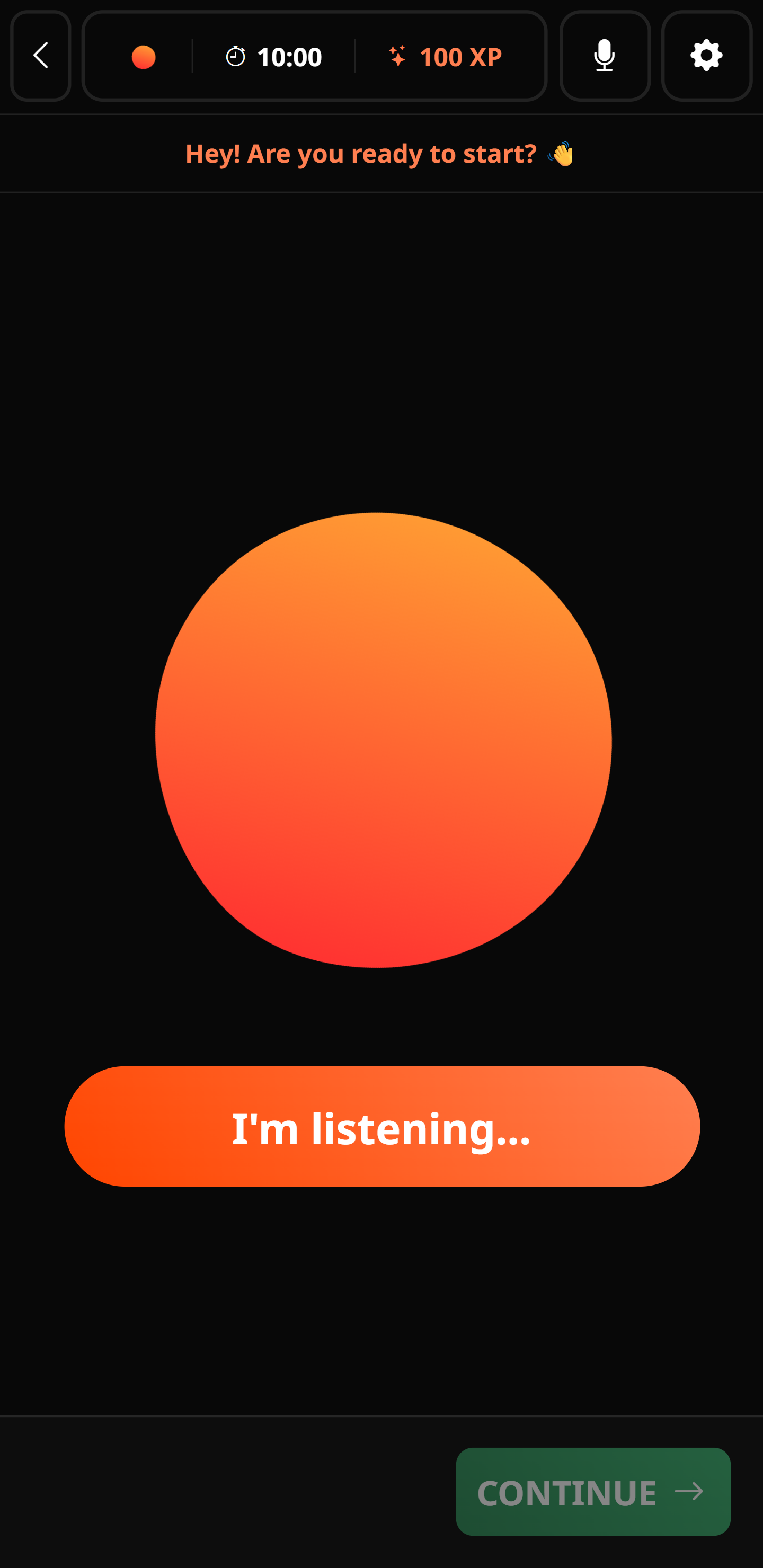
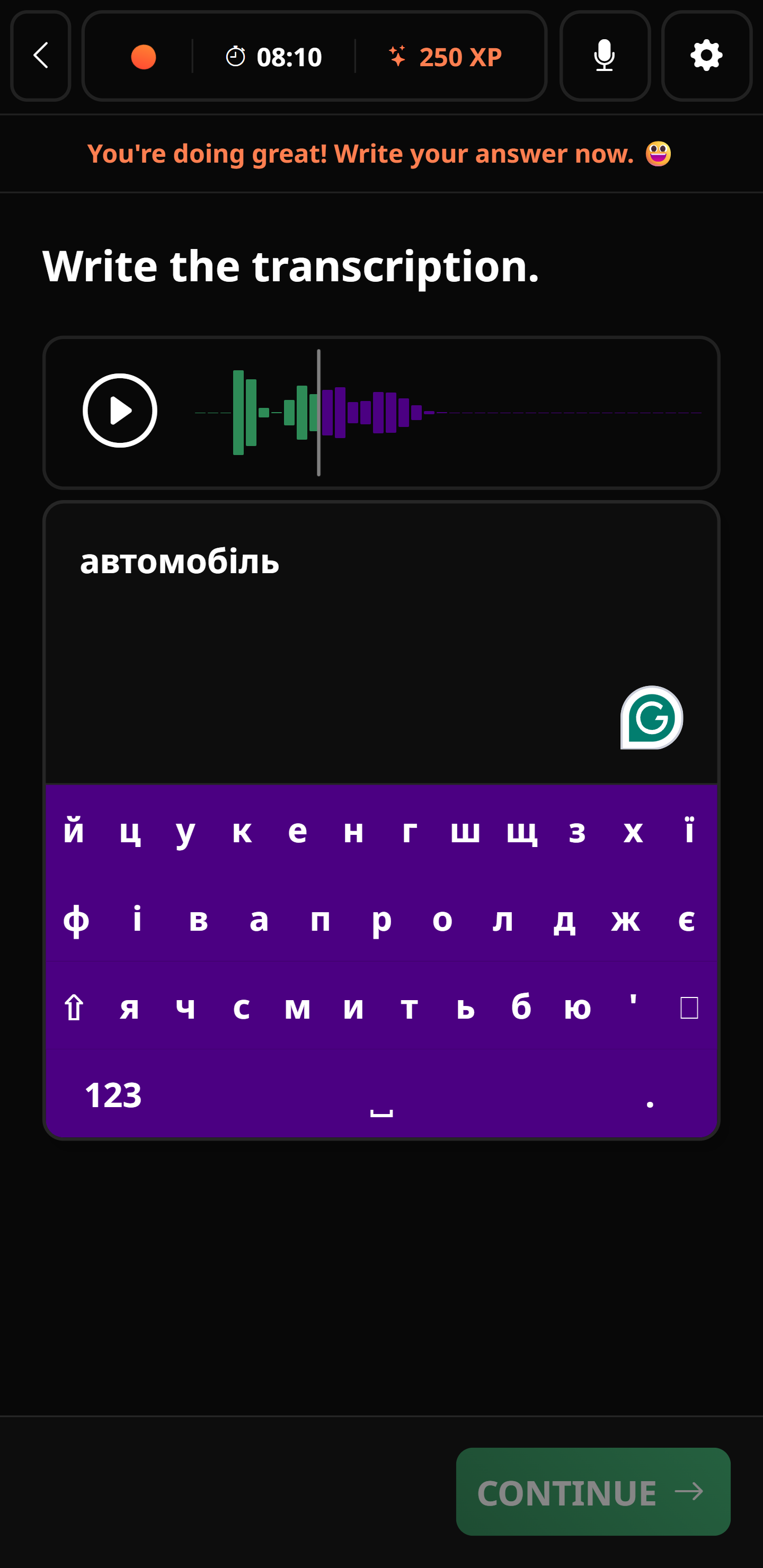
Univext's AI tutor Umi speaks Brazilian Portuguese natively and adapts to your level in real time. Unlike apps that make you tap colored bubbles, Umi has actual voice conversations with you — in PT-BR — about real topics: ordering food in São Paulo, negotiating an Airbnb in Rio, or just chatting about your day.
What makes it work:
- Real voice conversations — not scripted dialogues. Umi listens, responds, and corrects your pronunciation as you go.
- Brazilian dialect by default — every lesson uses São Paulo / Rio Portuguese. The vocabulary, the rhythm, the slang.
- Adaptive difficulty — Umi notices when você trips you up and slows down. It notices when you're cruising and pushes harder.
- Unlimited speaking time during your trial — most apps give you 5 minutes. Umi gives you 30 minutes a day for 14 days, free.
Important
Try a free Brazilian Portuguese lesson with Umi — 14 days free, no commitment. Start your trial →
Where it's weakest: No flashy gamification. If you want streaks and confetti, you'll be disappointed. If you want to speak Portuguese to a Brazilian by the end of the month, this is the one.
Pricing: 14-day free trial (30 min/day), then quarterly subscription.




Join more than 100,000 students learning on Univext
🥈 2. Pimsleur — Best for Pronunciation Drills
Pimsleur has been doing audio-based language teaching since the 1960s, and their Brazilian Portuguese course is genuinely strong. The 30-minute audio lessons drill pronunciation with native speakers and force you to speak out loud — even if you're alone in your car.
Pros:
- Excellent Brazilian pronunciation modeling
- Forces verbal output (no clicking through silently)
- Works hands-free during commutes
Cons:
- Audio only — no reading practice, no writing
- Repetitive structure gets tedious by lesson 20
- Expensive monthly subscription
- No real conversation — you respond to prompts, but nothing responds back
Verdict: Great supplement for pronunciation. Not enough on its own.
🥉 3. Babbel — Best for Grammar Foundations
Babbel actually offers a Brazilian Portuguese-specific course (not just "Portuguese"), which puts it ahead of half the market. The grammar explanations are clear, the lessons are bite-sized, and the spaced-repetition vocabulary review actually works.
Pros:
- Brazilian dialect throughout
- Solid grammar progression
- Good for absolute beginners who want structure
Cons:
- Almost no speaking practice — you'll learn about Portuguese without ever speaking it
- Voice recognition is forgiving to the point of being useless
- Lessons feel like worksheets
Verdict: Good for the first month. You'll plateau fast.
Become bilingual in 30 days with Univext!
Start a lesson with our teacher for free and become bilingual like our 100,000 students!
🖼️ 4. Rosetta Stone — Best for Visual Learners
Rosetta Stone's image-based method has its fans. You match Portuguese words to pictures, never seeing English. It feels immersive at first.
Pros:
- Pure-immersion approach
- Polished interface
- Decent vocabulary acquisition for nouns
Cons:
- The Portuguese course doesn't fully commit to Brazilian dialect
- Frustrating for grammar — you're left guessing rules
- Speaking exercises are scripted and repetitive
- You can match a picture of a horse to cavalo without knowing how to use it in a sentence
Verdict: Decent vocab builder. Won't get you speaking.
🦉 5. Duolingo — Most Popular, Least Effective
Duolingo's Portuguese course is its most-used Portuguese resource by far — and also the most criticized. The gamification works (people stick around), but the actual learning outcomes for Brazilian Portuguese are weak.
Pros:
- Free tier exists
- Streaks and gamification keep you opening the app
- Massive community
Cons:
- Mixes Brazilian and European Portuguese inconsistently
- Almost no real speaking practice — you tap, you don't talk
- Sentences you'll never use in real life ("the bear drinks milk")
- Feels like a game, not a class
Notes
We dug into this more here: Why Duolingo Doesn't Teach You to Actually Speak
Verdict: Fun. Not a serious tool for Brazilian Portuguese.
Join more than 100,000 students learning on Univext
🔍 Which Apps Actually Teach Brazilian (Not European) Portuguese
This is the single question most "best Portuguese app" lists skip. Here is how the market actually splits:
Notes
Rule of thumb: if the app's course is simply called "Portuguese" with no country flag or dialect setting, assume it will drift between dialects and correct nothing when you mix them.
Become bilingual in 30 days with Univext!
Start a lesson with our teacher for free and become bilingual like our 100,000 students!
💻 Best Brazilian Portuguese Learning Software (Desktop & Web)
Not everyone wants to learn on a phone. If you study at a desk — with a keyboard, a second monitor, and your notes open — you want software, not a tapping game. Desktop and browser-based learning changes what is possible: longer sessions, real typing practice with Portuguese accents, side-by-side reading, and headset-quality audio for pronunciation work.
Why desktop matters for Brazilian Portuguese specifically: nasal vowels and the Brazilian r need a decent microphone and a session long enough to actually correct you. A 3-minute phone lesson on a commute cannot do pronunciation work. A 30-minute browser session with a headset can — Umi listens, flags the vowel you flattened, and makes you say it again.
The practical desktop setup we recommend:
- Univext in a browser tab for daily speaking (headset on, 20-30 minutes)
- Anki on the desktop for vocabulary you keep forgetting (free)
- A Brazilian YouTube channel or podcast on a second monitor for passive listening
Important
Umi runs entirely in your browser — nothing to install, no app store. Start your 14-day free trial →
🆓 How to Learn Brazilian Portuguese Free (What Actually Works)
You can get genuinely far without paying anything. Here is what is free, what it is good for, and where each free option stops working.
The honest free stack: Anki for vocabulary + YouTube for listening + a language exchange partner for practice. It works, and it is slow — mostly because nobody corrects your pronunciation, so mistakes calcify for months before a native speaker finally tells you.
Where free breaks down: speaking. Every genuinely free option is either input-only (video, podcasts) or unstructured (exchange apps where your partner is also a beginner). The one thing that needs immediate correction — your mouth — is the one thing free tools cannot give you.
Notes
If your budget is strictly zero: start with Anki plus Speaking Brazilian on YouTube, and use the Univext free trial for the two weeks where pronunciation feedback matters most — the very beginning, when habits form.
🎯 How to Pick the Right App for You
Match your goal to the app:
If your goal is the first one — actually speaking the language — the only app that gives you unlimited voice practice with a tutor that responds in Brazilian Portuguese is Univext.
Become bilingual in 30 days with Univext!
Start a lesson with our teacher for free and become bilingual like our 100,000 students!
🚀 Getting Started with Brazilian Portuguese
The hardest part of learning a language isn't grammar or vocabulary — it's getting yourself to actually open your mouth and speak it. Apps that don't force you to speak don't work, no matter how addictive they are.
That's why we built Umi the way we did: voice-first, Brazilian Portuguese by default, available 24/7. You don't need to schedule a tutor. You don't need to feel embarrassed. You just talk, and Umi talks back — patiently, in PT-BR, until you sound like you've actually been to Brazil.
Important
Ready to actually speak Brazilian Portuguese? Start your 14-day free trial of Univext → — 30 minutes per day, no credit card surprises, no flashcard games. Just real conversations in Brazilian Portuguese.
🌍 Learning Other Languages?
If Brazilian Portuguese is one of several languages on your list, Univext supports them all with the same Umi-powered approach:
- Best Apps to Learn Spanish for Beginners
- Best Apps to Learn French for Beginners
- Best Apps to Learn Italian for Beginners
- Best Apps to Learn English for Beginners
- Best Apps to Learn German for Beginners
One subscription, every language. The same Umi who teaches you to order pão de queijo in São Paulo will teach you to order croissants in Paris.
❓ FAQ
Is Brazilian Portuguese harder than Spanish? For English speakers, Brazilian Portuguese is rated similarly to Spanish by the FSI — about 600 class hours to reach professional fluency. The pronunciation is slightly trickier (nasal vowels), but the grammar is similar.
Can I learn Brazilian Portuguese for free? You can start free with Duolingo or Univext's 14-day trial. To actually become conversational, you'll need consistent speaking practice — which the free tools don't provide.
How long until I can hold a conversation? With 30 minutes per day of real speaking practice (like Umi provides), most learners hit basic conversational fluency in 3-4 months. Tap-to-learn apps take 2-3x longer.
What is the best free app to learn Brazilian Portuguese? For genuinely zero cost, Anki (free, open-source) for vocabulary plus a Brazilian YouTube channel for listening is the strongest combination. Duolingo's free tier is fine for building a daily habit but mixes dialects and never makes you speak. The gap in every free stack is pronunciation feedback — which is why most learners use a free trial for the first two weeks, when accent habits form.
Is there Brazilian Portuguese learning software for desktop, not just mobile? Yes. Univext, Babbel, Rosetta Stone and Duolingo all run fully in a browser on Windows, macOS and Linux, and Anki has a free native desktop app. For Brazilian Portuguese specifically, desktop is the better environment for pronunciation work: a headset plus a 30-minute session lets an AI tutor actually catch and correct nasal vowels, which a 3-minute phone session cannot.
Do I need a separate Brazilian Portuguese course, or is "Portuguese" enough? If your target is Brazil, insist on a Brazilian course. A generic "Portuguese" course will teach tu falas and autocarro alongside você fala and ônibus without telling you which belongs where, and it will not correct you when you mix them.
Should I learn Brazilian or European Portuguese first? Pick the one that matches your goals. Brazilian Portuguese has more speakers and more media (music, telenovelas, YouTube). European Portuguese is more relevant if you're moving to or doing business in Portugal.
Brazilian Portuguese rewards anyone who puts in the work. Pick an app that actually makes you speak — and start today.