

European Portuguese is one of Europe's most under-taught languages — a rich, melodic tongue spoken by roughly 10 million people in Portugal plus diaspora communities across Europe and Africa. It opens the doors to Lisbon's tile-lined streets, Porto's wine cellars, and one of the EU's most welcoming places to live. But picking the right app to learn it is genuinely hard. Most "language apps" treat European Portuguese as a side dish next to Brazilian Portuguese, throwing both dialects into the same lessons and leaving you sounding like nobody in particular.
We tested every major app on the market specifically for European Portuguese (PT-PT) — the dialect actually spoken in Lisbon, Porto, and Coimbra — and ranked them on what really matters: pronunciation feedback, real conversation practice, and whether you can actually order a bica by the time you finish month one.
Here's what we found.
🇵🇹 Why European Portuguese Deserves Its Own App
Before we get to the rankings, a quick reality check. European Portuguese (PT-PT) and Brazilian Portuguese (PT-BR) are not the same language in practice. They diverge in:
- Pronunciation — closed and reduced vowels in Portugal, open and clear in Brazil. "Telefone" sounds like "tlfon" in Lisbon but clearly "te-le-fo-ni" in Rio. The Portuguese famously "swallow" vowels.
- The "shhh" sound — final and pre-consonant s becomes /ʃ/ in Portugal ("os pais" sounds like "ush paish") but stays /s/ in most of Brazil.
- Grammar — Portuguese keep tu for informal "you" and conjugate it; Brazilians use você almost exclusively. The infinitive is preferred in Portugal (estou a falar); the gerund is normal in Brazil (estou falando).
- Vocabulary — bus is autocarro in Portugal, ônibus in Brazil. Phone is telemóvel vs celular. Train is comboio vs trem. The list goes on.
If you're learning European Portuguese to move to Portugal, get the D7 visa, talk to Portuguese family, or study in Lisbon, you need an app that commits to the European dialect — not one that hedges with mostly-Brazilian content and a single Portuguese voice option.
Notes
If you're still deciding between dialects, read our breakdown: Brazilian vs European Portuguese: What's the Difference?
📊 The Ranking (TL;DR)
Now let's break down each one.
Become bilingual in 30 days with Univext!
Start a lesson with our teacher for free and become bilingual like our 100,000 students!
🥇 1. Univext — Best Overall for European Portuguese
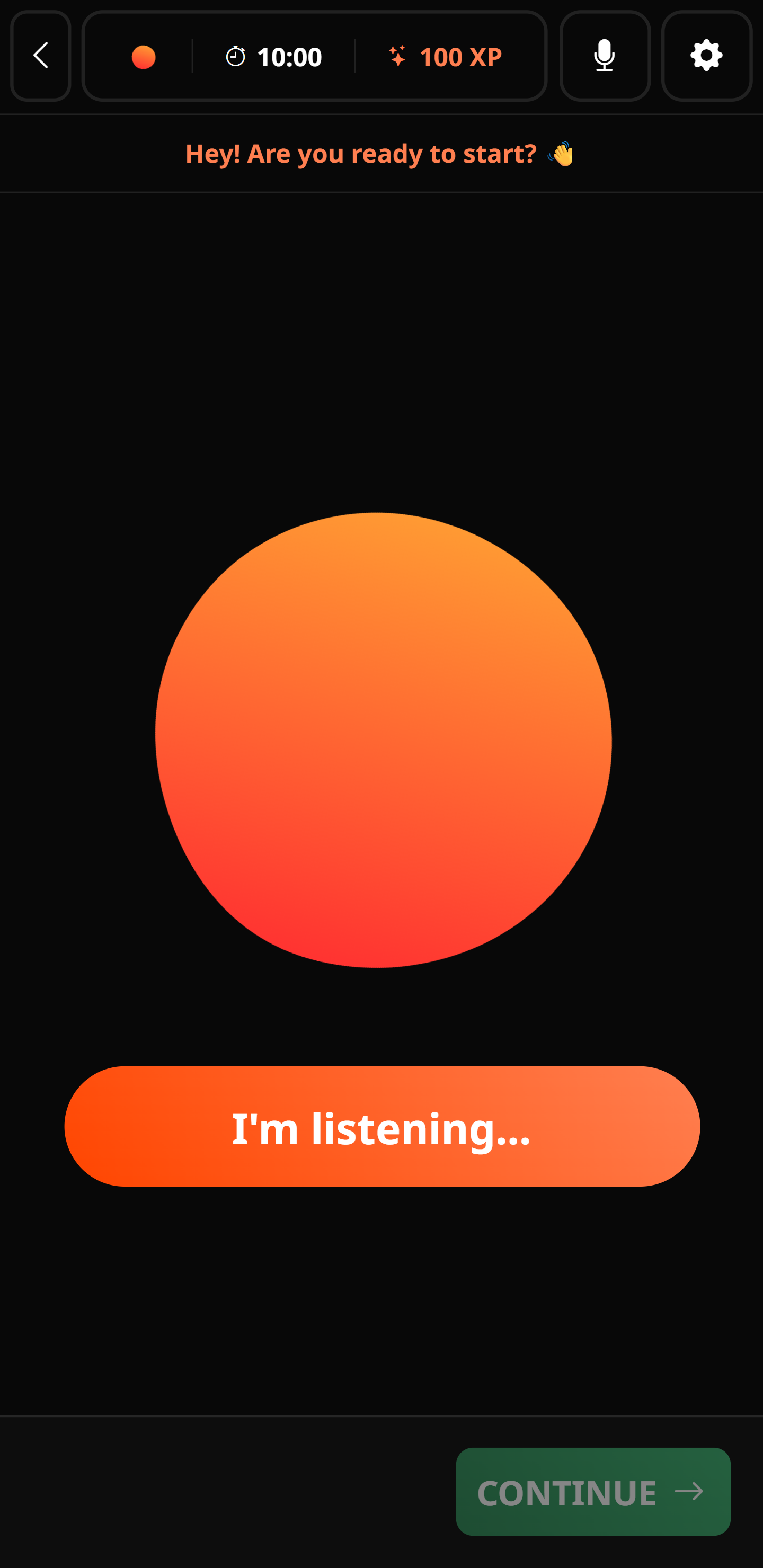
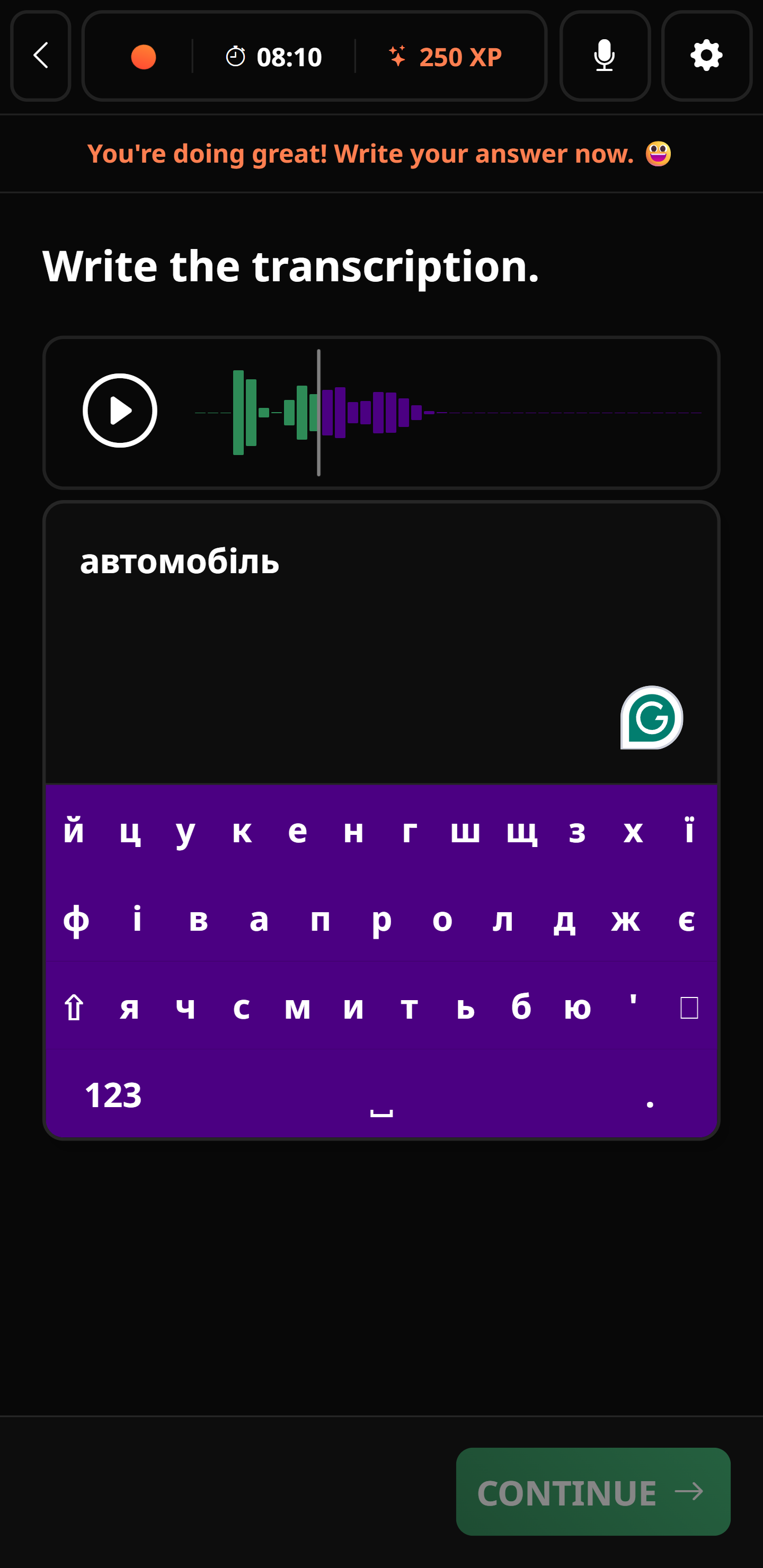
Univext's AI tutor Umi speaks European Portuguese natively and adapts to your level in real time. Unlike apps that make you tap colored bubbles, Umi has actual voice conversations with you — in PT-PT — about real topics: navigating the metro in Lisbon, ordering at a tasca in Porto, or making small talk with your Portuguese neighbours.
What makes it work:
- Real voice conversations — not scripted dialogues. Umi listens, responds, and corrects your pronunciation as you go, including the famously tricky reduced vowels.
- European dialect on demand — you can tell Umi to use European Portuguese and it will commit, including tu-form conjugations, autocarro-style vocabulary, and the Lisbon-Porto rhythm.
- Adaptive difficulty — Umi notices when the shhh sound trips you up and slows down. It notices when you're cruising and pushes harder.
- Unlimited speaking time during your trial — most apps give you 5 minutes. Umi gives you 30 minutes a day for 14 days, free.
Important
Try a free European Portuguese lesson with Umi — 14 days free, no commitment. Start your trial →
Where it's weakest: No flashy gamification. If you want streaks and confetti, you'll be disappointed. If you want to speak Portuguese to a Lisbon native by the end of the month, this is the one.
Pricing: 14-day free trial (30 min/day), then quarterly subscription.





Join more than 100,000 students learning on Univext
🥈 2. Practice Portuguese — Best Niche Pick for Lisbon Dialect
Practice Portuguese is a small, indie platform built specifically for European Portuguese. Made by a team in Lisbon, it commits fully to the Portugal dialect and has a loyal following among expats in Lagos, Cascais, and the Algarve.
Pros:
- Genuinely European — every audio is recorded by Portuguese natives
- Useful "Shorties" — 5-minute audio dialogues at real conversational speed
- Smart Review system spaces vocabulary nicely
- Great pronunciation guides explaining vowel reduction
Cons:
- No real conversation practice — you listen, you read, you don't speak back to anyone
- Smaller content library than the bigger apps
- Subscription is on the pricier side
- Limited grammar drills compared to Babbel
Verdict: Excellent passive immersion for European Portuguese. Pair it with something that forces you to actually speak.
🥉 3. Pimsleur — Best for Pronunciation Drills
Pimsleur has been doing audio-based language teaching since the 1960s, and they offer a separate European Portuguese course (don't confuse it with their Brazilian course). The 30-minute audio lessons drill pronunciation with Lisbon-area native speakers and force you to speak out loud — even if you're alone in your car.
Pros:
- Excellent European pronunciation modeling
- Forces verbal output (no clicking through silently)
- Works hands-free during commutes
- One of the few mainstream courses that genuinely commits to PT-PT
Cons:
- Audio only — no reading practice, no writing
- Repetitive structure gets tedious by lesson 20
- Expensive monthly subscription
- No real conversation — you respond to prompts, but nothing responds back
Verdict: Great supplement for pronunciation. Not enough on its own.
Become bilingual in 30 days with Univext!
Start a lesson with our teacher for free and become bilingual like our 100,000 students!
📚 4. Babbel — Best for Grammar Foundations
Babbel offers a Portuguese course, but it's primarily Brazilian Portuguese with light European notes thrown in. The grammar explanations are clear, the lessons are bite-sized, and the spaced-repetition vocabulary review actually works — but you'll learn Brazilian forms and have to translate them in your head.
Pros:
- Solid grammar progression
- Good for absolute beginners who want structure
- Decent vocabulary spaced repetition
Cons:
- The "Portuguese" course leans Brazilian — you'll miss tu conjugation patterns
- Almost no speaking practice — you'll learn about Portuguese without ever speaking it
- Voice recognition is forgiving to the point of being useless
- Lessons feel like worksheets
Verdict: Workable for grammar foundations, but plan to relearn vocabulary if you're heading to Portugal.
🦉 5. Duolingo — Most Popular, Worst Fit for European Portuguese
Duolingo's Portuguese course is Brazilian only. There is no European Portuguese course on Duolingo at the time of writing. If you're committed to PT-PT, this is the worst major app for you, no matter how many streaks the green owl wants.
Pros:
- Free tier exists
- Streaks and gamification keep you opening the app
- Massive community
Cons:
- 100% Brazilian Portuguese — wrong dialect for Portugal
- Almost no real speaking practice — you tap, you don't talk
- Sentences you'll never use in real life ("the bear drinks milk")
- You'll arrive in Lisbon sounding Brazilian and have to unlearn vocabulary
Notes
We dug into this more here: Why Duolingo Doesn't Teach You to Actually Speak
Verdict: Skip it for European Portuguese. If you must use Duolingo, treat it as Brazilian-only and use a different tool for PT-PT.
Join more than 100,000 students learning on Univext
🎯 How to Pick the Right App for You
Match your goal to the app:
If your goal is the first one — actually speaking the language with people in Portugal — the only app that gives you unlimited voice practice with a tutor that responds in European Portuguese is Univext.
Still deciding? If what you want is something that talks back instead of another set of drills, see the AI tutors we tested for European Portuguese.
Become bilingual in 30 days with Univext!
Start a lesson with our teacher for free and become bilingual like our 100,000 students!
🍷 Getting Started with European Portuguese
The hardest part of learning a language isn't grammar or vocabulary — it's getting yourself to actually open your mouth and speak it. Apps that don't force you to speak don't work, no matter how addictive they are. And for European Portuguese specifically, you also have to retrain your ear to handle the famous vowel reduction that makes Portugal Portuguese sound so different from Brazil's.
That's why we built Umi the way we did: voice-first, available 24/7, and capable of switching to European Portuguese on command. You don't need to schedule a tutor. You don't need to feel embarrassed by your tu-form mistakes. You just talk, and Umi talks back — patiently, in PT-PT, until you sound like you've actually been to Lisbon.
Important
Ready to actually speak European Portuguese? Start your 14-day free trial of Univext → — 30 minutes per day, no credit card surprises, no flashcard games. Just real conversations in European Portuguese.
🌍 Learning Other Languages?
If European Portuguese is one of several languages on your list, Univext supports them all with the same Umi-powered approach:
- Best Apps to Learn Brazilian Portuguese in 2026
- Best Apps to Learn Spanish for Beginners
- Best Apps to Learn French for Beginners
- Best Apps to Learn Italian for Beginners
- Best Apps to Learn English for Beginners
- Best Apps to Learn German for Beginners
One subscription, every language. The same Umi who teaches you to order bacalhau à brás in Lisbon will teach you to order croissants in Paris.
❓ FAQ
Is European Portuguese harder than Brazilian Portuguese? For most English speakers, European Portuguese is initially harder to listen to because of the vowel reduction — Portuguese natives "swallow" unstressed vowels in ways Brazilians don't. Speaking and grammar are similar in difficulty; the FSI rates Portuguese as a Category I language at roughly 600 class hours to professional fluency.
Will my European Portuguese be understood in Brazil? Yes, easily. Brazilians understand European Portuguese without much effort, even if they find the accent amusing. The opposite is also true. Both dialects are mutually intelligible; the differences are mostly accent, a few hundred vocabulary items, and the tu/você preference.
Can I learn European Portuguese for free? You can start free with Univext's 14-day trial or Practice Portuguese's free tier. To actually become conversational, you'll need consistent speaking practice — which the free tools don't fully provide.
How long until I can hold a conversation in Portugal? With 30 minutes per day of real speaking practice (like Umi provides), most learners hit basic conversational fluency in 3-4 months. Tap-to-learn apps take 2-3x longer because they don't train the ear for vowel reduction.
Should I learn European or Brazilian Portuguese first? Pick the one that matches your goals. Going to Portugal, getting a D7 visa, or studying at a Portuguese university? Learn European Portuguese. Going to Brazil, working with Brazilian colleagues, or just love the music? Learn Brazilian. Switching dialects later is much easier than learning the wrong one first and having to relearn vocabulary.
European Portuguese rewards anyone who puts in the work. Pick an app that actually makes you speak — and start today.