
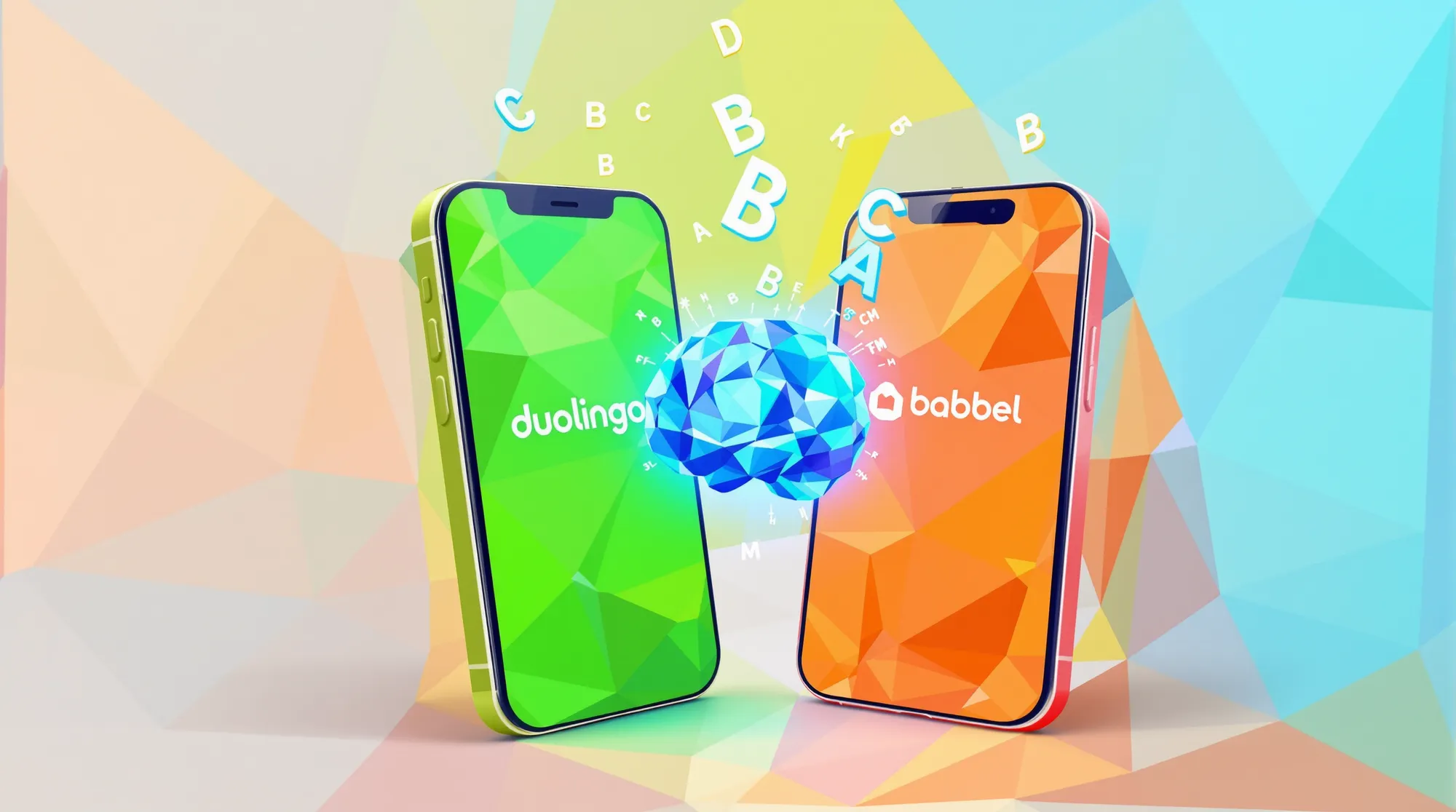
🔍 Duolingo vs Babbel for English: The Quick Verdict
If you are one of the millions of people worldwide trying to master English, you have undoubtedly faced the same dilemma: should you go with the green owl or the orange logo? Choosing between Duolingo and Babbel is the most common starting point for learners in countries like Brazil, Germany, Turkey, and Japan. English is the global language of business and travel, making the stakes higher than learning a hobby language.
The quick verdict for 2026 is simple: Duolingo is the superior choice if you want a casual, free experience to build a basic vocabulary habit. Babbel is significantly better if you require structured grammar explanations and professional English for the workplace.
However, there is a major "but" that most reviews ignore. Neither app teaches you how to have a real conversation.
Duolingo relies on repetitive translation drills. Babbel uses pre-scripted dialogues where you fill in the blanks. While both are helpful for beginners, they leave a massive gap when it comes to "thinking on your feet" in English. This is where Univext enters the 2026 landscape. Unlike the traditional apps, Univext uses an AI tutor named Umi to facilitate open-ended conversations, filling the practical gap that Duolingo and Babbel leave wide open. If your goal is to speak English at a meeting or during an international trip, you need a tool that focuses on output, not just recognition.
📊 Feature-by-Feature Comparison
Become bilingual in 30 days with Univext!
Start a lesson with our teacher for free and become bilingual like our 100,000 students!
🟢 What Duolingo Does Well for English
The English course is Duolingo’s "flagship." Because English is the most requested language globally, the developers have poured the most resources into it. For a learner in Poland or Vietnam, the English tree is much deeper and more sophisticated than their courses for other languages.
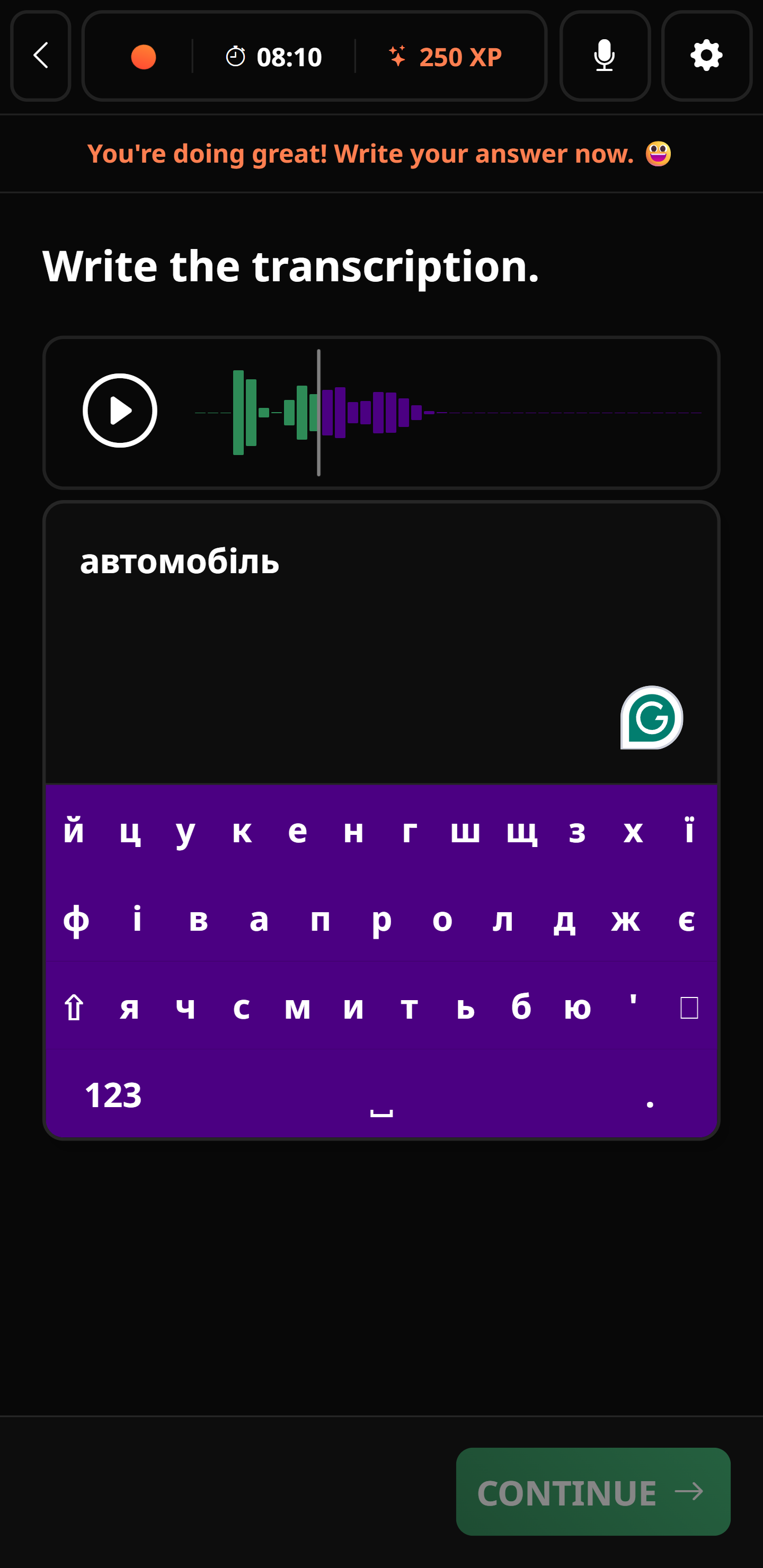
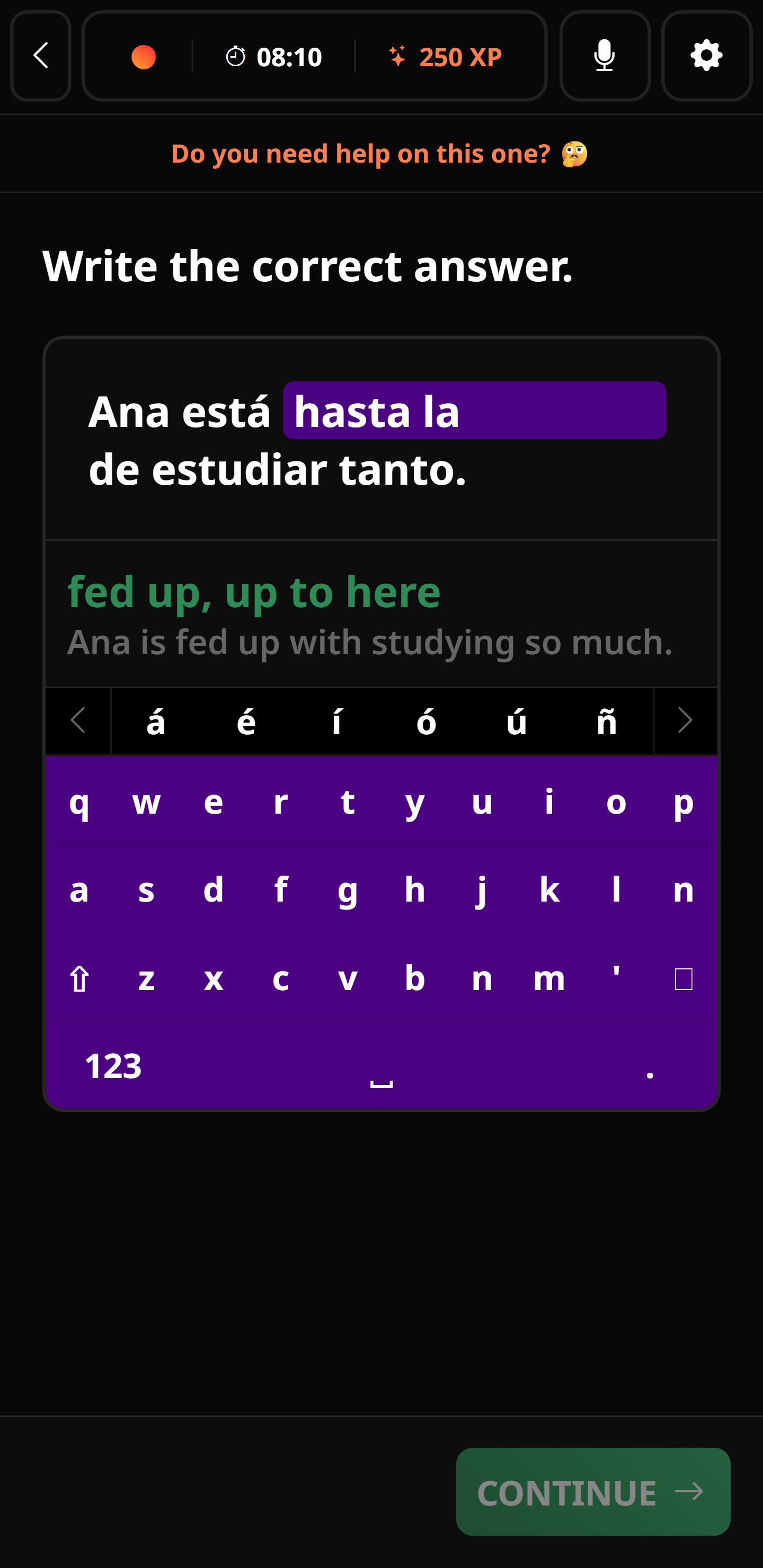
Duolingo’s primary strength is its gamification. The streaks, leagues, and XP systems are designed to keep you coming back every day. For English learners who struggle with motivation, this is a powerful psychological tool. The lessons are bite-sized, making it easy to practice "phrasal verbs" like get up or put off while waiting for the bus.
In 2026, the English course includes high-quality Stories, which help with reading comprehension and listening. The audio quality is generally excellent, and the podcast integrations provide much-needed exposure to different accents. You will learn a lot of vocabulary and become very fast at translating sentences in your head.
However, Duolingo has a clear ceiling. The exercises are heavily focused on "recognition." You see a pile of words and reorganize them into a sentence. This is fundamentally different from the mental process of speaking English in the real world. You might know how to write "If I were you, I would go," but Duolingo rarely forces you to generate that "second conditional" structure from scratch in a high-pressure situation. The grammar explanations are also thin, often leaving you to guess why a certain sentence was marked wrong.
Important
If your goal is to actually speak English — not just recognize words — Duolingo alone won't get you there. Read our full analysis: Why Duolingo Doesn't Teach You to Actually Speak.





Join more than 100,000 students learning on Univext
🔵 What Babbel Does Well for English
Babbel is the "grown-up" alternative. While Duolingo feels like a game, Babbel feels like a digital textbook. Every lesson in the English course is designed by linguists with a specific pedagogical goal.
Babbel excels at real-world situations. Instead of translating "The bear wears a hat," Babbel focuses on "Business English" and "English for Travel." You will learn how to handle a job interview, how to write a formal email using linking words like furthermore or nevertheless, and how to navigate a social situation in London or New York.
The Grammar Review Manager is a standout feature. English grammar is notoriously difficult due to irregular past tenses (like went, bought, and thought) and complex tenses. Babbel explains these rules clearly and provides targeted practice to ensure you actually understand the "why" behind the language. Their speech recognition is also slightly more sophisticated than Duolingo’s, helping you fine-tune your pronunciation of difficult English vowels.
The downside to Babbel is that it remains very pre-scripted. Every user follows the same path. There is no AI personalization that adapts the content to your specific hobbies or job. Most importantly, Babbel does not offer real conversation. You are essentially interacting with a recording. Once you finish the levels, you are often left with "passive knowledge"—you understand English when you hear it, but you still freeze when a native speaker asks you a follow-up question.
❌ The Problem Both Share: No Real English Conversation Practice
The dirty secret of the language app industry is that neither Duolingo nor Babbel teaches you how to speak.
They both offer "speaking exercises," but these are actually just pronunciation drills. The app shows you a sentence, and you read it aloud. This is a vital first step, but it is not a conversation. Real English conversation requires a completely different set of skills:
- Natural Speed: Understanding English spoken at 150 words per minute, not the slowed-down audio of an app.
- On-the-spot Formulation: Building a sentence from your own thoughts, not choosing from a word bank.
- Handling Unpredictability: Responding to a question you didn't expect.
- Recovery: Learning how to keep talking even after you make a mistake with an article (a vs the) or a preposition.
For English learners, this gap is critical. Most people learn English to communicate internationally. Whether you are a developer in India or a designer in Italy, you need to be able to talk to people. If you spend three years on Duolingo without ever practicing an open-ended dialogue, you will likely fail your first real-world English interaction.
To see a more detailed breakdown of these traditional methods, see our full comparison of Duolingo and Babbel.
Become bilingual in 30 days with Univext!
Start a lesson with our teacher for free and become bilingual like our 100,000 students!
🚀 Univext: The AI Alternative That Actually Teaches You to Speak English
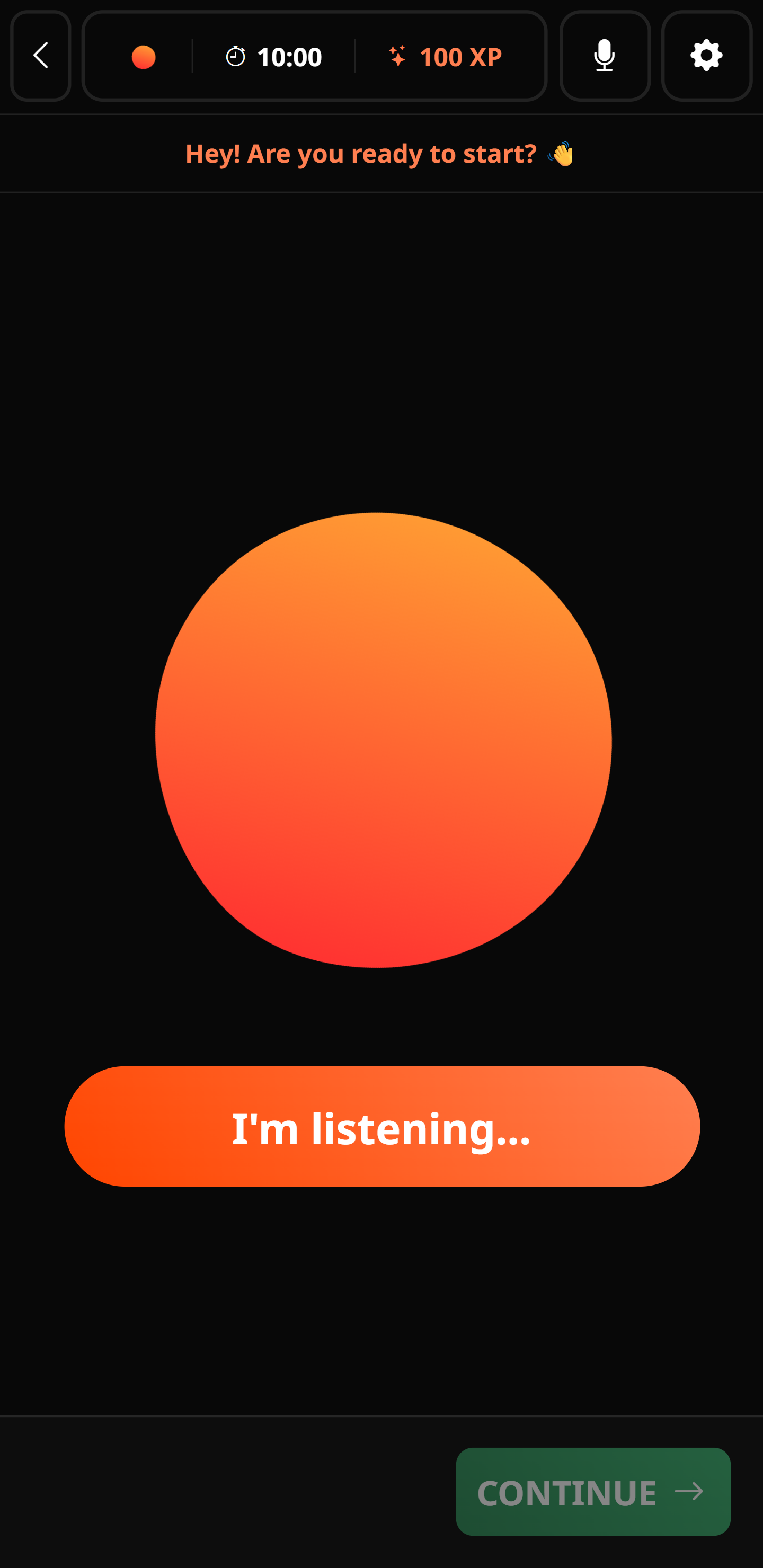
Univext was built specifically to solve the "I can read it but I can't speak it" problem. Instead of static lessons, Univext uses Umi, a sophisticated AI tutor that engages you in actual, real-time English conversations.
Here is how the process works:
- Choose Your Focus: You select English and your current level (from A1 to C1).
- Contextual Dialogue: You choose a scenario—perhaps a business meeting about a project deadline or a casual chat at a coffee shop.
- Umi Starts the Talk: Umi initiates the conversation. You aren't reading a script; you are responding to what the AI says.
- Natural Adaptation: If you make a mistake with a phrasal verb or use the wrong tense, Umi doesn't just give you a red "X". It corrects you in context, explains the rule, and keeps the conversation moving.
The key differentiator is adaptive difficulty. If the conversation is too easy, Umi will use more complex vocabulary and faster speech. If you are struggling, it simplifies its language. This mimics the experience of talking to a patient human tutor but without the social anxiety or the $30/hour price tag.
Univext currently supports 12 languages, allowing you to bridge the gap in:
Univext offers a 14-day free trial with 30 minutes of speaking time per day. This is enough time to see a measurable improvement in your speaking confidence.
Important
Try Univext free for 14 days — start your first AI English conversation with Umi and see what real speaking practice feels like.
📈 When to Use Each App for English
Many successful learners in 2026 use a combined approach. They might use Duolingo for 5 minutes in the morning to keep their brain in "English mode," and then use Univext for 20 minutes in the evening to actually practice speaking. For more options, check our list of the Best Apps to Learn English in 2026.
Join more than 100,000 students learning on Univext
💰 Pricing Comparison (2026)
Notes
Prices are estimates for 2026 and may vary significantly by country. Univext uses purchasing-power-adjusted pricing to ensure the AI tutor remains affordable for learners in developing economies.
Become bilingual in 30 days with Univext!
Start a lesson with our teacher for free and become bilingual like our 100,000 students!
❓ Frequently Asked Questions
1. Is Babbel better than Duolingo for English specifically?
Yes, if you are an adult learner. Babbel’s English course is focused on professional and practical scenarios, whereas Duolingo can feel a bit childish or repetitive. However, Duolingo is completely free, which makes it more accessible for many.
2. Can I become fluent in English with Duolingo alone?
No. You can reach a "high-beginner" or "low-intermediate" level of reading and listening. However, because Duolingo doesn't require you to produce original thoughts or handle live conversations, your speaking fluency will remain very low.
3. What's the best app for learning English for work/business?
Univext is the most effective because you can tell the AI tutor, "I want to practice a salary negotiation" or "Let's practice a stand-up meeting," and the AI will roleplay that exact scenario with you. Babbel is a good second choice for learning business terminology.
4. Is Univext better than Duolingo for English?
They serve different purposes. Duolingo is a game to help you remember words. Univext is a training tool to help you use those words in conversation. Most learners find that they need Univext once they get tired of just clicking buttons and want to actually talk.
5. Can I use all three apps together?
Absolutely. Use Duolingo for fun, Babbel for deep grammar study, and Univext for your daily speaking practice. This "triple threat" approach is the fastest way to reach English fluency in 2026.
6. How long does it take to learn English?
For a native speaker of a European language, reaching B2 (Upper Intermediate) usually takes 600-800 hours. Using an AI tutor like Univext can speed this up by forcing you into "active recall" much sooner than traditional methods.
✅ The Bottom Line
In the battle of Duolingo vs Babbel for English, there is no single winner—only the tool that fits your current needs.
- Choose Duolingo if you want a free, fun way to learn basic English vocabulary and keep your brain active.
- Choose Babbel if you are willing to pay for a structured, professional curriculum that explains grammar clearly.
- Choose Univext if your priority is speaking.
Most English learners fail because they spend years "studying" the language but never "using" it. Don't fall into the trap of a 500-day Duolingo streak without being able to order a coffee in London. Balance your study with real AI conversation practice.
Start your free 14-day trial on Univext today and move beyond the word games.