
Spanish is more than just a language; it is a global gateway. With over 500 million native speakers spanning across 20 countries, mastering Spanish opens doors that few other skills can match. Whether you are planning a deep-dive journey through the Andean highlands, looking to advance your career in international business, navigating immigration pathways, or simply wanting to connect with the rich cultural heritage of the Hispanic world through cinema and literature, Spanish is the key. However, the sheer demand for Spanish fluency has led to a saturated market of learning tools. Most people start their journey with high hopes, only to find themselves three months deep into an app, having memorized the word for "apple" but completely unable to order a coffee in Mexico City or explain a work project to a colleague in Madrid.
In 2026, the technology behind language learning has shifted. We no longer have to rely on static flashcards or repetitive multiple-choice bubbles. For this guide, we tested the most prominent Spanish apps on the market against what actually matters for real-world success: high-quality speaking practice, the ability to handle spontaneous conversation, and nuanced pronunciation feedback. We looked for tools that move you past the "beginner plateau" and into functional fluency.
Here's what we found.
🇪🇸 Why Spanish Apps Need Real Speaking Practice
The biggest pitfall in the Spanish app market is the "illusion of competence." Many popular apps treat Spanish like a puzzle game where you drag and drop words into the correct order. While this helps you recognize Spanish, it does nothing to help you produce it. Speaking a language is a motor skill and a cognitive challenge that requires your brain to retrieve vocabulary and apply grammar rules in real-time under pressure.
If an app doesn't make you open your mouth, it isn't teaching you to speak Spanish; it's teaching you to play a game about Spanish. Real-world Spanish is fast, rhythmic, and full of regional slang. To navigate a conversation in Bogotá or Seville, you need to practice the "output" phase of learning from day one. This means moving beyond "tap-the-right-bubble" interfaces and using tools that simulate real dialogue, provide immediate feedback on your accent, and force you to formulate original thoughts rather than just translating pre-written sentences.
Notes
Wondering why your current daily streak isn't translating to real-world skills? Check out our deep dive: Why Duolingo doesn’t teach you to speak.
📊 The Ranking (TL;DR)
Become bilingual in 30 days with Univext!
Start a lesson with our teacher for free and become bilingual like our 100,000 students!
🥇 1. Univext — Best Overall for Spanish
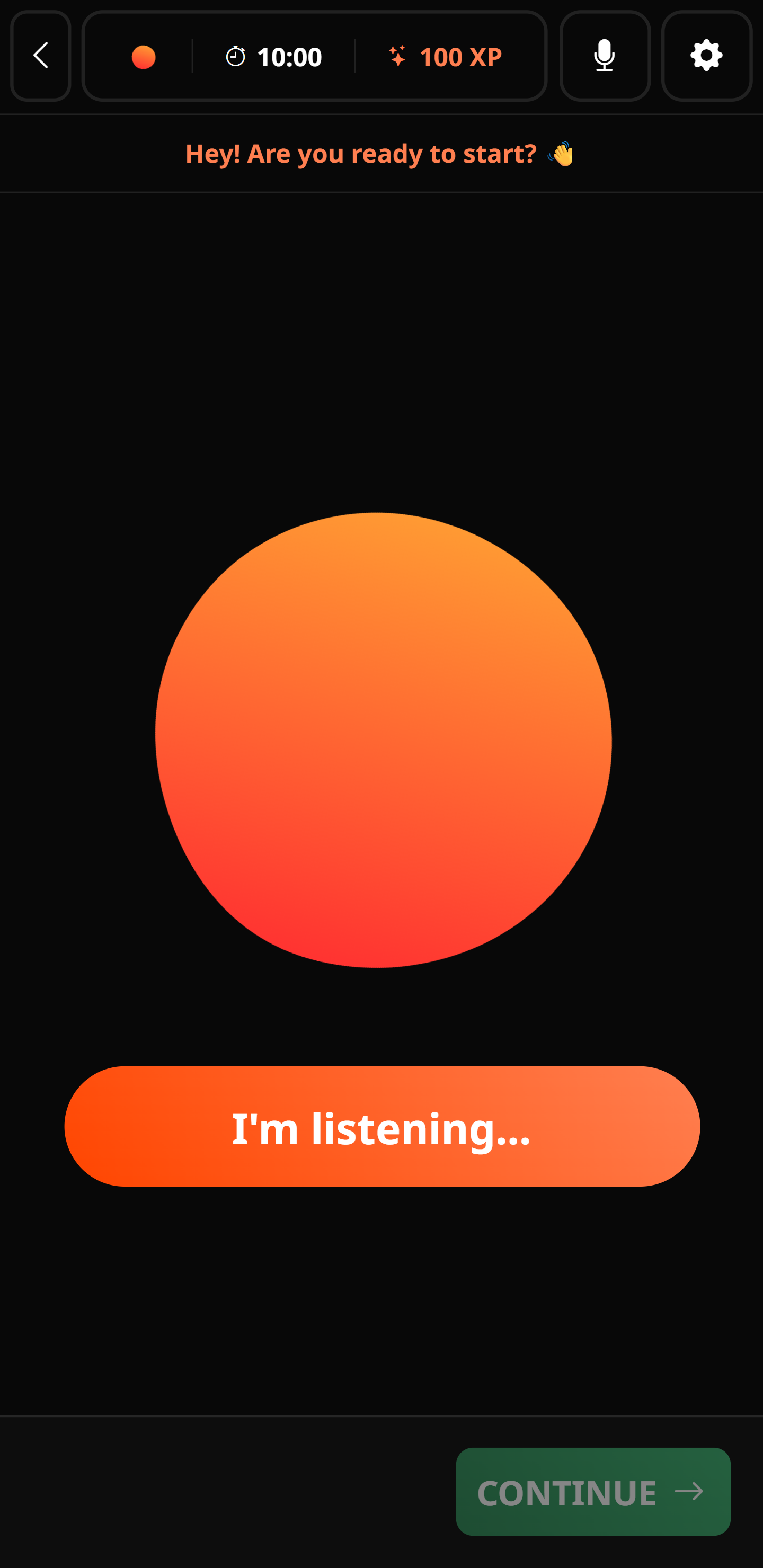
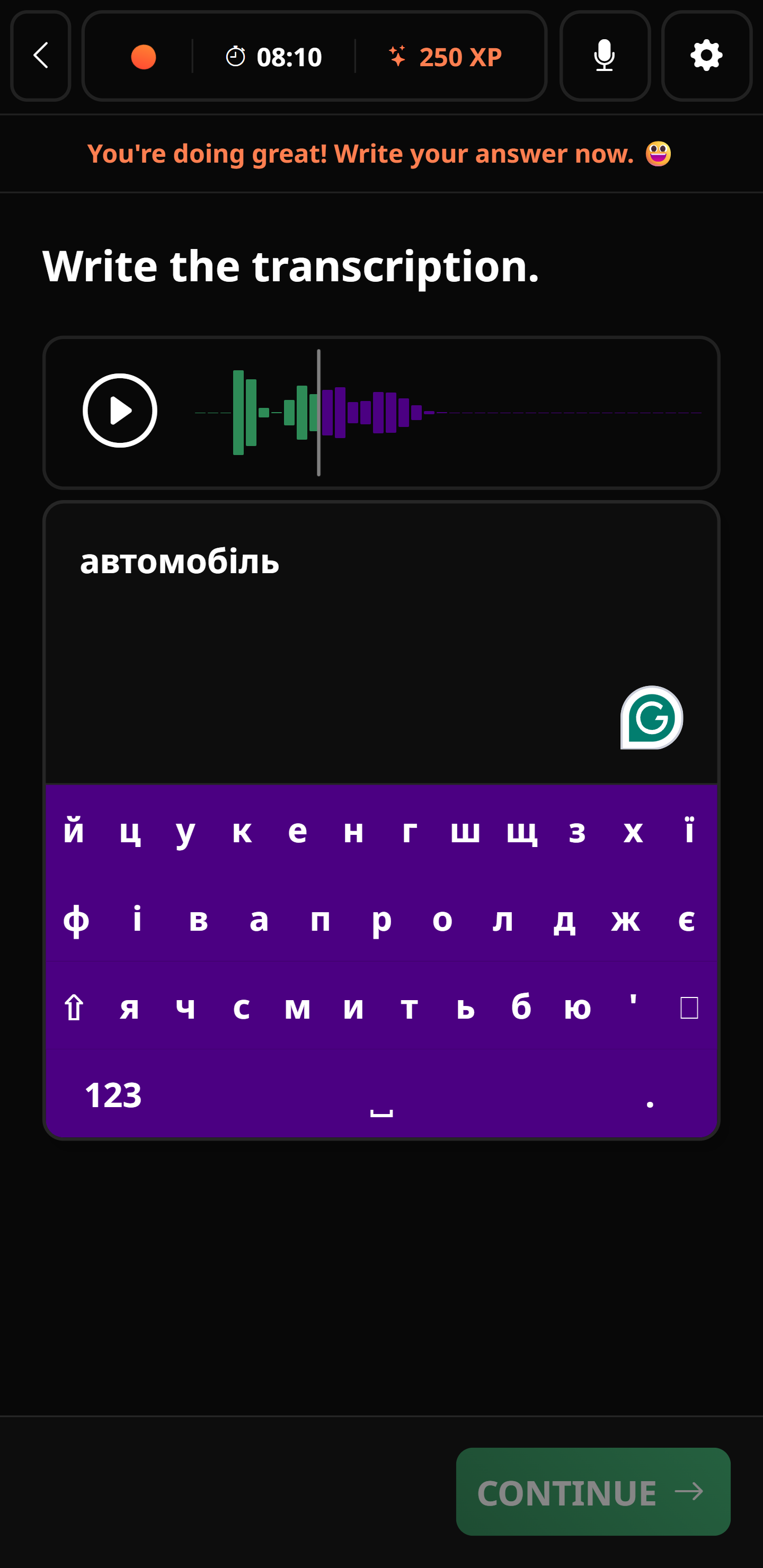
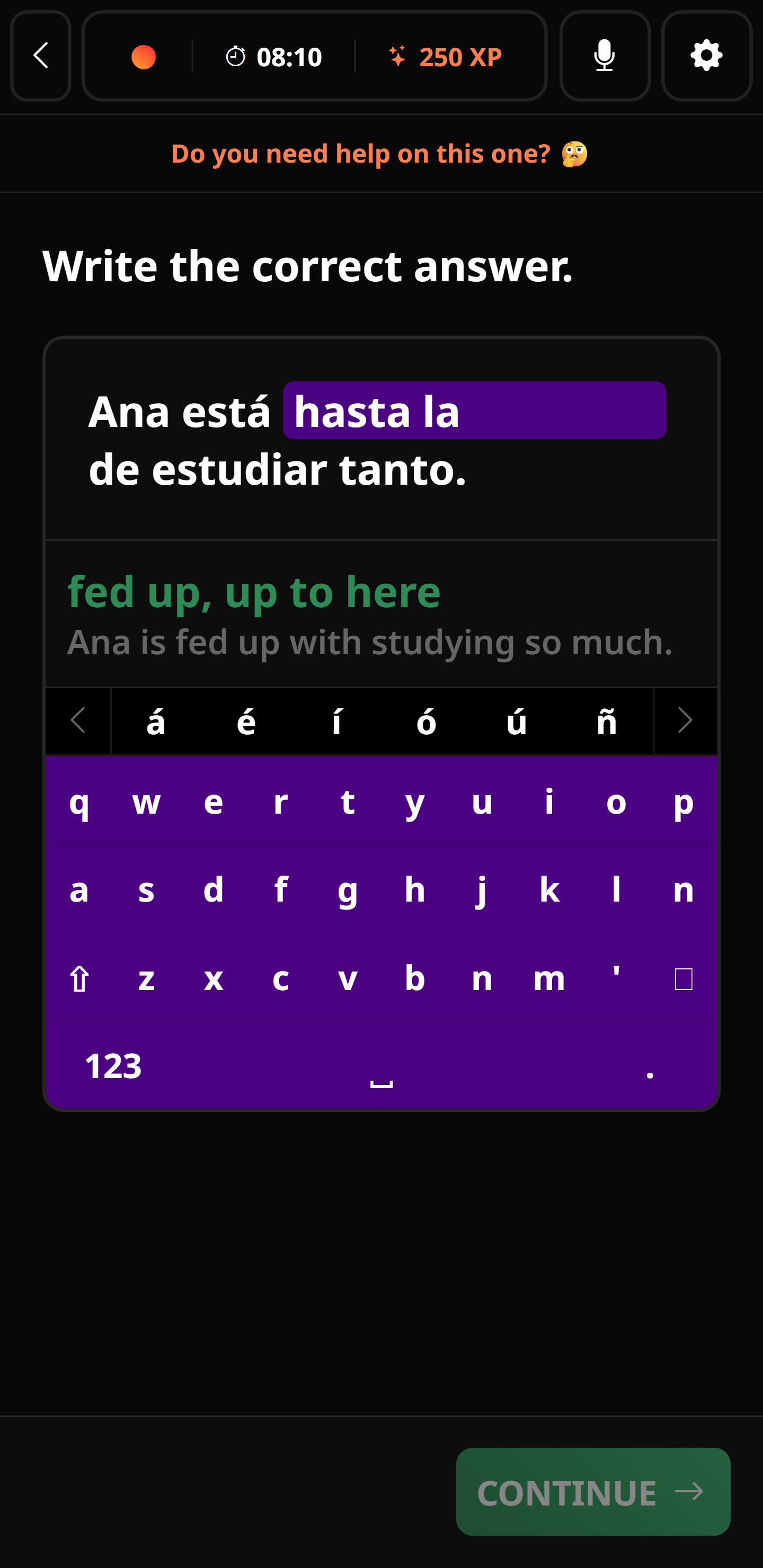
Univext is a modern AI tutoring platform that centers entirely around Umi, your personal AI language teacher. Unlike traditional apps that follow a linear, rigid curriculum, Univext is designed to get you speaking from the very first minute. Umi doesn't just ask you to repeat words; she engages you in dynamic, open-ended conversations that adapt to your specific level and interests. Whether you want to roleplay a business meeting in Mexico City or practice ordering tapas in Madrid, Umi provides a safe, judgment-free environment to make mistakes and improve rapidly.
What makes it work:
- Real voice conversations: You talk to Umi using your natural voice, and she responds with human-like prosody, making the practice feel like a real Zoom call with a tutor.
- Adaptive difficulty: Umi senses when you are struggling and will simplify her vocabulary or offer hints in English, then gradually increases the complexity as you improve.
- Regional flexibility: You can toggle between Latin American and Castilian Spanish on demand, ensuring you learn the specific vocabulary and "voseo" or "vosotros" forms relevant to your goals.
- Unlimited speaking time: During your trial and subscription, there are no "heart" systems or limits on how much you can talk.
Important
Try a free Spanish lesson with Umi — 14 days free, no commitment. Start your trial →
Where it's weakest:
- Univext skips the flashy gamification found in other apps. There are no leaderboards, virtual currencies, or "lingots," which might be a downside for those who need external "hooks" to stay motivated.
Pricing:
- 14-day free trial: Includes 30 minutes of speaking time per day.
- Subscription: After the trial, users move to a quarterly Ultra plan that unlocks full access to all languages and features.




Join more than 100,000 students learning on Univext
🥈 2. Pimsleur — Best for Pronunciation Drills
Pimsleur is a household name in language learning, and for good reason. Its method is almost entirely audio-based, focusing on the "Spaced Repetition System" (SRS) to help you internalize the sounds of Spanish. It is particularly effective for people who spend a lot of time commuting or who want to perfect their accent without looking at a screen.
- Pros: Excellent for developing a "native-like" rhythm; focus on high-frequency phrases; hands-free learning is convenient for busy schedules.
- Cons: Very little reading or writing practice; the formal nature of the conversations can feel a bit "stiff" or outdated for casual travelers.
- Verdict: If your primary goal is to sound good when you speak and you have a long commute, Pimsleur is a fantastic supplemental tool.
🥉 3. Babbel — Best for Grammar Foundations
Babbel sits in the middle ground between a game and a digital textbook. It is highly structured and focuses heavily on the "why" behind the language. For Spanish learners who get frustrated when they don't understand the rules of verb conjugation (like the difference between ser and estar), Babbel provides clear, concise explanations in English.
- Pros: Strong emphasis on grammar and sentence structure; lessons are themed around practical topics like "Shopping" or "Health"; high-quality recordings from native speakers.
- Cons: The speaking practice is limited to repeating phrases into a microphone for basic speech recognition; it doesn't prepare you for spontaneous conversation.
- Verdict: Great for learners who want a traditional classroom feel and a deep understanding of Spanish grammar.
Become bilingual in 30 days with Univext!
Start a lesson with our teacher for free and become bilingual like our 100,000 students!
4. Rosetta Stone — Best for Visual Learners
Rosetta Stone is the pioneer of the "immersion method." It never uses your native language to explain things. Instead, it shows you a series of pictures and asks you to associate them with Spanish words and phrases. In 2026, the app remains a solid choice for those who want to "think" in Spanish from the start.
- Pros: Intuitive interface; great for visual memory; avoids the "translation trap" by teaching through images.
- Cons: It can be incredibly frustrating for complex grammar concepts like the subjunctive mood; it is often slower than other methods because it takes time to "guess" meanings.
- Verdict: A classic choice that works well for visual thinkers, but it may require a lot of patience.
5. Duolingo — Most Popular, Least Effective for Conversation
Duolingo is the world’s most downloaded education app. It excels at keeping users coming back through gamification, streaks, and colorful characters. For Spanish, the course is one of the most developed on the platform, offering a massive amount of vocabulary.
- Pros: Completely free version available; highly addictive; good for learning the names of animals, foods, and basic household objects.
- Cons: The "sentences" are often surreal and useless in real life; there is almost zero focus on actual conversation; the "hearts" system can punish you for making the mistakes necessary for learning.
- Verdict: Fine for a hobbyist who wants to keep their brain active, but it will not make you fluent in Spanish.
Notes
Thinking about relying on the owl? Read this first: Why Duolingo doesn’t teach you to speak.
Join more than 100,000 students learning on Univext
🎯 How to Pick the Right App for You
Become bilingual in 30 days with Univext!
Start a lesson with our teacher for free and become bilingual like our 100,000 students!
🚀 Getting Started with Spanish
Learning Spanish is one of the most rewarding investments you can make in yourself. In 2026, the barrier to entry has never been lower, but the noise has never been louder. Don't fall into the trap of "passive learning"—watching videos or clicking buttons without ever speaking. The fastest path to fluency is through active production. By choosing a tool that prioritizes your voice, you shorten the distance between "studying" Spanish and "living" in Spanish.
Important
Ready to actually speak Spanish? Start your 14-day free trial of Univext → — 30 minutes per day, no credit card surprises, no flashcard games. Just real conversations in Spanish.
🌍 Learning Other Languages?
If you want to apply the same high-intensity speaking practice to other languages, explore our other rankings and guides:
- Best Apps to Learn French for Beginners
- Best Apps to Learn Italian for Beginners
- Best Apps to Learn German for Beginners
- Best Apps to Learn English for Beginners
- Best Apps to Learn Brazilian Portuguese in 2026
- Best Apps to Learn European Portuguese in 2026
- Best Apps to Learn Russian in 2026
One subscription, every language. The same Umi who teaches you to order tapas in Madrid will teach you to order croissants in Paris.
❓ FAQ
Is Latin American or Castilian Spanish easier to learn?
Neither is inherently "easier." Latin American Spanish (specifically the Mexican standard) is often considered very clear and is widely used in media across the Americas. Castilian Spanish uses the "vosotros" form and a distinct "ceceo" (the 'th' sound for 'z' and 'c'), which is essential if you plan to live in Spain. Most apps focus on Latin American Spanish by default, but Univext allows you to choose.
How long until I can hold a conversation in Spanish?
With consistent speaking practice of 30 minutes a day, most learners can hold basic "survival" conversations (ordering food, asking directions) within 4-6 weeks. Functional fluency for business or complex social interactions usually takes 6-12 months of daily practice.
Can I learn Spanish for free?
You can learn vocabulary and basic grammar for free through apps like Duolingo or YouTube. However, to achieve conversation-level fluency, you generally need to invest in a tutor or an AI platform like Univext to get the necessary feedback and practice.
Should I learn Latin American or Castilian Spanish first?
Learn the one spoken in the region you plan to visit most. If you aren't sure, Latin American Spanish is generally more "portable" as it is spoken by a larger number of people across more countries.
Spanish rewards anyone who puts in the work. Pick an app that actually makes you speak — and start today.