

English is the language of opportunity — 1.5 billion speakers worldwide, the dominant language of business, science, the internet, and pop culture. Learning it isn't a vanity project; in most of the world it's a career multiplier. But picking the right app to actually learn it — not just collect Duolingo streaks — is genuinely hard. Most language apps treat English as their flagship product, which means they all promise the moon and most quietly under-deliver on the one thing that matters: getting you to speak.
We tested every major English-learning app on the market in 2026 and ranked them on what really matters: pronunciation feedback, real conversation practice, and whether you'll actually be able to hold a job interview, order coffee in London, or argue politics on Reddit by month three.
Here's what we found.
🌍 Why Most English Apps Don't Get You Speaking
Before we get to the rankings, a quick reality check. Most English learners hit the same wall: they can read decent English, they can pass a multiple-choice grammar quiz, but the moment a native speaker actually talks to them, their mouth stops working. This isn't a knowledge gap. It's a practice gap.
The apps that dominate the market — Duolingo, Babbel, Memrise — are built around silent input: you tap, you swipe, you read. You barely ever produce a full English sentence out loud. The fix isn't "more vocabulary." The fix is forced verbal output — you talk, something corrects you, you talk again. Apps that don't do this won't get you speaking, no matter how many lessons you complete.
That's our number one ranking criterion: does the app force you to speak?
Notes
If you're a complete beginner, also check our companion guide: Best Apps to Learn English for Beginners (2026 Guide)
📊 The Ranking (TL;DR)
Now let's break down each one.
Become bilingual in 30 days with Univext!
Start a lesson with our teacher for free and become bilingual like our 100,000 students!
🥇 1. Univext — Best Overall for Real English Conversation
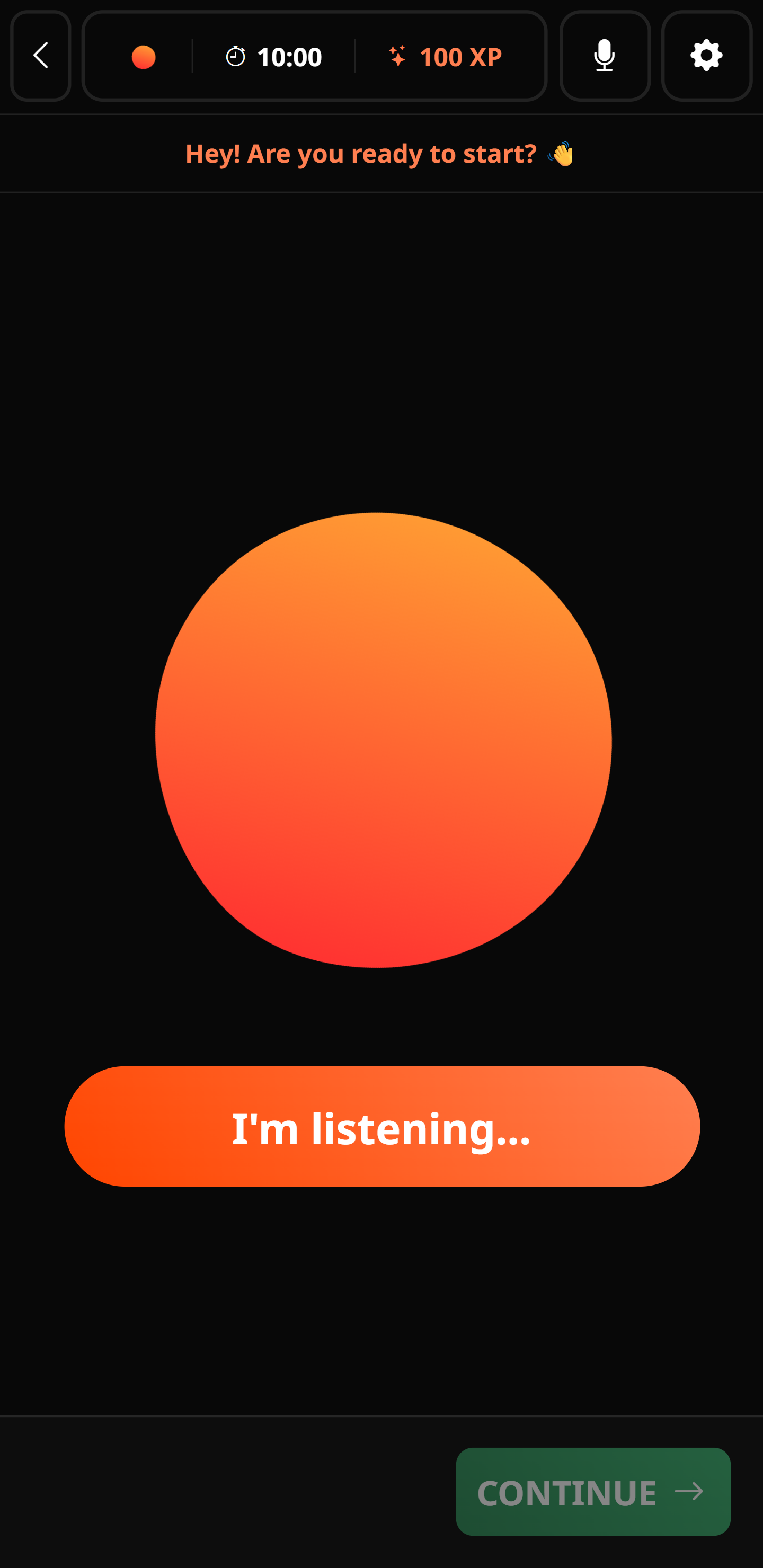
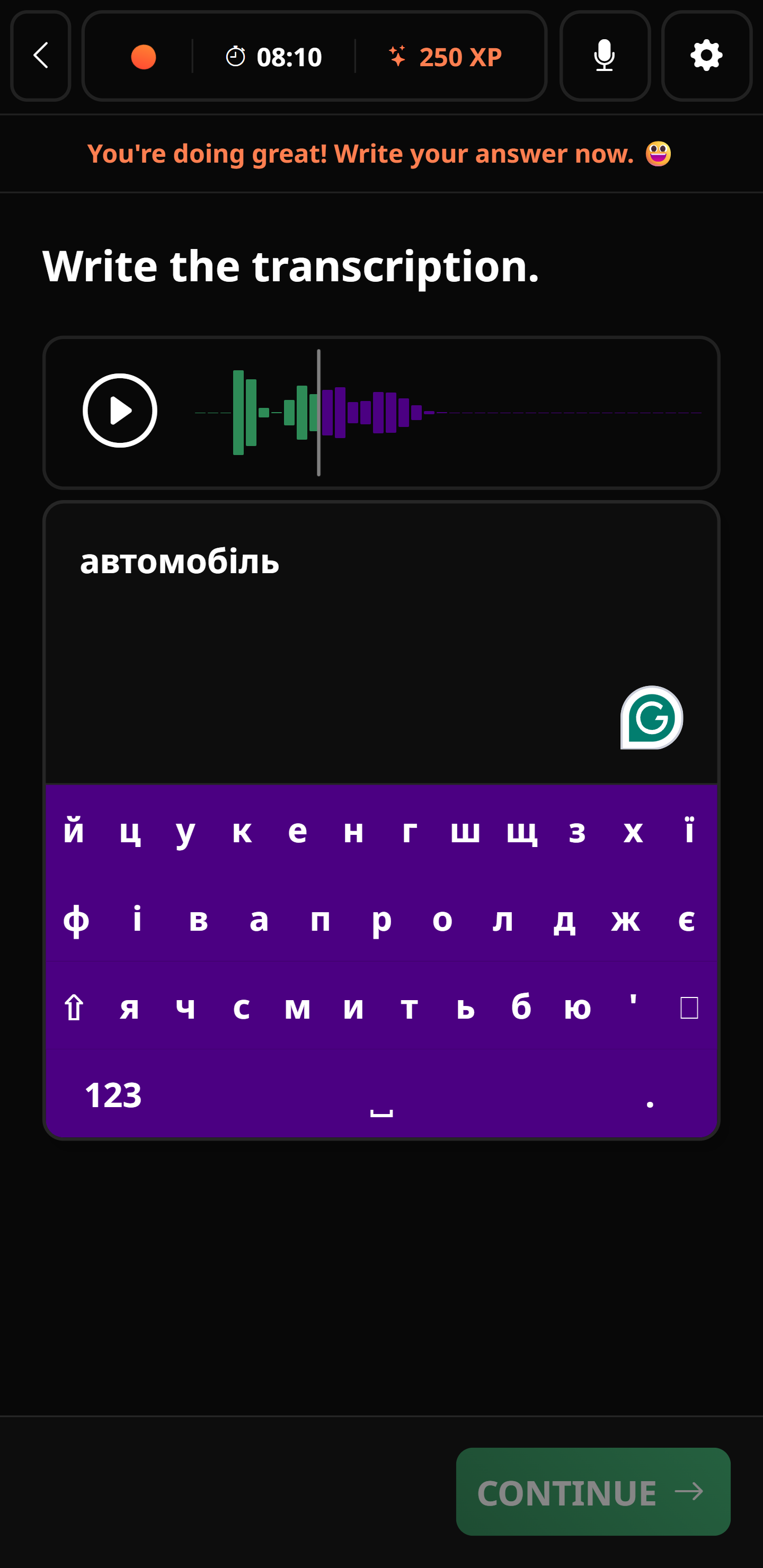
Univext's AI tutor Umi speaks English natively and adapts to your level in real time. Unlike apps that make you tap colored bubbles, Umi has actual voice conversations with you — about real topics: nailing a job interview, navigating an Airbnb in Brooklyn, arguing about whether Succession is overrated, or explaining your work to a new colleague.
What makes it work:
- Real voice conversations — not scripted dialogues. Umi listens, responds, corrects your pronunciation in the moment, and keeps the conversation going at the pace you can handle.
- Choose American or British English — you can tell Umi which variety to use and it commits, including vocabulary (lift vs elevator), spelling preferences, and accent reference points.
- Adaptive difficulty — Umi notices when the present perfect trips you up and slows down. It notices when you're cruising and pushes harder.
- Unlimited speaking time during your trial — most apps give you 5 minutes a day. Umi gives you 30 minutes a day for 14 days, free.
- Topic flexibility — bring your own. Talking about your actual job and life trains the vocabulary you'll actually use, not "the bear drinks milk."
Important
Try a free English lesson with Umi — 14 days free, no commitment. Start your trial →
Where it's weakest: No flashy gamification. If you want streaks and confetti, you'll be disappointed. If you want to speak English to a native by the end of the month, this is the one.
Pricing: 14-day free trial (30 min/day), then quarterly subscription.





Join more than 100,000 students learning on Univext
🥈 2. Cambly — Best for Live Human Tutors
Cambly connects you with native-speaking English tutors over video chat, on demand. You open the app, pick a tutor, and you're in a conversation within minutes. There's no schedule, no commitment to a particular teacher, just instant access to humans who will talk to you in English.
Pros:
- Real native speakers — American, British, Australian, Canadian
- Conversation-first by design (no curriculum if you don't want one)
- 24/7 availability across timezones
- Recordings of every session you can replay
Cons:
- Expensive — per-minute pricing adds up fast for serious daily practice
- Tutor quality is highly variable; some are professional, others are college students reading from a tablet
- No structured progression — you have to drive the lesson yourself
- Free trial is just 15 minutes total
Verdict: Excellent if money isn't a concern and you thrive talking to humans. For most learners, daily Cambly use costs more per month than a year of Univext.
🥉 3. ELSA Speak — Best for Pronunciation Drills
ELSA is a pronunciation specialist. It listens to you read English sentences, isolates exactly which sounds you mispronounce (down to specific phonemes), and gives you targeted drills. Speech recognition is the best in the category — sharper than Cambly, sharper than Univext for raw phoneme analysis.
Pros:
- Best-in-class phoneme-level pronunciation feedback
- Visualizes your mouth shape and tongue position
- Gradual progression that genuinely improves accent
- Affordable monthly subscription
Cons:
- You read scripted sentences — you don't have conversations
- Limited grammar and vocabulary work
- Can feel mechanical and repetitive after a few weeks
- Doesn't teach you to think in English, only to pronounce it
Verdict: A great pronunciation companion to a more conversation-focused app. Not enough on its own.
Become bilingual in 30 days with Univext!
Start a lesson with our teacher for free and become bilingual like our 100,000 students!
4. Babbel — Best for Grammar Foundations
Babbel offers structured English courses with clear grammar progression and bite-sized lessons. The vocabulary spaced repetition is genuinely effective, and the explanations are clear. If you want to understand the rules of English (when to use will vs going to, the difference between past simple and present perfect), Babbel is solid.
Pros:
- Clean grammar explanations
- Good for absolute beginners who want structure
- Decent vocabulary spaced repetition
- Affordable annual subscription
Cons:
- Almost no real speaking practice — you'll learn about English without ever speaking it
- Voice recognition is forgiving to the point of being useless
- Lessons feel like worksheets
- You'll plateau at intermediate without supplementing with real conversation
Verdict: Good for the first three months. After that, you need something that makes you talk.
5. Pimsleur — Best for Audio Commute Learning
Pimsleur has been doing audio language teaching since the 1960s, and their American English course is genuinely strong. The 30-minute audio lessons drill pronunciation and force you to speak out loud — even if you're alone in your car. The methodology forces verbal output, which is rare among popular apps.
Pros:
- Forces verbal output (no clicking through silently)
- Works hands-free during commutes, walks, or the gym
- Excellent foundational pronunciation
- Drills transfer well to real conversations
Cons:
- Audio only — no reading, no writing, no visual aids
- Repetitive structure gets tedious by lesson 20
- Expensive monthly subscription
- No real conversation — you respond to prompts, but nothing responds back to what you said
Verdict: Great supplement for commuters. Pair it with something that lets you actually have a back-and-forth.
Join more than 100,000 students learning on Univext
6. Duolingo — Most Popular, Least Effective for Speaking
Duolingo's English course is its most-used English resource by far — and also the most criticized. The gamification works (people stick around), but the actual speaking outcomes are weak. You can complete the entire English tree and still freeze in a conversation.
Pros:
- Free tier exists
- Streaks and gamification keep you opening the app
- Massive community
- Decent for absolute beginners building first vocabulary
Cons:
- Almost no real speaking practice — you tap, you don't talk
- Sentences you'll never use in real life ("the bear drinks milk")
- Voice recognition is generous to the point of being meaningless
- Feels like a game, not a class — and that's the point, but it's also the problem
Notes
We dug into this more here: Why Duolingo Doesn't Teach You to Actually Speak
Verdict: Fun. Not a serious tool for real spoken English.
Become bilingual in 30 days with Univext!
Start a lesson with our teacher for free and become bilingual like our 100,000 students!
🎯 How to Pick the Right App for You
Match your goal to the app:
If your goal is the first one — actually speaking the language with confidence — the only app that gives you unlimited voice practice with a tutor that responds to what you actually said is Univext. Cambly comes close, but at a per-minute cost most learners can't sustain daily.
🚀 Getting Started with English
The hardest part of learning English isn't grammar or vocabulary — it's getting yourself to actually open your mouth and speak it. Apps that don't force you to speak don't work, no matter how addictive they are. And for English specifically, the fear of sounding wrong is universal — every learner freezes the first time a native speaker asks them a question.
That's why we built Umi the way we did: voice-first, available 24/7, and patient enough to let you stumble through your first hundred sentences without judgement. You don't need to schedule a tutor. You don't need to feel embarrassed. You just talk, and Umi talks back — patiently, in the variety of English you choose, until you sound like you actually live the language.
Important
Ready to actually speak English? Start your 14-day free trial of Univext → — 30 minutes per day, no credit card surprises, no flashcard games. Just real conversations in English.
🌍 Learning Other Languages?
If English is one of several languages on your list, Univext supports them all with the same Umi-powered approach:
- Best Apps to Learn Spanish in 2026
- Best Apps to Learn French in 2026
- Best Apps to Learn Italian in 2026
- Best Apps to Learn German in 2026
- Best Apps to Learn Brazilian Portuguese in 2026
- Best Apps to Learn Russian in 2026
- Best Apps to Learn Polish in 2026
- Best Apps to Learn Ukrainian in 2026
One subscription, every language. The same Umi who teaches you to nail a job interview in English will teach you to order un café in Paris.
Become bilingual in 30 days with Univext!
Start a lesson with our teacher for free and become bilingual like our 100,000 students!
❓ FAQ
Is American or British English easier to learn? For most learners, neither is harder than the other — it comes down to your goals. American English dominates global media (Hollywood, YouTube, US-based tech companies), so most learners absorb it passively even when they don't mean to. British English is more relevant if you're moving to the UK, working in international finance, or studying at a British university. Both varieties are mutually intelligible — pick the one that matches your goals and don't overthink it.
How long until I can hold an English conversation? With 30 minutes per day of real speaking practice (like Umi provides), most learners hit basic conversational fluency in 3-4 months. Tap-to-learn apps take 2-3x longer because they don't train your mouth and ear together.
Can I learn English for free? You can start free with Univext's 14-day trial or Duolingo's free tier. To actually become conversational, you'll need consistent speaking practice — which the free tools don't fully provide. Most learners who succeed combine a free passive tool (Duolingo, BBC Learning English) with one paid speaking tool.
Is English really worth learning in the AI translation era? Yes — and arguably more than ever. AI translation handles transactions (reading menus, basic emails) but it doesn't handle relationships. Promotions, friendships, negotiations, casual conversations at conferences — all of these still happen in English, in real time, with no translator in the loop. The career ceiling for non-English speakers in most knowledge industries is still real, AI or no AI.
Should I focus on grammar or speaking first? Speaking first, grammar second. Grammar without speaking produces silent learners who freeze in real conversations. Speaking without grammar produces fluent learners who polish their accuracy over time. The latter is much closer to how children acquire languages — and it's the path that actually leads to fluency.
English rewards anyone who puts in the work. Pick an app that actually makes you speak — and start today.