
🇯🇵 Why "Fast" Means Something Different in Japanese
Most "learn a language fast" advice assumes you can read the language on day one. In Spanish or German you can — the alphabet is already in your head. Japanese is the language where that assumption breaks, and it is the single reason beginners stall.
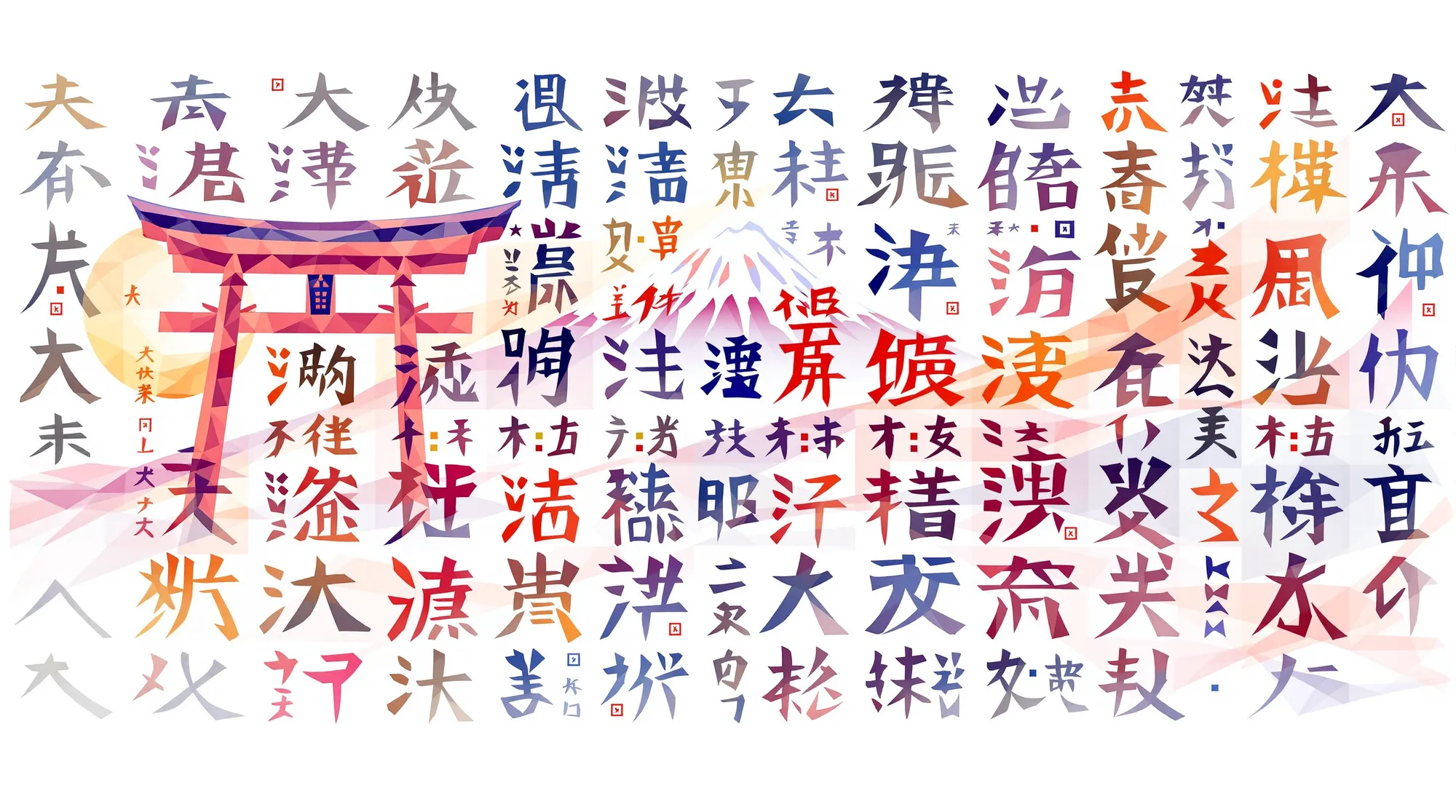
Japanese uses three writing systems at once: hiragana (ひらがな), katakana (カタカナ), and kanji (漢字). A single ordinary sentence uses all three:
私は日本語を勉強しています。 (Watashi wa nihongo o benkyou shite imasu — "I am studying Japanese.")
So speed in Japanese is not about studying more hours. It is about ORDER. Get the order right and you are reading real sentences in a week. Get it wrong — start by grinding kanji flashcards, the way most beginners do — and you will spend three months unable to read a menu.
Important
Ready to start speaking Japanese today? Try Univext free for 14 days — practice real conversation with Umi, your AI Japanese tutor, 30 minutes every day.
⚡ The Order That Makes You Fast
Here is the sequence, and it is not negotiable:
Notice what stage 4 says. Nobody learns kanji fast. There are 2,136 jōyō kanji in everyday use, and a Japanese child spends nine years of school on them. Anyone selling you a kanji shortcut is selling you something.
But here is the part nobody tells beginners: you do not need kanji to start speaking Japanese. Speech has no kanji in it. Conversation, listening, pronunciation, grammar — all of it is available to you the moment you finish hiragana. Kanji is a reading problem, and it can run in the background for years while your spoken Japanese races ahead.
That reframing is what makes progress feel fast.
Become bilingual in 30 days with Univext!
Start a lesson with our teacher for free and become bilingual like our 100,000 students!
📝 Step 1: Hiragana in a Week (Really)
Hiragana is 46 characters. That is fewer symbols than a keyboard has keys, and unlike English spelling, it is perfectly phonetic — か is always ka, never anything else. No silent letters, no "-ough" with six pronunciations.
Learn it in five rows of five:
Five more rows (h, m, y, r, w) and you are done. Two rows a day, seven days, finished.
Example
Once you know hiragana you can already read: ありがとう (thank you), おはよう (good morning), すみません (excuse me). Real Japanese, week one.
Do not use romaji as a crutch. Writing arigatou instead of ありがとう feels faster for three days and costs you three months later, because your eye never learns to read Japanese shapes. Rip the bandage off in week one.





Join more than 100,000 students learning on Univext
🔤 Step 2: Katakana — Your Free Vocabulary
Katakana is another 46 characters representing the exact same sounds, used for foreign loanwords. And it is where Japanese hands you a gift: thousands of words you already know.
Learn katakana and a Japanese menu, station sign, or convenience store shelf becomes half-readable overnight. It is the single highest-return week in the entire language.
🗣️ Step 3: Speak Before You Are Ready
This is where most learners lose a year. They decide they will start speaking "once the grammar is solid." The grammar is never solid, so they never start.
Japanese grammar is genuinely different from English, but it is also remarkably regular. Three things to internalize early:
- Verb goes last. English: "I eat sushi." Japanese: 私は寿司を食べます (watashi wa sushi o tabemasu) — literally "I sushi eat."
- Particles mark roles. は marks the topic, を marks the object, に marks direction. They are the glue, and there are only about ten that matter.
- No plurals, no gendered nouns, no verb conjugation by person. 食べます is "I eat," "you eat," "they eat." Japanese drops an enormous amount of the machinery English carries.
Notes
Japanese has no future tense either. 行きます means both "I go" and "I will go" — context decides. Grammar you do not have to learn is grammar you cannot get wrong.
The way to internalize this is not by memorizing tables. It is by producing sentences out loud and being corrected, over and over, until the word order stops feeling backwards. That is exactly what an AI tutor is for.
Become bilingual in 30 days with Univext!
Start a lesson with our teacher for free and become bilingual like our 100,000 students!
🈶 Step 4: Kanji — The Honest Plan
No shortcut here. What there is instead is a strategy that stops kanji from blocking everything else.
Learn kanji by frequency, not by grade. The 100 most common kanji cover a huge share of everyday text. Start with the ones you will actually meet:
日本 = "origin of the sun" = Japan. 日本人 = Japanese person. 大学 = "big study" = university. Kanji compound, so 100 characters give you far more than 100 words.
Learn them in words, never as isolated characters. A kanji alone has several readings and no context; a kanji inside a word you actually use has one reading and a meaning you remember.
And let it be slow. Five kanji a week is 260 a year — that is functional literacy in three to four years, alongside a spoken Japanese that got good in twelve months. Trying to front-load kanji is the classic way to quit in month two.
📱 Best Apps for Learning Japanese Fast
For a full breakdown, see Best Apps to Learn Japanese in 2026 (Tested & Ranked). If you want the script details first, start with our Japanese Alphabet: Hiragana and Katakana Complete Guide.
Join more than 100,000 students learning on Univext
🎯 Why Univext Works for Japanese Specifically
Japanese punishes the standard app format harder than any other language. Multiple-choice tapping cannot teach you politeness levels, and a fixed lesson path cannot tell whether your problem this week is particles or pitch.
Umi is an AI tutor you actually talk to, in Japanese, out loud, from your first lesson:
- Speaking from day one — even with only hiragana, you can hold a real exchange
- Correction in context — mixing up は and が gets fixed the moment you say it, with the reason
- Politeness levels taught properly — です/ます form vs. casual speech, and when each one is right. Getting this wrong is the mistake that actually embarrasses learners in Japan
- Pronunciation feedback — Japanese has few sounds but real pitch patterns; 箸 (chopsticks) and 橋 (bridge) differ only in pitch
- No judgment, unlimited repetition — the single biggest advantage over a human tutor you are paying by the hour
Important
Try Umi free for 14 days — 30 minutes of daily Japanese conversation practice, starting with your very first lesson.
Become bilingual in 30 days with Univext!
Start a lesson with our teacher for free and become bilingual like our 100,000 students!
⚠️ 5 Mistakes That Slow Japanese Learners Down
1. Starting with kanji
The most common and the most expensive. Kanji before kana is like memorizing a dictionary before learning the alphabet. Kana first, always.
2. Living in romaji
Romaji feels like a shortcut and functions as a ceiling. Every week you spend reading konnichiwa instead of こんにちは is a week your reading does not improve.
3. Studying grammar instead of using it
Japanese grammar explanations are endlessly interesting and completely useless until you produce sentences. Read a rule once, then say twenty sentences with it.
4. Ignoring politeness levels
Japanese encodes social relationship into the verb. Using casual form with a stranger is not a small error — it lands the way calling your boss by a nickname would. Learn です/ます form first and casual speech second.
5. Measuring progress in kanji
If your only metric is characters memorized, you will feel like you are failing for years. Measure in conversations held. That number moves weekly.
🗺️ Your 12-Month Japanese Roadmap
Weeks 1-2 — the scripts Hiragana, then katakana. Read simple words aloud. Start speaking with Umi on day three; you do not need to wait.
Months 1-3 — survival Japanese (N5 territory) 300 core words, the ten essential particles, present and past tense, です/ます form. Introduce yourself, order food, ask directions. Begin five kanji a week.
Months 4-6 — conversational (N4) Te-form, casual speech, giving opinions. Hold a ten-minute conversation about your day. Watch anime with Japanese subtitles instead of English ones. ~150 kanji.
Months 7-12 — real Japanese (N4 → N3) Discuss work, plans and abstract topics. Understand native speech at natural speed. Read simple manga and NHK Easy News. ~300 kanji, and climbing quietly in the background.
Notes
Compare that to the classroom route, where students often finish a full year still unable to hold a spontaneous conversation. The difference is not talent or hours — it is that speaking started in week one.
🏁 Start Today
- Sign up at univext.com — 14-day free trial
- Choose Japanese
- Learn hiragana this week — two rows a day
- Talk to Umi for 30 minutes daily, starting before you feel ready
- Add five kanji a week, and let them accumulate
The learners who get fast are not the ones who study hardest. They are the ones who got the order right and started speaking early.
Become bilingual in 30 days with Univext!
Start a lesson with our teacher for free and become bilingual like our 100,000 students!
🌍 More Japanese Reading
- How Long Does It Take to Learn Japanese? (Realistic Timeline)
- Is Japanese Hard to Learn? The Honest Answer
- Japanese Particles: wa, o, ni and the Verb at the End
- は or が? 15 Japanese Mistakes English Speakers Make
- Basic Japanese Phrases for Travel
Whatever you do, start this week. Hiragana takes seven days, and after those seven days Japanese stops looking like a wall and starts looking like a language.