
🇮🇹 Babbel vs Rosetta Stone for Italian: The Quick Verdict
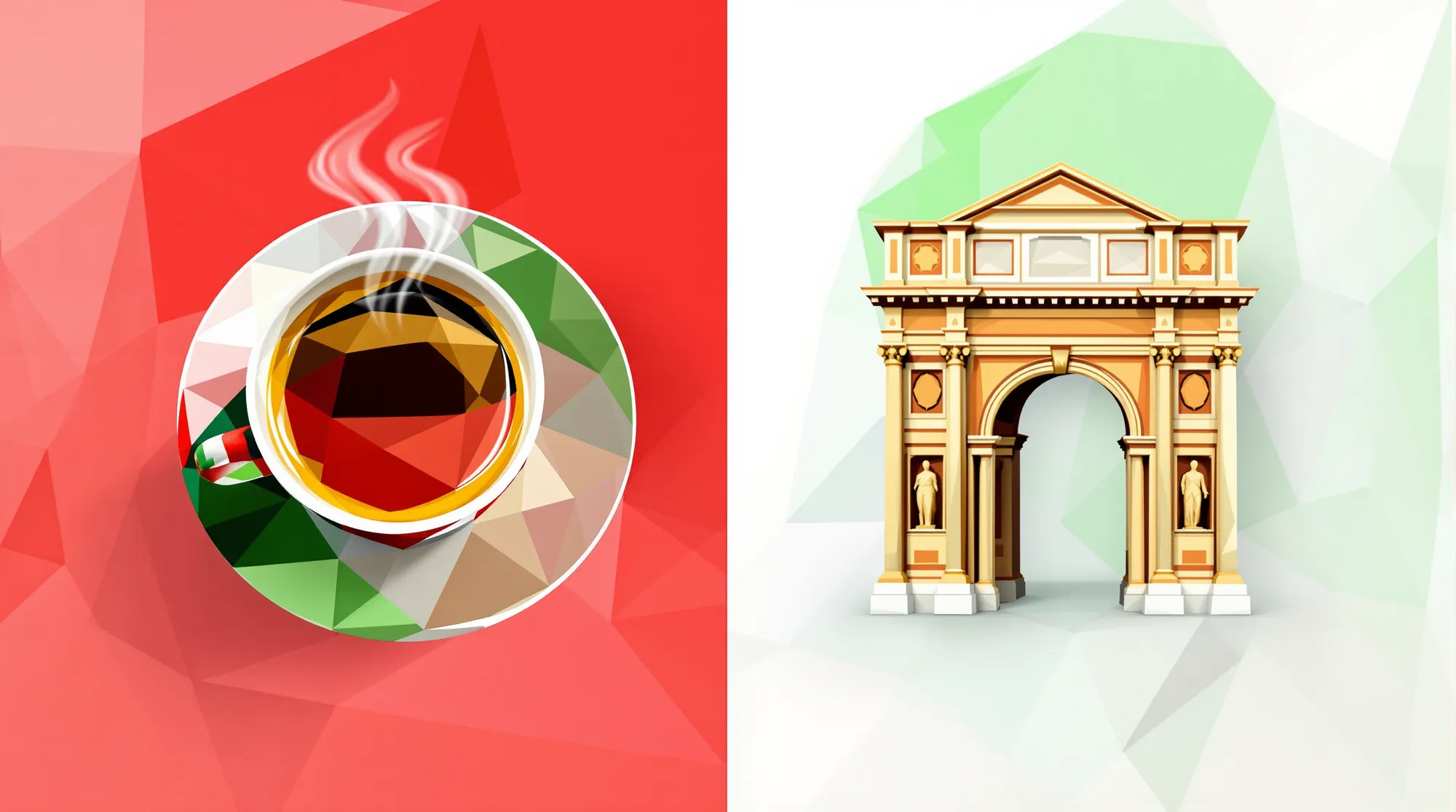
Choosing between Babbel and Rosetta Stone for Italian in 2026 is a choice between two very different philosophies. Babbel is the pragmatist's option: structured dialogues, explicit grammar notes, and short lessons you can finish on a commute. Rosetta Stone is the legacy brand built on "Dynamic Immersion" — pictures, audio, and no English at all.
The quick verdict? If you want to understand why Italian says "mi piace la pizza" instead of "io piaccio pizza", Babbel is the better choice. If you would rather absorb the language the way a child does, through images and repetition, Rosetta Stone will feel more natural.
But there is an elephant in the room that neither brand has solved in twenty years: neither one teaches you to hold a spontaneous conversation. They build a foundation, and then they leave you standing in a bar in Bologna, understanding every word the barista says and still unable to answer.
Important
Both apps are good at teaching you to recognize Italian. Neither is good at teaching you to produce it under pressure. If your goal is to actually speak, you will need conversation practice on top of either one.
📱 What Babbel Offers for Italian
Babbel has long been one of the best apps to learn Italian because it treats you like an adult who can handle an explanation. It is closer to a well-designed textbook chopped into 15-minute pieces than to a game.
The Curriculum and Lesson Structure
The Italian course runs from Newcomer to Advanced, with thematic add-ons like travel, food, and business Italian. A typical lesson goes:
- Vocabulary introduction — you see the word, hear a native speaker, repeat it.
- Dialogue — the word reappears in a realistic exchange between two people.
- Grammar note — this is Babbel's real strength. It explains why "il" becomes "lo" before studente, and why "sono andato" and "andavo" are not interchangeable.
- Review — spaced-repetition flashcards built from what you got wrong.
Strengths of Babbel
- Grammar you can actually follow. Italian articles, prepositions and the passato prossimo are explained in plain English rather than left for you to guess.
- Practical, adult vocabulary. You learn to order at a trattoria, check into a hotel in Florence, and ask for the bill without pointing.
- Speech recognition. Basic, but enough to tell you whether your double consonants in "anno" versus "ano" are landing — a distinction that genuinely matters in Italian.
Weaknesses of Babbel
- It gets repetitive. After two or three months the fill-in-the-blank rhythm becomes a chore.
- Everything is scripted. You respond to prompts someone else wrote. You never have to build a sentence from nothing.
- Recognition over production. You end up excellent at picking the right answer from four options and shaky at speaking without options.
Notes
Babbel suits learners who want the rules stated out loud. For most beginners it is significantly less frustrating than an immersion-only course.
Become bilingual in 30 days with Univext!
Start a lesson with our teacher for free and become bilingual like our 100,000 students!
🗿 What Rosetta Stone Offers for Italian
Rosetta Stone is the old guard. Its argument is simple: you learned your first language without a dictionary, so you should learn Italian the same way. In practice this means no English translations anywhere.
The Immersive Method
You see a photograph of a woman drinking coffee. You hear "La donna beve un caffè." You pick the matching image. Repeat a few hundred times and the sounds attach themselves directly to meanings, with no English in the middle.
TruAccent
Rosetta Stone's speech engine, TruAccent, is more demanding than Babbel's. For Italian this is a genuine advantage: it pushes you on the rolled r in "Roma" and on the vowel purity that makes the difference between sounding Italian and sounding like a tourist reading a menu.
Strengths of Rosetta Stone
- True immersion. It trains you out of the habit of translating in your head, which is the single biggest brake on fluency.
- Great for visual learners. If grammar tables make your eyes glaze over, this is a relief.
- Serious pronunciation work. Italian rewards good pronunciation more than most languages, and TruAccent is built for it.
Weaknesses of Rosetta Stone
- Frustrating for complex grammar. Deducing the difference between passato prossimo and imperfetto from photographs is genuinely painful. Thirty seconds of English would have done it.
- Slow. Discovery takes longer than being told.
- Thin on real situations. You will learn that the cat is under the table. You will not learn how to argue with an Italian pharmacist or handle a phone call from your landlord.
Example
Example: Rosetta Stone shows you four photos and plays "I ragazzi corrono." You must deduce that "i ragazzi" is plural and "corrono" is the matching verb form. Babbel would simply hand you the -ere conjugation table and move on.





Join more than 100,000 students learning on Univext
📊 Babbel vs Rosetta Stone: Side-by-Side Comparison
🗣️ The Real Problem: Neither Teaches You to Speak
Here is what most comparison articles leave out. You can finish the entire Babbel Italian tree and still freeze when a waiter in Naples asks you a question you did not rehearse.
The reason is structural. Both apps are input-heavy. They are built around you absorbing material. Even the speaking exercises are recitation — the sentence is already on the screen, and your job is to say it correctly.
Speaking is output. It is the specific experience of hunting for a word mid-sentence, getting the auxiliary verb wrong, being corrected, and trying again. Neither Babbel nor Rosetta Stone gives you a place to do that. They are the foundation, not the house. If you are hunting for the best app to learn languages in a way that ends in actual conversation, you have to look past both of them.
Become bilingual in 30 days with Univext!
Start a lesson with our teacher for free and become bilingual like our 100,000 students!
🚀 What Actually Works: AI Conversation Practice
This is where Univext does something the legacy apps do not. Instead of another set of exercises, you get Umi — an AI tutor that talks back, any hour of the day.
You can tell Umi about your weekend, rehearse a job interview in Italian, or role-play checking into an apartment in Rome. It is a conversation, not a quiz.
Why it works for Italian specifically:
- Correction in the moment. Say "Ieri io vado al mercato" and Umi corrects you to "Ieri sono andato al mercato" — and tells you why the past tense needs essere there.
- It remembers what you get wrong. If you keep missing noun gender or double consonants, those come back in later conversations on purpose.
- No embarrassment. Most learners are too self-conscious to speak with a human tutor early on. With Umi you can be wrong a hundred times before your first real conversation.
- Production from day one. You are building your own sentences immediately, not selecting from four options.
Traditional vs. Modern
Important
Want to actually speak Italian? Univext gives you a 14-day free trial with 30 minutes of conversation a day. Stop tapping pictures and start talking. Register here.
🎯 Which Should You Choose?
Choose Babbel if:
- You are a beginner who wants the rules of Italian grammar spelled out.
- You have a trip booked and need survival phrases fast.
- You like structure and clear progress markers.
Choose Rosetta Stone if:
- You have time and want to absorb the language rather than study it.
- Pronunciation is your priority and you want to be pushed on it.
- Seeing English on the screen breaks your concentration.
Choose Univext if:
- You understand a lot of Italian and still can't speak it — the classic plateau.
- You want to be conversational as quickly as possible.
- You want a tutor without the cost or the calendar of a human one.
- You want to practice speaking every day without anyone judging you.
Join more than 100,000 students learning on Univext
❓ FAQ
Is Babbel better than Rosetta Stone for Italian beginners? For most people, yes. Italian throws gendered nouns, irregular articles and two past tenses at you early, and Rosetta Stone's no-English rule makes those unnecessarily hard. Babbel explains them and moves on.
Can you become fluent with Rosetta Stone alone? Realistically, no. Fluency is an output skill, and Rosetta Stone is almost entirely input. You would need to pair it with genuine speaking practice — a human tutor, a language exchange, or an AI tutor like Umi.
How much do they cost? Babbel runs roughly $7–$13 per month depending on the plan length. Rosetta Stone pushes a lifetime option (usually around $179–$199) or about $12–$15 per month. Univext starts with a free 14-day trial that includes 30 minutes of AI tutoring per day.
Is Italian easier than French or Spanish? For English speakers, Italian pronunciation is the friendliest of the three — spelling and sound line up almost perfectly. The grammar is comparable to Spanish. The hard part is the same as always: getting from understanding to speaking.
Is there a free alternative? Duolingo is the obvious one, and it is genuinely fine for vocabulary. It is also gamified to the point where progress on the app stops correlating with progress in the language. For speaking, the Univext trial gets you further in two weeks.
Become bilingual in 30 days with Univext!
Start a lesson with our teacher for free and become bilingual like our 100,000 students!
💡 Bottom Line
In Babbel vs Rosetta Stone for Italian in 2026, there is no loser — just two different tools. Babbel is the textbook. Rosetta Stone is the picture book. Both will get vocabulary and structure into your head.
Neither will get Italian out of your mouth. That takes real-time production: searching for a word, being wrong, being corrected, and going again. It is the one thing tapping a screen cannot simulate.
That gap is exactly where Univext lives. Keep the foundation the legacy apps give you, and add the part they have never built.
Important
Don't just learn Italian — speak it. Start your 14-day free trial with Univext and get 30 minutes of daily conversation with Umi. Claim your trial here.