
🇺🇦 Duolingo vs Rosetta Stone for Ukrainian: The Quick Verdict
Let's not bury the answer under 2,000 words of hedging, because for Ukrainian there's a fact that settles most of this comparison before it starts.
Rosetta Stone does not offer Ukrainian. It never has. Rosetta Stone sells roughly 25 languages — Spanish, French, German, Japanese, Arabic, Polish, Russian, Turkish, Vietnamese and about seventeen others — and Ukrainian is not one of them. If you came here trying to decide between the two, the decision has already been made for you.
So the honest verdict is: Duolingo wins by default, because it's the only one of the two that has a Ukrainian course at all.
But "wins by default" is not the same as "is good enough," and that's the part worth your next five minutes. Duolingo's Ukrainian course exists, it's free, and it is noticeably thinner than its Spanish or French trees. Meanwhile Ukrainian is a seven-case, three-gender, aspect-driven Slavic language with its own alphabet. The gap between what the app gives you and what the language demands is the widest of any course Duolingo runs.
Important
Rosetta Stone has no Ukrainian course. Duolingo does, and it's free. The real question isn't which of the two to pick — it's what you use alongside Duolingo, because on its own it will not get you speaking Ukrainian.
🗿 Why Rosetta Stone Has No Ukrainian Course
This isn't an oversight you should expect them to fix next quarter. It's structural, and understanding why tells you something useful about the whole product category.
Rosetta Stone's method is built on photographs. You see four images, you hear a sentence, you click the matching picture. Building one of those courses means commissioning thousands of images, recording thousands of native-speaker lines, and mapping a curriculum by hand. It's expensive and slow, which is exactly why the catalogue has sat at ~25 languages for years and moves only when the commercial case is overwhelming.
Ukrainian, for most of Rosetta Stone's history, sat in the shadow of the Russian course they'd already built. Interest in Ukrainian rose sharply after 2022 — but a picture-based curriculum can't be spun up in response to demand the way a text course can.
Notes
Worth knowing: Rosetta Stone does sell Russian. If you find a page claiming "Rosetta Stone Ukrainian," check carefully — it's usually either a Russian course being loosely described, or a third-party seller. Buying Russian to learn Ukrainian is a genuinely bad idea, and the next section explains why.
Don't Substitute Russian for Ukrainian
The most common bad advice on this exact question is "just take the Russian course, they're similar." They are related, and they are not interchangeable.
Ukrainian has letters Russian doesn't — , , , and the apostrophe — and lacks Russian's and hard sign. The vowels behave differently: Russian reduces unstressed vowels heavily, Ukrainian keeps them much clearer. The letter is a soft "h" in Ukrainian, a hard "g" in Russian. Ukrainian has a vocative case for addressing people that standard Russian has largely lost.
And there's the part no textbook mentions: speaking Russian to a Ukrainian, in Ukraine, in 2026, is a socially loaded act. If your goal is to talk to Ukrainian people, learn Ukrainian.
Become bilingual in 30 days with Univext!
Start a lesson with our teacher for free and become bilingual like our 100,000 students!
🦉 What Duolingo Actually Offers for Ukrainian
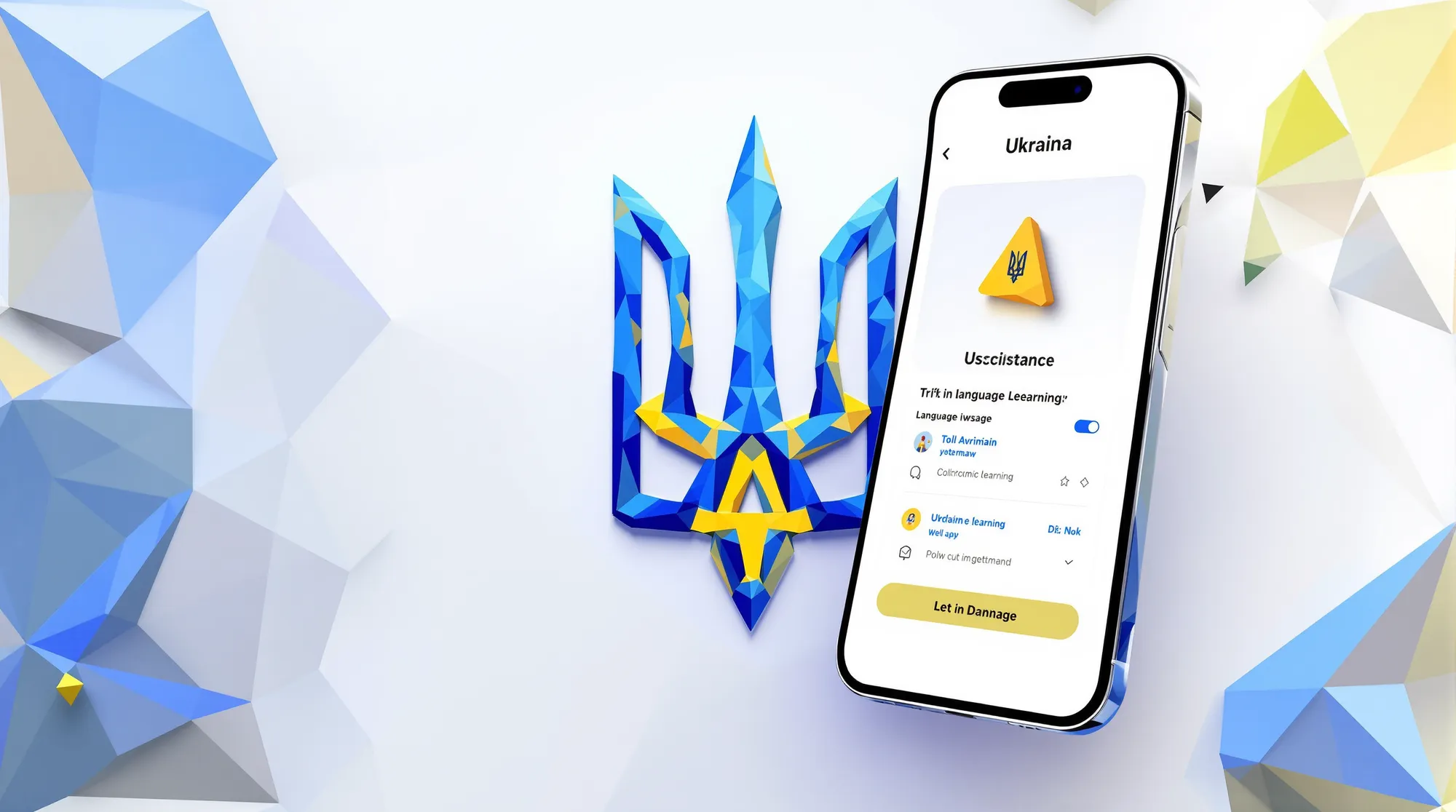
Duolingo's Ukrainian tree is the default starting point for most learners, and it earns that spot — it's free and it removes the alphabet barrier painlessly. It's one reason it appears in our roundup of the best apps to learn Ukrainian.
The Lesson Structure
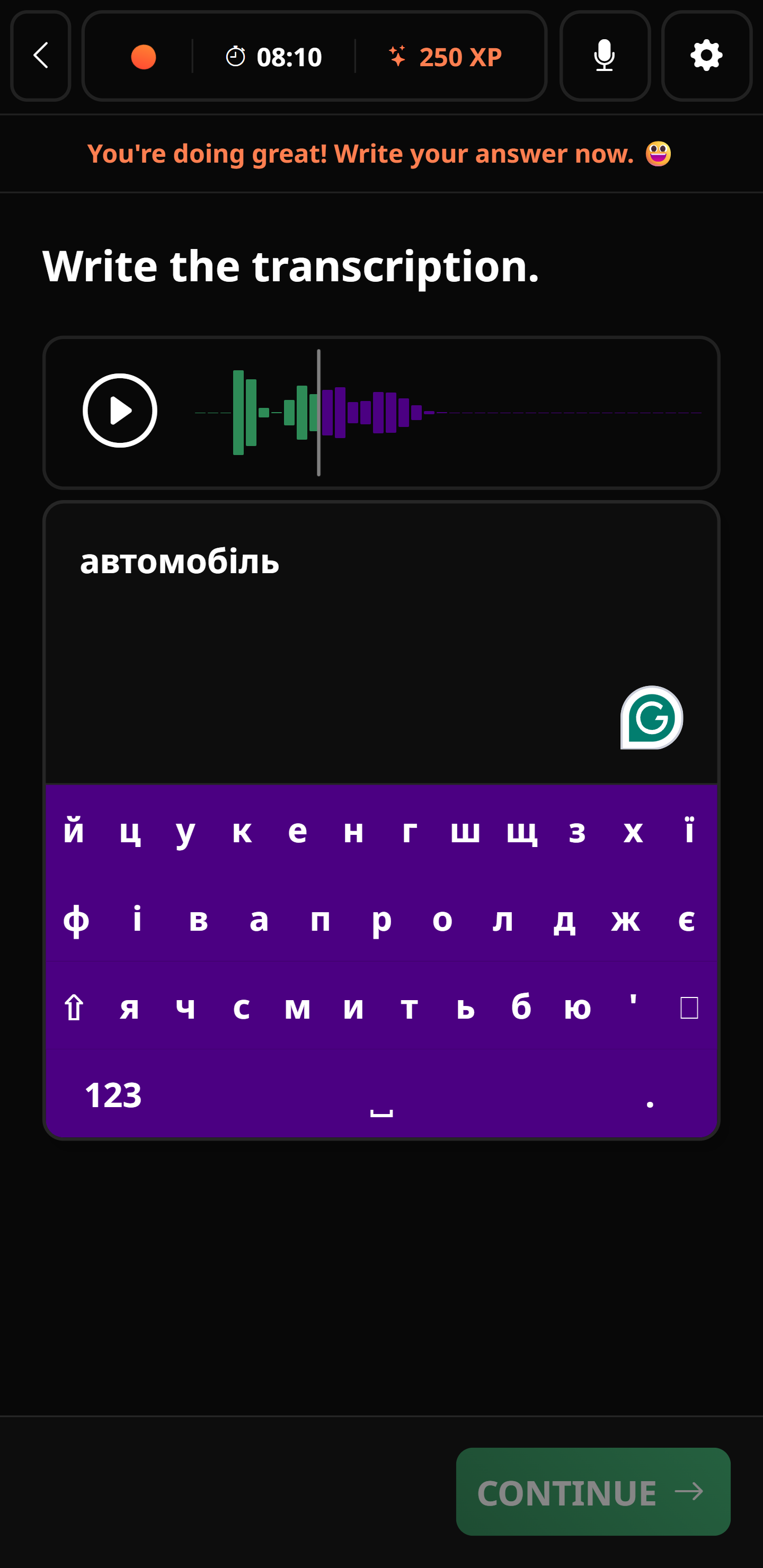
- Cyrillic first: Early units drill the Ukrainian alphabet — matching (yes) and (no) to their written forms until the letters stop looking foreign.
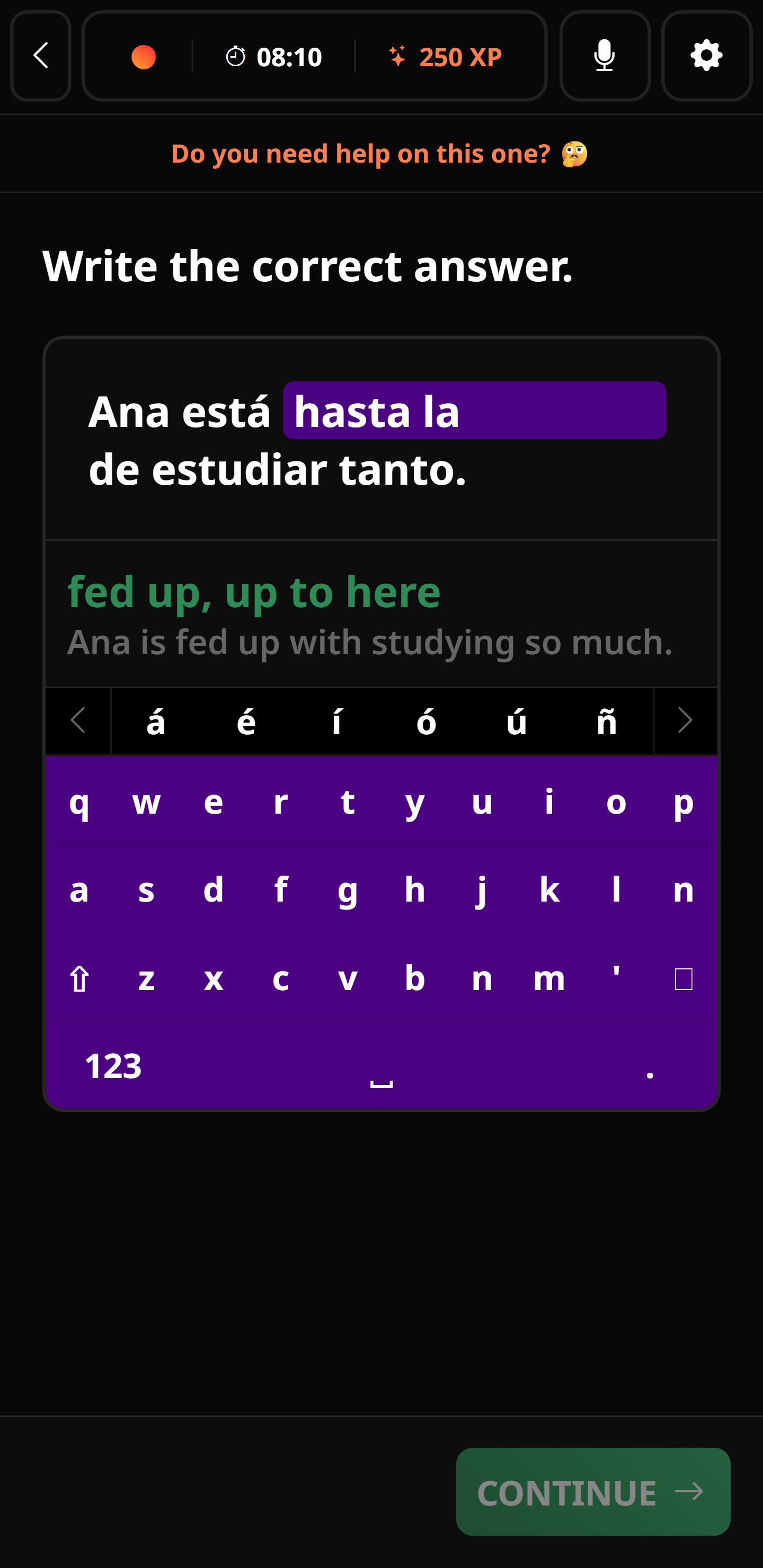
- Word tiles: You assemble sentences from a bank of words already on screen.
- Listening drills: A synthetic voice reads a line and you type what you heard.
- Streaks and XP: The gamification loop that keeps you opening the app.
What Duolingo Genuinely Does Well
- It's free. The entire Ukrainian course costs nothing. Ads are the price.
- The alphabet onboarding is excellent. Within a week you'll read Ukrainian script without stopping to decode it. That's the scariest barrier, gone.
- Habit formation. The streak works. Most people who studied Ukrainian daily for a year did it here.
- Low friction. Two minutes on a bus is a real lesson.
Where It Falls Short — Specifically for Ukrainian
- The tree is thin. Duolingo's Ukrainian course is markedly shorter than its Spanish or German trees. You will finish it and still be a beginner.
- Word tiles do the work for you. This is fatal here. When , and are all sitting on screen, you pick the one that looks right. You never had to know the case. Nobody hands you the ending in Kyiv.
- Seven cases, never systematized. Ukrainian has seven cases — including the vocative, which you need the moment you address anyone by name. Duolingo shows you the forms changing and hopes repetition does the rest, never teaching when or why each case fires.
- Verb aspect goes untaught. Every Ukrainian verb comes as a perfective/imperfective pair — versus . Pick wrong and your meaning changes. The tiles accept it; nothing explains it.
- No real speaking. The speaking exercises ask you to read a sentence aloud. That's pronunciation practice, not conversation.
- Fewer resources when you're stuck. The Ukrainian course has a smaller community, fewer forum answers, and thinner grammar notes than the flagship languages.
Notes
Duolingo is best understood as an alphabet-and-vocabulary tool for Ukrainian. Used that way, it's excellent and it's free. Used as your only resource, you'll plateau — while still holding a 400-day streak, which is the frustrating part.





Join more than 100,000 students learning on Univext
📊 Side-by-Side: Duolingo vs Rosetta Stone for Ukrainian
The honest read of this table: there's only one column with a product in it, and that product has a hole where speaking should be.
🗣️ The Real Problem: Recognition Isn't Speaking
Here's what the marketing never says. You can hold a 500-day Duolingo streak and still freeze solid when a cashier in Lviv asks what you'd like.
Why? Because Duolingo is a recognition machine. It hands you the words and asks you to arrange them. The right answer is already on the screen. Your brain never does the hard part — reaching into empty space and pulling out a Ukrainian sentence with the endings already correct.
Ukrainian widens this gap more than almost any language. Every noun you say forces a live decision: which gender, which of seven cases, therefore which ending, therefore which adjective ending to match it. You can't defer it. You can't mumble past it. A tile bank makes that decision for you every single time — so a year of tapping tiles trains you to do the one thing real Ukrainian never allows.
Then the verb. You want to say "I read the book" — but did you read it through to the end, or were you reading it? Ukrainian makes you choose or before the sentence leaves your mouth. No tile exercise builds that instinct, because the tile was chosen for you.
Real conversation is the opposite. You search for a word mid-sentence, pick the wrong case, get corrected, try again. That struggle is the learning — and it's exactly what a tapping interface can never simulate. If you want the best app to learn languages in a way that ends with you actually talking, you have to look past the tiles.
Become bilingual in 30 days with Univext!
Start a lesson with our teacher for free and become bilingual like our 100,000 students!
🚀 What to Do Instead: AI Conversation Practice
Since Rosetta Stone isn't an option, the useful question becomes: what fills the gap Duolingo leaves?
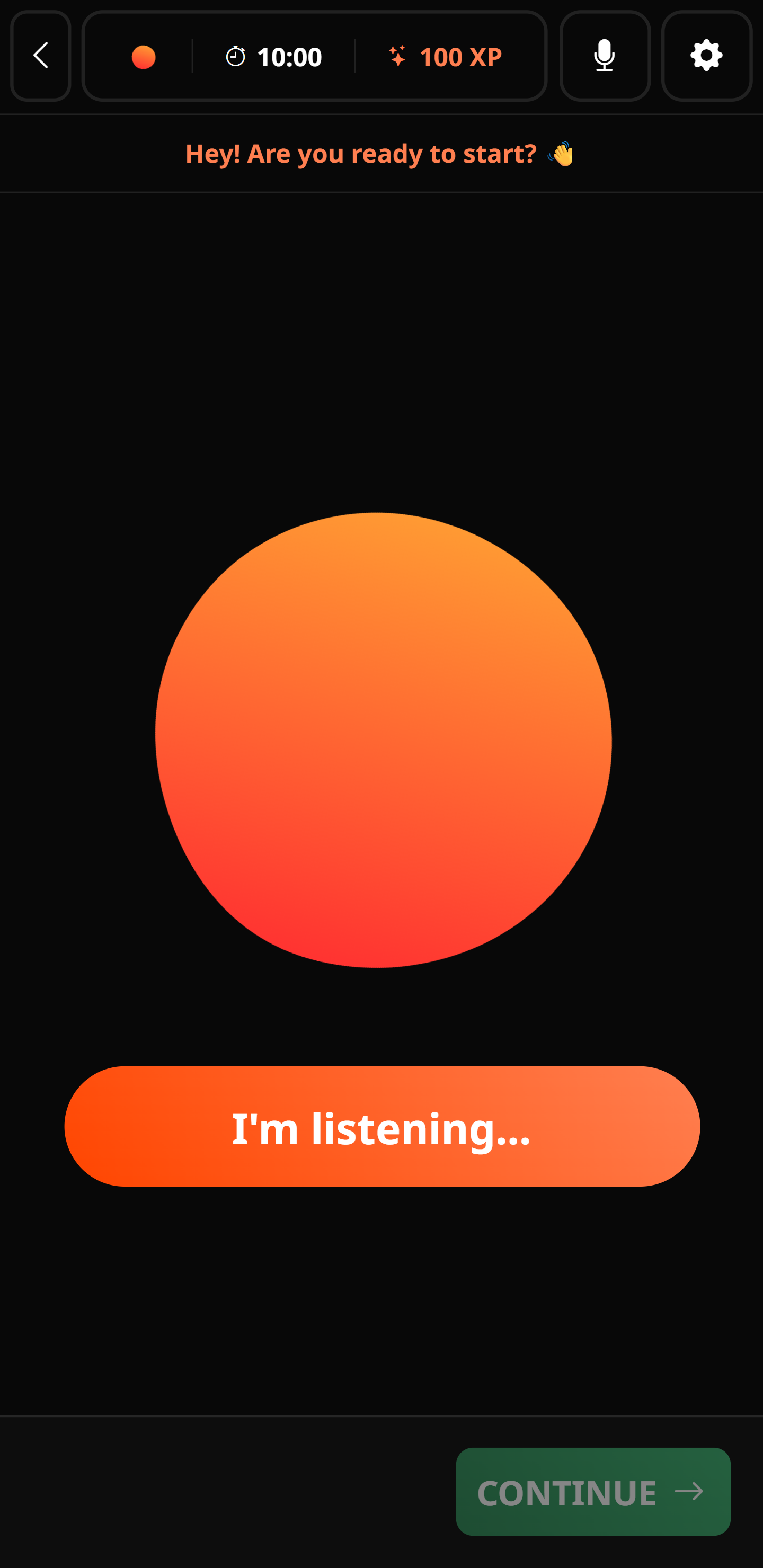
This is where Univext changes the equation. Instead of tiles or pictures, you get Umi — an AI tutor that talks with you, in Ukrainian, about whatever you want, whenever you want.
Umi doesn't quiz you. It has a conversation with you. Tell it about your weekend, practice ordering coffee in Kyiv, role-play a job interview. There are no word banks. You produce the sentence yourself, cases and all — and that's the entire point.
Why this works where the apps stall
- Real-time correction. Reach for the wrong case after a preposition and Umi corrects you in the moment you needed it, not in a tip note you skipped.
- It remembers. Keep missing the perfective after (yesterday)? Umi quietly weaves more past-tense narration into tomorrow's conversation until it becomes automatic.
- Zero judgment. Mangle the soft fifty times. Umi never sighs, never checks the clock, never costs $40 an hour.
- Output from day one. You build sentences from nothing — the only exercise that transfers to a real conversation, and the only one that forces you to actually choose a case.
- It exists for Ukrainian. Not a footnote: the language you want is actually supported, at full depth, not as a thin side-tree.
Important
Ready to actually speak Ukrainian? Univext gives you a 14-day free trial with 30 minutes of conversation a day. Put down the tiles and say something. Register here.
🎯 Which Should You Choose?
Choose Duolingo if:
- You're starting from zero and need the Cyrillic alphabet and a daily habit more than you need a method.
- You don't want to pay anything to find out whether you'll stick with Ukrainian.
- You accept it as a supplement, not the whole plan.
Rosetta Stone isn't a choice here. No Ukrainian course exists. Don't buy their Russian course as a substitute — different alphabet details, different pronunciation, different vocabulary, and the wrong language for talking to Ukrainians.
Choose Univext if:
- You already know some Ukrainian words but freeze when it's your turn to talk.
- You keep guessing at case endings and want correcting in real time until it sticks.
- You want to reach a real conversation as fast as possible.
- You want a tutor's correction without a tutor's price or calendar.
The combination most learners land on: Duolingo for the alphabet and free vocabulary reps, Univext for the speaking that Duolingo structurally can't provide.
Join more than 100,000 students learning on Univext
❓ FAQ
Does Rosetta Stone have a Ukrainian course? No. Rosetta Stone offers about 25 languages — including Russian and Polish — and Ukrainian is not among them. There is no Ukrainian course to buy, at any price tier.
Can I use Rosetta Stone's Russian course to learn Ukrainian? Not sensibly. They share Cyrillic roots but differ in alphabet (Ukrainian has , , ; Russian has ы and the hard sign), in pronunciation, in a large slice of everyday vocabulary, and Ukrainian keeps a vocative case Russian mostly dropped. You'd spend months building habits you then have to unlearn.
Is Duolingo good for Ukrainian? It's good for two things: learning to read the alphabet, and building a daily habit for free. It's weak on the seven-case system, silent on verb aspect, and its Ukrainian tree is shorter than its flagship courses. Treat it as a starting point, not a finish line.
Can you become fluent with Duolingo alone? No. It builds recognition and vocabulary, not production — and with Ukrainian that limit is sharp, because recognizing a case ending on a tile isn't the same skill as producing it under pressure. Learners who get fluent add conversation practice on top.
What are the best Rosetta Stone alternatives for Ukrainian? Since Rosetta Stone doesn't compete here at all, the real field is Duolingo for basics plus an AI tutor or human tutor for speaking. We break down the wider field in our guide to Rosetta Stone alternatives.
How hard is Ukrainian for English speakers? Harder than Spanish, easier than people fear. The alphabet takes about a week. The seven cases take considerably longer, and they're the thing app-based learning handles worst. We cover the realistic picture in is Ukrainian hard to learn.
What's the fastest way to actually speak Ukrainian? Daily output with immediate correction. That means talking — to a human tutor, or to an AI one. Univext's free trial gives you 30 minutes a day of exactly that.
Become bilingual in 30 days with Univext!
Start a lesson with our teacher for free and become bilingual like our 100,000 students!
💡 Bottom Line
"Duolingo vs Rosetta Stone for Ukrainian" turns out to have a one-line answer: Rosetta Stone doesn't make a Ukrainian course, so Duolingo wins the matchup unopposed. Anyone selling you a comparison of the two is comparing something to nothing.
The more useful question is what Duolingo leaves out. It gives you the alphabet, consistency, and free vocabulary — real value, genuinely worth using. It does not give you the seven cases, verb aspect, or the ability to produce a Ukrainian sentence out of your own head under time pressure. That's not a knock on the app; it's just what a tile-tapping interface is.
Ukrainian is a system, not a word list. And the only way to learn a system is to use it wrong, get corrected, and use it again — out loud, until it's automatic.
That's the gap Univext was built for. Keep the streak if it's working. But if you want to speak, you have to start speaking.
Important
Don't just learn Ukrainian — speak it. Start your 14-day free trial with Univext and get 30 minutes of daily conversation with Umi. Claim your trial here.