
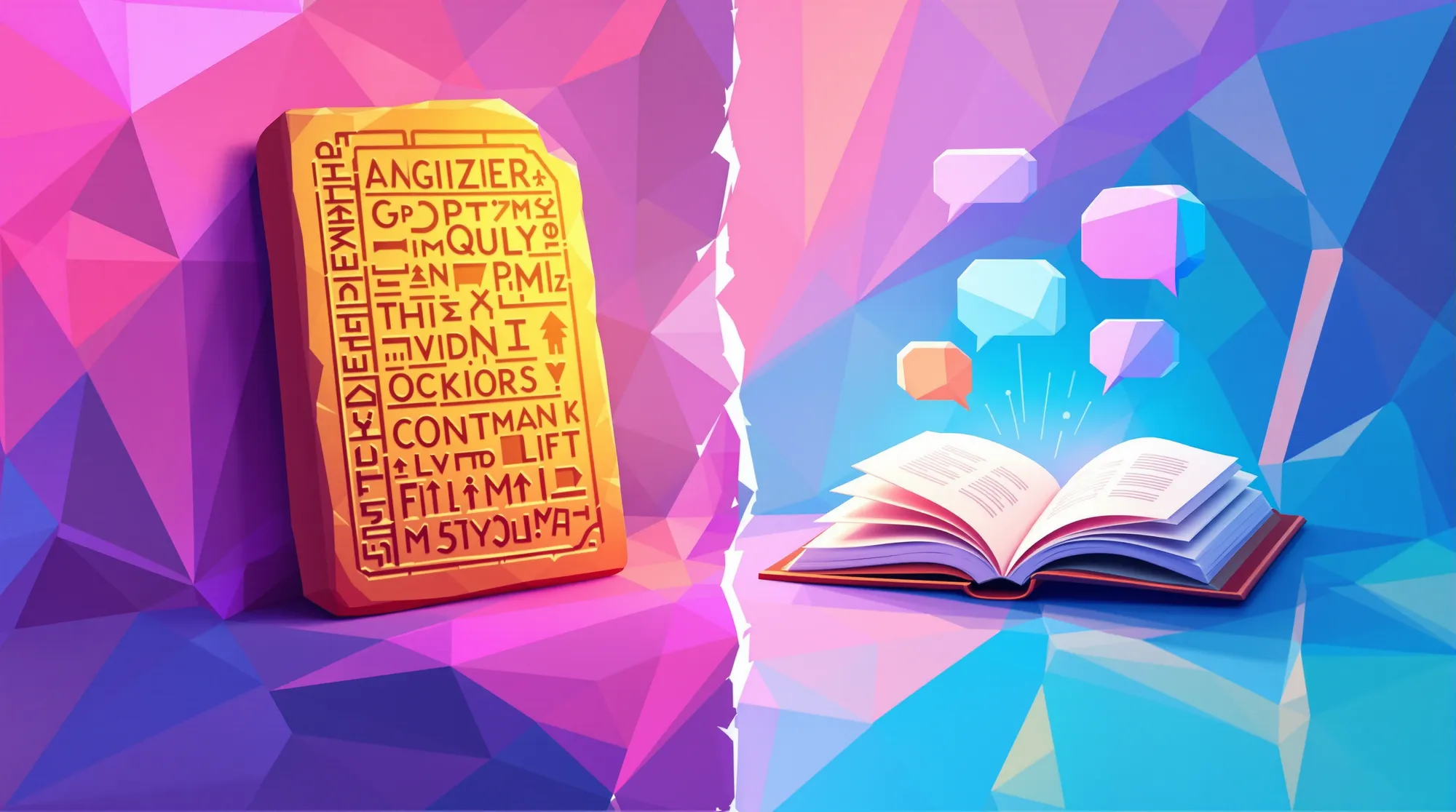
Rosetta Stone and Babbel are the two names people land on once they've decided Duolingo isn't serious enough. Both are paid, both are polished, both have been around long enough to have real reputations — and they teach in almost opposite ways. Rosetta Stone throws you into wordless immersion and expects you to work it out from pictures. Babbel sits you down and explains the grammar like a teacher would.
We ran both in 2026 to see which actually earns the subscription. Here's the unvarnished comparison — including the one thing that neither of them does, which happens to be the thing that makes you fluent.
Notes
Quick answer for the impatient: Babbel for structured lessons, grammar you understand, and fast practical progress. Rosetta Stone for pure immersion and a lifetime license. Neither holds a conversation with you.
🥊 Rosetta Stone vs Babbel: The 30-Second Verdict
🗿 Rosetta Stone: Immersion, No Hand-Holding
Rosetta Stone's whole philosophy is that you learned your first language without translations, so you should learn your second the same way. There are no English explanations — just images, audio, and pattern matching, until the meaning clicks. It's a genuinely elegant idea, the interface is clean, and TruAccent (its speech-recognition engine) gives useful pronunciation feedback that most competitors still can't match. The lifetime licence is its strongest commercial argument: pay once, keep it forever, and if you learn languages for years it works out cheap.
The catch is pace and frustration. Because nothing is ever explained, you can spend a long time inferring a grammar rule that one sentence of plain English would have settled in ten seconds. Adults are not toddlers — we already have a first language, and refusing to use it is a philosophical stance, not an efficiency gain. The lessons can feel repetitive and slow, the vocabulary skews generic (a lot of pictures of people eating apples, not much of ordering dinner), and many learners plateau feeling like they can pattern-match a screen but not say anything useful. Our full Rosetta Stone review breaks down whether it still holds up.
Become bilingual in 30 days with Univext!
Start a lesson with our teacher for free and become bilingual like our 100,000 students!
📘 Babbel: The Teacher in Your Pocket
Babbel takes the opposite bet: it explains things. Lessons are short, built around practical dialogue you'd actually use — introducing yourself, booking a room, ordering, complaining politely — and when a grammar rule shows up, Babbel tells you what it is in a language you already speak. The courses are written by real linguists for specific language pairs, so a Spanish course for English speakers anticipates the mistakes English speakers actually make. For most adults with a job and limited patience, this is simply the faster route from zero to saying something real.
Its weaknesses are quieter. Babbel's content is strongest in the popular European languages and thins out beyond them. The review system is decent but not as ruthless as a dedicated spaced-repetition tool. And while the dialogues are practical, they are still dialogues you read and repeat — scripted, predictable, and always on the app's terms. You finish a lesson having said the right thing at the right prompt, which is not the same as coping when a real person says something unexpected. See how it stacks up elsewhere in Duolingo vs Babbel 2026.




Join more than 100,000 students learning on Univext
⚖️ Which Should You Choose?
Pick Rosetta Stone if:
- You genuinely enjoy figuring things out from context and dislike being lectured.
- Pronunciation is a priority and you want speech feedback built in.
- You want a lifetime licence and expect to study for years.
- You're comfortable with slow, patient progress.
Pick Babbel if:
- You want to understand why the language works the way it does.
- You want practical, usable phrases quickly — a trip, a move, a job.
- You have limited time and want the shortest path to a useful sentence.
- You're learning a mainstream European language.
Important
For most adults with a deadline and a day job, Babbel gets you speaking sooner. Rosetta Stone is the better long-haul purchase if immersion genuinely suits how you think.
🤖 The Gap Both of Them Leave
Now the honest part. Rosetta Stone shows you pictures. Babbel gives you scripts. Both are one-way: the app speaks, you respond in the slot provided, the app moves on. Neither one has ever asked you an unexpected question. Neither has ever misunderstood you and made you rephrase. Neither has let you say something wrong in a way that matters and then helped you fix it.
That is what actual conversation does, and it's the step where learners stall. You can finish a Babbel tree or a Rosetta Stone level and still freeze the first time a waiter goes off-script — because you trained recognition and repetition, never improvisation.
Umi, the AI tutor from Univext, exists for exactly that gap. It's a tutor you talk to out loud, any time, about anything you like. It listens, answers, corrects you as you go, and adapts to your level in real time — unlimited conversation practice without booking a human or paying by the hour. Nine languages come with one subscription, usually less than either app charges. Compare it with the rest of the field in our Best AI Language Tutors in 2026.
Keep the structure if you like it. Then go and use it on something that talks back.
Become bilingual in 30 days with Univext!
Start a lesson with our teacher for free and become bilingual like our 100,000 students!
❓ FAQ
Is Rosetta Stone or Babbel better for beginners? Babbel, for most beginners. It explains grammar in a language you already speak and gets you to useful phrases fast. Rosetta Stone suits beginners who prefer to absorb patterns without explanation and don't mind a slower start.
Which is cheaper? Month to month they're close (roughly $12-15 for Rosetta Stone, around $15 for Babbel, both cheaper on longer plans). Rosetta Stone's lifetime licence (~$179-199) is the cheapest option long-term if you intend to keep studying for years.
Which one teaches speaking better? Rosetta Stone gives better pronunciation feedback via TruAccent; Babbel gives you more genuinely useful things to say. Neither offers unscripted two-way conversation, which is what speaking actually requires.
Can I use Babbel and Rosetta Stone together? You can, but it's redundant — they're both structured beginner-to-intermediate courses. Your money goes further pairing one of them with real conversation practice.
What's missing from both? Improvisation. Both drill recognition and repetition inside a script. An AI tutor like Umi supplies the missing half — unpredictable, spoken, two-way practice.
Ready to talk instead of tap? Start a free lesson with Umi and have your first real conversation today.