
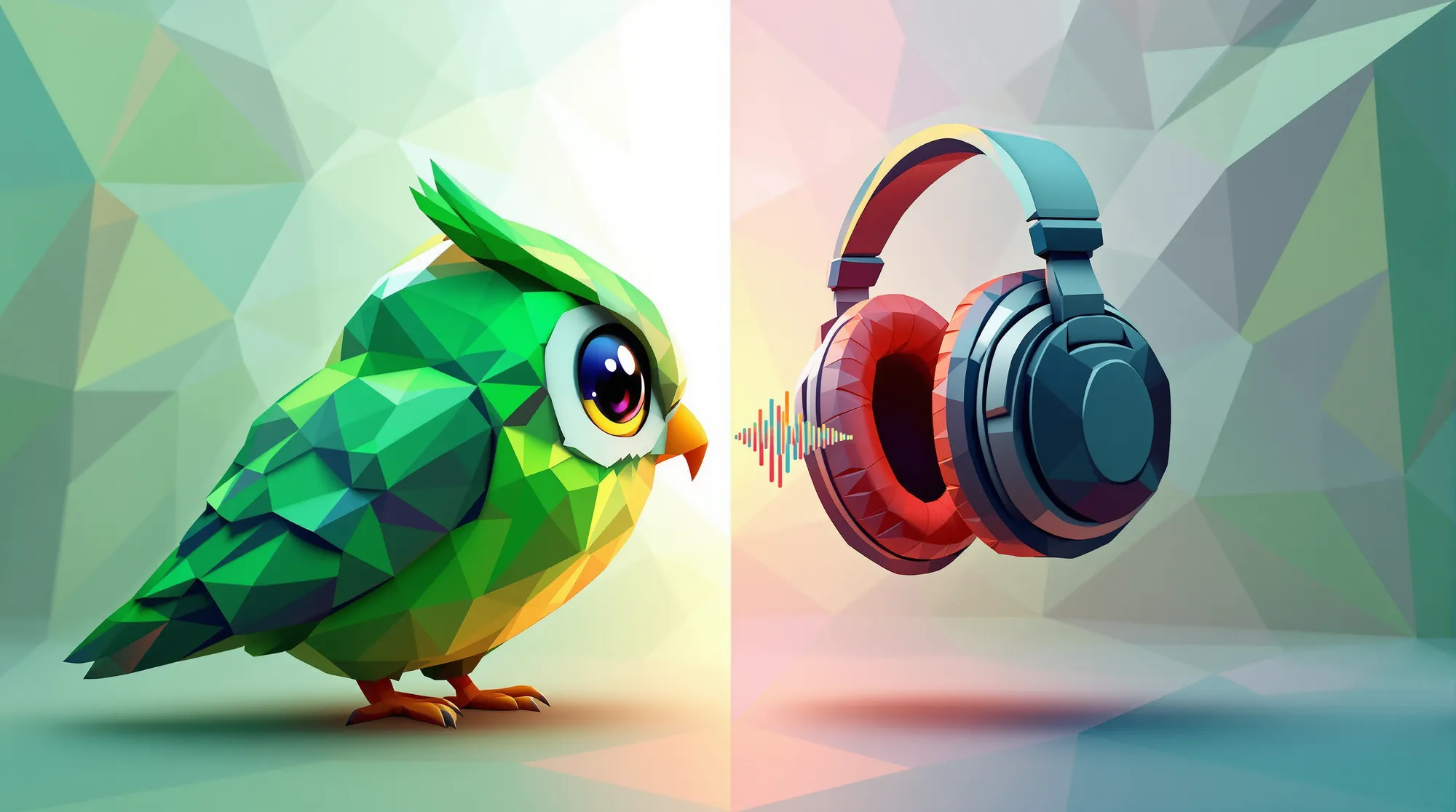
One is free, green, and on 100 million phones. The other costs about the price of a gym membership and has been teaching diplomats and business travellers to speak since the 1960s. Duolingo and Pimsleur are the two most recognisable names in language learning, and they could not be more different — one is a game you tap, the other is a voice you answer out loud.
We spent 2026 putting both through real use, on real commutes, with real learners. This is the honest breakdown: what each one is genuinely good at, where each one quietly fails, and which one deserves your money. And a warning up front — they fail in the same place, and it's the place that matters most.
Notes
Quick answer for the impatient: Duolingo for free daily habit-building and vocabulary. Pimsleur for actually opening your mouth and sounding like a human. Neither one holds a conversation with you.
🥊 Duolingo vs Pimsleur: The 30-Second Verdict
🦉 Duolingo: The Habit Machine
Duolingo's genuine achievement is that it gets people to show up. Streaks, leagues, the guilt-tripping owl — the gamification works, and no other app comes close at turning "I should learn Spanish" into fifteen consecutive days of practice. It's free, the course catalogue is enormous, and for absolute beginners it does a competent job of drilling vocabulary and letting you recognise written sentences. If your goal is to build a daily habit at zero cost, it is the obvious starting point.
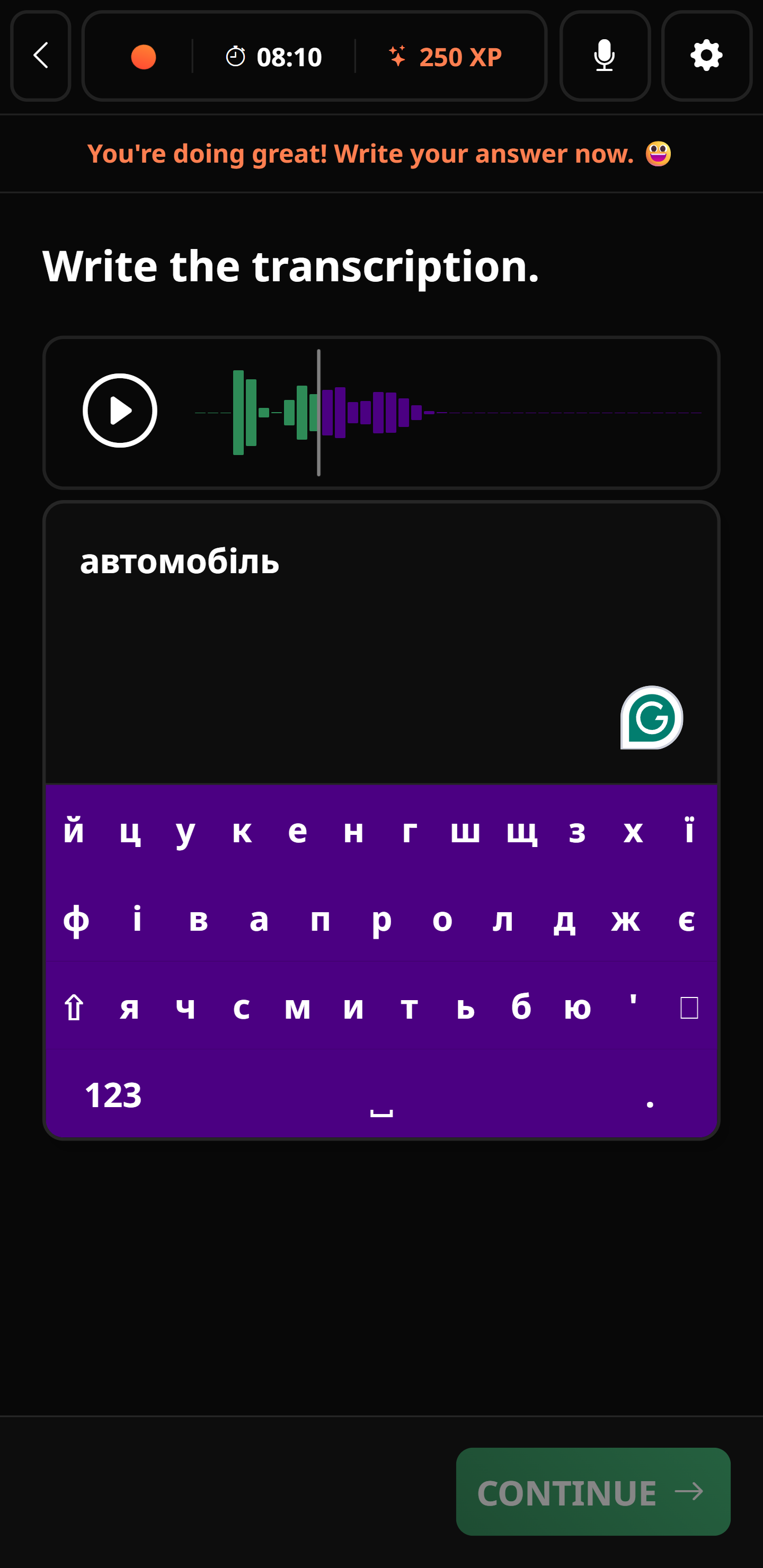
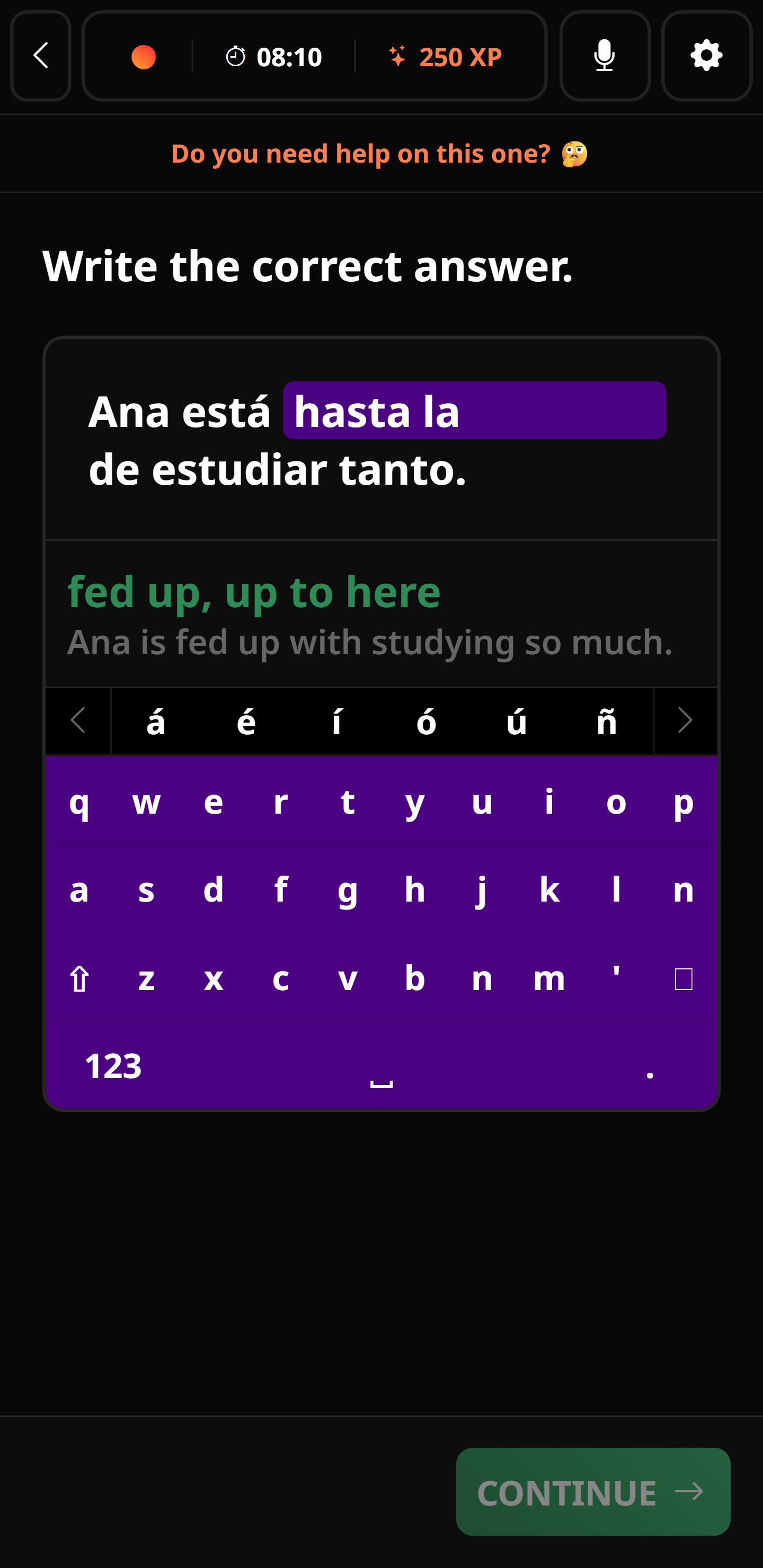
The problem arrives around month three. Duolingo teaches you to recognise a language, not to produce it. You tap word tiles into place; you don't form sentences from nothing. Its speaking exercises are a handful of scripted phrases with forgiving speech recognition that will happily accept a mumbled approximation. Listening audio is slow and unnaturally clean, so the first real conversation with a native speaker is a shock. And the grammar explanations are thin enough that many learners hit a plateau, keep the streak alive out of guilt, and quietly stop improving. We wrote about this failure mode in detail in Why Duolingo Doesn't Teach You to Speak.
Become bilingual in 30 days with Univext!
Start a lesson with our teacher for free and become bilingual like our 100,000 students!
🎧 Pimsleur: The Speaking Drill
Pimsleur is the opposite bet. There is no game, no streak, no owl. There is a voice, a 30-minute audio lesson, and a series of pauses in which you are expected to say something out loud. The method — graduated-interval recall — resurfaces each phrase just as you're about to forget it, and it is genuinely effective. After a few weeks of Pimsleur, learners typically pronounce far better and hesitate far less than Duolingo learners who have been at it three times as long.
It's also the best commute tool in the category: hands-free, eyes-free, and easy to run on a walk or a drive. But it comes with real costs. It's expensive next to a free app. Reading and writing are near-afterthoughts, so you can finish a level speaking decent Portuguese and still struggle to read a menu. Grammar is left for you to infer from patterns, which frustrates learners who want to know why. And the lessons are rigidly scripted — you're responding to prompts on rails, not saying what you actually want to say. Our full Pimsleur review digs into whether the price holds up.




Join more than 100,000 students learning on Univext
⚖️ Which Should You Choose?
Pick Duolingo if:
- You're starting from zero and want to spend nothing.
- Your problem is consistency, not method — you need something that drags you back daily.
- You want to build vocabulary and get comfortable reading the language.
- You're happy to add speaking practice separately, later.
Pick Pimsleur if:
- Your goal is to speak — a trip, a move, a job — and you have a deadline.
- You learn well by ear and want pronunciation that doesn't embarrass you.
- You want to learn during a commute, a walk, or a workout.
- You'll accept weak reading/writing in exchange for real speaking confidence.
Important
If you can only afford one and you actually intend to talk to human beings: Pimsleur. Duolingo's streak feels like progress; Pimsleur's discomfort is progress.
🤖 What Both of Them Cannot Do
Here's the thing neither company advertises. Duolingo is a quiz. Pimsleur is a recording. Both are one-way. You can tap ten thousand tiles and answer a thousand audio prompts and still have never once said an unscripted sentence to something that listens, understands, and answers back.
That gap is where fluency actually lives. Real conversation is unpredictable — someone interrupts, changes topic, uses a word you don't know, and you have to improvise in real time. No amount of drilling prepares you for that, because drilling is the opposite of improvising.
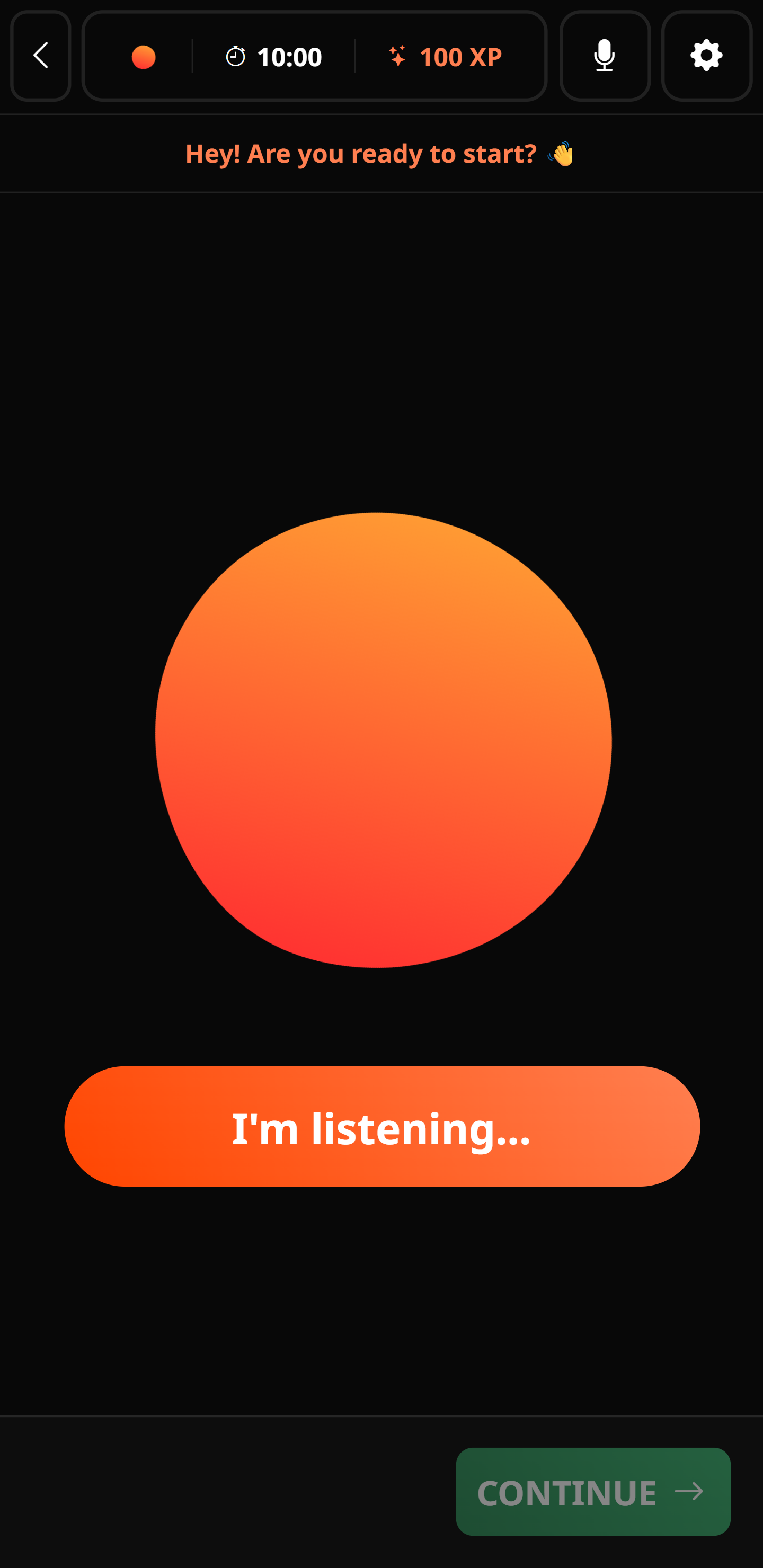
This is exactly what Umi, the AI tutor from Univext, was built for. Umi is a tutor you talk to — out loud, 24/7, about whatever you want. It listens, replies, corrects you naturally as you go, and adapts to your level in real time. It doesn't hand you a script; it holds a conversation, which is the one thing Duolingo and Pimsleur structurally cannot do. Nine languages come with a single subscription, typically for less than one month of Pimsleur. Compare it against the rest of the field in our roundup of the Best AI Language Tutors in 2026.
The honest recommendation: keep the drills if you like them, and add the conversation. That combination is what turns study into speech.
Become bilingual in 30 days with Univext!
Start a lesson with our teacher for free and become bilingual like our 100,000 students!
❓ FAQ
Is Duolingo or Pimsleur better for beginners? Duolingo is the easier on-ramp — it's free, it builds the habit, and it teaches you to read the language. Pimsleur is the better beginner-to-speaker path: it's harder and pricier, but after a month you'll actually be able to say things out loud. Choose based on whether your bottleneck is consistency (Duolingo) or speaking (Pimsleur).
Which is more expensive? Duolingo is free, with an optional Super/Max subscription in the ~$7-13/month range. Pimsleur runs around $20-21/month. Pimsleur costs meaningfully more — the question is whether speaking practice is worth it to you, and for most people with an actual reason to learn, it is.
Which one teaches you to speak? Pimsleur, clearly. It forces spoken production in every lesson, and its graduated-interval recall is built around recall-and-say rather than recognise-and-tap. Duolingo's speaking exercises are limited and forgiving. Neither, however, gives you unscripted two-way conversation.
Can I use Duolingo and Pimsleur together? Yes, and it's a sensible combination — Duolingo for vocabulary, reading and daily consistency; Pimsleur for pronunciation and speaking. The remaining hole is real conversation, which is where an AI tutor completes the stack.
Do I still need a tutor if I use both? For fluency, yes. Both apps train inputs and drills; conversation trains output under pressure. An AI tutor like Umi gives you unlimited spoken practice without booking a human or paying by the hour.
Ready to actually talk? Start a free lesson with Umi and say your first unscripted sentence today.