


Every German learner makes the same mistakes. Not similar mistakes — the same ones, in roughly the same order, for roughly the same reasons.
That's actually good news. It means the errors holding your German back aren't personal failings or proof you "don't have the language gene." They're structural. German asks your brain to do a handful of things English never asked it to do, and until someone points at those things directly, you keep tripping over them.
Below are the 15 mistakes that show up in almost every learner's German, from week one to year three. For each one: what you probably say, what a German actually says, and the short reason why. No 4,000-word grammar lecture — just the fix and enough of the "why" that it sticks.
Fair warning: reading about these is not the same as fixing them. You fix them by getting them wrong out loud, in front of something that corrects you, until the right form arrives before the wrong one does. More on that at the end.
🎯 The Gender Mistakes
1. Guessing der, die, das
The single biggest time sink in German. Learners guess, get it wrong, and — critically — never find out they were wrong, so the wrong version hardens.
Example
❌ das Tisch → ✅ (the table)
❌ der Zeitung → ✅ (the newspaper)
Why: German gender is grammatical, not logical. — "the girl" — is neuter, because the -chen ending overrides biology. Every time.
The fix: Stop learning nouns. Start learning article + noun as one indivisible word. Never store Tisch. Store derTisch. There are reliable ending-based patterns — -ung, -heit, -keit, -schaft, -tion are always feminine; -chen and -lein always neuter; -er agent nouns usually masculine — and those five rules alone will carry a huge share of the vocabulary you meet.
2. Assuming German gender matches your language's gender
Spanish and French speakers get burned constantly here.
Example
le soleil is masculine in French → ❌ der Sonne → ✅ (the sun)
la lune is feminine in French → ❌ die Mond → ✅ (the moon)
Why: German flipped the sun and moon relative to the Romance languages. There's no transfer rule. Your intuition from Spanish, French, or Italian is actively misleading here — treat German gender as a blank slate.
🔀 The Word Order Mistakes
3. Forgetting the verb goes last after weil
If you fix one thing today, fix this. It's the loudest possible "I'm a beginner" signal.
Example
❌ Ich bleibe zu Hause, weil ich bin müde.
✅ — I'm staying home because I'm tired.
Why: weil is a subordinating conjunction. It kicks the conjugated verb to the very end of its clause. Same for dass, wenn, obwohl, damit, ob.
The fix: Learn them as a set, and drill the reflex: hear weil → verb goes to the back.
Notes
You will hear native Germans break this rule in casual speech — "weil ich bin müde" is extremely common spoken German. Learn the correct form first. Break it later, on purpose, when you know what you're breaking.
4. Confusing weil and denn
Both mean "because." They do completely different things to your word order.
The fix: If word order under pressure is what breaks you, denn is your escape hatch — it leaves the sentence in normal order.
5. Putting the verb in third position
German is a verb-second language. Whatever you front, the conjugated verb still lands in slot two.
Example
❌ Morgen ich gehe ins Kino.
✅ — Tomorrow I'm going to the cinema.
Why: Front Morgen and the subject ich gets bumped behind the verb. English lets you say "Tomorrow I go." German does not.
6. Splitting separable verbs... by not splitting them
Example
❌ Ich aufstehe um sieben Uhr.
✅ — I get up at seven.
Why: aufstehen splits in a main clause. The prefix auf flies to the end. Same with anrufen, einkaufen, mitkommen, fernsehen, ankommen.
The fix: When you learn a separable verb, learn it inside a full sentence, never as a bare infinitive. anrufen teaches you nothing. teaches you everything.
Become bilingual in 30 days with Univext!
Start a lesson with our teacher for free and become bilingual like our 100,000 students!
⚠️ The False Friends
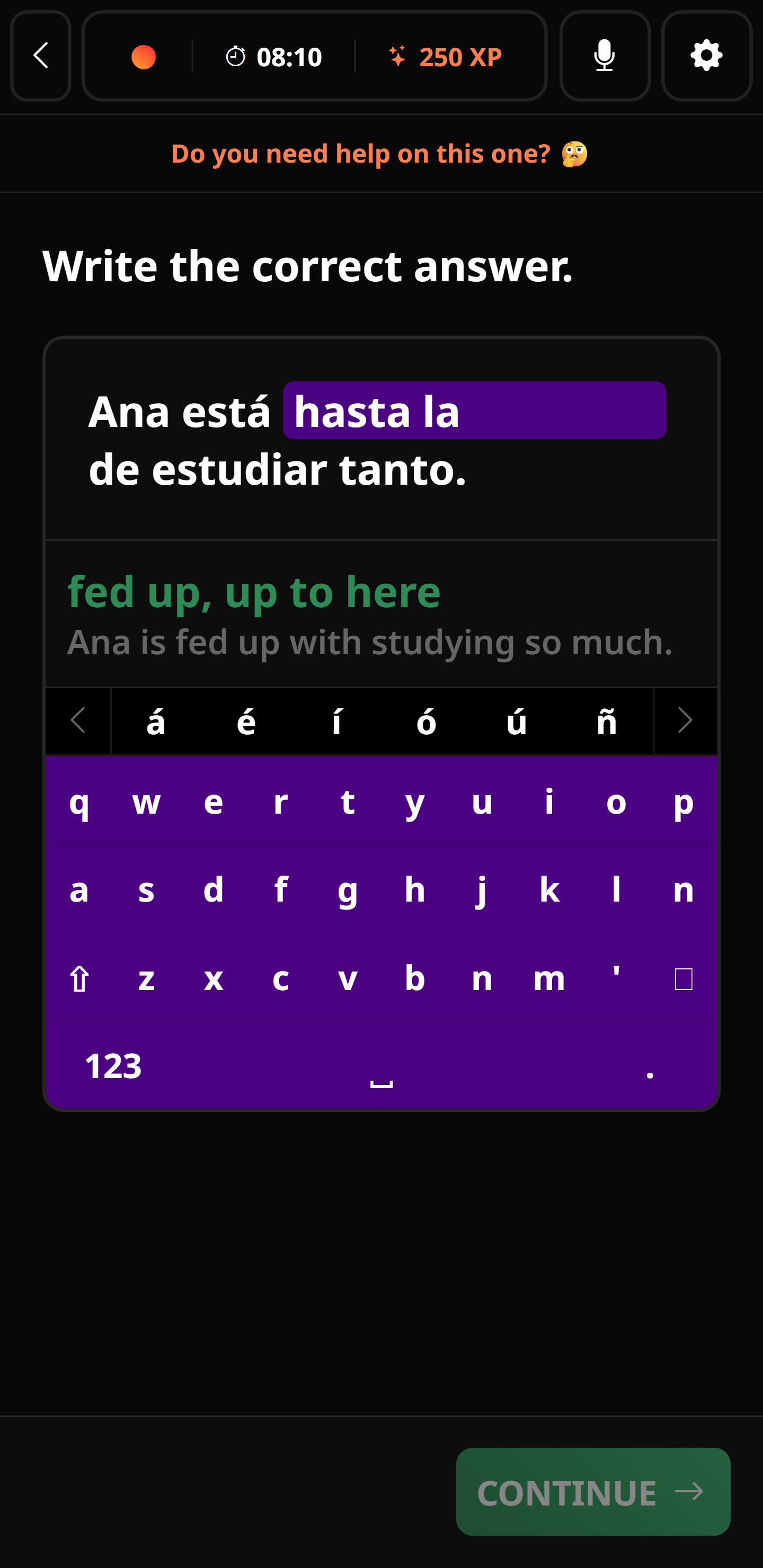
7. bekommen does not mean "become"
The classic. Every German learner tells this story, usually about a restaurant.
Example
A learner wanting a steak says "I want to become a steak." The German verb bekommen means to GET, not to become.
✅ — I'd like to get a steak.
✅ — I'm becoming a teacher.
Why: bekommen = to receive or get. werden = to become. A German saying "I become a steak" in English is making the mirror-image mistake.
8. Other false friends that quietly wreck sentences





Join more than 100,000 students learning on Univext
📐 The Case Mistakes
9. Using the wrong case after two-way prepositions
in, auf, an, unter, über, vor, hinter, neben, zwischen take either accusative or dative. The preposition doesn't decide. The meaning does.
Example
Movement toward it, so accusative: — I go into the kitchen.
Location with no movement, so dative: — I am in the kitchen.
The fix: Ask one question — wohin (where to) or wo (where at)? wohin → accusative. wo → dative. That single question resolves the entire set of nine prepositions.
10. Ignoring dative verbs
Some verbs simply demand dative. There's no logic to derive; there's a list to know.
Example
❌ Ich helfe dich. → ✅ — I help you.
❌ Ich danke dich. → ✅ — I thank you.
The core set: helfen, danken, folgen, gefallen, gehören, antworten, glauben, passen. Learn these eight and you've covered most of what you'll actually say.
11. Getting the accusative masculine wrong
Masculine is the only gender that visibly changes in the accusative. Which is exactly why it gets missed.
Example
❌ Ich sehe der Mann. → ✅ — I see the man.
Unchanged: ✅ and ✅
Why: der → den. Feminine and neuter look identical in nominative and accusative, so learners conclude "cases don't change much" and then flatten masculine too.
🕐 The Wenn, Wann and Als Mistakes
12. Using wenn when you mean wann
Example
❌ Ich weiß nicht, wenn er kommt.
✅ — I don't know when he's coming.
Why: wann = the question word "when," including inside indirect questions. wenn = "if" or "whenever." English collapses both into "when," so English speakers reach for the wrong one roughly half the time.
13. Using wenn for a single past event
Example
❌ Wenn ich ein Kind war, wohnte ich in Berlin.
✅ — When I was a child, I lived in Berlin.
The rule, compressed: One specific completed event in the past → als. Repeated or habitual → wenn. A question → wann.
Become bilingual in 30 days with Univext!
Start a lesson with our teacher for free and become bilingual like our 100,000 students!
🗣️ The Mistakes That Make You Sound Foreign
14. Over-using the present perfect in writing
In speech, Germans say constantly. In written narrative, that same choice reads oddly childish. Written German prefers the simple past: .
The fix: Speak in perfect. Write in past. sein, haben and the modals are exceptions — use their simple past everywhere, including speech: , , .
15. Saying "Ich bin gut" when you mean you're doing fine
Example
❌ Ich bin gut. This means "I am a morally good person."
✅ — I'm doing well.
Why: German expresses states of being with a dative construction. Literally: "to me it goes well." The same pattern runs through — I'm cold — where saying Ich bin kalt tells people you're emotionally frigid.
🚀 Reading This Won't Fix Your German
Here's the uncomfortable part. You just read 15 corrections. In a week you'll remember maybe three. In a month, one.
Not because the explanations are bad — because recognition is not production. You can recognize weil + verb-final on a page and still say "weil ich bin müde" out loud, because the wrong pattern arrives faster than the right one. The gap between knowing a rule and executing it under conversational pressure is the entire difficulty of learning German.
That gap closes exactly one way: producing German, being corrected instantly, and producing it again. Not next week when a tutor is free. Not when a course module unlocks. In the moment your brain reached for the wrong article.
Important
Umi is an AI tutor that talks with you in German and catches these exact errors as they leave your mouth — the missed den, the verb that should have gone last, the wenn that should have been wann. Try a free lesson right now, no scheduling and no waiting. Start speaking German →
Join more than 100,000 students learning on Univext
📚 Keep Going
- Best Apps to Learn German in 2026 (Tested & Ranked) — how the tools actually compare
- How Long Does It Take to Learn German? (Realistic Timeline) — honest numbers, no marketing math
Making these mistakes isn't a sign you're bad at German. It's a sign you're speaking German — which is the only place fluency has ever come from. The learners who fix them fastest aren't the smartest ones. They're the ones getting corrected the most often.
Important
Ready to stop making mistake #3? Start your free German lesson with Umi →