

Everyone asking "how long does it take to learn German?" wants the same thing: a real number, not a sales pitch. So here it is up front — reaching conversational German (B1) takes most English speakers around 600–750 hours of focused study, and full professional fluency (C1) closer to 900–1,100 hours. What that means in calendar time depends entirely on how many hours a week you put in. Study 30 minutes a day and B1 is roughly 18 months away. Study an hour a day and you're looking at 9–12 months. This guide breaks down the honest timeline level by level, explains exactly which parts of German slow learners down, and shows how to shave hundreds of hours off the total.
⏱️ The Honest Timeline: German by CEFR Level
The Common European Framework of Reference (CEFR) splits language ability into six levels — A1, A2, B1, B2, C1, C2. The US Foreign Service Institute classifies German as a Category II language for English speakers: harder than Spanish or French, but far easier than Russian, Arabic, or Mandarin. English and German share Germanic roots, thousands of cognates (Haus/house, Wasser/water, Freund/friend), and similar sentence rhythm. That head start is real — but German grammar claws some of it back.
Here's what each level actually looks like, and the study hours to get there:
Most learners' real goal is B1–B2: the point where German stops being a subject you study and becomes a language you actually live in. That's the sweet spot this article focuses on.
Notes
These hours assume active, focused study — not passively leaving a podcast on while you cook. One hour of real practice beats three hours of background noise.
📅 What That Means in Real Calendar Time
Hours only matter once you turn them into a schedule you'll actually keep. Here's how the same ~600 hours to B1–B2 spreads out depending on your daily commitment:
The pattern is obvious but worth saying plainly: consistency beats intensity. Thirty focused minutes every single day will carry you further than a three-hour cram session every Sunday, because language lives in your long-term memory, and long-term memory is built through spaced repetition — a little, often. The learners who reach fluency aren't the ones with the most free time. They're the ones who never skip two days in a row.
Become bilingual in 30 days with Univext!
Start a lesson with our teacher for free and become bilingual like our 100,000 students!
🧩 Why German Feels Hard (and What Actually Slows You Down)
German has a reputation for difficulty, but that reputation is lopsided. Some parts are genuinely easy; a few specific features are what cost learners months. Knowing which is which lets you brace for the hard bits instead of being blindsided.
The four cases
German nouns, articles, and adjectives change form depending on their grammatical role — nominative, accusative, dative, and genitive. "The" alone has forms like der, die, das, den, dem, des. This is the single biggest time sink for English speakers, because English abandoned cases centuries ago. The good news: cases follow rules, and once the patterns click (usually well into A2), they become automatic.
Grammatical gender
Every German noun is der (masculine), die (feminine), or das (neuter) — and the gender is often unpredictable. Das Mädchen ("the girl") is neuter. The only real fix is learning each noun with its article from day one, never the bare word. Learners who do this from the start save themselves a painful relearning phase later.
Word order
German loves sending the verb to the end of the clause: "Ich glaube, dass er heute nach Hause kommt" — literally "I believe that he today home comes." It feels backwards at first, then suddenly stops feeling like anything at all.
Compound words and long nouns
Geschwindigkeitsbegrenzung (speed limit) looks terrifying but is just three ordinary words glued together. Once you can spot the seams, long words become easy — they're logic, not vocabulary you have to memorize whole.
Example
What's actually EASY in German: spelling is phonetic (words are pronounced how they're written), there's no tonal system, and roughly 40% of English vocabulary has a German cousin you'll recognize on sight.





Join more than 100,000 students learning on Univext
🎯 The Factors That Change Your Personal Timeline
The averages above are a starting point. Your real number depends on a handful of variables:
- Prior language experience. If you've already learned a second language — especially another Germanic or case-based one like Dutch or Russian — your brain already has the machinery. Expect to move 20–30% faster.
- Daily consistency. Covered above, but it's the #1 predictor. Daily learners routinely hit B1 in half the calendar time of weekend-only learners logging the same total hours.
- Speaking practice from day one. Learners who speak early reach conversational fluency dramatically faster than those who only read and do grammar drills. You cannot learn to speak by reading, any more than you can learn to swim by watching videos.
- Immersion. Living in Germany, or simply switching your phone, shows, and music to German, multiplies every study hour.
- Motivation and goal clarity. "I want to pass the Goethe B1 exam for my visa by June" pulls you forward far harder than "I'd like to learn some German someday."
🚀 How to Cut Hundreds of Hours Off the Total
The published FSI numbers assume a traditional classroom — a teacher, a textbook, a fixed pace set by the slowest student in the room. Most of the wasted hours there come from three things: waiting for feedback, drilling grammar you already know, and never getting enough speaking time. Kill those three and the total drops fast.
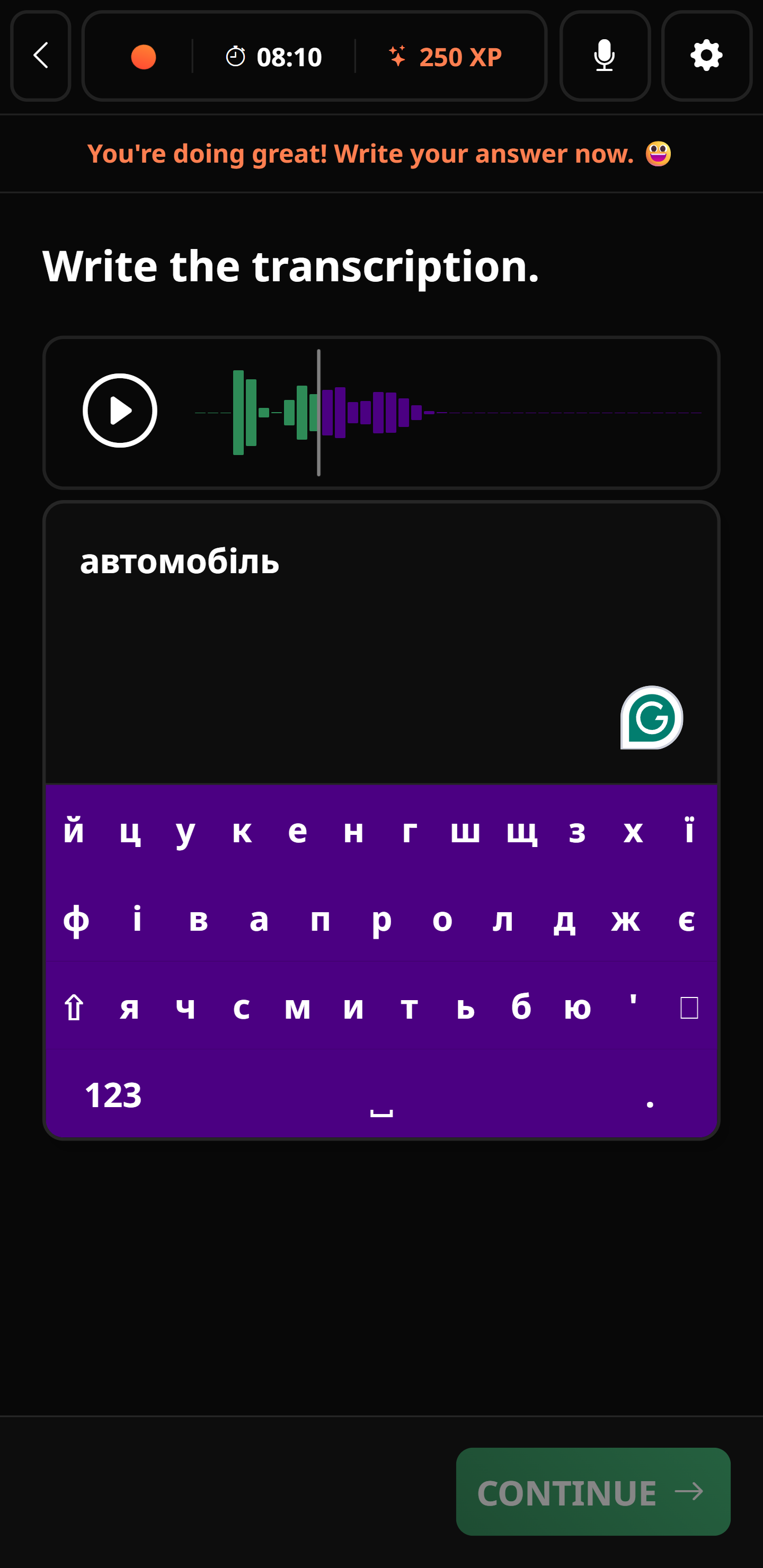
This is exactly where an AI tutor changes the math. Univext's AI teacher, Umi, gives you a personal German tutor available 24/7 — one that corrects every sentence the instant you say it, adapts each lesson to the exact things you're getting wrong, and lets you speak out loud from your very first session instead of waiting weeks for the confidence to open your mouth in a group class.
The point isn't that grammar stops mattering. It's that the hours you spend actually using German — speaking it, being corrected, trying again — are worth several times the hours you spend passively reading rules. Concentrate your time there and B1 arrives months sooner.
Important
The fastest way to find out how many hours German will really take you is to start the clock today. Every day you wait is a day the timeline doesn't move. Start a free lesson with Umi — it takes under two minutes to sign up.
Become bilingual in 30 days with Univext!
Start a lesson with our teacher for free and become bilingual like our 100,000 students!
🗺️ A Realistic 12-Month Plan to Conversational German
If you can commit to about an hour a day, here's what a year of focused German looks like:
- Months 1–2 (A1): Master the sounds, the present tense, ~500 core words, and — crucially — every new noun learned with its der/die/das. Start speaking in full simple sentences immediately.
- Months 3–5 (A2): Add the past tense (Perfekt), the accusative and dative cases, and everyday vocabulary. Begin having short real conversations. This is where cases stop being scary.
- Months 6–9 (B1): Handle opinions, hypotheticals, and connected speech. You can now travel, handle appointments, and hold a genuine conversation. This is conversational fluency — the goal most learners are really chasing.
- Months 10–12 (early B2): Refine, expand vocabulary, tackle nuance and idiom. You start following films and news without subtitles.
Stretch that same plan over 30 minutes a day and simply double the calendar — the destination is identical, the road is just longer. What matters is that you don't stop.
🌟 Start Your German Clock Today
So — how long does it take to learn German? For most English speakers: a few months to hold a conversation, around a year to real conversational fluency at an hour a day, and a couple of years to professional mastery. German rewards consistency more than talent, and it rewards speaking more than studying. The learners who get there fastest are simply the ones who start now and never let two days pass without German.
You don't need to book a class, buy a textbook, or wait for the new term. You need to open your mouth and start — with a tutor who corrects you, adapts to you, and is available the moment you have a spare ten minutes.
Want to see how fast you can move? Sign up for Univext in under two minutes and start your free German lesson with Umi today. Your timeline starts the day you do.
If you're still comparing tools before you commit, these two guides are worth a read: Best Apps to Learn German in 2026 (Tested & Ranked) and Learn German with AI: Best AI Tutors (2026).
Join more than 100,000 students learning on Univext
🎓 How Long to Reach Specific German Goals
Not everyone is chasing the same finish line. Here's how the timeline maps onto the goals learners actually have:
The Goethe-Zertifikat B1 is the milestone most people ask about, because it's the level tied to residence permits and citizenship in Germany, Austria, and Switzerland. It's a realistic first-year target at an hour a day — and having a hard exam date on the calendar is one of the strongest accelerators there is.
Become bilingual in 30 days with Univext!
Start a lesson with our teacher for free and become bilingual like our 100,000 students!
❓ How Long to Learn German — Quick Answers
Can I learn German in 3 months? You can reach solid A1–A2 and hold basic conversations in three months with intensive daily study (2+ hours). True fluency in three months is a myth — ignore anyone selling it.
Is German harder than Spanish? Slightly. Spanish is FSI Category I (600 hours to fluency); German is Category II (750 hours). The gap is mostly the case system and gender. But German's shared vocabulary with English narrows it more than the raw numbers suggest.
How long to become fluent in German? "Fluent" usually means B2 — comfortable in work and social life. That's around 600 hours, roughly 12–20 months at a steady daily pace.
What's the fastest way to learn German? Daily practice, speaking from day one, immersion where possible, and instant correction so you never cement mistakes. An AI tutor like Umi delivers the last three on demand.
Do I need to live in Germany? No. Immersion helps, but with the right tools you can build conversational German entirely from home — millions do.