

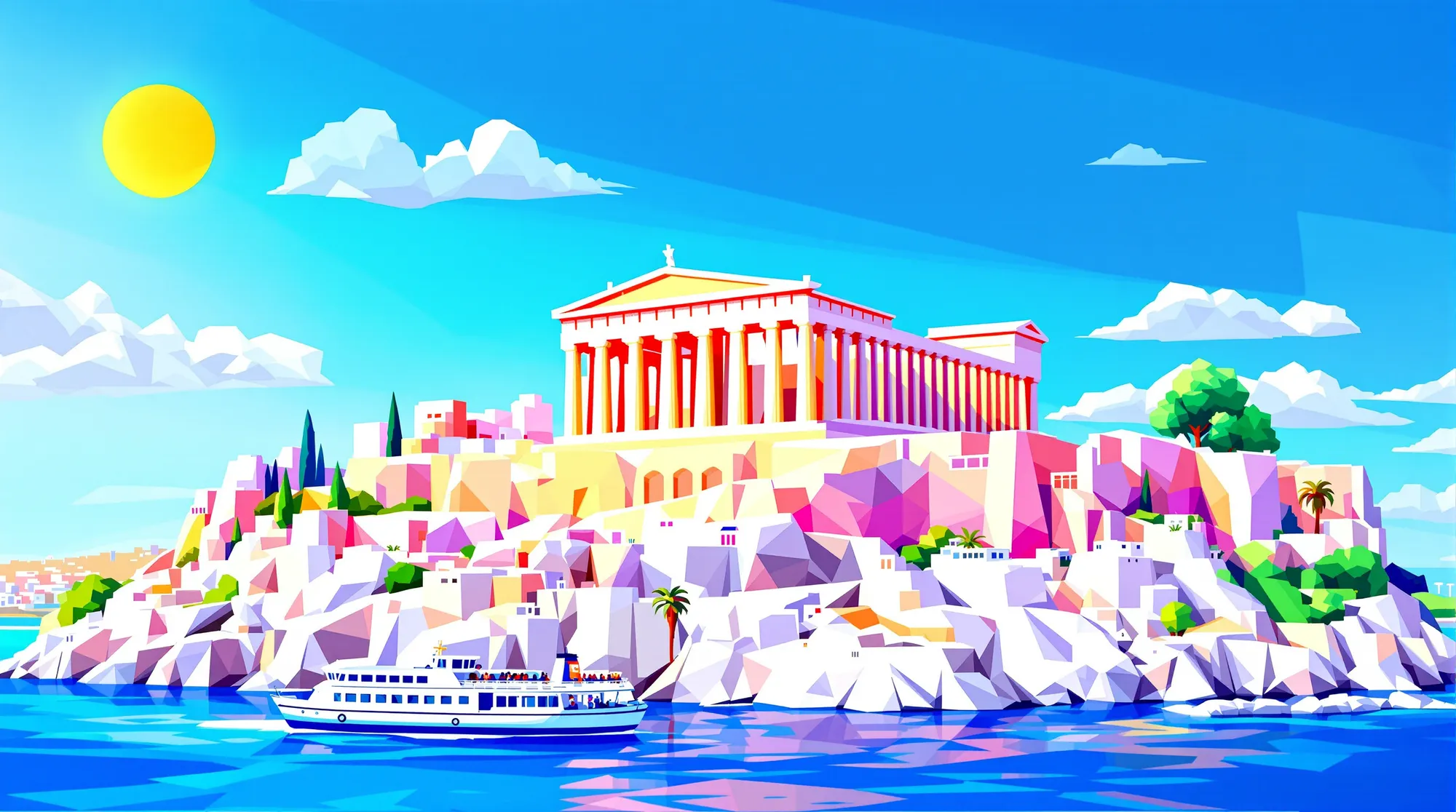
Heading to Greece and worried about the language barrier? You're not alone. Whether you're island-hopping through the Cyclades, ordering souvlaki in Athens, or catching a ferry to Santorini, knowing a few basic Greek phrases can completely transform your travel experience.
The good news? Greeks are famously warm and hospitable, and they light up when a visitor makes the effort — even a simple "καλημέρα" (kaliméra) instead of "hello" can change the entire tone of an interaction. You don't need to be fluent. You just need the right phrases at the right time.
In this guide, we've compiled 50+ essential Greek phrases organized by real travel situations: from greetings and taverna orders to asking for directions, catching ferries, and handling emergencies. Every Greek phrase is written in the Greek alphabet with an easy romanization beside it, plus audio pronunciation so you can start practicing right away.
👋 Greek Greetings and Basic Courtesy
First impressions matter everywhere, but especially in Greece. Starting a conversation with a proper greeting shows respect and opens doors — sometimes literally.
Important
Careful: "ναι" (ne) means YES in Greek, even though it sounds like "no" in English. And a Greek "no" is "όχι" (óhi). Mixing these two up is the classic tourist mistake.
🍽️ Taverna and Food Phrases
Eating is one of the great joys of any Greek trip. These phrases will help you navigate menus, order like a local, and enjoy long taverna meals with confidence.
Example
Order like a local: In a taverna, ordering a few small plates to share — "μεζέδες" (mezédes) — is the traditional way to eat. Say "Θα ήθελα μερικούς μεζέδες" (tha íthela merikús mezédes), "I'd like some mezze," and let the table fill up.
Notes
A Greek coffee ("ελληνικός καφές") is strong and served with the grounds. If you want something long and iced, ask for a "freddo espresso" or "freddo cappuccino" — the summer staple all over Greece.
Become bilingual in 30 days with Univext!
Start a lesson with our teacher for free and become bilingual like our 100,000 students!
🗺️ Asking for Directions
GPS doesn't always work in whitewashed island alleys or old Athens neighborhoods. These phrases will help when technology fails.
Example
Useful combo: "Συγγνώμη, πού είναι το λιμάνι;" (signómi, pu íne to limáni) — "Excuse me, where is the port?" Swap in any place: η παραλία (i paralía, the beach), η φαρμακείο (to farmakío, the pharmacy), η Ακρόπολη (i Akrópoli, the Acropolis).





Join more than 100,000 students learning on Univext
⛴️ Ferry and Transport Phrases
Greece runs on ferries and buses. These phrases will get you to the right island, on the right boat, at the right time.
Notes
Ferry schedules in Greece shift with the weather and the season. Always double-check the departure the day before — "Τι ώρα φεύγει το πλοίο αύριο;" (ti óra févyi to plío ávrio), "What time does the ferry leave tomorrow?"
🏨 Hotel and Accommodation
Check-in, check-out, and everything in between.
Become bilingual in 30 days with Univext!
Start a lesson with our teacher for free and become bilingual like our 100,000 students!
🚨 Emergency Phrases
Nobody plans for emergencies, but being prepared matters. These phrases could be genuinely important.
Important
Greece's emergency number is 112 (the EU standard, English-speaking operators). You can also dial 166 for an ambulance, 100 for the police, and 199 for the fire service.
🛍️ Shopping Phrases
From leather sandals in Athens to souvenirs on the islands, these phrases will help you shop without awkward pointing.
Join more than 100,000 students learning on Univext
💬 Numbers and Useful Extras
Numbers come up constantly — prices, addresses, ferry times, ordering quantities.
Become bilingual in 30 days with Univext!
Start a lesson with our teacher for free and become bilingual like our 100,000 students!
🚀 How to Actually Learn These Phrases
Reading a phrase list is a great start — but if you can't pronounce them or recall them under pressure, they won't help you at the taverna counter in Naxos.
Here's what actually works:
1. Listen and repeat. Greek has sounds that don't exist in English — the soft "γ" (gh), the rolled "ρ" (r), the "χ" (h) like a Scottish "loch." Reading romanization only gets you halfway. Hearing native pronunciation is essential — use the audio buttons above to practice.
2. Learn the alphabet early. The Greek alphabet looks intimidating but it's only 24 letters, and once you can read signs, menus, and ferry boards, your whole trip gets easier. Many letters are already familiar from math and science.
3. Practice in context. Don't memorize isolated words. Practice complete sentences in realistic scenarios: ordering mezze, asking for the port, checking into a hotel.
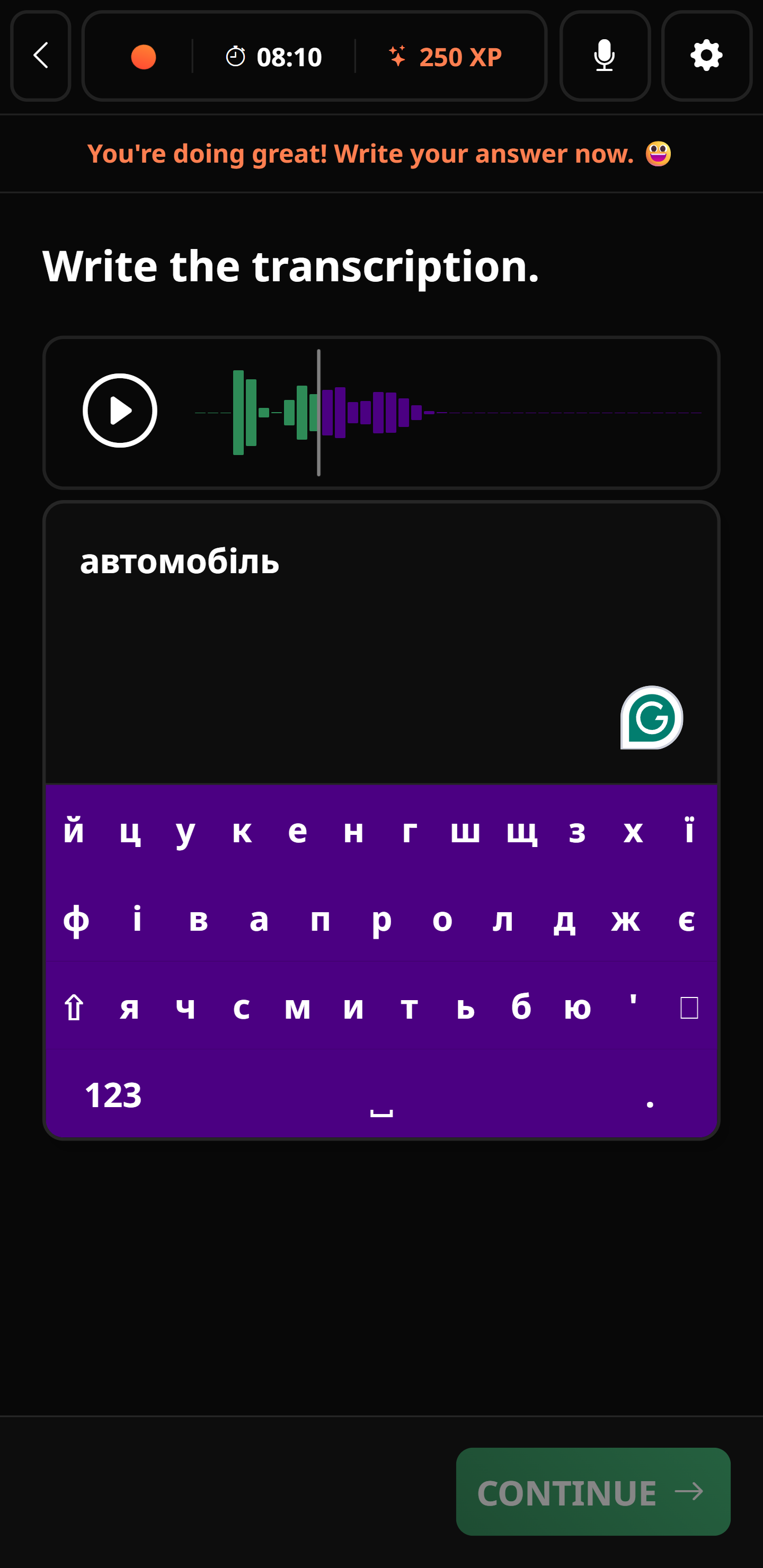
4. Use an AI tutor for conversation practice. Apps like Univext let you practice Greek conversations with Umi, an AI teacher who speaks native Greek and corrects your mistakes in real time. It's like having a patient Greek tutor available 24/7.
Important
Univext offers a 14-day free trial with 30 minutes per day — enough to practice every phrase in this guide before your trip. Start your free trial →
📊 Phrasebook vs App vs AI Tutor
Not sure which tool to use for your trip prep? Here's how the options compare:
Notes
A phrasebook gets you through basic transactions, but it can't teach you to understand what Greeks say back. An AI tutor like Umi can simulate real conversations so you're not just speaking at people — you're speaking with them.
🇬🇷 Cultural Tips That Go With the Language
Knowing the phrases is half the battle. Here are cultural norms that will help you use them correctly:
- Greet before asking. Always say "καλημέρα" or "γεια σας" before asking a question. Jumping straight to a request without a greeting comes across as abrupt.
- Slow down. Greek meals, especially in tavernas, are long and social. Rushing the bill is unusual — relax and enjoy the "παρέα" (paréa, good company).
- "Φιλοξενία" (filoxenía) is real. Hospitality is a point of pride. Don't be surprised by a free dessert or a shot of tsipouro after your meal — accept it graciously.
- Name days matter. Greeks often celebrate their name day more than their birthday. "Χρόνια πολλά" (hrónia polá) is the all-purpose "best wishes / many happy returns."
- A little goes a long way. Even a few words of Greek earn genuine warmth. Locals know it's a hard language for visitors and appreciate every attempt.
Become bilingual in 30 days with Univext!
Start a lesson with our teacher for free and become bilingual like our 100,000 students!
🎯 Ready to Go Beyond Phrases?
These 50+ phrases will get you through your trip to Greece. But if you want to actually have conversations — understand what people say back to you, chat with your host, or make friends at a seaside taverna — you need real practice.
Univext gives you an AI Greek tutor named Umi who speaks native Greek, corrects your pronunciation, explains grammar when you need it, and adapts every lesson to your level. No textbooks, no memorization drills — just real conversation practice.
Already studying another language? We also cover the best apps to learn Italian, French, Spanish, German, Portuguese, Russian, Polish, Ukrainian, and English.
Important
Try Univext free for 14 days → Practice these Greek phrases with Umi before your trip. 30 minutes a day is all you need.