


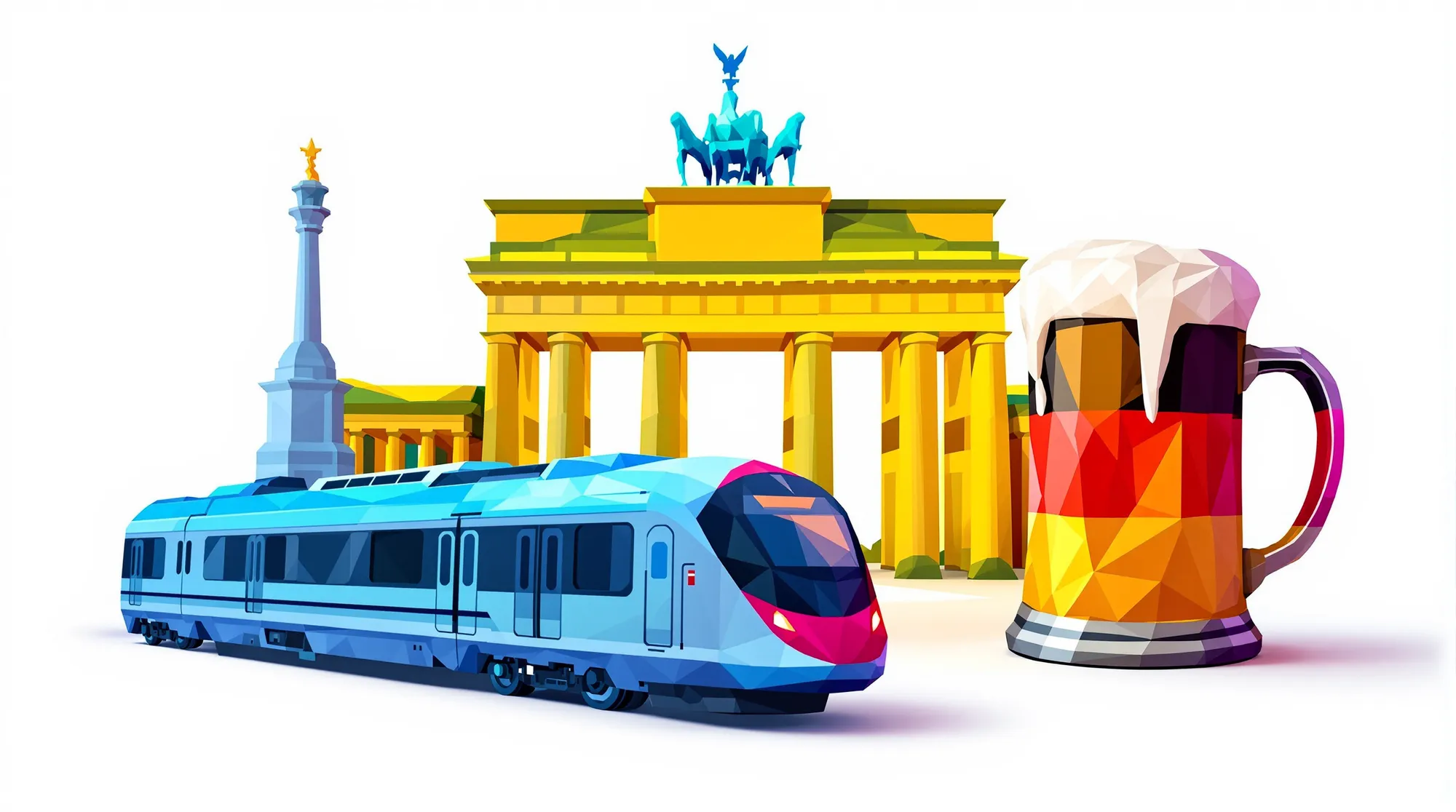
Planning a trip to Germany, Austria, or Switzerland and worried about the language barrier? You're not alone. Whether you're wandering through Berlin, ordering a pretzel in Munich, or catching a train in Frankfurt, knowing a few basic German phrases can completely transform your travel experience.
The good news? Germans genuinely appreciate it when visitors make an effort — even a simple "Guten Tag" instead of "hello" can change the entire tone of an interaction. You don't need to be fluent. You just need the right phrases at the right time.
In this guide, we've compiled 50+ essential German phrases organized by real travel situations: from greetings and restaurant orders to asking for directions and handling emergencies. Each phrase includes audio pronunciation so you can start practicing right away.
👋 German Greetings and Basic Courtesy
First impressions matter everywhere, but especially in Germany, where politeness and formality are valued. Starting a conversation with a proper greeting shows respect and opens doors — sometimes literally.
Important
Pro tip: Germans use "Sie" (formal you) with strangers and "du" (informal you) with friends. When in doubt, stay formal — starting with "Guten Tag" and "Entschuldigung" immediately earns respect.
🥨 Restaurant and Food Phrases
Eating and drinking are a big part of any German trip — from beer gardens to bakeries. These phrases will help you navigate menus, order with confidence, and settle the bill smoothly.
Example
Ordering like a local: In many German restaurants you seat yourself, and you often pay at the table — say "Die Rechnung, bitte" to get the bill. When paying, it's common to tell the server the total you want to pay including tip.
Notes
Tap water isn't usually served for free. If you order "ein Wasser," you'll likely get sparkling mineral water. Ask for "stilles Wasser" if you prefer it still.
Become bilingual in 30 days with Univext!
Start a lesson with our teacher for free and become bilingual like our 100,000 students!
🗺️ Asking for Directions
Google Maps can't always save you — especially in old town centers or underground stations. These phrases will help when technology fails.
Example
Useful combo: "Entschuldigung, wo ist der Bahnhof?" — "Excuse me, where is the train station?" This polite formula works for asking about anything: die Apotheke (pharmacy), das Krankenhaus (hospital), das Museum (museum).





Join more than 100,000 students learning on Univext
🛍️ Shopping Phrases
From Christmas markets to department stores, these phrases will help you shop without awkward pointing.
🏨 Hotel and Accommodation
Check-in, check-out, and everything in between.
Become bilingual in 30 days with Univext!
Start a lesson with our teacher for free and become bilingual like our 100,000 students!
🚨 Emergency Phrases
Nobody plans for emergencies, but being prepared matters. These phrases could be genuinely important.
Important
The emergency number across Germany, Austria, and Switzerland is 112 (the EU standard for medical and fire emergencies). For police in Germany, you can also dial 110.
🚆 Transportation Phrases
Getting around — whether by train, bus, or taxi — requires a few key phrases.
Join more than 100,000 students learning on Univext
💬 Numbers and Useful Extras
Numbers come up constantly — prices, addresses, phone numbers, ordering quantities.
Become bilingual in 30 days with Univext!
Start a lesson with our teacher for free and become bilingual like our 100,000 students!
🚀 How to Actually Learn These Phrases
Reading a phrase list is a great start — but if you can't pronounce them or recall them under pressure, they won't help you at the ticket counter in Berlin.
Here's what actually works:
1. Listen and repeat. German pronunciation is quite consistent once you learn the rules, but sounds like "ü," "ö," and "ch" trip people up. Hearing native pronunciation is essential — use the audio buttons above to practice.
2. Practice in context. Don't memorize isolated words. Practice complete sentences in realistic scenarios: ordering food, asking for directions, checking into a hotel.
3. Use an AI tutor for conversation practice. Apps like Univext let you practice German conversations with Umi, an AI teacher who speaks native German and corrects your mistakes in real-time. It's like having a patient German tutor available 24/7.
Important
Univext offers a 14-day free trial with 30 minutes per day — enough to practice every phrase in this guide before your trip. Start your free trial →
4. Focus on the 80/20 rule. The phrases in this guide cover roughly 80% of typical tourist interactions. You don't need to learn German grammar — just these practical phrases spoken with confidence.
📊 Phrasebook vs App vs AI Tutor
Not sure which tool to use for your trip prep? Here's how the options compare:
Notes
A phrasebook gets you through basic transactions, but it can't teach you to understand German responses. An AI tutor like Umi can simulate real conversations so you're not just speaking at Germans — you're speaking with them.
🇩🇪 Cultural Tips That Go With the Language
Knowing the phrases is half the battle. Here are cultural norms that will help you use them correctly:
- Be punctual. Germans value punctuality highly. Being on time — for trains, reservations, and meetings — is a sign of respect.
- Use formal address. With strangers and in shops, restaurants, and hotels, use "Sie" and address people as "Herr" or "Frau" plus their surname.
- Carry cash. Many smaller shops, bakeries, and restaurants still prefer cash over cards. Always have some euros on hand.
- Recycling and quiet hours. Germans take recycling seriously, and Sundays are traditionally quiet days — many shops are closed and loud noise is frowned upon.
- Say hello when entering. In small shops or waiting rooms, a friendly "Guten Tag" when you enter is expected and appreciated.
Become bilingual in 30 days with Univext!
Start a lesson with our teacher for free and become bilingual like our 100,000 students!
🎯 Ready to Go Beyond Phrases?
These 50+ phrases will get you through your trip to Germany, Austria, or Switzerland. But if you want to actually have conversations — understand what people say back to you, chat with your Airbnb host, or make friends at a local pub — you need real practice.
Univext gives you an AI German tutor named Umi who speaks native German, corrects your pronunciation, explains grammar when you need it, and adapts every lesson to your level. No textbooks, no memorization drills — just real conversation practice.
For a detailed comparison of German learning tools, check out our guide to the best apps to learn German in 2026. Already studying another language? We also cover French, Spanish, Italian, Portuguese, Russian, Polish, Ukrainian, and English.
Important
Try Univext free for 14 days → Practice these German phrases with Umi before your trip. 30 minutes a day is all you need.