

"How long does it take to learn Italian?" is one of the most-searched questions from anyone who has ever daydreamed about ordering a real cappuccino in Rome or reading Dante in the original. The honest answer is: it depends — but not on luck or talent. It depends on measurable things like how many hours you put in, where you're starting from, and how you study. This guide gives you the realistic numbers, level by level, so you can set expectations you'll actually hit instead of the vague "a few months" promise most apps sell you.
⏱️ The Short Answer
For a native English speaker, Italian is one of the fastest major languages to learn. The U.S. Foreign Service Institute (FSI), which has trained diplomats for decades, classifies Italian as a Category I language — the easiest tier for English speakers, alongside Spanish and French. Their estimate: roughly 600–750 hours of study to reach professional working proficiency (around a strong B2/C1 on the CEFR scale).
That sounds like a lot until you break it down:
- 30 minutes a day → conversational (B1) in about 12–18 months
- 1 hour a day → conversational (B1) in about 6–9 months
- 2 hours a day + immersion → solid B2 in under a year
The difference between someone who "tried Italian for years and gave up" and someone who's chatting confidently in a café isn't intelligence. It's consistent, focused hours — and the quality of those hours.
Important
The single biggest predictor of success isn't your age, your background, or your "language gene." It's whether you show up every day. Twenty focused minutes daily beats a three-hour cram session once a week, every single time.
📊 Italian Timeline by CEFR Level
The CEFR (Common European Framework of Reference) is the international standard for measuring language ability. Here's what each level means for Italian and roughly how long it takes at a steady pace of about 1 hour per day.
Notes
These hours include everything: lessons, vocabulary review, listening practice, and real conversation. They are not "sitting in a classroom" hours — they're total exposure. This is why an efficient method that packs real practice into every minute reaches these milestones faster.
Most people who say they want to "learn Italian" are actually aiming for B1 — the point where you can travel, socialize, and feel genuinely capable. That's a realistic 6–12 month goal for a committed learner, and it's the sweet spot where the language stops feeling like homework and starts feeling like a superpower.
Become bilingual in 30 days with Univext!
Start a lesson with our teacher for free and become bilingual like our 100,000 students!
🇮🇹 Why Italian Is Faster Than You Think
Italian has a reputation for being romantic and musical, but it's also genuinely learner-friendly. Here's why English speakers tend to move quickly:
- Thousands of cognates. Words like importante, famiglia, nazione, stazione, and animale are close enough to English that you already half-know them.
- Phonetic spelling. Italian is written the way it sounds. Once you learn the rules, you can pronounce almost any word on sight — no silent letters, no spelling chaos like English or French.
- Consistent pronunciation. Vowels are pure and stable. There are only a handful of sounds that don't exist in English, and they're easy to pick up.
- Latin roots you already use. English borrowed heavily from Latin, so Italian vocabulary constantly feels familiar.
Of course, Italian isn't effortless. There are real hurdles:
- Gendered nouns (il libro vs. la casa) that don't always follow obvious rules
- Verb conjugations across multiple tenses and moods
- The subjunctive mood (il congiuntivo), which trips up even advanced learners
- Double consonants that change meaning (pena = pain, penna = pen)
Example
Here's the good news: you hit A1 and A2 — the levels that make travel and small talk possible — long before you need to master the subjunctive. You can be ordering dinner, making friends, and reading menus with confidence months before you tackle the hard grammar.




Join more than 100,000 students learning on Univext
🔑 The 4 Factors That Change Your Timeline
Two people can start Italian on the same day and finish a year apart. These are the variables that decide which one you'll be.
1. Hours per day (consistency)
This is the big one. Language learning rewards frequency over volume. Your brain consolidates vocabulary and grammar during the gaps between sessions, so daily contact — even short — compounds far faster than occasional marathons.
2. Prior language experience
If you already speak Spanish, French, Portuguese, or Romanian, you have an enormous head start — these are Italian's cousins, and you'll recognize grammar patterns and vocabulary immediately. Even a year of high-school Latin helps more than you'd expect.
3. Active vs. passive study
Watching Italian TV with subtitles feels productive, but it's mostly passive. Speaking, being corrected, and producing the language yourself builds fluency several times faster. This is the difference most learners never fix — and it's exactly why they plateau.
4. Immersion and real practice
You don't need to move to Florence. But you do need to use the language in conversation regularly. The learners who improve fastest are the ones who talk — messily, imperfectly, daily — from week one.
🐢 Why Most People Take Longer Than They Should
If the numbers above look encouraging, here's the uncomfortable truth: most people learning Italian never reach them. Not because the timeline is wrong, but because of how they study.
The typical journey looks like this: download a gamified app, tap through cute exercises for a few weeks, build a streak, and then realize six months later they still can't hold a basic conversation. The problem isn't effort — it's that tapping the right answer from four choices is not the same as producing the language.
Real fluency requires three things most apps skip:
- Speaking out loud and getting corrected in real time
- Explaining, describing, and improvising — not just matching words
- Personalized feedback on your specific mistakes, not a one-size-fits-all lesson
Important
You can shave months off every estimate in this guide simply by making your practice active instead of passive. An hour of real conversation with instant correction is worth several hours of silent tapping.
Become bilingual in 30 days with Univext!
Start a lesson with our teacher for free and become bilingual like our 100,000 students!
🤖 How an AI Tutor Compresses the Timeline
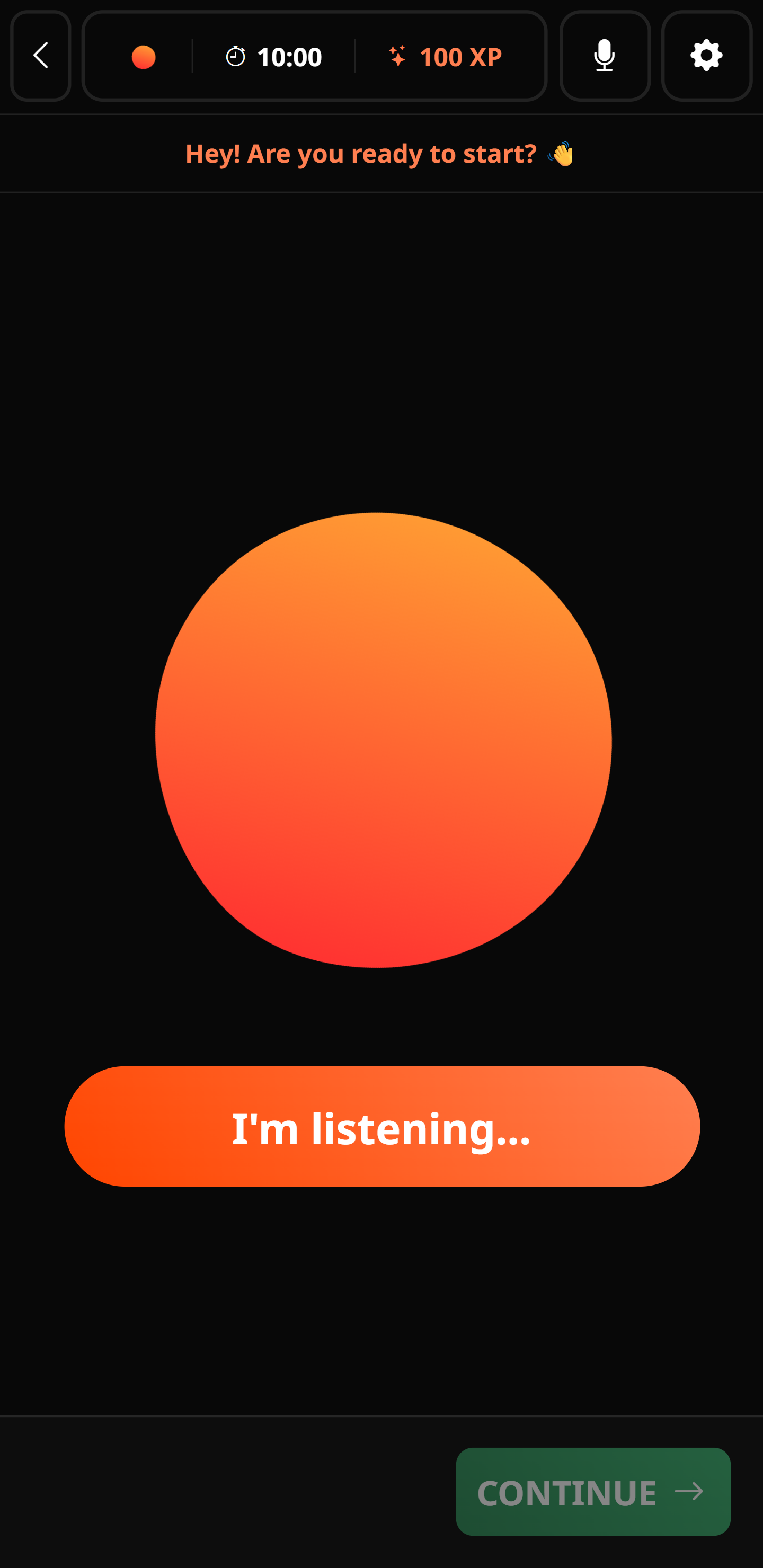
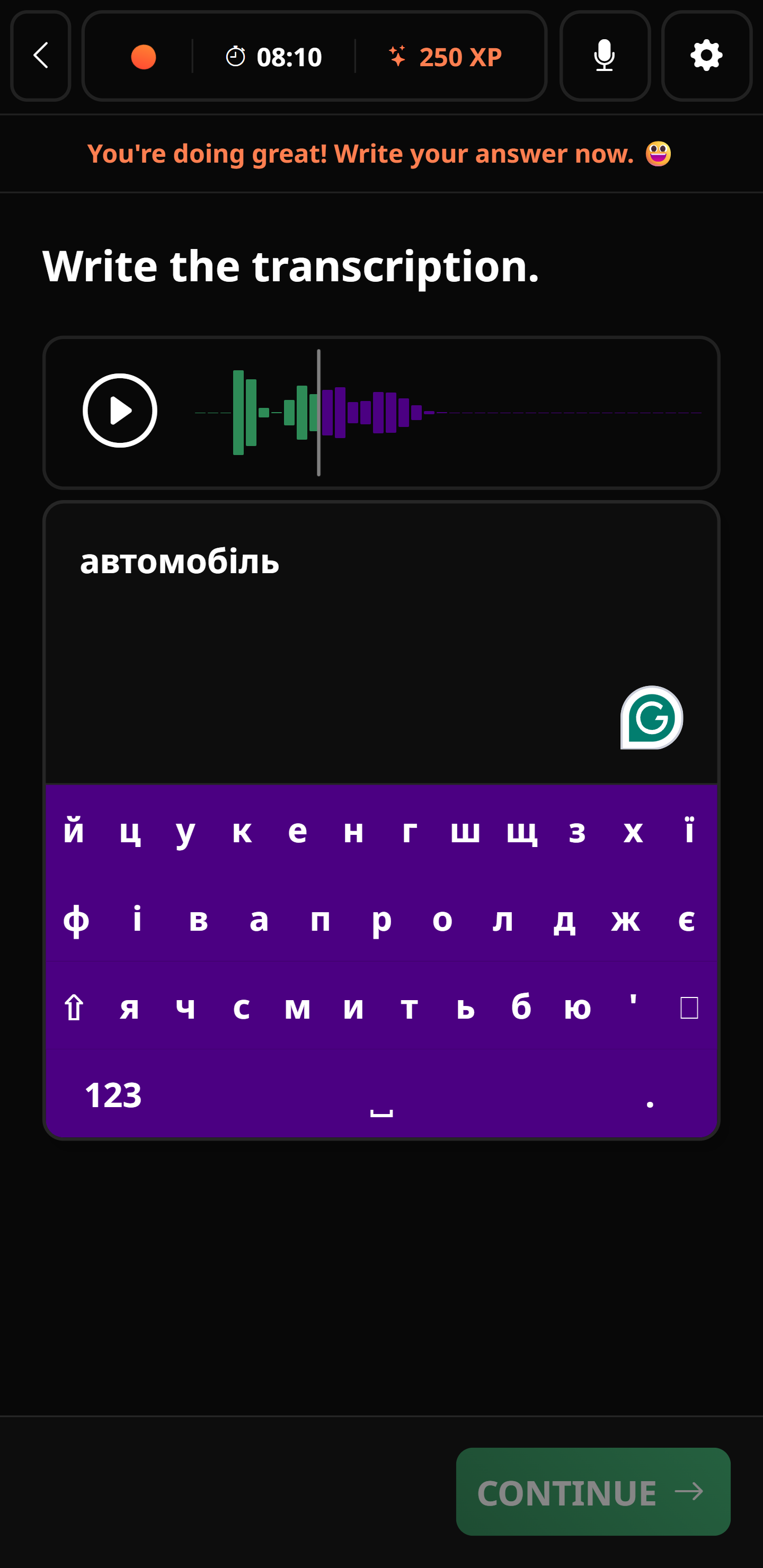
This is where the way you learn matters more than the hours you log. Univext is built around Umi, an AI language tutor designed to do the one thing most apps can't: hold a real, personalized conversation with you and correct you the moment you slip.
Instead of pre-scripted multiple-choice drills, Umi adapts to your level, remembers your weak spots, and pushes you to actually produce Italian — speaking, responding, and thinking in the language from day one. That's the active, feedback-rich practice that the FSI hours assume but most self-study never delivers.
The result: the passive hours that quietly waste most learners' time get replaced with the active practice that actually moves the needle. You still put in the work — but every minute counts for more.
If you're comparing your options, our guides on the best apps to learn Italian in 2026 and the best AI tutors for Italian break down how the tools stack up.
🗓️ A Realistic 6-Month Plan (30–45 Minutes a Day)
Here's what an achievable, non-overwhelming schedule looks like for someone aiming at confident conversational Italian (B1) within about six months.
Example
Notice what makes this work: it's daily, it builds in order, and every month ends with something you can actually do — not just a grammar chapter you've "covered." Motivation comes from visible progress, and visible progress comes from using the language, not just studying it.
The learners who follow a plan like this — and practice speaking every day instead of hoarding grammar rules — routinely reach conversational Italian in half the time of those grinding through passive apps.
Join more than 100,000 students learning on Univext
🎯 So, How Long Will It Take You?
Let's make it concrete:
- Just want to travel and get by? A1–A2 in 2–5 months of daily practice. Very achievable.
- Want real conversations? B1 in 6–12 months at 30–60 minutes a day.
- Want to work, study, or live in Italy? B2 in roughly 1–2 years of consistent effort.
- Want near-native mastery? C1+ over 2+ years — a lifelong, rewarding project.
None of these require moving abroad, quitting your job, or having a "gift for languages." They require showing up daily and making your practice active.
Important
The best day to start learning Italian was a year ago. The second-best day is today — and the timeline only starts counting once you begin. Start a free lesson with Umi and take your first step toward Italian right now: create your free account in under 2 minutes.
Become bilingual in 30 days with Univext!
Start a lesson with our teacher for free and become bilingual like our 100,000 students!
❓ Frequently Asked Questions
Is Italian hard to learn for English speakers? No — it's one of the easiest. The FSI ranks it Category I, the same tier as Spanish and French, thanks to shared Latin roots, thousands of cognates, and phonetic spelling.
Can I learn Italian in 3 months? You can reach a functional A2 — enough to travel, order, and have simple exchanges — in about 3 months with daily practice. True conversational fluency (B1) typically takes 6–12 months.
How many hours a day should I study Italian? Consistency beats intensity. Even 20–30 focused minutes every day will outperform a few long sessions per week, because your brain consolidates language between sessions.
What's the fastest way to learn Italian? Active practice: speaking out loud, getting corrected in real time, and using the language daily. Passive tapping and subtitle-watching feel productive but are far slower. An AI tutor like Umi delivers exactly this kind of active, personalized practice.
Do I need to live in Italy to become fluent? No. Immersion helps, but you can recreate its most valuable part — daily conversation and correction — from anywhere with the right tools and consistent effort.
🚀 Start Your Italian Timeline Today
Now you know the real numbers: A1 in a couple of months, conversational B1 in 6–12, and professional B2 in a year or two — all at a pace that fits a normal life. The only variable left is when you start and how you practice.
Don't let another year pass wondering "how long would it take." Make today hour zero. Sign up for Univext, meet Umi, and start speaking Italian from your very first lesson — with a 14-day free trial and 30 minutes of practice a day to build the daily habit that fluency is made of.
In bocca al lupo — good luck. Your Italian journey starts now.