

If you have ever typed "how long does it take to learn Spanish?" into Google, you already know the frustrating truth: most answers are either wildly optimistic ("fluent in 3 weeks!") or hopelessly vague ("it depends"). The honest answer sits in the middle, and it is genuinely useful once you see the numbers. This guide gives you a realistic timeline — in study hours and calendar months — for every level from complete beginner to advanced, the factors that speed things up or slow them down, and the fastest sane path to actually getting there.
Spanish is one of the best languages an English speaker can choose. It is phonetic (you read what you see), shares thousands of cognates with English, and the U.S. Foreign Service Institute ranks it as a Category I language — the easiest tier for native English speakers, alongside French and Italian. That single fact is why your timeline is shorter than you probably fear.
⏱️ The Short Answer (In Hours)
The FSI, which has trained U.S. diplomats for over 70 years, estimates that a motivated English speaker reaches professional working proficiency in Spanish in roughly 600–750 class hours. That is their benchmark for solid, confident conversation on most topics — not native perfection.
But "fluency" is not a single finish line. It is a staircase. Here is what each realistic milestone actually costs you in focused study time:
Notes
These are focused-study hours, not calendar time. Twenty minutes of real practice a day beats a three-hour cram session once a month — consistency is the single biggest multiplier in the whole table.
The takeaway: you do not need 750 hours to use Spanish. Most people feel a real thrill of progress at A2, when they can actually survive a trip and hold a simple conversation — and that is only a few months away, not years.
📅 What Each Stage Actually Feels Like
Numbers are abstract. Here is what the journey feels like from the inside, so you know what to expect and when.
Weeks 1–8: The "I can say things!" rush (A1)
This is the most motivating stretch. Spanish greetings, numbers, the present tense, and a few hundred high-frequency words unlock an surprising amount. You will order a coffee, introduce your family, and understand simple signs. Progress feels fast because you are starting from zero and every lesson adds something you can use immediately.
Months 3–7: The plateau nobody warns you about (A2)
Here is where most learners quit. The novelty fades, the past tenses arrive (Spanish has two — pretérito and imperfecto — and choosing between them trips everyone up), and you feel like you understand nothing when native speakers talk at full speed. This is normal. It is not a sign you are bad at languages. The learners who push through this valley are the ones who reach fluency. The ones who quit are the ones who believed the plateau meant failure.
Important
The plateau is a checkpoint, not a wall. Everyone hits it around A2. The only difference between people who become fluent and people who don't is that the fluent ones kept showing up for 15 minutes a day through the boring middle.
Months 8–14: Conversations click (B1)
This is the payoff. You start thinking small thoughts in Spanish instead of translating. You follow the plot of a telenovela. You have a real, if imperfect, conversation with a native speaker and both of you enjoy it. B1 is the level most people mean when they say "I want to be conversational."
Year 2 and beyond: Depth and nuance (B2–C1)
Now it is about refinement — the subjunctive mood in all its glory, idioms, humor, reading a novel without a dictionary, understanding regional accents from Mexico to Argentina to Spain. Fewer people need this level, but if you do, it is very reachable with continued daily contact.
Become bilingual in 30 days with Univext!
Start a lesson with our teacher for free and become bilingual like our 100,000 students!
🧭 The Factors That Change Your Timeline
Two people can start on the same day and one reaches B1 in 8 months while the other takes 2 years. Here is what actually accounts for the gap.
1. Consistency beats intensity — by a lot
Thirty minutes a day, every day, will take you further in six months than a weekend bootcamp every few weeks. Language lives in long-term memory, and long-term memory is built by spaced repetition — small, frequent contact. This is the number-one lever, and it is entirely under your control.
2. Speaking from day one
The learners who progress fastest talk out loud early and often, mistakes and all. Reading and listening build comprehension, but only speaking builds the reflex of producing Spanish under real-time pressure. Every week you delay speaking is a week added to your timeline.
3. Prior language experience
If you already speak French, Italian, or Portuguese, huge chunks of Spanish vocabulary and grammar will feel familiar — you may shave months off. If Spanish is your first foreign language, be patient with the first stage; you are also learning how to learn a language, and that skill compounds.
4. Comprehensible input at your level
Watching a fast Spanish film at week three is discouraging, not useful. Input works when it is slightly above your current level — challenging but understandable. Matching the difficulty to where you actually are is why a good tutor accelerates you and random YouTube videos often don't.
5. Motivation with a "why"
A concrete reason — a trip to Colombia, a Spanish-speaking partner, a job requirement — pulls you through the plateau far better than a vague "it'd be nice." Attach your Spanish to something real.



Join more than 100,000 students learning on Univext
🚀 How to Cut Your Timeline (Without Cutting Corners)
You cannot cheat the hours, but you can make every hour count for more. The difference between an efficient hour and a wasted one is enormous — and it is mostly about how you study, not how much.
The two things that shorten the timeline most — daily speaking and instant correction — are exactly what traditional apps skip and what human tutors charge a premium for. That gap is the reason so many people stall at A2: they have vocabulary but never build the reflex of using it.
Example
A learner doing 20 focused minutes a day of real conversation — speaking, getting corrected, and reviewing weak spots — routinely reaches confident B1 in under a year. The same person passively tapping through a gamified app can spend two years and never hold a live conversation, because they never practiced the one skill that matters most.
🤖 Where an AI Tutor Fits
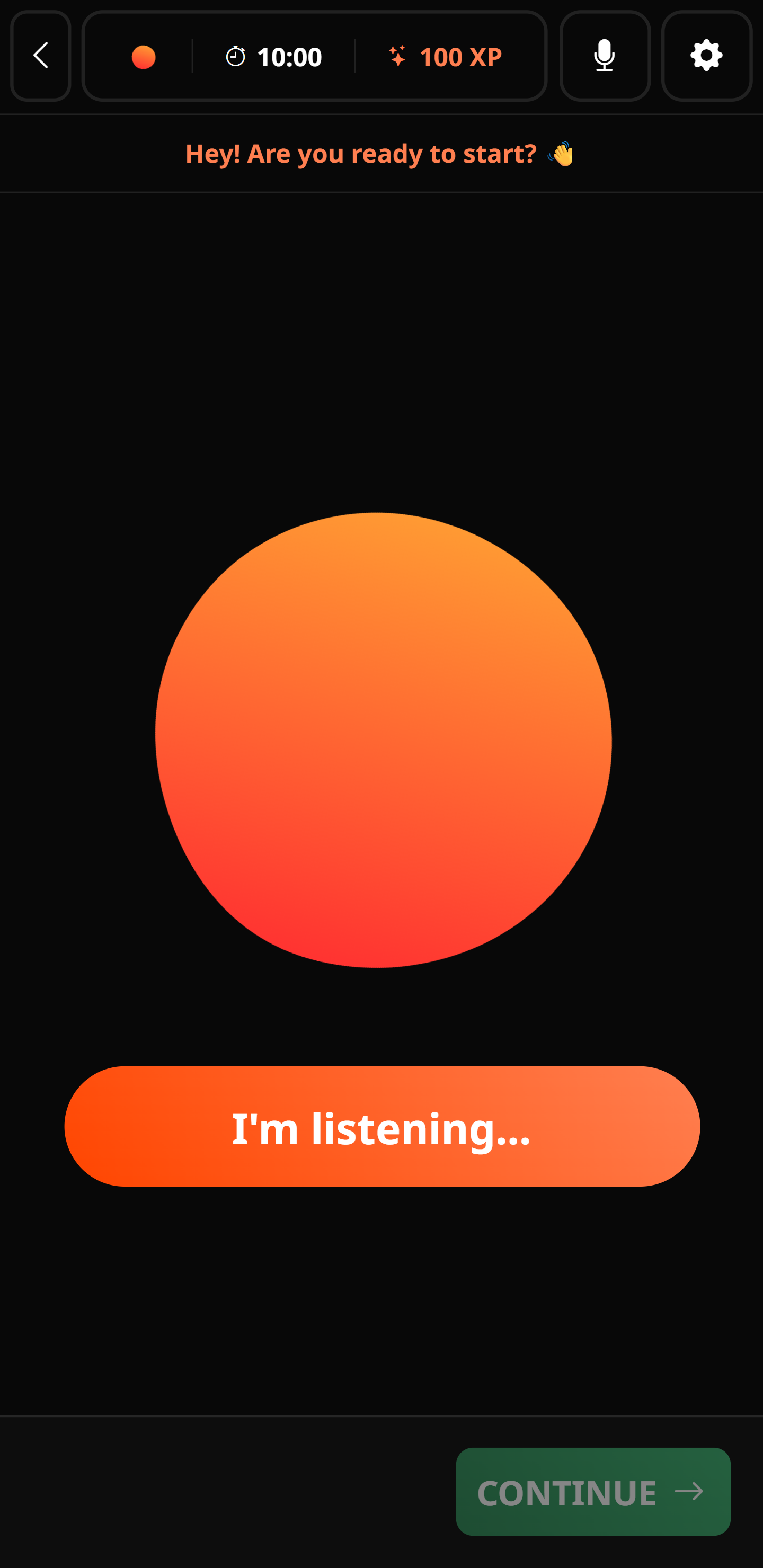
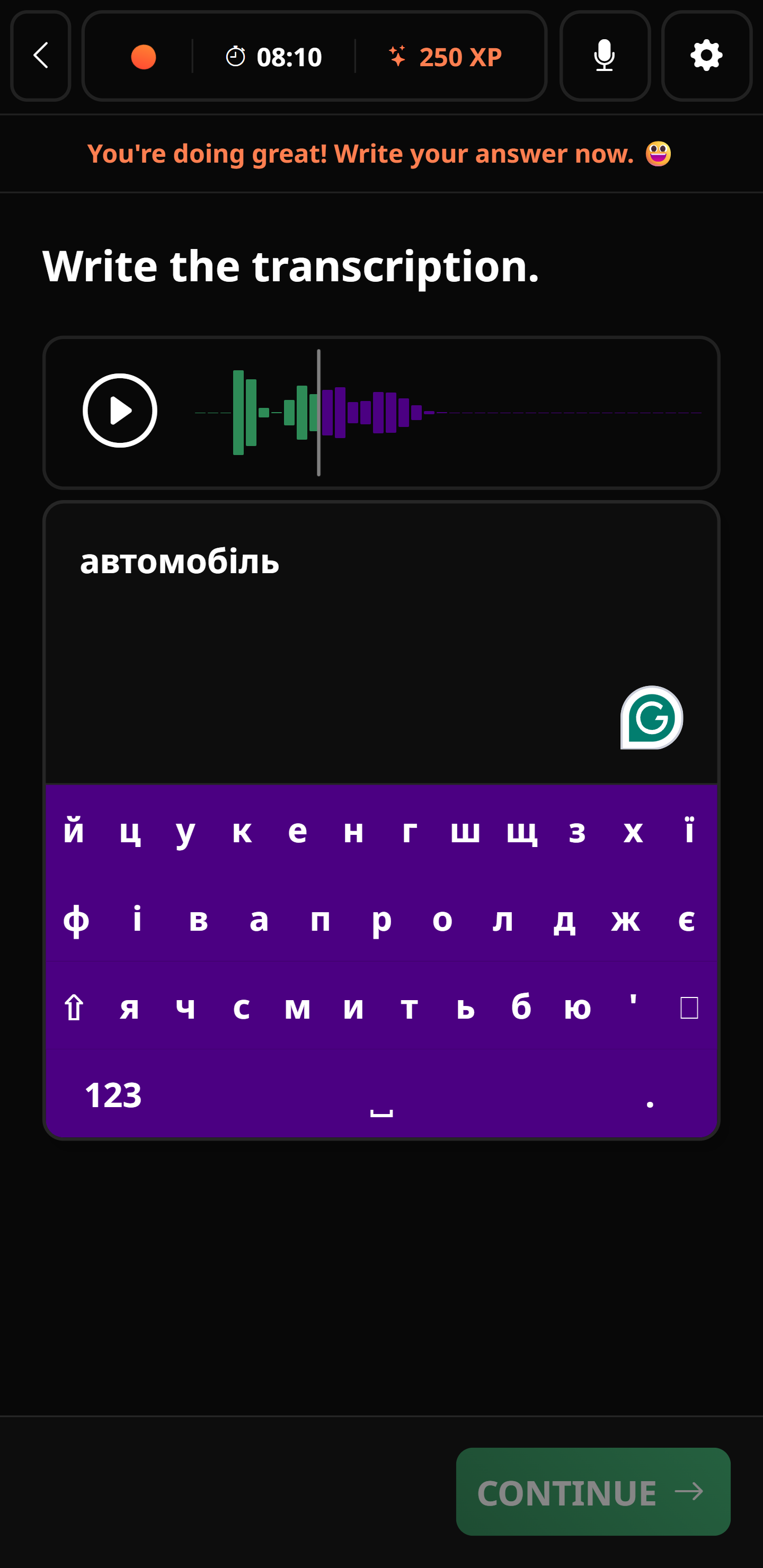
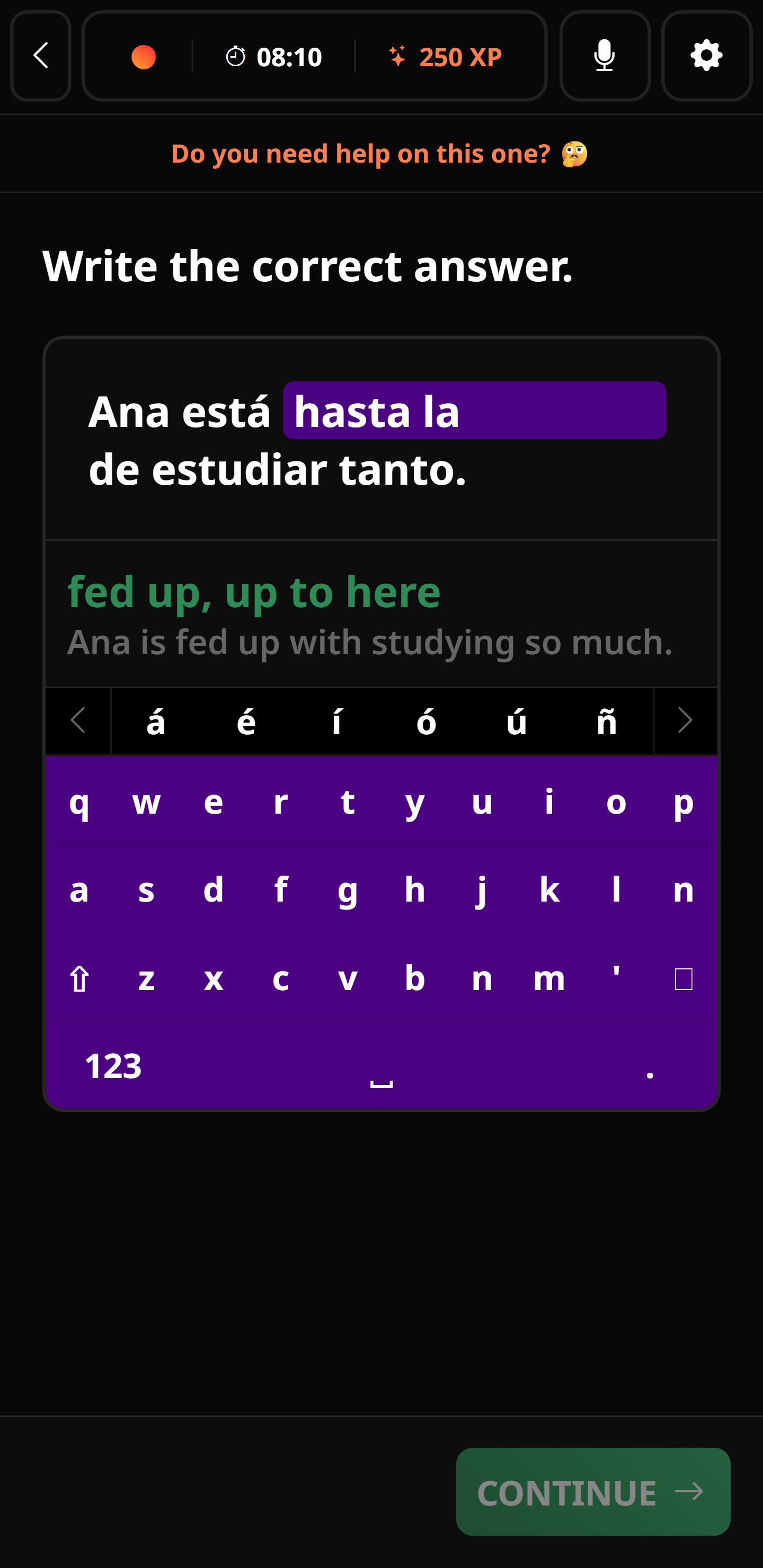
This is exactly the problem Umi, our AI teacher, was built to solve. Instead of tapping through flashcards, you actually talk — Umi speaks with you in Spanish at your level, corrects your mistakes the moment you make them, and adapts every lesson to what you personally struggle with. It is available at 6 a.m. or midnight, never gets impatient, and costs a fraction of a private human tutor.
The result is that you get the two timeline-shrinking ingredients — daily speaking practice and instant, personalized correction — without scheduling a class or paying by the hour. You get through the A2 plateau faster because you are practicing the exact skill that plateau demands: real, spontaneous conversation.
Important
Ready to start your Spanish timeline today? Create a free account and have your first real Spanish conversation with Umi in the next five minutes. The best time to start was a year ago. The second-best time is right now.
Become bilingual in 30 days with Univext!
Start a lesson with our teacher for free and become bilingual like our 100,000 students!
❓ Frequently Asked Questions
Can I learn Spanish in 3 months? You can reach a solid A2 — enough to travel, order, and have simple conversations — in about 3–5 months at an hour a day. True fluency (B2+) takes longer, but "useful and fun" arrives much sooner than most people think.
How many hours a day should I study? Consistency matters more than volume. Thirty minutes to an hour daily is the sweet spot for steady progress without burnout. Even 15 focused minutes every day beats three hours once a week.
Is Spanish hard to learn for English speakers? It is one of the easiest. Spanish is phonetic, shares thousands of cognates with English, and the FSI ranks it in its easiest category. The main hurdles are the two past tenses and the subjunctive — both very learnable with practice.
What is the fastest way to become conversational? Speak from day one, practice daily, and get instant correction so you don't cement mistakes. A tutor or AI tutor that pushes you to talk beats any passive app for reaching conversation.
🎯 The Bottom Line
Learning Spanish is not a mysterious, decade-long quest. It is a staircase with clear steps: a few months to survival A2, about a year to conversational B1, and a couple of years to advanced fluency — all driven by daily, consistent practice. The single biggest thing standing between you and that timeline is not talent or time. It is starting, and then showing up.
So start today. Your future Spanish-speaking self will be counting the months from right now.
Explore more: Best Apps to Learn Spanish in 2026 (Tested & Ranked), Learn Spanish with AI: Best AI Tutors, and How Long Does It Take to Learn a Language?.