


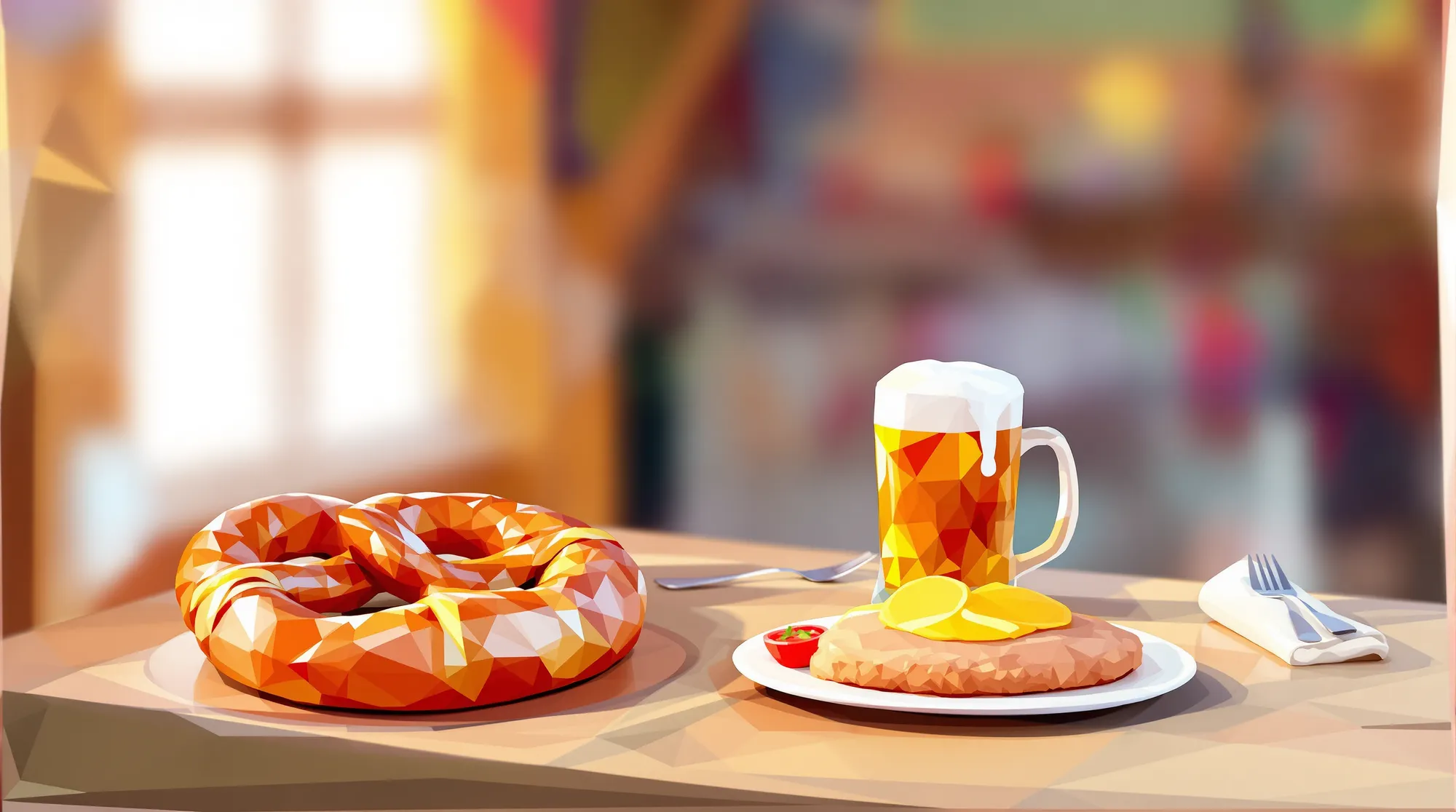
🇩🇪 Why Learn German Restaurant Phrases?
Traveling to Germany, Austria, or Switzerland offers an incredible culinary journey, from hearty Bavarian pork knuckles to refined modern dining in Berlin. While it is true that many hospitality workers in major European cities speak excellent English, relying solely on English can sometimes lead to a transactional, tourist-like experience. Learning how to order food in German completely transforms your dining experience.
When you make the effort to speak the local language, you are showing respect for the culture. Waitstaff are generally more appreciative, you might get better recommendations, and you will feel a much deeper connection to the environment around you. Understanding a German menu also helps you avoid surprises—like accidentally ordering a raw minced pork roll (Mettbrötchen) when you thought you were getting a simple meat sandwich!
Furthermore, practicing real-life scenarios like restaurant interactions is one of the most effective ways to build language fluency. If you have been using some of the best apps to learn German, putting that knowledge into practice at a restaurant is the ultimate test. It requires listening comprehension, proper pronunciation, and cultural awareness all at once.
Important
Mastering restaurant vocabulary is the fastest way to feel confident in a German-speaking country. Food is a universal language, but knowing the exact words to express your cravings makes the experience stress-free.
If you are feeling nervous about speaking to a real waiter, you can prepare beforehand with Univext's AI teacher, Umi. Umi can simulate realistic restaurant roleplays, allowing you to practice ordering, asking for the bill, and handling menu questions in a safe, judgment-free environment. Before you step foot in a Munich beer hall or a cozy Viennese café, let's explore the essential phrases, vocabulary, and etiquette you need to dine like a local in 2026.
🍽️ Arriving at a Restaurant: First Impressions
The moment you walk through the door of a German restaurant (a Restaurant, Gaststätte, or Wirtshaus), the cultural norms differ slightly from what you might be used to in North America or other parts of the world. In many casual cafes and beer gardens, you might be expected to find your own seat. However, in formal dining establishments, you should always wait to be seated.
Here are the essential phrases you will need upon entering.
Greeting the Staff
Always start with a polite greeting. Depending on the time of day and the region, you can use:
— Good day! (Standard daytime greeting)
— Good evening!
— Hello! (More casual)
— Hello! (Used primarily in Bavaria and Austria)
Asking for a Table
Once you have greeted the host or waiter, you need to state how many people are in your party.
— A table for two people, please.
— Do you have a table for four people?
If the restaurant looks incredibly busy, they might ask you if you have made a reservation. You will likely hear the waiter say:
— Have you reserved?
You can reply with:
— Yes, I have a reservation under the name Müller.
— No, unfortunately we haven't reserved.
Do's and Don'ts When Arriving
Become bilingual in 30 days with Univext!
Start a lesson with our teacher for free and become bilingual like our 100,000 students!

📖 Reading the German Menu: Key Vocabulary
Before you can order, you need to know how to navigate the Speisekarte (menu). German menus are usually laid out logically, but the compound words can look intimidating to beginners. By breaking them down, you will find they are quite descriptive. For those using AI apps for German, studying these vocabulary words is a fantastic way to build your noun recognition.
Menu Sections
- Die Vorspeisen: Appetizers / Starters
- Die Hauptspeisen / Hauptgerichte: Main courses
- Die Beilagen: Side dishes
- Die Nachspeisen / Desserts: Desserts
- Die Getränke: Drinks
Common Meat and Fish Vocabulary
If you are a meat-eater, Germany is a paradise. Here is how to identify what you are ordering:
- Das Fleisch: Meat
- Das Rindfleisch: Beef
- Das Schweinefleisch: Pork (Very common in German cuisine, e.g., Schweinshaxe)
- Das Geflügel: Poultry
- Das Hähnchen / Huhn: Chicken
- Die Ente: Duck
- Der Fisch: Fish
- Der Lachs: Salmon
Vegetables and Sides
- Das Gemüse: Vegetables
- Die Kartoffeln: Potatoes (A staple in Germany, served boiled, fried, or mashed)
- Die Pommes frites: French fries (Often just called "Pommes")
- Der Reis: Rice
- Die Nudeln: Noodles / Pasta
- Der Salat: Salad / Lettuce
Example
If you see a dish called Schweinebraten mit Knödeln und Rotkohl, you now know it involves pork (Schweinebraten), accompanied by dumplings (Knödel) and red cabbage (Rotkohl).





Join more than 100,000 students learning on Univext
🎯 How to Order Food in German: Essential Phrases
Once you have deciphered the menu, it is time to flag down the waiter. Unlike in some countries where waiters constantly check on you, German waiters generally leave you alone to enjoy your conversation. When you are ready, close your menu, make eye contact, and politely raise your hand.
Getting the Waiter's Attention
— Excuse me!
— We would like to order, please.
The Magic Ordering Phrases
When it comes to the actual ordering, you want to be polite. The most common and polite way to order is by using the subjunctive mood (Konjunktiv II). Avoid saying "Ich will" (I want), as it sounds a bit demanding and childish in a restaurant setting. Instead, use these variations:
— I would like the Wiener Schnitzel.
— I'll take the potato soup, please.
— For me, the roast pork, please.
Asking Questions About the Menu
Sometimes you need a little clarification before you commit to a dish.
— What is in this dish?
— Does that come with a salad?
— Can I have that without onions?
Notes
Do not be afraid to customize your order slightly, such as asking for no onions or a different side dish. However, extreme substitutions are less common in Germany than in North America, and chefs usually prefer you enjoy the dish as it was designed.
💬 Asking for Recommendations
If you are overwhelmed by the choices or want to try something truly local, asking the waiter for a recommendation is a great strategy. Waiters in Germany are usually straightforward and will tell you honestly what they think is best, rather than just pointing you to the most expensive item.
Use these phrases to discover the chef's specialties:
— What can you recommend?
— What is the specialty of the house?
— Which dish is typical for this region?
If you are torn between two options, you can ask:
— What is better, the salmon or the steak?
Practicing these conversational pivots is exactly what Univext's AI teacher Umi is built for. You can set Umi to "Restaurant Waiter" mode and practice asking for recommendations until the words flow naturally from your tongue.
Become bilingual in 30 days with Univext!
Start a lesson with our teacher for free and become bilingual like our 100,000 students!
🥗 Dietary Restrictions and Allergies in German
Traveling with dietary restrictions can be stressful, but awareness of veganism, vegetarianism, and food allergies has skyrocketed in Germany over the last decade. Berlin, in particular, is considered one of the vegan capitals of the world. Still, in traditional Bavarian or rural restaurants, you will need to be clear about your needs.
Vegetarian and Vegan Phrases
— Do you have vegetarian dishes?
— Do you have vegan options?
— I don't eat meat.
— Is there meat broth in there? (Crucial question for soups!)
Communicating Allergies
If you have a serious allergy, it is critical to communicate this clearly to ensure your safety.
— I am allergic to nuts.
— I have a gluten intolerance.
— Is this gluten-free?
— Is this dish lactose-free?
Important
Always double-check if a dish contains your allergen by asking "Enthält dieses Gericht..." followed by the ingredient. For example: Enthält dieses Gericht Erdnüsse? (Does this dish contain peanuts?). The waitstaff are legally required in the EU to provide allergen information.
🍺 Ordering Drinks in German
Germany is famous worldwide for its beer culture, but its wine regions (like the Mosel and Rheingau) also produce spectacular beverages. Ordering drinks is usually the very first thing the waiter will ask you to do, often before you have even looked at the food menu.
When the waiter approaches, they will likely say:
— Would you like something to drink already?
Ordering Beer
Beer (Bier) comes in many varieties depending on the region.
- Helles: Light, pale lager (very common in Bavaria).
- Pils / Pilsner: A slightly more bitter, hoppy pale lager.
- Weißbier / Weizenbier: Wheat beer, often served in a tall, distinct glass.
- Dunkles: Dark lager.
— I would like a large beer, please.
— A pale lager on tap, please.
Ordering Wine
- Weißwein: White wine.
- Rotwein: Red wine.
- Trocken: Dry.
- Lieblich: Sweet.
— A glass of dry white wine, please.
The Water Rule in Germany
One of the biggest culture shocks for tourists in Germany is the water situation. If you simply ask for "Wasser," the waiter will bring you a bottle of sparkling mineral water (Mineralwasser) and charge you for it, often around 4 to 6 Euros. Water is rarely served free by default.
If you want still water (no bubbles), you must specify: — A still water, please.
If you want free tap water, you must ask for Leitungswasser. Be aware that some traditional restaurants may refuse or frown upon this, though it is becoming more accepted in modern city cafes.
— A glass of tap water, please.
Join more than 100,000 students learning on Univext
💰 Paying the Bill: Phrases You Need
In Germany, the bill is called die Rechnung. The waiter will never bring the bill to your table unless you explicitly ask for it. You could sit there for three hours after finishing your food, and they will happily let you stay, assuming you are enjoying the atmosphere.
When you are ready to leave, make eye contact and signal the waiter.
— The bill, please.
— We would like to pay.
Splitting the Bill (Getrennte Kasse)
In many cultures, splitting the bill is seen as a hassle for the waiter. In Germany, it is completely normal and highly efficient. The waiter will come to your table with a large wallet and process the payments right there. They will almost always ask:
— Together or separate?
You reply: — Together, please. (One person pays for everything)
— Separately, please.
If you choose "getrennt," the waiter will go down the list and ask each person what they had. "Was hatten Sie?" (What did you have?). You simply tell them what you ate and drank, and they will calculate your exact total on the spot.
Cash vs. Card
While Germany has historically been a very cash-heavy society (Bargeld lacht - cash is king), card payments have become much more common. However, you should always ask to be safe, especially in smaller bakeries or rural pubs.
— Can I pay with a card?
Become bilingual in 30 days with Univext!
Start a lesson with our teacher for free and become bilingual like our 100,000 students!
💡 German Dining Etiquette: Cultural Tips
Knowing the vocabulary is only half the battle. To truly blend in and avoid awkward encounters, you need to understand German dining etiquette. Here are seven crucial cultural tips to keep in mind.
1. German Tipping (Trinkgeld)
Tipping in Germany is not like tipping in the United States, where 20% is expected. Service is already included in the menu price. However, it is customary to round up or leave a 5-10% tip for good service. The crucial difference is how you tip. Do not leave money on the table when you leave. Instead, tell the waiter the total amount you want to pay when they hand you the bill. For example, if your bill is €18.50, hand them a €20 note and say "Stimmt so" (keep the change), or say "Zwanzig, bitte" (Twenty, please).
2. Saying "Mahlzeit"
If you are eating lunch in a casual setting, a canteen, or around coworkers, you will hear people say "Mahlzeit!" to each other. It literally translates to "mealtime," but it functions as a combination of "hello" and "enjoy your meal" used specifically around lunchtime.
3. Bread Baskets Are Not Free
In some countries, a basket of bread is brought to the table free of charge. In Germany, if there is a basket of pretzels or bread rolls on the table, you will usually be charged per piece that you eat. The waiter will ask you how many you consumed when you ask for the bill.
4. Wishing "Guten Appetit"
Before anyone takes their first bite, it is highly customary to wish everyone at the table a good meal. — Enjoy your meal! Wait until everyone has their food, say the phrase, look people in the eyes, and then begin eating.
5. Splitting the Bill is Perfectly Normal
As mentioned in the payment section, do not feel shy about asking to split the bill. It is deeply ingrained in the culture, and waitstaff are fully equipped with coin purses to handle exact change for six different people at the same table in record time.
6. Water Etiquette
Remember, tap water (Leitungswasser) is not standard. If you order water, expect to pay for a bottled mineral water. This surprises many tourists, but it is just a fact of European dining.
7. No Excessive Small Talk with Waiters
German service is highly professional, efficient, and sometimes perceived by tourists as "cold." Waiters are there to ensure you get your food quickly and accurately, not to be your best friend. Do not expect long chats about your day or constant check-ins asking "How is everything tasting?" If you need something, it is your responsibility to flag them down.
🚀 Practice with Univext's AI Teacher Umi
Reading about these phrases is a great first step, but speaking them out loud with confidence takes practice. If you want to perfect your pronunciation of "Zusammen oder getrennt?" or roleplay ordering a complex meal with dietary restrictions, Univext is the ultimate tool.
With Univext, our AI teacher Umi can engage in real-time, voice-based conversations. You can instruct Umi to act as a grumpy Berlin bartender or a polite Bavarian waiter, giving you dynamic, unpredictable practice that mimics real life.
Example
Try telling Umi: Let's do a roleplay where I am ordering dinner at a traditional German restaurant, and I need to ask for gluten-free options. Umi will guide you through the conversation, correcting your grammar and pronunciation along the way!
Ready to upgrade your language skills? You can get a 14-day free trial of our Ultra subscription, giving you 30 minutes of speaking practice every single day.
Register now and start practicing before your trip: https://univext.com/register
And if your European tour takes you beyond Germany, Univext supports multiple languages! Check out our guides on the best apps to learn French, explore the 5 best apps to learn Spanish, discover the best 5 apps to learn Italian, or dive into the best apps to learn Russian.
❓ Frequently Asked Questions
Do restaurant workers in Germany speak English?
In major cities like Berlin, Munich, Frankfurt, and Hamburg, almost all restaurant staff speak excellent English. However, in smaller towns, rural areas, and traditional Gaststätten, English proficiency drops significantly. Even if they do speak English, greeting them and ordering in German is highly appreciated.
Do I need to carry cash for restaurants in Germany?
Yes. While the pandemic accelerated card acceptance, Germany remains very fond of cash (Bargeld). Many smaller cafes, bakeries, and traditional pubs still only accept cash, or they might have a minimum card spend of €10 or €15. Always carry some Euros on you just in case.
How long does a typical meal take in Germany?
Dining is considered an experience to be savored. Do not expect to be rushed out the door so the restaurant can turn the table over. A standard dinner can easily last two to three hours. If you are in a rush, you will need to actively ask the waiter for the bill.
Is it rude to leave food on my plate?
While not a massive faux pas, German culture values resourcefulness, and wasting food is generally frowned upon. Portions are usually hearty, so if you cannot finish, you can ask to have the rest packed up by saying: — Can you pack this up for me, please?
Become bilingual in 30 days with Univext!
Start a lesson with our teacher for free and become bilingual like our 100,000 students!
✅ Conclusion
Ordering food in a foreign language might feel intimidating at first, but with these essential German restaurant phrases, you are more than ready to conquer any Speisekarte that comes your way. Remember to be polite, use your "hätte gerne" instead of "will," and do not forget to look your dining companions in the eye when saying "Guten Appetit."
Language learning is all about real-world application. Don't let your vocabulary sit unused in a textbook. Register for Univext today (https://univext.com/register), fire up a conversation with Umi, and start roleplaying your way to fluency. Soon enough, ordering a Schweinebraten and a Weißbier will feel like second nature. Prost!