

🔍 Duolingo vs Babbel for Russian: The Quick Verdict
If you have been thinking about learning Russian, you have probably wondered which app to start with. Duolingo and Babbel are the two most recognized names in language learning, but their Russian courses are very different from their popular Spanish or French offerings. Choosing the right one matters more for Russian than for most other languages because Russian presents unique challenges that not every app handles well.
The quick verdict for 2026: Duolingo is the better choice if you want a free, gamified introduction to Russian vocabulary and the Cyrillic alphabet. Babbel is better if you want structured grammar explanations and a more methodical approach to Russian's complex case system.
However, there is a catch that most comparison articles skip. Neither app teaches you to actually speak Russian. Russian is a Category IV language according to the US Foreign Service Institute, meaning it takes roughly 1,100 hours of study to reach professional proficiency. At that difficulty level, repetitive drills and fill-in-the-blank exercises simply are not enough. This is where Univext changes the equation. Univext's AI teacher Umi engages you in real Russian conversations, corrects your grammar and pronunciation in real time, and adapts to your level — filling the massive conversation gap that both Duolingo and Babbel leave wide open.
📊 Feature-by-Feature Comparison
Become bilingual in 30 days with Univext!
Start a lesson with our teacher for free and become bilingual like our 100,000 students!
🟢 What Duolingo Does Well for Russian
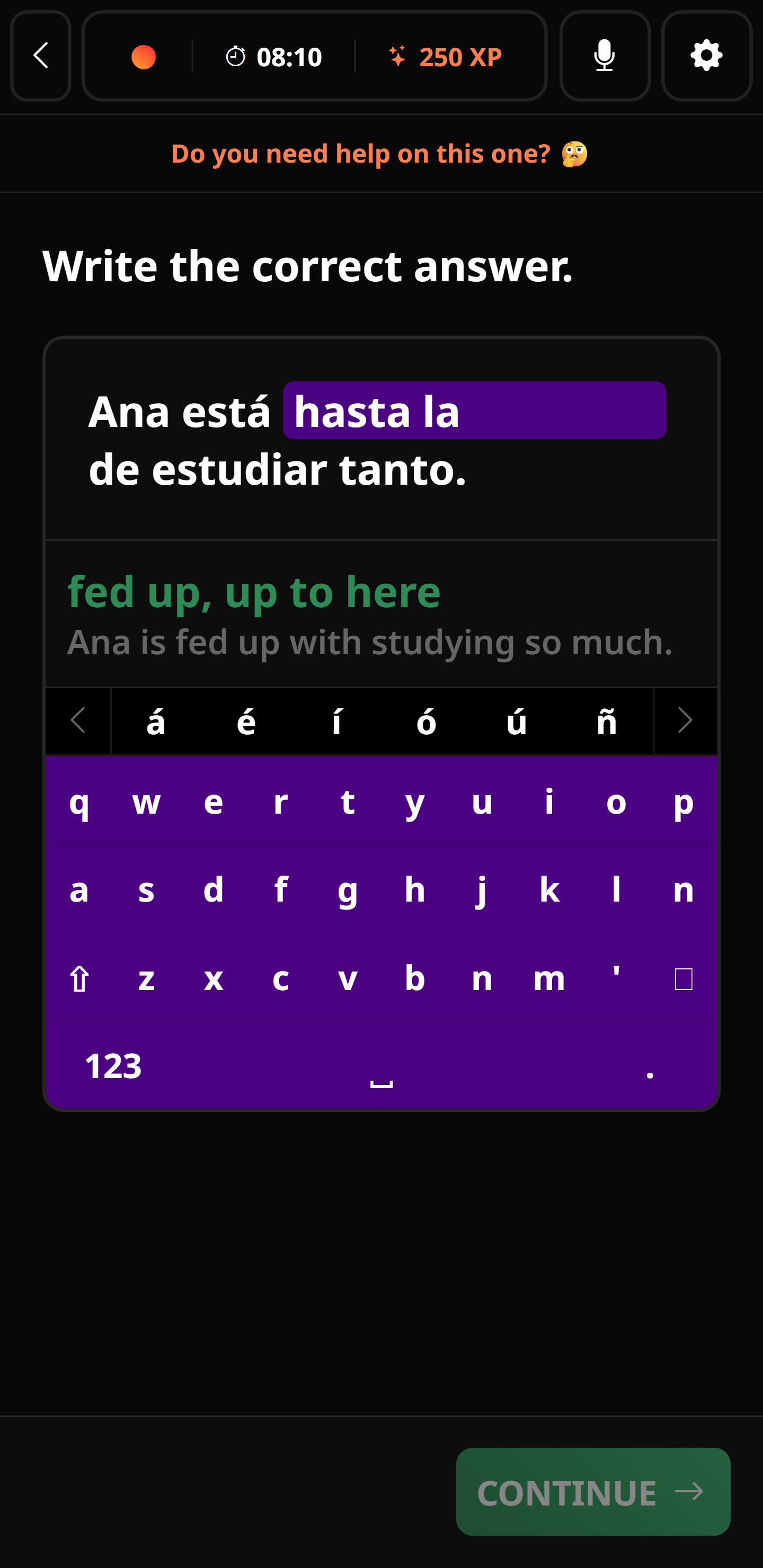
Duolingo's Russian course is one of its more developed offerings outside of Spanish and French. For complete beginners, Duolingo handles the Cyrillic alphabet surprisingly well. The app introduces Cyrillic letters gradually, mixing them with familiar Latin characters so you are reading Russian words within your first few lessons.
The gamification system — streaks, leaderboards, and XP — works especially well for Russian learners because Russian requires sustained daily practice over a long period. The psychological nudge to maintain your streak can be the difference between quitting after two weeks and building a genuine habit.
Duolingo's Russian tree covers basic vocabulary, common phrases, and elementary grammar. The sentences are often quirky and memorable, which helps with retention. For a learner who just wants to get comfortable with Cyrillic and pick up survival phrases before a trip to Moscow or Saint Petersburg, Duolingo is a reasonable free starting point.
Where Duolingo Falls Short for Russian
The problems start when you move beyond the basics. Russian grammar is built on a case system with six cases (nominative, accusative, genitive, dative, instrumental, prepositional), and Duolingo barely explains them. You will encounter sentences where the word endings change, but the app rarely tells you why. For a language where a single word can have dozens of forms depending on its grammatical role, this "figure it out" approach creates confusion rather than understanding.
Duolingo also offers zero conversation practice for Russian. You can translate sentences and match words, but you never practice forming your own Russian sentences in a real-time dialogue. Given that Russian word order is relatively flexible but case endings are critical, this gap is particularly damaging — you need practice constructing sentences, not just recognizing them.




Join more than 100,000 students learning on Univext
🟠 What Babbel Does Well for Russian
Babbel takes the opposite approach. Where Duolingo gamifies and hopes you absorb grammar naturally, Babbel provides explicit grammar lessons designed by linguists. For Russian, this structured approach has clear advantages.
Babbel's Russian course teaches the case system methodically, with dedicated lessons that explain when to use the accusative versus the genitive, how adjective endings change to match nouns, and how verb aspects (perfective vs imperfective) work. If you are the type of learner who wants to understand why Russian works the way it does, Babbel will feel more satisfying than Duolingo.
The speech recognition feature lets you practice pronunciation, and the review system uses spaced repetition to reinforce what you have learned. Babbel also offers offline access, which is convenient for studying during commutes.
Where Babbel Falls Short for Russian
Babbel's Russian course is noticeably smaller than its Spanish, French, or German courses. The content library is more limited, and advanced learners may exhaust the available material relatively quickly. The course focuses heavily on travel scenarios, which does not always align with the contexts where you would actually use Russian.
More importantly, Babbel's exercises are entirely scripted. You fill in blanks, select the correct answer, or repeat a phrase — but you never have to produce Russian spontaneously. The lessons follow a fixed path with no AI-powered adaptation, so if you already know some Russian, you still have to work through content you have already mastered.
Like Duolingo, Babbel provides no real conversation practice. You cannot ask questions, get real-time corrections, or practice the kind of open-ended dialogue that you would need in a real Russian conversation.
🤖 Why Neither App Is Enough for Russian
Russian is not Spanish. You cannot gamify your way to fluency.
The US Foreign Service Institute classifies Russian as a Category IV language, requiring approximately 1,100 hours of study to reach professional proficiency — nearly double the time needed for French or Spanish. Russian's Cyrillic alphabet, six-case grammatical system, verb aspect pairs, and complex pronunciation patterns demand more than what translation drills and scripted exercises can provide.
Both Duolingo and Babbel teach you to recognize Russian. Neither teaches you to produce it. The difference matters enormously. In a real conversation, nobody gives you four multiple-choice options — you have to construct a grammatically correct sentence on the spot, with the right case endings, the right verb aspect, and the right word stress.
This is exactly the gap that Univext fills.
Become bilingual in 30 days with Univext!
Start a lesson with our teacher for free and become bilingual like our 100,000 students!
🚀 Univext: The AI Alternative That Gets You Speaking Russian
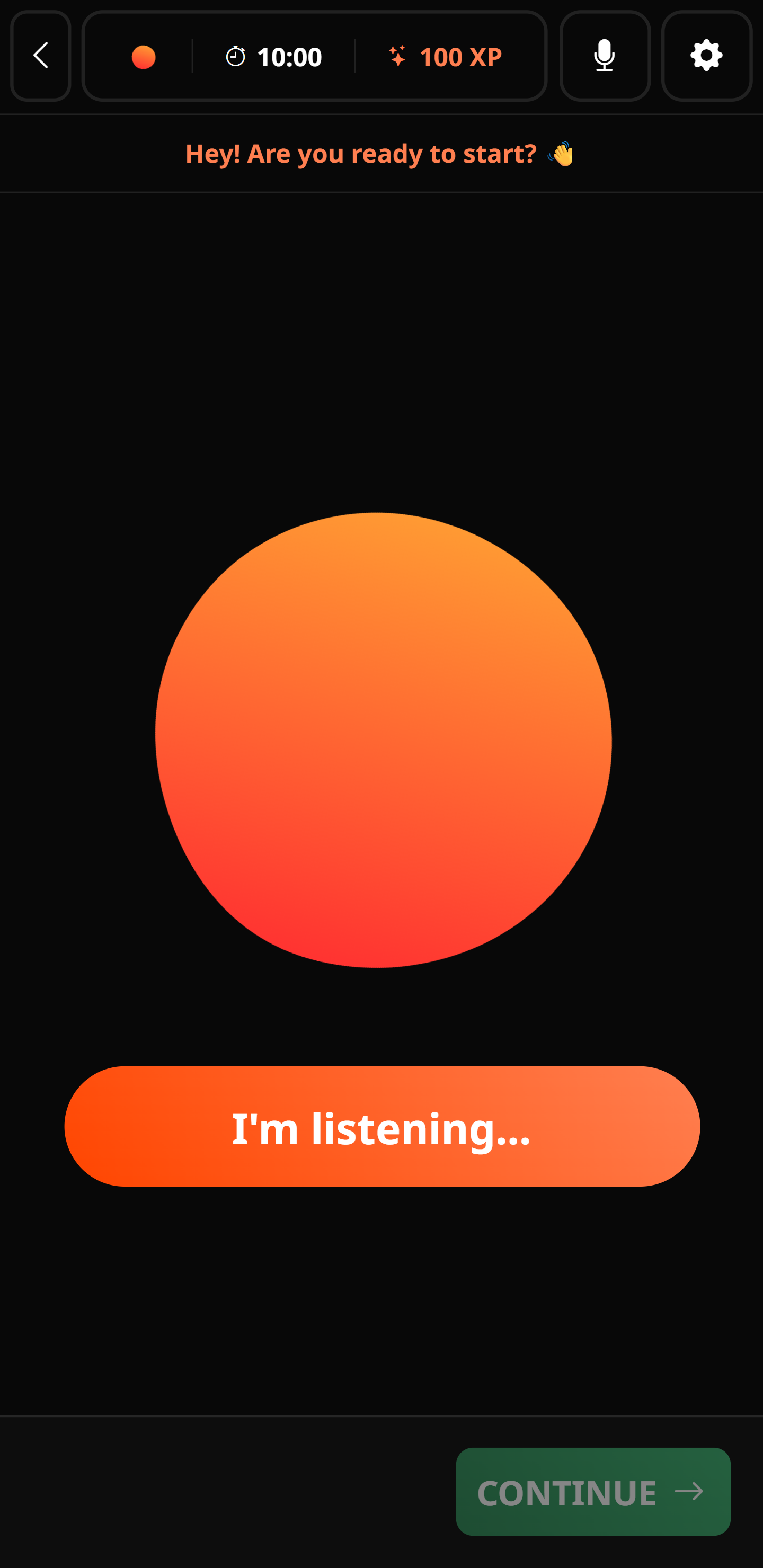
Univext takes a fundamentally different approach to learning Russian. Instead of pre-scripted exercises, Univext uses an AI teacher named Umi to engage you in real Russian conversations from your very first lesson.
How Umi Works
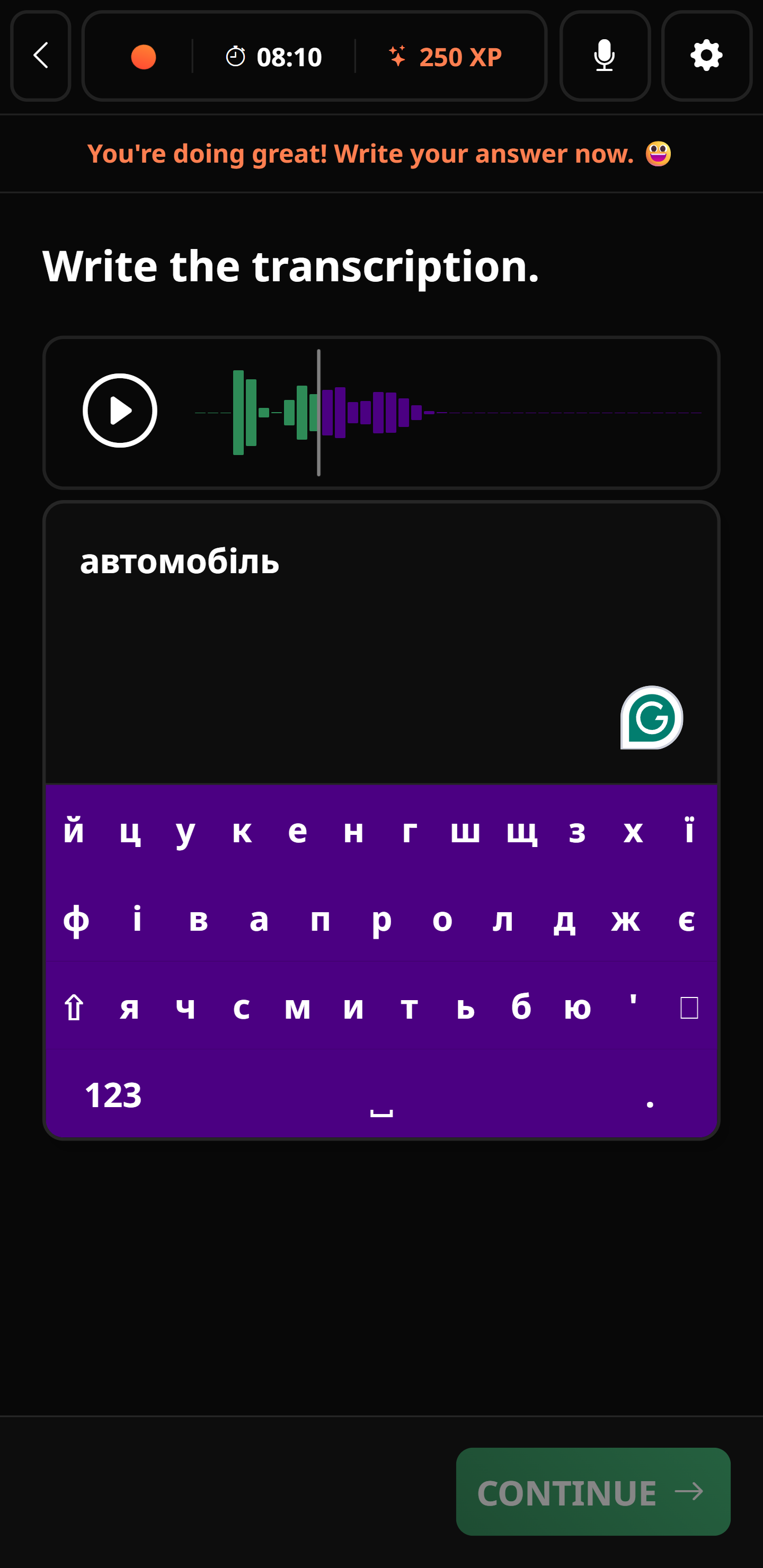
Umi is not a chatbot. Umi is an AI language teacher that understands Russian grammar, pronunciation, and natural speech patterns. When you make a mistake — using the wrong case ending, choosing the wrong verb aspect, or mispronouncing a word — Umi corrects you in real time and explains the rule behind the correction.
The conversations are open-ended. You are not selecting from a list of pre-written responses. You are formulating your own Russian sentences, making decisions about grammar and vocabulary, and getting immediate feedback. This is the kind of active practice that builds real fluency.
Why Univext Works Better for Russian
Russian's complexity actually makes AI tutoring more valuable, not less. Here is why:
- Case endings in context: Instead of memorizing declension tables, you learn case endings through natural conversation. When you say "Я иду в магазин" (I am going to the store), Umi explains why it is accusative — not in a grammar lesson, but in the moment you actually use it
- Verb aspects made intuitive: Russian's perfective/imperfective distinction confuses every learner. Umi introduces these naturally in conversation and corrects you when you choose the wrong aspect, building an intuitive feel rather than a memorized rule
- Pronunciation feedback: Russian word stress is unpredictable and changes meaning. Umi provides real-time pronunciation guidance that neither Duolingo nor Babbel can match
- Personalized pacing: If you already know basic vocabulary but struggle with cases, Umi focuses on cases. If your pronunciation needs work, Umi emphasizes pronunciation. The AI adapts to you
Important
Try Univext free for 14 days with 30 minutes of daily practice. No textbook drills — real Russian conversations with an AI teacher that adapts to your level.
Start your free 14-day trial →
📋 Duolingo vs Babbel vs Univext: Who Should Use What?
Choose Duolingo if:
- You want a completely free way to learn the Cyrillic alphabet
- You prefer gamified, bite-sized lessons
- You are a complete beginner testing whether Russian interests you
- You need a casual study tool with no commitment
Choose Babbel if:
- You want structured, explicit grammar explanations
- You prefer a methodical, textbook-style approach
- You plan to study offline frequently
- You want to understand Russian grammar rules before practicing them
Choose Univext if:
- You want to actually speak Russian, not just recognize it
- You need real conversation practice with immediate feedback
- You are serious about reaching conversational fluency
- You want a personalized learning path that adapts to your weaknesses
- You value 24/7 access to a tutor without the cost of private lessons
For most learners, the optimal approach in 2026 is to use Duolingo or Babbel for initial vocabulary and grammar foundations, then switch to Univext for the conversation practice and AI-powered tutoring that takes you to fluency. Many Univext users report that the switch to real conversation practice was the breakthrough moment in their Russian learning journey.
If you are also exploring other languages, check out our comparisons for French, English, and Italian. For a full rundown of Russian learning tools, see our Best Apps to Learn Russian in 2026 guide.
Join more than 100,000 students learning on Univext
💡 Tips for Learning Russian Faster in 2026
No matter which app you start with, these strategies will accelerate your Russian learning:
Master Cyrillic First
Spend your first week focused entirely on reading Cyrillic fluently. Once the alphabet clicks, everything else becomes dramatically easier. Duolingo handles this well for beginners, but Univext's conversational approach reinforces reading skills naturally as you go.
Focus on the Top 3 Cases First
Russian has six grammatical cases, but nominative, accusative, and prepositional cover the majority of everyday speech. Master these three before worrying about genitive, dative, and instrumental. Babbel teaches them in order; Univext lets you practice them in natural conversation.
Practice Every Day, Even for 15 Minutes
Consistency beats intensity for Russian. A daily 15-to-30-minute session is far more effective than a weekly three-hour marathon. Univext's 14-day free trial gives you 30 minutes daily — enough to build a genuine habit.
Consume Russian Media
Supplement your app-based learning with Russian YouTube channels, music, podcasts, and TV shows. Listening to natural Russian speech trains your ear for the rhythm and intonation patterns that apps alone cannot fully replicate. Start with children's cartoons like "Маша и Медведь" (Masha and the Bear) and work your way up.
Do Not Fear Mistakes
Russian grammar is complex, and you will make mistakes constantly. This is normal and expected. The advantage of practicing with an AI tutor like Umi on Univext is that you can make mistakes freely without the social anxiety of a human conversation partner — and get corrected instantly every time.
Become bilingual in 30 days with Univext!
Start a lesson with our teacher for free and become bilingual like our 100,000 students!
❓ Frequently Asked Questions
Is Duolingo good for learning Russian?
Duolingo is a decent starting point for learning the Cyrillic alphabet and basic Russian vocabulary. However, its limited grammar explanations and lack of conversation practice make it insufficient for reaching conversational fluency. Most serious learners supplement Duolingo with a conversation-focused tool like Univext.
Is Babbel good for learning Russian?
Babbel's structured grammar lessons are helpful for understanding Russian's case system and verb aspects. However, the Russian course is smaller than Babbel's offerings for other languages, and the scripted exercises do not prepare you for real conversations. For speaking practice, AI-powered platforms like Univext are more effective.
Which is cheaper, Duolingo or Babbel?
Duolingo offers a free tier with ads, making it the cheaper option. Babbel requires a paid subscription. Univext offers a free 14-day trial with 30 minutes of daily practice, letting you test real conversation practice before committing.
How long does it take to learn Russian?
The US Foreign Service Institute estimates approximately 1,100 hours to reach professional proficiency in Russian. With daily practice, most learners reach basic conversational ability in 8-14 months. Using an AI tutor like Univext's Umi can accelerate this timeline by maximizing speaking practice in every session.
Can I learn Russian just with apps?
Apps are a great foundation, but most learners benefit from combining multiple approaches. A gamified app like Duolingo for vocabulary, a grammar-focused app like Babbel for rules, and an AI conversation platform like Univext for speaking practice creates a well-rounded learning routine. For a complete list of tools, see our Best Apps to Learn Russian in 2026.
✅ The Bottom Line
Duolingo and Babbel are both useful tools for beginning your Russian journey, but neither one can get you to conversational fluency on its own. Duolingo builds habits and basic vocabulary. Babbel teaches grammar rules. But only Univext — with its AI teacher Umi — gives you the real conversation practice that Russian learners desperately need.
Russian is a challenging language that rewards active practice over passive memorization. If your goal for 2026 is to actually speak Russian — whether for travel, work, relationships, or personal achievement — investing in real conversation practice is the fastest path forward.
Ready to start speaking Russian? Try Univext free for 14 days →