

🔍 Duolingo vs Babbel for Polish: The Quick Verdict
If you are learning Polish, the first thing worth knowing is that this comparison is not the same as it would be for Spanish or German. Polish is a smaller market for both companies, and their courses reflect that. Choosing between them matters more here precisely because neither is operating at full strength.
The quick verdict for 2026: Duolingo is the better choice for Polish, mostly by default. Its Polish course is reasonably developed, it is free, and it will get you through the alphabet, pronunciation and a working base of vocabulary. Babbel offers Polish, but the course is noticeably smaller than its German, Spanish or French offerings, and you will reach the end of the useful material faster than you expect.
But there is a catch that neither option solves. Neither app teaches you to actually speak Polish. Polish is a Category IV language according to the US Foreign Service Institute — roughly 1,100 hours to professional proficiency, the same tier as Russian. It has seven cases, three genders that fracture further in the plural, consonant clusters that defeat most beginners, and an aspect system with no English equivalent. At that difficulty, fill-in-the-blank exercises are not enough. This is where Univext changes the equation. Univext's AI teacher Umi holds real Polish conversations with you, corrects your cases and pronunciation in the moment, and adapts to your level — closing the conversation gap both apps leave wide open.
📊 Feature-by-Feature Comparison
Become bilingual in 30 days with Univext!
Start a lesson with our teacher for free and become bilingual like our 100,000 students!
🟢 What Duolingo Does Well for Polish
For a language this size, Duolingo's Polish course is better than it had to be. It is the more complete of the two options and the obvious free starting point.
- It is free. For a language where paid course quality is inconsistent, this matters more than usual
- Pronunciation exposure early. You hear Polish constantly from the first lesson, which is essential for a language whose spelling looks intimidating but is actually highly regular
- Habit formation. Streaks and short lessons keep you returning daily, and Polish punishes gaps badly
- Decent vocabulary base. Enough practical vocabulary to support early conversations
Where Duolingo Falls Short for Polish
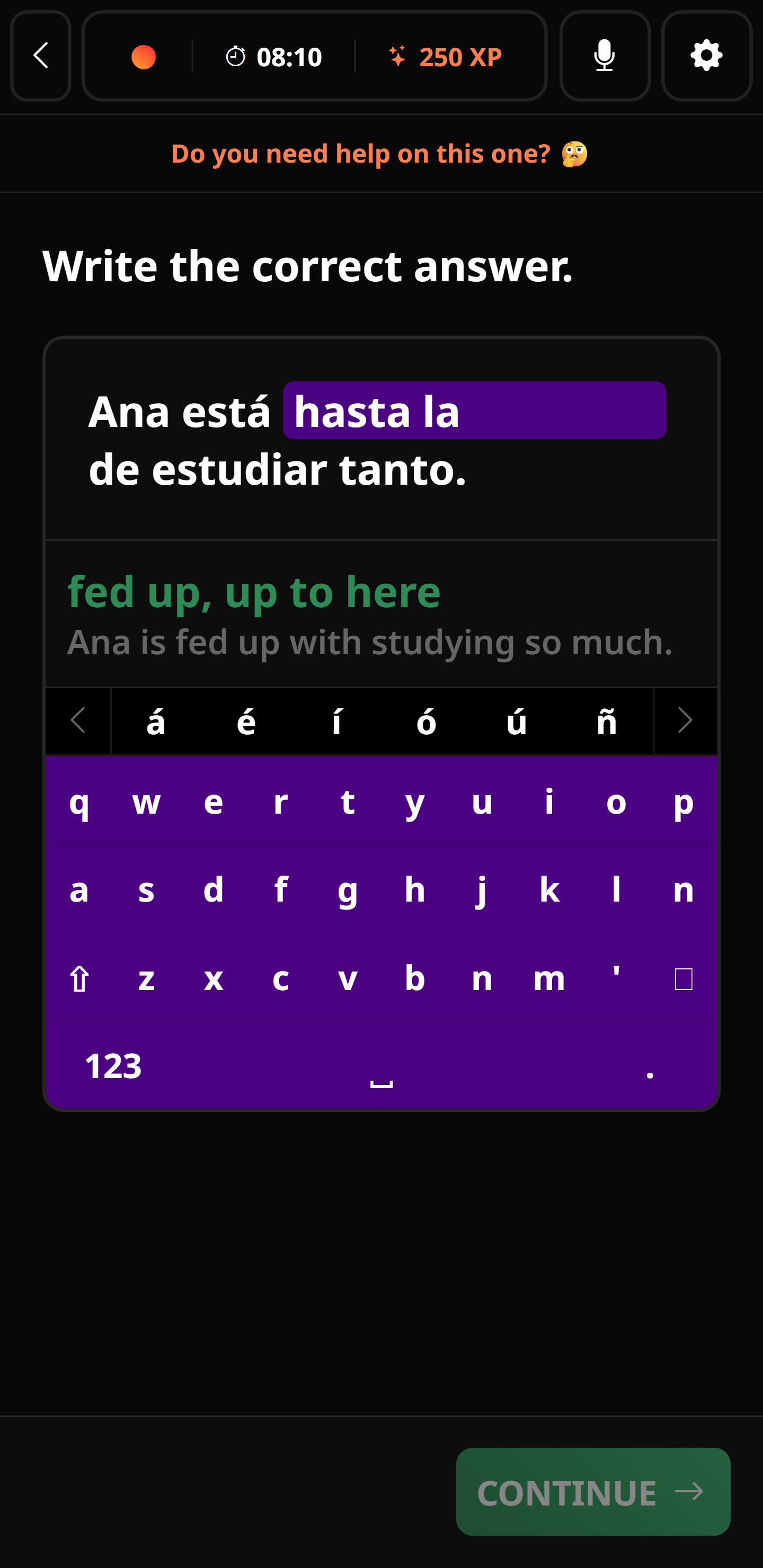
Duolingo's refusal to explain grammar is a mild handicap in Spanish and a serious one in Polish. Seven cases interacting with three genders produce a large table of endings, and Duolingo shows you the output without the system. Learners commonly report finishing large sections of the tree still unable to say what the instrumental case is for or when to use it. The sentence-puzzle format compounds this — you can assemble correct Polish by picking plausible tiles without ever generating a case ending yourself.




Join more than 100,000 students learning on Univext
🟠 What Babbel Does Well for Polish
Babbel's methodology is sound, and where it has built out a course properly the explicit grammar approach suits Polish very well.
- Explicit grammar. When a case is introduced, it is explained as a rule with clear examples — exactly what Polish needs
- Practical dialogues. Realistic, adult situations rather than novelty sentences
- Clear audio. Well-recorded native speech at a manageable pace
- Sensible sequencing. Concepts arrive in a defensible order
Where Babbel Falls Short for Polish
The honest limitation is scope. Babbel's Polish course is substantially smaller than its flagship offerings, and committed learners run out of material well before reaching intermediate competence. You are also paying a subscription for a course that is thinner than the one a German or Spanish learner receives for the same price. And as with Duolingo, the dialogues are scripted — you practise completing Polish rather than producing it, and the fixed path cannot adapt when your genitive is solid but your aspect choices are still guesswork.
🤖 Why Neither App Is Enough for Polish
Both apps can get you started. Neither can get you talking.
Polish makes this gap unusually costly. Every noun you use requires choosing a case, and that choice has to happen at conversational speed. In an exercise you have several seconds and a visible set of options; in a conversation you have neither. The skill of selecting the right ending under time pressure is only built by speaking, and neither app asks you to speak.
Pronunciation compounds it. Clusters like szcz and prz, and the distinction between ś/sz and ć/cz, need corrective feedback from something that can actually hear you. Repeat-after-me speech recognition that accepts near-misses will happily let you cement a mispronunciation for months.
The predictable result: a learner with a respectable passive vocabulary who cannot order food without freezing on the case ending.
Become bilingual in 30 days with Univext!
Start a lesson with our teacher for free and become bilingual like our 100,000 students!
🚀 Univext: The AI Alternative That Gets You Speaking Polish
Univext inverts the order. Rather than drilling Polish until conversation becomes possible, you converse from the start and the grammar is corrected inside the conversation.
How Umi Works
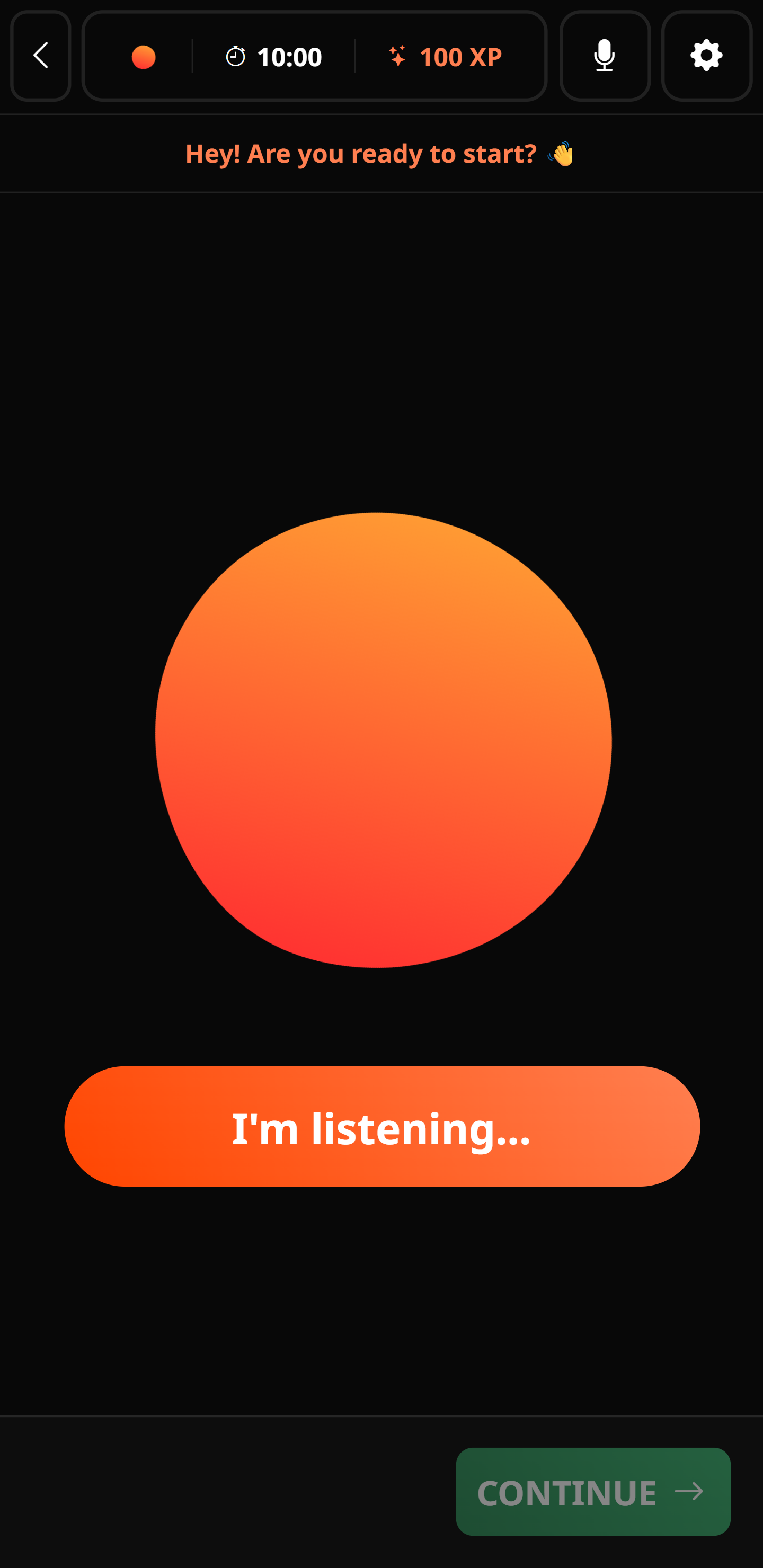
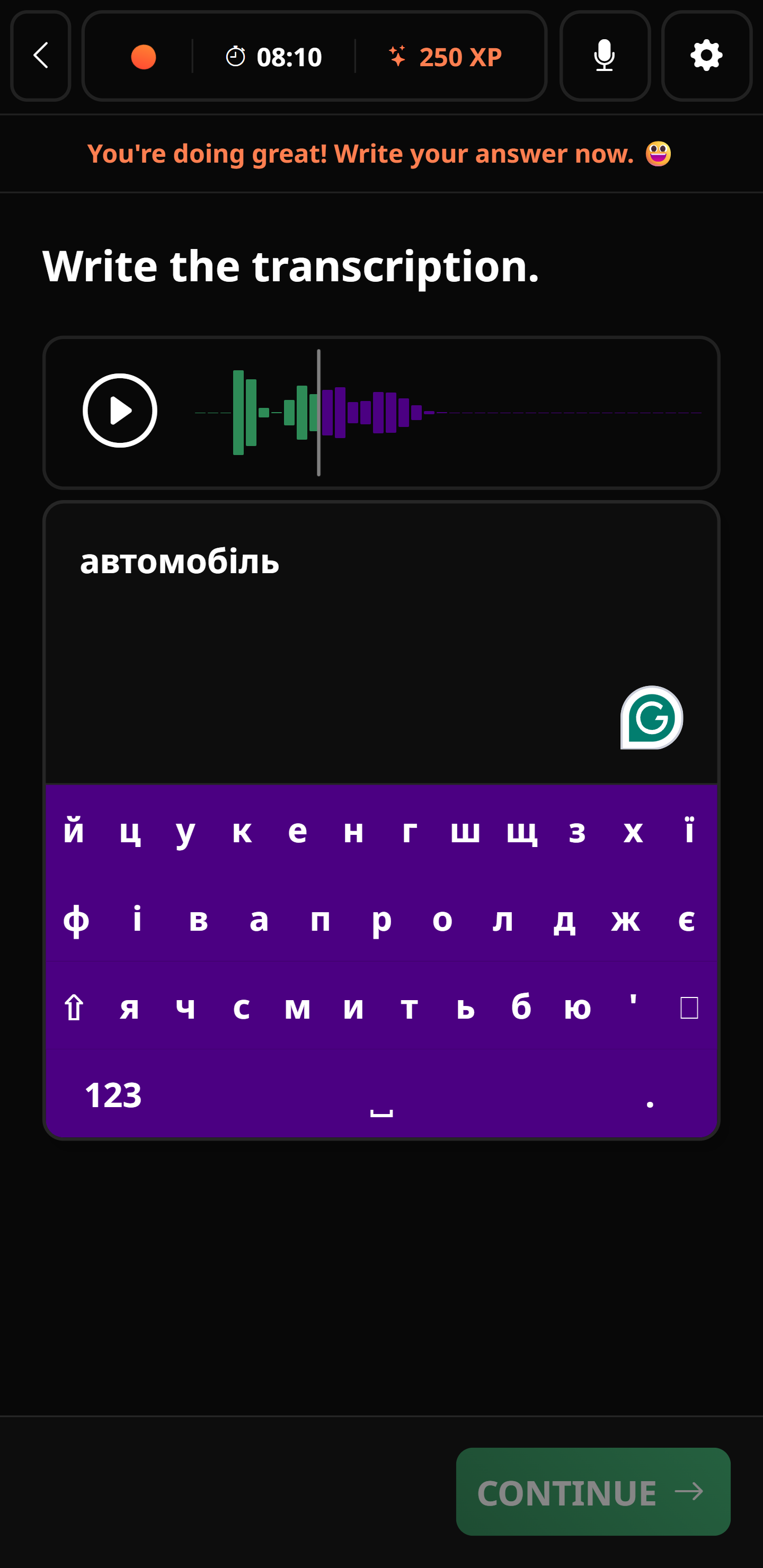
Umi is Univext's AI teacher. You speak or type in Polish, Umi replies in Polish pitched at your level, and corrections arrive in the flow rather than as an end-of-lesson score. Choose the wrong case and Umi tells you which one you needed and why — then keeps talking so you use the correct form again immediately.
Why Univext Works Better for Polish
Polish's complexity actually makes AI tutoring more valuable, not less. Here is why:
- Cases in context: Instead of memorising seven declension tables, you meet endings through use. Say "Idę do sklepu" and Umi explains why sklepu is genitive — at the moment you needed it
- Aspect made intuitive: The perfective/imperfective split has no clean English equivalent and resists memorisation. Umi corrects your aspect choices in live conversation until the distinction becomes a feel rather than a rule
- Pronunciation feedback: Polish consonant clusters and the ś/sz distinction get real-time guidance, which neither Duolingo nor Babbel provides
- Personalized pacing: If your cases are solid but verbs of motion collapse, Umi focuses there. The AI adapts to your actual weaknesses
Important
Try Univext free for 14 days with 30 minutes of daily practice. No textbook drills — real Polish conversations with an AI teacher that adapts to your level.
Start your free 14-day trial →
📋 Duolingo vs Babbel vs Univext: Who Should Use What?
Choose Duolingo if:
- You want a completely free way to build Polish vocabulary and pronunciation
- You prefer gamified, bite-sized lessons
- You are a complete beginner testing whether Polish interests you
- You need a casual study tool with no commitment
Choose Babbel if:
- You want structured, explicit grammar explanations
- You prefer a methodical, textbook-style approach
- You plan to study offline frequently
- You accept a smaller course in exchange for clearer teaching
Choose Univext if:
- You want to actually speak Polish, not just recognize it
- You need real conversation practice with immediate feedback
- You are serious about reaching conversational fluency
- You want a personalized learning path that adapts to your weaknesses
- You value 24/7 access to a tutor without the cost of private lessons
For most learners, the optimal approach in 2026 is to use Duolingo for initial vocabulary and pronunciation, then switch to Univext for the conversation practice and AI-powered tutoring that takes you to fluency. Many Univext users report that the switch to real conversation practice was the breakthrough moment in their Polish learning journey.
If you are also exploring other languages, check out our comparisons for French, English, and Italian. For a full rundown of Polish learning tools, see our Best Apps to Learn Polish in 2026 guide.
Join more than 100,000 students learning on Univext
💡 Tips for Learning Polish Faster in 2026
No matter which app you start with, these strategies will accelerate your Polish learning:
Learn the Spelling Rules First
Polish spelling looks brutal and is actually near-perfectly regular. One focused week on the alphabet, digraphs and stress means you can pronounce any written word for the rest of your life. This is the highest-return week you will spend.
Learn Nouns in the Nominative and Genitive
The genitive is the most frequently used case and the least predictable. Learning both forms together from the start costs little and saves you relearning every noun later.
Practice Every Day, Even for 15 Minutes
Consistency beats intensity for Polish. A daily 15-to-30-minute session is far more effective than a weekly three-hour marathon. Univext's 14-day free trial gives you 30 minutes daily — enough to build a genuine habit.
Consume Polish Media
Supplement app learning with Polish YouTube, podcasts, music and TV. Polish speech is fast and cluster-heavy, and ear training is the only remedy. Start with dubbed content you already know, then move to Polish originals.
Do Not Fear Mistakes
You will get cases wrong constantly for a long time, and that is expected. The advantage of practicing with an AI tutor like Umi on Univext is that you can make mistakes freely without the social anxiety of a human conversation partner — and get corrected instantly every time.
Become bilingual in 30 days with Univext!
Start a lesson with our teacher for free and become bilingual like our 100,000 students!
❓ Frequently Asked Questions
Is Duolingo good for learning Polish?
Duolingo is the stronger free option for Polish and a reasonable starting point for pronunciation and vocabulary. Its weakness is that it barely explains the case system, which is the single hardest part of Polish. Most serious learners supplement Duolingo with a conversation-focused tool like Univext.
Is Babbel good for learning Polish?
Babbel's grammar-first method suits Polish well, but its Polish course is considerably smaller than its German or Spanish courses, and committed learners exhaust it quickly. For sustained progress and speaking practice, AI-powered platforms like Univext are more effective.
Which is cheaper, Duolingo or Babbel?
Duolingo offers a free tier with ads, making it the cheaper option — and for Polish specifically it is also the more complete one. Univext offers a free 14-day trial with 30 minutes of daily practice, letting you test real conversation practice before committing.
How long does it take to learn Polish?
The US Foreign Service Institute rates Polish a Category IV language at roughly 1,100 hours to professional proficiency. With daily practice, most learners reach basic conversational ability in 8-14 months. Using an AI tutor like Univext's Umi can accelerate this timeline by maximizing speaking practice in every session.
Can I learn Polish just with apps?
Apps are a great foundation, but most learners benefit from combining approaches. A gamified app like Duolingo for vocabulary, a grammar-focused app like Babbel for rules, and an AI conversation platform like Univext for speaking practice creates a well-rounded routine. For a complete list of tools, see our Best Apps to Learn Polish in 2026.
✅ The Bottom Line
Duolingo and Babbel can both start you in Polish, and Duolingo is the better of the two for this particular language. But neither gets you to conversational fluency alone. Duolingo builds vocabulary and habit. Babbel explains the rules, for as long as its course lasts. Only Univext — with its AI teacher Umi — gives you the unscripted conversation practice where Polish cases stop being a table you have memorised and become endings you produce without thinking.
Polish rewards active practice over passive memorisation more than almost any language. If your goal for 2026 is to actually speak Polish — for work, family, heritage or life in Poland — investing in real conversation practice is the fastest path forward.
Ready to start speaking Polish? Try Univext free for 14 days →