
The Goethe-Institut is the official cultural institute of the Federal Republic of Germany, and for German learners it occupies a place no app has ever taken: it is the body that issues the Goethe-Zertifikat, the certificate that German universities, employers and immigration offices actually recognise. If you need that piece of paper, this article will tell you to go and get it — from them.
But most people searching for Goethe-Institut alternatives are not chasing a certificate. They are looking at a course fee of €500–€1,200 for a single intensive level, a fixed timetable in a city they may not live in, and a curriculum built around passing an exam rather than around holding a conversation. If your goal is to talk to your German colleagues, understand your partner's family at dinner, or stop freezing at the bakery in Berlin, an exam-preparation institute is an expensive way to get there.
This guide breaks down the best Goethe-Institut alternatives in 2026 — honestly, including where the Goethe-Institut still wins outright and where you should stop reading and enrol with them instead.
🎓 First, What the Goethe-Institut Genuinely Owns
Let's be straight about this before we compare anything, because a comparison that pretends the institution has no advantages is not worth your time.
The Goethe-Institut has three things no alternative on this list replaces:
- Official certification. The Goethe-Zertifikat (A1 through C2) and TestDaF are recognised by German universities for admission, by employers as proof of working proficiency, and by immigration authorities for family reunification and naturalisation. No app, including ours, issues a recognised certificate.
- Institutional credibility. It is funded by the German state. When a visa officer or an admissions committee sees that certificate, there is no discussion about whether the provider is legitimate.
- Exam-shaped teaching. Their courses are engineered around the exam format — the specific writing tasks, the listening format, the structured oral exam. If your deadline is an exam date, that alignment is worth paying for.
Important
If you need a recognised certificate for a university application, a visa, a work permit or naturalisation, go to the Goethe-Institut. Nothing in this article is a substitute for that. Read our full breakdown first: Goethe Institut Review 2026: Is It Worth It?
Still here? Then you probably don't need the certificate — you need to speak German. That is a completely different problem, and the Goethe-Institut is not the cheapest or the fastest way to solve it.
📊 Quick Comparison: Goethe-Institut vs The Alternatives
Become bilingual in 30 days with Univext!
Start a lesson with our teacher for free and become bilingual like our 100,000 students!
🗣️ 1. Univext — Best for Daily Speaking Practice at a Fraction of the Price
If the reason you were looking at the Goethe-Institut is that you want to actually speak German, this is the honest swap: you do not need a classroom in a specific city on a specific evening. You need to talk, every day, and be corrected while you do it.
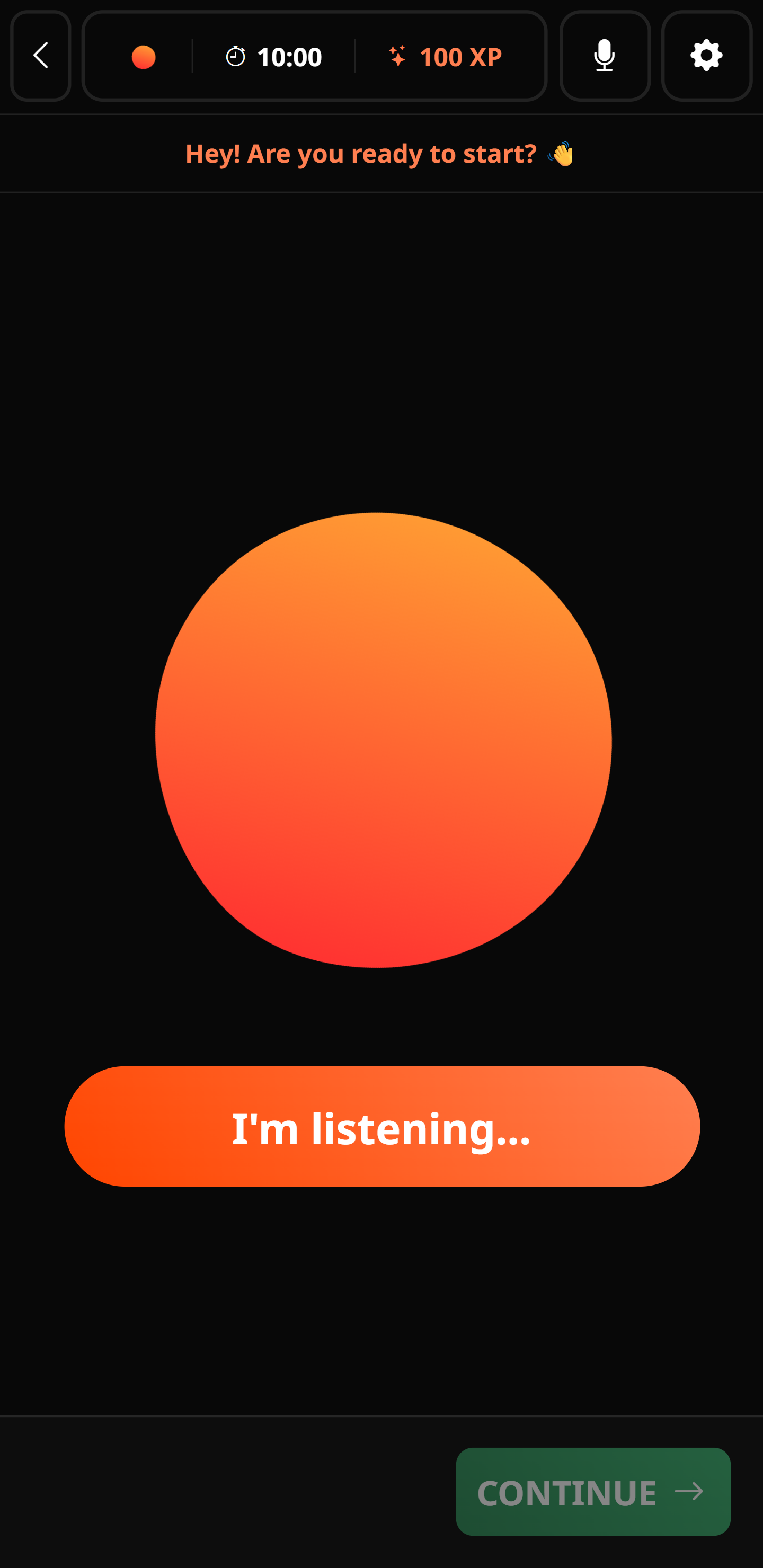
Univext's AI teacher, Umi, speaks German with you — unscripted, at whatever level you are at, whenever you open the app. You describe your weekend, argue about a film, role-play a call with a landlord or an appointment at the Bürgeramt. When you get a case ending wrong, Umi tells you why, in context, and brings the same structure back later to check it stuck.
What This Replaces — And What It Doesn't
Be clear-eyed about the last two rows. We do not issue a certificate and we never will pretend otherwise. What we do give you is roughly twenty times more speaking practice per euro than an institute course, on your own schedule.
Who It's Best For
- You want conversational German, not a diploma
- You were priced out of a €900 intensive course
- You don't live near a Goethe-Institut branch
- You already hold a certificate and now need to actually use the language
- You are preparing for an exam and want daily speaking practice alongside an exam course
Important
Start your 14-day free trial at univext.com/register — 30 minutes of German conversation per day. Test it for two weeks before you spend anything on a course.
If you want the wider field of German-learning tools, we compared them all here: Best Apps to Learn German in 2026.





Join more than 100,000 students learning on Univext
🏛️ 2. Volkshochschule (VHS) — Best Cheap Classroom Alternative in Germany
This is the alternative most learners outside Germany have never heard of, and it is the most underrated on the list. The Volkshochschule is Germany's public adult-education network — every town has one, and course fees are subsidised.
A full A2 course at a VHS typically runs €100–€300, against €500–€1,200 for a comparable Goethe intensive. You get a real teacher, a real classroom and real classmates, and many VHS centres are official telc exam centres — so a recognised certificate is still reachable, just not a Goethe one.
Pros: Dramatically cheaper, genuinely local, in-person human contact, telc exams often available on site.
Cons: You need to be in Germany. Class sizes are bigger, pace is slower, and teaching quality varies far more between branches than at the Goethe-Institut. Courses run on semester timetables, so you may wait weeks to start.
Notes
If you live in Germany and money is the constraint, check your local VHS before anything else. Most learners who complain about Goethe pricing simply never checked.
💻 3. Lingoda — Best for Live Online Classes with a Timetable
Lingoda runs live small-group classes over video, and German is its strongest course by a distance. Classes are 60 minutes, groups are usually three to five students, and the curriculum is CEFR-aligned, so you always know whether you are working at A2 or B1.
The key difference from the Goethe-Institut is flexibility: you book individual classes from a rolling schedule rather than committing to a fixed six-week block at a fixed hour. If you travel or work shifts, that alone can be the deciding factor.
Lingoda issues its own certificates of completion. They are useful for an employer who just wants evidence you studied — they are not a substitute for a Goethe-Zertifikat in a visa file.
Pros: Live teachers, real classmates, flexible booking, strong German curriculum.
Cons: At €15–€25 per class, daily practice costs €450–€750 a month — more than the Goethe-Institut, not less. Best used two or three times a week.
Become bilingual in 30 days with Univext!
Start a lesson with our teacher for free and become bilingual like our 100,000 students!
👨🏫 4. iTalki and Preply — Best for a Human Tutor on Demand
If what you valued about the institute was a qualified human paying attention to you specifically, a 1-on-1 marketplace tutor delivers exactly that without the enrolment fee. German tutors on iTalki and Preply run roughly $10–$40 per hour, and you can find teachers who specialise in Goethe exam preparation if that is your goal.
The trade-off is the one every hourly model has: your practice is capped by your budget. Three sessions a week at $25 is $300 a month for about three hours of speaking. That is the arithmetic that pushes most learners toward an AI tutor for daily reps and a human for a weekly check-in.
For a fuller comparison of the marketplaces, see Best Preply Alternatives in 2026.
Pros: Real human, fully flexible, exam-specialist tutors exist, you pick the person.
Cons: Quality varies sharply, no structured curriculum unless you build one, cost scales linearly with practice.
📺 5. Deutsche Welle — Best Free Resource, Full Stop
Deutsche Welle is Germany's international public broadcaster, and its German courses are free, complete and genuinely good. Nicos Weg covers A1 to B1 as a filmed drama series with exercises attached; the slowly-spoken news bulletins are the best free listening practice for intermediate learners anywhere.
There is no catch and no upsell. What there isn't, is anyone to talk to. DW gives you excellent input — video, audio, reading, grammar — and zero output. You will understand a great deal of German and still freeze when someone asks you a question.
Pros: Free, high production quality, state-funded and stable, superb listening material.
Cons: No speaking practice, no correction, no accountability. Best paired with something conversational.
Join more than 100,000 students learning on Univext
💡 Which Goethe-Institut Alternative Is Right for You?
- You need a recognised certificate for a visa, university or employer → the Goethe-Institut. Do not economise here.
- You want to speak German daily on a small budget → Univext
- You live in Germany and want a cheap classroom → Volkshochschule
- You want live classes but can't commit to a fixed timetable → Lingoda
- You want one qualified human focused on you → iTalki or Preply
- You have no budget at all → Deutsche Welle, paired with any speaking practice you can find
The most cost-effective combination we see working for serious learners is unglamorous: daily AI conversation for the reps, a weekly human or class for accountability, and the Goethe exam booked directly with the institute only when the certificate is genuinely required. You can sit a Goethe exam without taking their course — that alone saves most people several hundred euros.
Become bilingual in 30 days with Univext!
Start a lesson with our teacher for free and become bilingual like our 100,000 students!
❓ Frequently Asked Questions
Is the Goethe-Institut worth the money?
For certification, yes — it is the recognised standard and there is no shortcut. For conversational fluency, it is expensive relative to what you get: a couple of hours of supervised speaking per week for several hundred euros. Judge it against your actual goal.
Can I take the Goethe exam without taking their course?
Yes. The Goethe-Institut lets you register for the exam as an external candidate. Many learners prepare far more cheaply elsewhere and pay only the exam fee. If a certificate is your target, this is the single biggest saving available to you.
What is the cheapest way to learn German?
Deutsche Welle for input costs nothing. Add an AI tutor at around $15 a month for the speaking practice DW cannot give you, and you have a complete setup for the price of a couple of coffees. In Germany, a VHS course is the cheapest classroom option.
Does Univext prepare you for the Goethe-Zertifikat?
Not directly — we teach conversational German across a structured A1-to-B2 progression, and we do not issue certificates. Learners do use us for the speaking half of exam preparation, because the oral exam is where daily conversation practice pays off most. But pair it with exam-specific materials for the written formats.
Is Lingoda cheaper than the Goethe-Institut?
Per class, yes. Per month of daily study, no — at €15–€25 a class, five classes a week costs more than most Goethe intensives. Lingoda is cheaper only if you study two or three times a week.
✅ Final Verdict
The Goethe-Institut is not overrated. It is precisely as good as its reputation at the one thing it is built for: certifying German at a level the German state and German employers trust. If that is what you need, pay them.
If what you actually need is to speak German — daily, without a timetable, without €900 — then the institute is the wrong instrument, and it always was. The reader who most needs to hear that is the one about to spend a month's rent on an intensive course to prepare for a conversation with their in-laws.
Practise every day for the price of two coffees, and book the exam only if the certificate is genuinely required.