



Learning French starts with 26 letters you already know — and about a dozen sounds you don't. That gap is why so many beginners stall in week one: they can read the French alphabet on day one, and still can't pronounce a single word correctly on day thirty.
This guide fixes that. You'll get all 26 letters with their real French names (not English approximations), every accent mark and what it actually does, the letter combinations that produce sounds English simply doesn't have, and the three letters that trip up English speakers hardest. Every example has an audio button — tap it, listen, repeat out loud. That last part matters more than anything you read here.
🇫🇷 The French Alphabet: All 26 Letters
Good news first: French uses the same 26 Latin letters as English. No new characters to memorize, no new writing system. The catch is that the names of the letters are completely different, and you need them constantly — for spelling your name over the phone, for reading abbreviations, for understanding a teacher who says "with an accent on the e."
Notes
Two names are worth memorizing separately because they surprise everyone. W is double vé — literally "double V", not "double U" as in English. And Y is i grec — "Greek i", because the letter arrived in French from Greek. French speakers use these names constantly and will not understand the English versions.
Note also that K and W are rare in native French words. Almost every word containing them is borrowed: le week-end, le kilo, le wagon. If you see a K or a W, you're probably looking at an import.
✍️ The Accents: What Each Mark Actually Does
This is where French stops being "English with a funny accent" and becomes its own system. Accent marks in French are not decoration and they are not optional. They change pronunciation, they change meaning, and leaving one out is a spelling mistake exactly like dropping a letter.
É — the accent aigu (acute)
Only ever appears on e. It makes a closed, bright "ay" sound — the vowel in English "day", but shorter and without the glide at the end.
- — été (summer)
- — café (coffee)
- — parler (to speak, same sound in the -er ending)
È — the accent grave (grave)
Opens the vowel up. Where é is tight and bright, è is wide and open — closer to the vowel in English "bed".
- — père (father)
- — très (very)
On a and u, the grave accent changes nothing about the sound — it exists purely to separate words that would otherwise be identical in writing:
- a (has) vs à (to) —
- ou (or) vs où (where) —
Important
This is the single most useful accent fact for a beginner: an accent grave on a or u is a spelling signal, not a sound signal. Nobody hears the difference between a and à — but writing the wrong one is a clear error.
Ê — the accent circonflexe (circumflex)
The little hat is a fossil. It marks a letter — almost always an s — that used to be there and disappeared centuries ago. Once you see it, French vocabulary suddenly connects to English:
- — forêt (forest)
- — être (to be)
On e, the circumflex opens the vowel like a grave accent. On a, i, o and u it barely changes the sound at all.
Ë Ï Ü — the tréma (diaeresis)
Two dots mean: pronounce this vowel separately from the one before it. Without the tréma, the two vowels would merge into a single sound.
- Noël → not "nol" but "no-el" —
- naïve → not "nève" but "na-ive" —
- maïs (corn) → "ma-ees", distinct from mais (but) —
Ç — the cédille (cedilla)
The little hook under c forces a soft "s" sound in front of a, o or u, where the c would otherwise be hard like "k".
- français → "fran-say", not "fran-kay" —
- garçon → "gar-son" —
- ça va → "sa va" —
Example
The rule underneath: c is already soft before e, i and y (cinéma, cerise). It's only before a, o and u that you need the cedilla to keep it soft. That's why you'll never see a ç before an e or an i — it would be redundant.
Become bilingual in 30 days with Univext!
Start a lesson with our teacher for free and become bilingual like our 100,000 students!
🔊 Letter Combinations That Break Beginners
Here's the hard truth: French spelling and French sound are related, but not letter by letter. Groups of two or three letters routinely produce one sound. Learn these groups and French reading suddenly clicks.
The vowel pairs
oi deserves special attention because it looks nothing like it sounds. Trois, moi, voiture, pourquoi — every one of them is "wah".
The nasal vowels
These do not exist in English at all, and they are the reason a beginner's French sounds foreign even when the grammar is perfect. When a vowel is followed by n or m, the air goes through the nose and the n/m itself is not pronounced as a consonant.
The classic beginner trap is pain (bread) versus pin (pine tree) versus pan. To an English ear these blur together; to a French ear they are three unmistakably different words. There is no shortcut here — you need to hear them repeatedly and produce them out loud with feedback.
Silent final consonants
Most final consonants in French are silent. This single rule fixes more beginner pronunciation than anything else on this page.
- petit → "puh-tee", no T —
- nous → "noo", no S —
- chaud → "show", no D —
- beaucoup → "boh-koo", no P —
The common exceptions are c, r, f and l — a memory trick English learners use is the word "CaReFuL". Sac, hiver, chef, animal all pronounce their final letter.
But there's a twist: a silent final consonant wakes up when the next word begins with a vowel. That's called a liaison.
- les amis → "lay-zami", the silent S reappears —
- un petit enfant → the T links forward —
H muet vs H aspiré
French never pronounces the letter h. Ever. But there are still two kinds of h, and the difference is real:
- H muet (mute h) behaves as if the letter isn't there. Elision and liaison happen normally: l'hôtel, les hôtels with the z-sound —
- H aspiré (aspirated h) is also silent, but it blocks elision and liaison. Le héros stays le héros, never l'héros —
Notes
There is no rule that tells you which is which from the spelling. H aspiré words are mostly of Germanic or foreign origin (le hall, la haine, le hasard, le homard). Dictionaries mark them, usually with an asterisk or a superscript symbol. You learn them one at a time — there are only a few dozen common ones.





Join more than 100,000 students learning on Univext
⚠️ Three Letters That Trip Up English Speakers
R — the guttural r
The French r is not the English r. It is produced at the back of the throat, close to where you'd make a soft gargle or the "ch" in Scottish loch. The tongue tip stays down and forward, doing nothing.
Try it on: · ·
The English r — made by curling the tongue back — is the single most recognizable marker of an English accent in French. Getting the French r even roughly right transforms how native you sound.
U — the sound English doesn't have
French u (as in tu, rue, sur) has no English equivalent, and English speakers almost always substitute the "oo" of ou. That's a real mistake — tu (you) and tout (all) become indistinguishable.
The trick: say "ee" and hold it. Now, without moving your tongue at all, round your lips as if to whistle. That's the French u.
- — tu
- — rue (street)
- Compare with — tout
E — the vowel that disappears
An unaccented e at the end of a word is silent: table, rouge, petite. In the middle of a word it's often a faint "uh" that native speakers drop entirely in casual speech — je ne sais pas becomes something close to "chais pas".
- — table
- — petite
🎯 How to Actually Learn This
Reading a pronunciation guide is the easy part. Every single item on this page is a motor skill — your mouth has to physically produce sounds it has never made, and that only happens through repetition with correction.
Here's what works, in order of impact:
- Say everything out loud. Silent reading builds zero pronunciation. Tap every audio button above and repeat each word three times.
- Work on minimal pairs. Pain / pin / pan. Tu / tout. Dessus / dessous. Training your ear to hear the difference is what lets your mouth produce it.
- Get corrected immediately. This is the piece most self-learners never get. You can practice a wrong French r for six months and only discover it when a native speaker frowns.
- Start with whole words, not letters. Nobody needs to recite the alphabet. You need bonjour, merci, s'il vous plaît said correctly.
Important
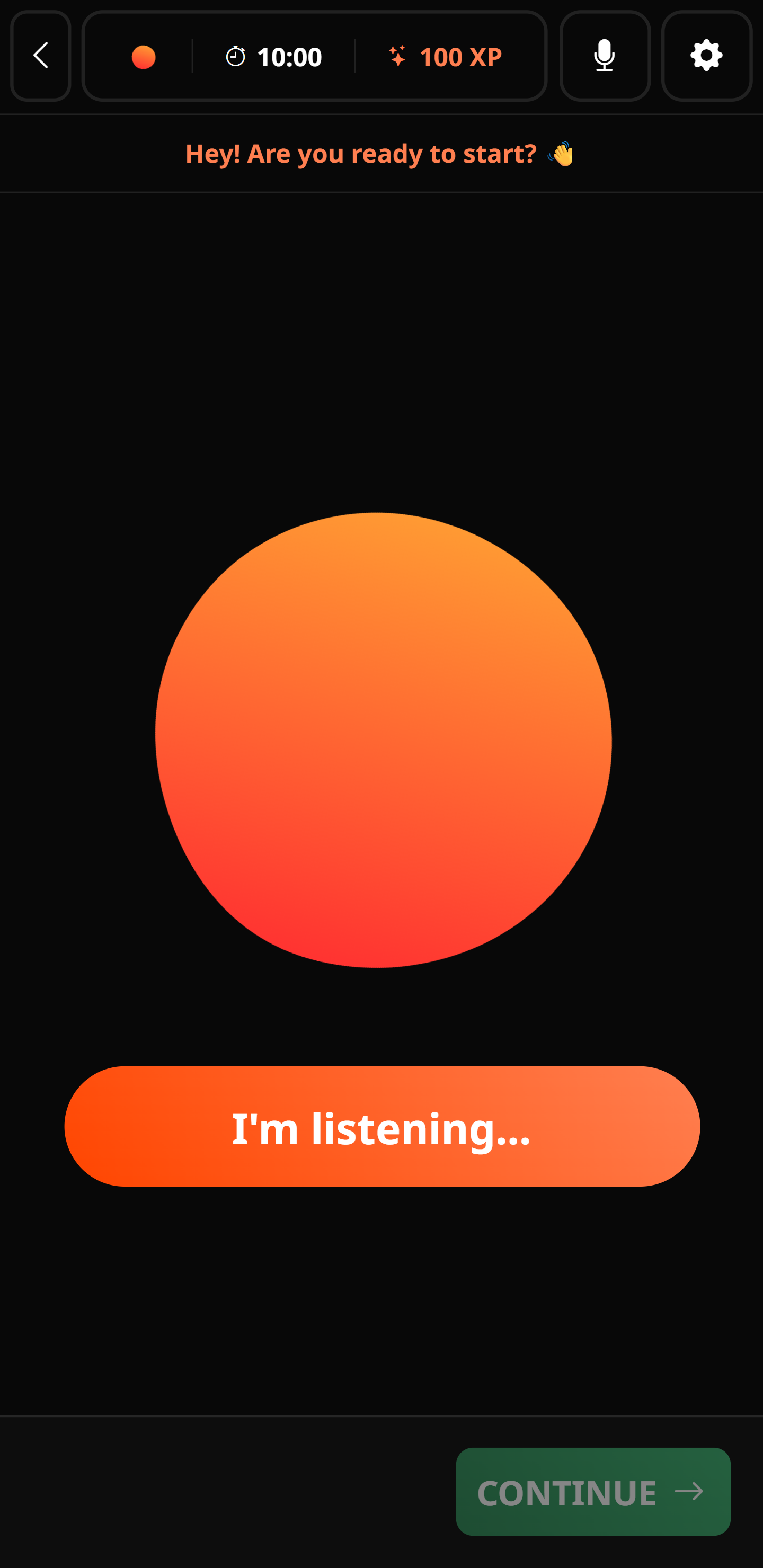
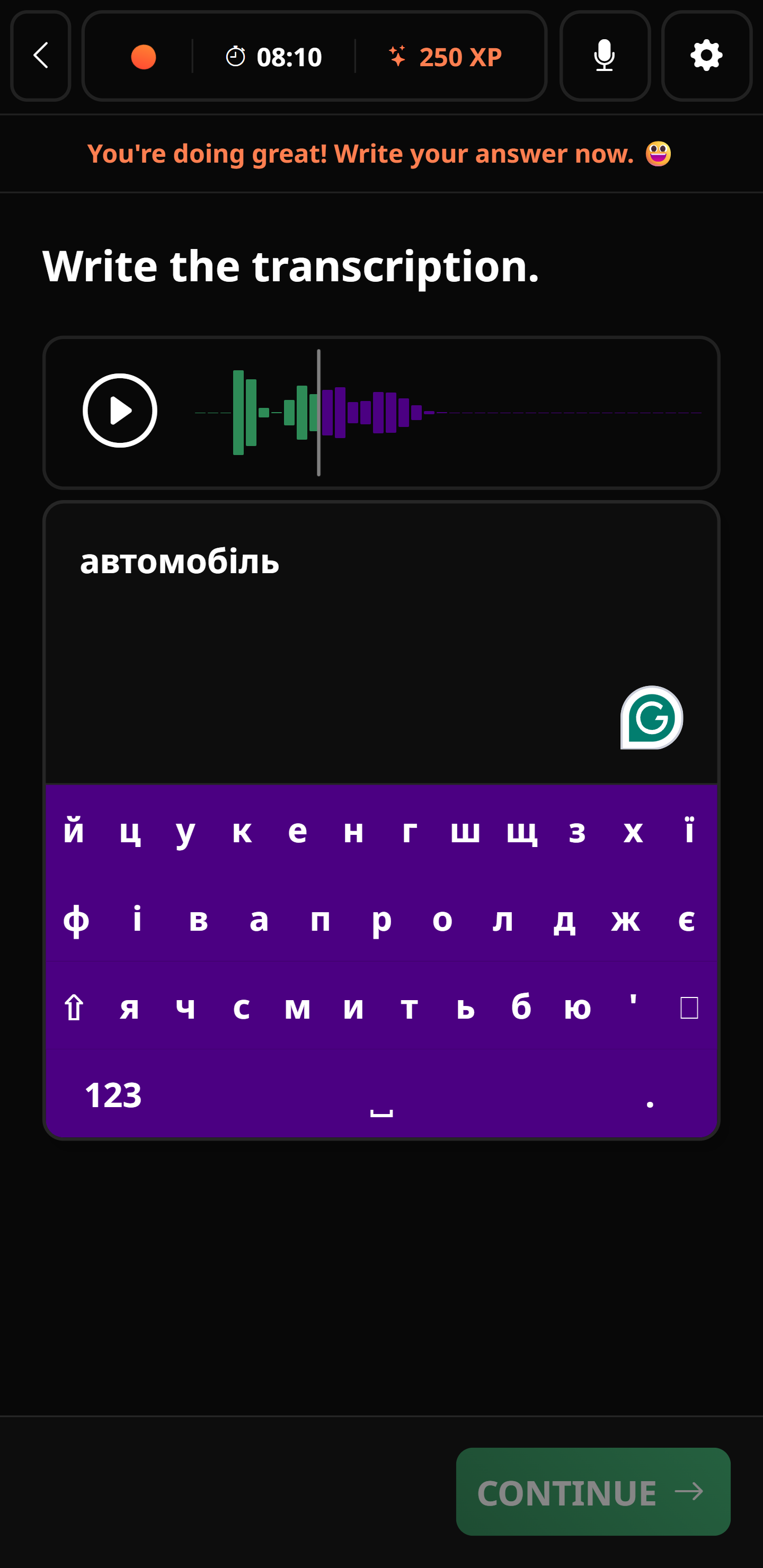
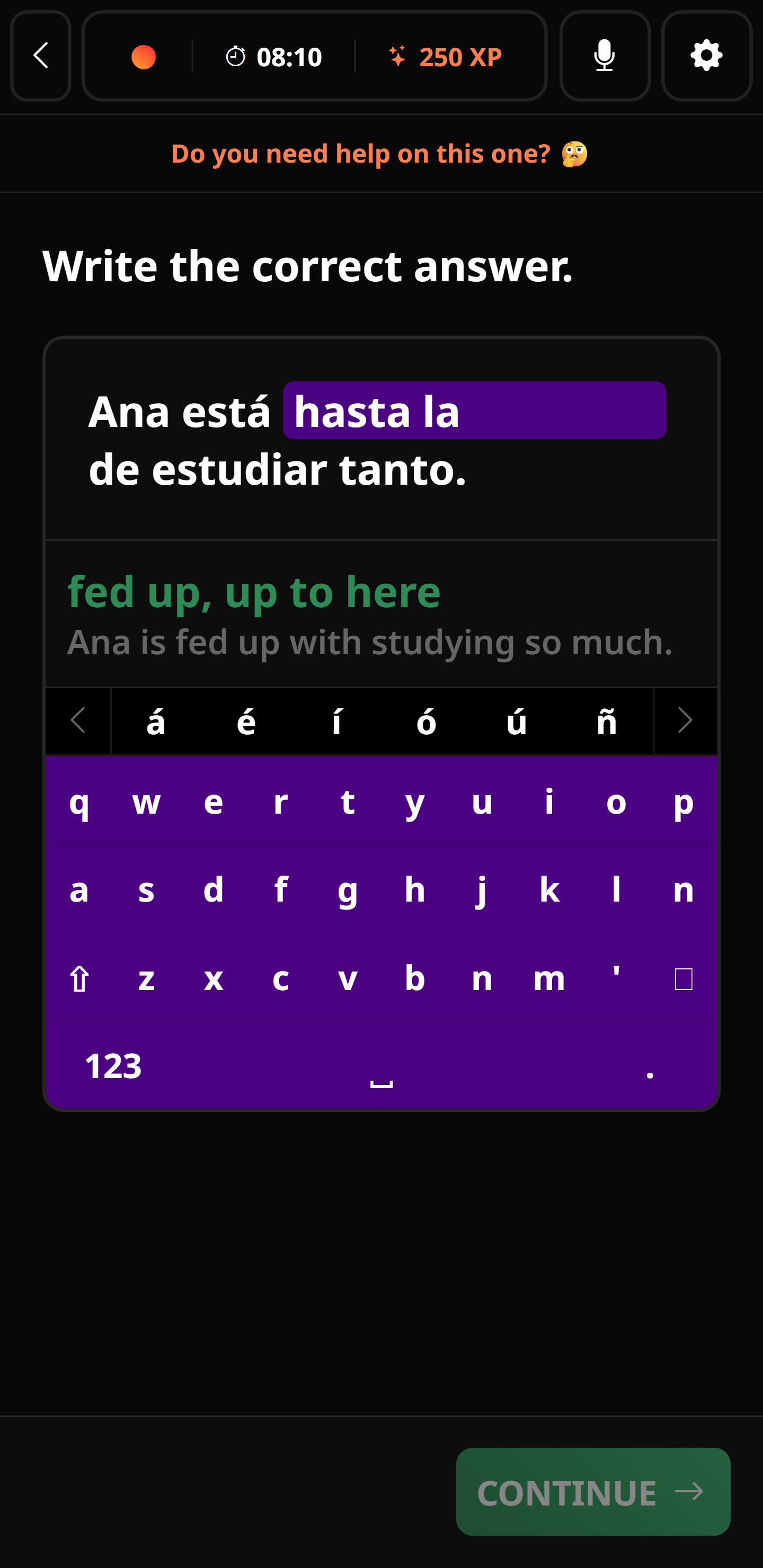
The bottleneck for almost every French beginner is speaking practice with feedback — not vocabulary, not grammar, not motivation. Univext's AI tutor Umi listens to you speak, catches the nasal vowel you flattened and the r you rolled the English way, and corrects you on the spot. You can start a free lesson right now and hear the difference on your first attempt.
Start a free French lesson with Umi
Become bilingual in 30 days with Univext!
Start a lesson with our teacher for free and become bilingual like our 100,000 students!
📚 Where to Go Next
Once the alphabet and its sounds feel comfortable, the next step is building real sentences out loud. If you're still choosing where to study, this comparison covers the main options honestly:
❓ Frequently Asked Questions
Does French have letters English doesn't? No. French uses the exact same 26 Latin letters. What it adds are five accent marks (é è ê ë and the cedilla ç) applied to letters you already know — not new letters. Accented forms are not counted separately in the French alphabet.
How long does it take to learn French pronunciation? The rules take an afternoon. The muscle memory takes weeks to months, depending entirely on how much you speak out loud. Learners who practise speaking daily from week one typically sound comfortable within two to three months; learners who only read often still struggle after a year.
Do I really need the accents when typing? Yes. Omitting an accent is a spelling error in French, and in some cases it changes the word entirely — ou (or) vs où (where), a (has) vs à (to), sur (on) vs sûr (sure). Most phone keyboards give you accented characters by holding the base letter.
Why is the French r so hard? Because it's made in a completely different part of the mouth than the English r — back of the throat instead of tongue-curl. It's not harder in an absolute sense; it's just a movement English never asked you to make. Most learners get a usable version within a few weeks of daily practice.
What's the difference between h muet and h aspiré if both are silent? Neither is pronounced, but h muet allows the preceding word to contract or link (l'hôtel, les hôtels with a z-sound), while h aspiré blocks it (le héros, les héros with no z-sound). There's no spelling clue — you learn the aspiré words individually, and there are only a few dozen common ones.
Join more than 100,000 students learning on Univext
🚀 Ready to Speak French?
You now know all 26 letters, every accent, the vowel pairs and nasals that make French sound French, and exactly which three letters will fight you hardest. The only thing left is opening your mouth.
Umi is available whenever you are — no scheduling, no judgment, and it will happily let you say pain twenty times until it's right.