


🇵🇱 Duolingo vs Rosetta Stone for Polish: The Quick Verdict
Duolingo and Rosetta Stone approach Polish from completely opposite directions, and in 2026 the right pick depends entirely on what you want out of your twenty minutes a day. Duolingo is free, gamified, and relentless about getting you back tomorrow. Rosetta Stone is the expensive old guard that drops you into Polish with no English whatsoever and trusts your brain to work it out from photographs.
The short answer: if you want a daily habit and a growing pile of vocabulary without paying anything, Duolingo is the better starting point. If you care about your accent and want to train your ear on the hardest consonant clusters in Europe, Rosetta Stone is the more serious instrument.
But Polish exposes a problem that sits underneath both of them, and it exposes it more brutally than almost any language an English speaker can pick. Polish is not a vocabulary language — it is a machine. Seven cases. Three genders in the singular and a separate personal-masculine category in the plural. Verbs that arrive in perfective and imperfective pairs where choosing wrong changes what you actually said. Duolingo has you tapping word tiles. Rosetta Stone has you clicking pictures. Neither one ever puts you in front of an empty screen and asks you to build a Polish sentence out of your own head with every ending already correct. That is precisely the skill you need at a bakery counter in Kraków, and it is the one skill neither app trains.
Important
Duolingo builds the habit. Rosetta Stone builds the ear. Neither builds the ability to hold a conversation — and with Polish that gap is wider than with any Romance language, because Polish gives you no room to guess your way through a sentence.
🦉 What Duolingo Offers for Polish
Duolingo's Polish course is smaller than its Spanish or French trees, but it is a real course and it is the reason Duolingo keeps appearing among the best apps to learn Polish. For a language with this little quality free material, that matters.
The Curriculum and Lesson Structure
The Polish tree runs as units of short lessons, each taking two to five minutes:
- Sound and Spelling First: Early lessons pair and with written forms and slowly introduce the digraphs — , , — that make written Polish look impossible at first glance.
- Word Tiles: You assemble sentences from a bank of supplied words.
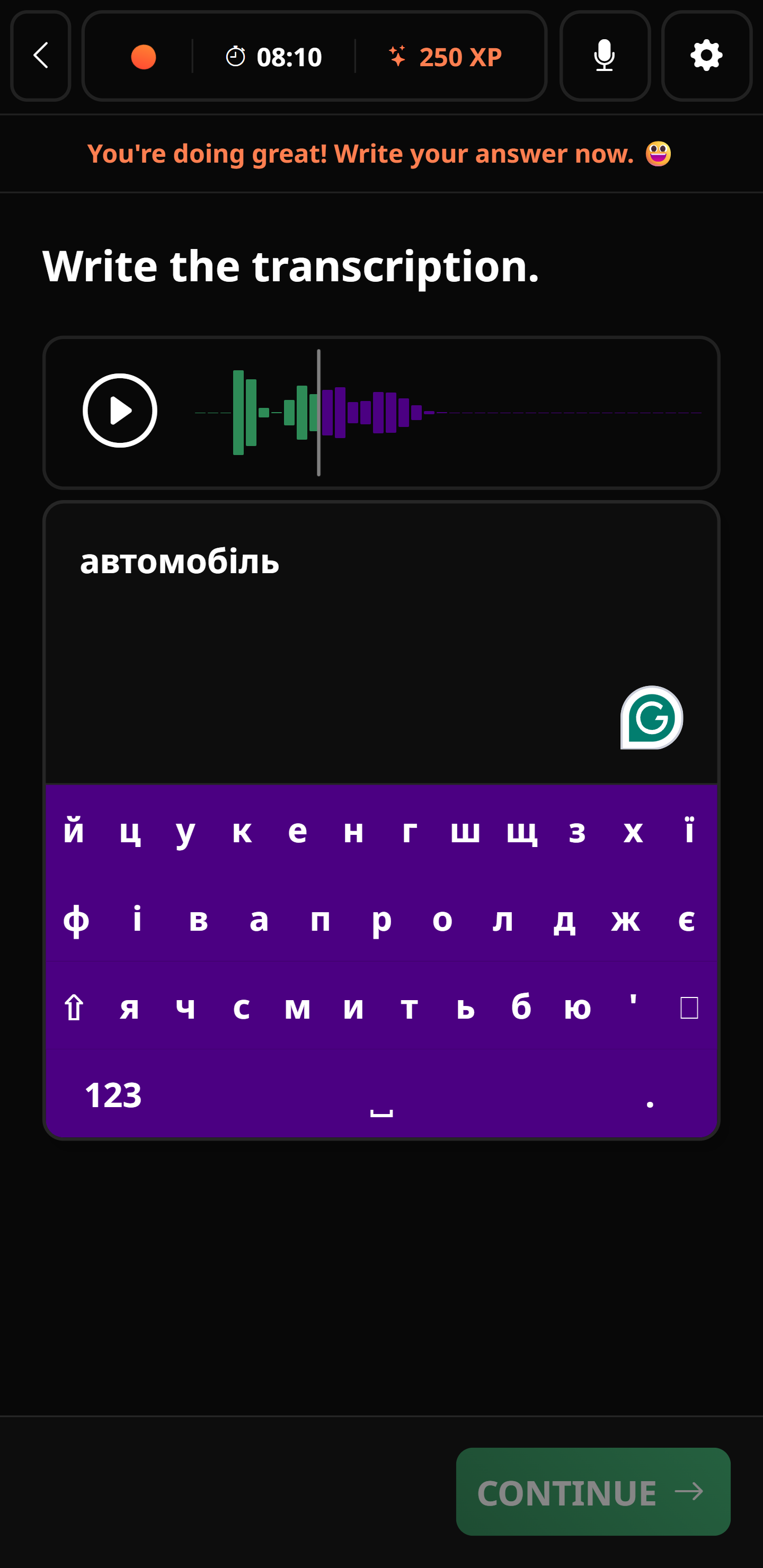
- Listening Drills: A synthetic voice reads a line and you type what you heard.
- Streaks and XP: The gamification is genuinely Duolingo's best feature and the reason people last more than a week.
Strengths of Duolingo
- It Costs Nothing: The entire Polish course is free. Ads are the price you pay.
- The Alphabet Is Handled Well: Polish uses Latin letters with diacritics — , , , — and Duolingo eases you into them without ceremony.
- Habit Formation: The streak works. Most people who touched Polish every day for a year did it here.
- Low Friction: Two minutes waiting for a tram is a real lesson. No setup, no commitment.
Weaknesses of Duolingo
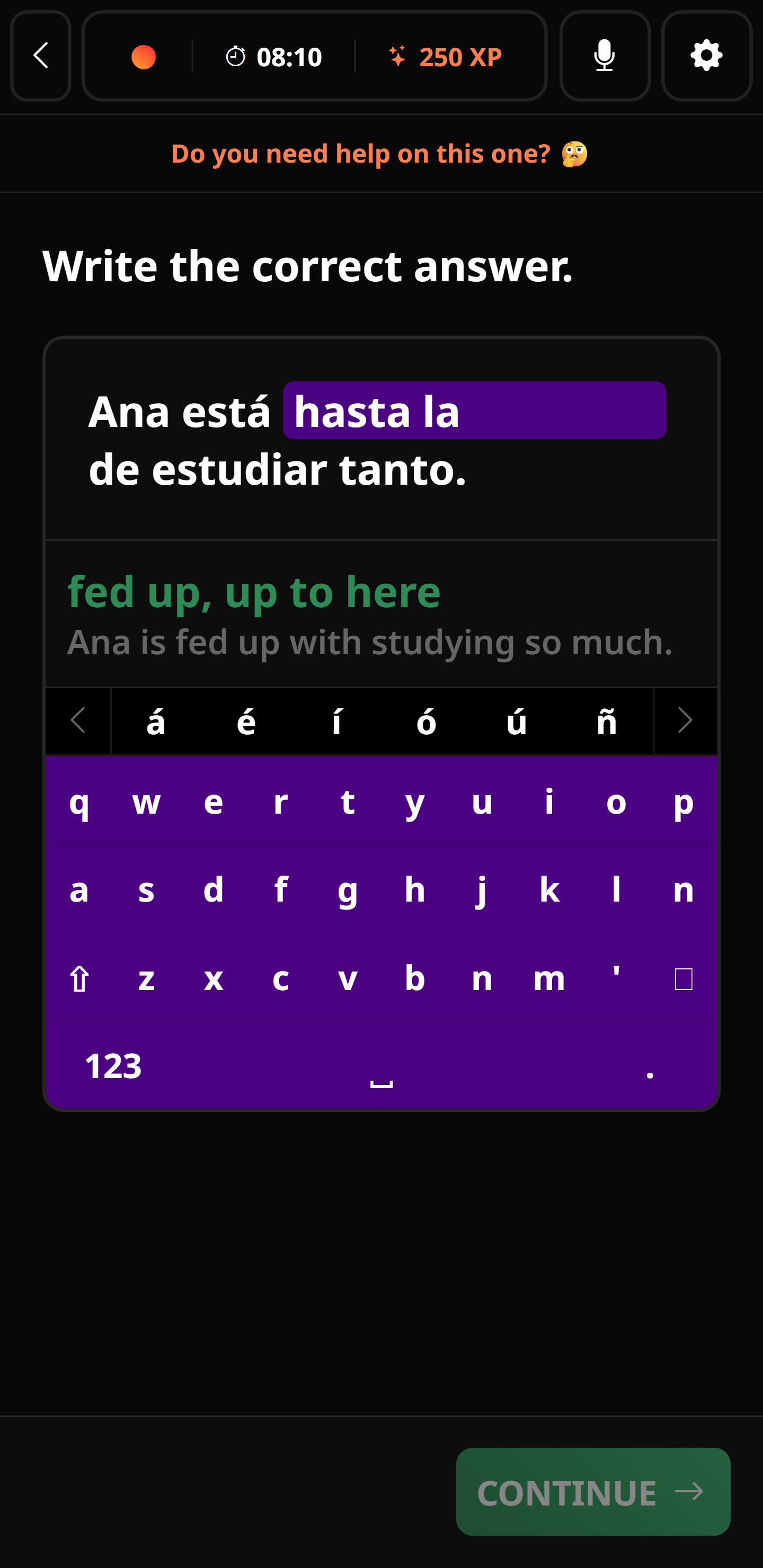
- Word Tiles Do the Work For You: This is fatal for Polish specifically. When , and are all sitting on screen as tiles, you pick whichever looks familiar. You never had to know the case. In a real sentence nobody lays the endings out in front of you.
- Seven Cases, Never Systematized: Polish reshapes the noun, the adjective and often the number for each case, and it does it seven times over. Duolingo shows you turning into and hopes repetition does the rest. It rarely explains when a case is triggered or why.
- Personal-Masculine Plural Goes Unmentioned: Polish splits plural nouns into personal-masculine and everything-else, and the verb and adjective forms follow. English has no equivalent and Duolingo barely acknowledges it exists.
- Aspect Goes Untaught: Every Polish verb comes as a pair — against . Pick the wrong one and you have said something different from what you meant. Duolingo accepts your tile and moves on.
- Thin Grammar Notes: The case system is the hardest thing about Polish for an English speaker, and it gets a tip note rather than an explanation.
- No Real Speaking: The speaking exercises ask you to read a sentence aloud. That is pronunciation practice, not conversation.
Notes
Treat Duolingo as a spelling and vocabulary tool and it is excellent. Treat it as your only Polish resource and you will plateau — while still holding a 400-day streak, which is the genuinely frustrating part.
Become bilingual in 30 days with Univext!
Start a lesson with our teacher for free and become bilingual like our 100,000 students!
🗿 What Rosetta Stone Offers for Polish
Rosetta Stone is the oldest name in this comparison and its philosophy has not shifted in decades: learn Polish the way you learned your first language. No translations, no grammar tables, no English safety net.
The Immersive Method
You see four photographs. You hear — the boy is eating an apple — and you click the matching image. Do that a few thousand times and your brain begins wiring Polish sounds straight to meaning without routing through English. For vocabulary and listening, this genuinely works.
TruAccent and the Polish Sound System
Rosetta Stone's speech engine is its strongest asset and it is noticeably stricter than Duolingo's. Polish gives it more to chew on than almost any other language on the platform: the nasal vowels and , the two separate hushing series where and are different sounds that English collapses into one, and consonant clusters like or that stop most beginners dead. TruAccent will make you say them again. For an English speaker who wants to sound less like a tourist, that is real value.
Strengths of Rosetta Stone
- Pure Immersion: Trains you out of mental translation, which is what eventually makes fast spoken Polish comprehensible.
- Best-in-Class Pronunciation: TruAccent is by a wide margin the more demanding accent tool here, and the Polish hushing consonants need exactly that.
- Serious Tone: No streaks, no owl, no XP. Some learners want that.
- Lifetime Option: A one-time payment rather than a subscription that outlives your motivation.
Weaknesses of Rosetta Stone
- The Polish Course Is Limited: This is the honest headline. Rosetta Stone's Polish offering is noticeably thinner than its Spanish, French or German courses — fewer levels, less content, and a curriculum that clearly was not built with the same investment. You will finish it faster than you expect and you will not be conversational when you do.
- Cases Are Where Immersion Breaks: A photo can show a girl handing a book to a friend. It cannot show you why it is — why the friend is dative and the book is accusative. Case has no picture. Pure photo-immersion has no mechanism to teach it and Rosetta Stone does not try.
- Aspect Is Left to Luck: The perfective and imperfective pairing carries no visual signal at all. A photograph of someone writing cannot tell you whether they were writing or wrote it and finished. You are expected to absorb it. Most learners simply do not.
- Gender Agreement Is Invisible: Polish adjectives and past-tense verbs agree with gender, and in the plural they split along the personal-masculine line. None of that is photographable.
- Slow: A rule a teacher explains in thirty seconds takes weeks of picture-matching to surface here, if it surfaces at all.
- Expensive: You are paying a serious price for a method that has not meaningfully evolved, on a course that got less attention than the flagship languages.
Example
Example: to teach the instrumental case, Rosetta Stone shows you contexts until the pattern clicks. Duolingo gives you a two-line tip and then an exercise where the ending is already sitting on screen as a tile. A tutor would say "the instrumental is the with-what case" in one sentence and then let you get it wrong out loud until you stopped. Only one of those three resembles how people actually learn to speak.





Join more than 100,000 students learning on Univext
📊 Duolingo vs Rosetta Stone: Side-by-Side Comparison
🗣️ The Real Problem: Recognition Isn't Speaking
Here is what neither company's marketing will tell you: you can hold a 500-day Duolingo streak, finish every Rosetta Stone unit that exists for Polish, and still freeze solid when someone in Wrocław asks what you would like.
Why? Because both apps are recognition machines. Duolingo hands you the words and asks you to arrange them. Rosetta Stone shows four pictures and asks you to pick one. In both cases the correct answer is already on the screen. Your brain never does the hard part — reaching into empty space and pulling out a Polish sentence with every ending already right.
Polish makes that gap worse than most languages, and the reason is structural. In Spanish, a slightly wrong ending makes you sound a little off. In Polish, every single noun you say forces a live decision: which gender, which of seven cases, therefore which ending, therefore which adjective ending to match it, therefore — in the plural — whether the group counts as personal-masculine. You cannot defer any of it. You cannot mumble past it. And a tile bank makes every one of those decisions for you, which means a year of tapping trains you to do the exact thing real Polish never permits.
Then the verb arrives. You want to say "I read the book" — but did you read it through to the end or were you reading it? Polish forces you to choose or before the sentence leaves your mouth, and to inflect it for your own gender while you are at it. No word-tile exercise builds that reflex, because the tile was chosen before you got there.
Real conversation is the opposite. Nobody offers you word tiles. You hunt for a noun mid-sentence, put it in the wrong case, get corrected, and go again. That struggle is the learning, and it is exactly what a tapping interface can never simulate.
If you want the best app to learn languages in a way that ends with you actually talking, you have to look past both of these.
Become bilingual in 30 days with Univext!
Start a lesson with our teacher for free and become bilingual like our 100,000 students!
🚀 What Actually Works: AI Conversation Practice
This is where Univext changes the equation. Instead of tiles or photographs, you get Umi — an AI tutor that talks with you, in Polish, about whatever you want, whenever you want.
Umi does not quiz you. It has a conversation with you. Tell it about your weekend, practise ordering at a milk bar in Warsaw, role-play a flat viewing. There are no word banks. You produce the sentence yourself, cases and all, and that is the entire point.
Why Univext works where the others stall:
- Real-Time Correction: Say when it should be and Umi fixes the genitive in the moment you needed it, not in a tip note you scrolled past.
- It Remembers: Keep reaching for the wrong aspect after ? Umi quietly threads more past-tense narration into tomorrow's conversation until the perfective becomes automatic.
- Zero Judgment: Mangle fifty times in a row. Umi never sighs, never checks the clock, never costs $40 an hour.
- Output From Day One: You build sentences from nothing. It is the only exercise that transfers to a real conversation, and the only one that forces you to actually choose a case.
Comparison: The Traditional vs. The Modern
Important
Ready to actually speak Polish? Univext gives you a 14-day free trial with 30 minutes of conversation a day. Put the tiles down and say something. Register here.
🎯 Which Should You Choose?
Choose Duolingo if:
- You are starting from zero and need the spelling system and a daily habit more than you need a method.
- You do not want to pay anything to find out whether Polish will stick.
- You want vocabulary volume and you are honest with yourself that it is a supplement.
Choose Rosetta Stone if:
- Your accent matters to you and you want the strictest pronunciation tool available — the hushing consonants and nasal vowels reward it.
- You want to train your ear to process spoken Polish without translating.
- You accept that the Polish course is thinner than the flagship languages and you are buying it mainly for TruAccent.
Choose Univext if:
- You already know Polish words but freeze when it is your turn to speak.
- You keep guessing at case endings and want to be corrected in real time until they stick.
- You want to reach a real conversation as fast as possible.
- You want a tutor's correction without a tutor's price or a tutor's calendar.
Join more than 100,000 students learning on Univext
❓ FAQ
Is Duolingo or Rosetta Stone better for Polish beginners? For an absolute beginner, Duolingo has the practical edge: it is free, the course is deeper than Rosetta Stone's Polish offering, and it handles the diacritics and digraphs gently. Rosetta Stone is the better choice if pronunciation is your priority and you can tolerate having no English at all. Neither will teach you the case system properly, and neither will get you speaking on its own.
Can you become fluent with Duolingo alone? No. Duolingo builds recognition and vocabulary, not production. With Polish that ceiling is especially low, because recognising a case ending on a tile is a completely different skill from producing it under pressure. Learners who get fluent almost always add conversation practice on top — a tutor, an exchange partner, or an AI tutor like Univext's Umi.
Which app is better for Polish pronunciation? Rosetta Stone, clearly. TruAccent is stricter than anything Duolingo offers, and Polish pronunciation is where English speakers lose the most ground — the nasal vowels, the two hushing series, the consonant clusters. But strict drilling on fixed sentences still is not speaking.
How limited is Rosetta Stone's Polish course? Noticeably. It has fewer levels and less content than the Spanish, French or German courses, and the curriculum was clearly built with less investment. You will work through it faster than you expect and you will not be conversational at the end. If you buy it, buy it for the pronunciation engine rather than the syllabus.
Do either app teach the Polish cases properly? No, and this is the answer nobody selling an app wants to give. Duolingo offers tip notes and then hands you the endings as tiles. Rosetta Stone cannot teach cases at all, because case has no picture and pure immersion has no mechanism for it. Seven cases are the core of Polish grammar and both apps route around them.
How hard is Polish for English speakers? Genuinely hard — it sits in the most demanding tier of languages for English speakers, alongside Russian and Greek, at roughly 1,100 hours of study to reach professional working proficiency. That is not a reason to avoid it. It is a reason to spend those hours on production rather than on tapping tiles.
What is the fastest way to actually speak Polish? Daily output with immediate correction. That means talking — to a human tutor, or to an AI one. Univext's free trial gives you 30 minutes a day of exactly that.
Become bilingual in 30 days with Univext!
Start a lesson with our teacher for free and become bilingual like our 100,000 students!
💡 Bottom Line
Duolingo vs Rosetta Stone for Polish in 2026 is really a question about what you are willing to be missing. Duolingo gives you the spelling system, consistency and a large passive vocabulary for free. Rosetta Stone gives you an ear and an accent for a real price, on a course that is thinner than it should be. Both are legitimate tools and both are worth using for the narrow thing they do well.
But Polish is a machine, not a word list. Seven cases, three genders, the personal-masculine plural, verbal aspect — none of it is learnable by tapping tiles that have already been sorted for you, and none of it is learnable from a photograph. That is not an insult to either app. It is simply what they are.
Neither one gives you the thing you actually wanted, which is walking into a bakery in Kraków and saying something out loud. That skill only comes from producing Polish out of your own head, getting the case wrong, and being corrected — over and over, until it stops being a decision.
That is the gap Univext was built for. Keep the streak if you enjoy it. But if you want to speak, you have to start speaking.
Important
Don't just learn Polish — speak it. Start your 14-day free trial with Univext and get 30 minutes of daily conversation with Umi. Claim your trial here.