

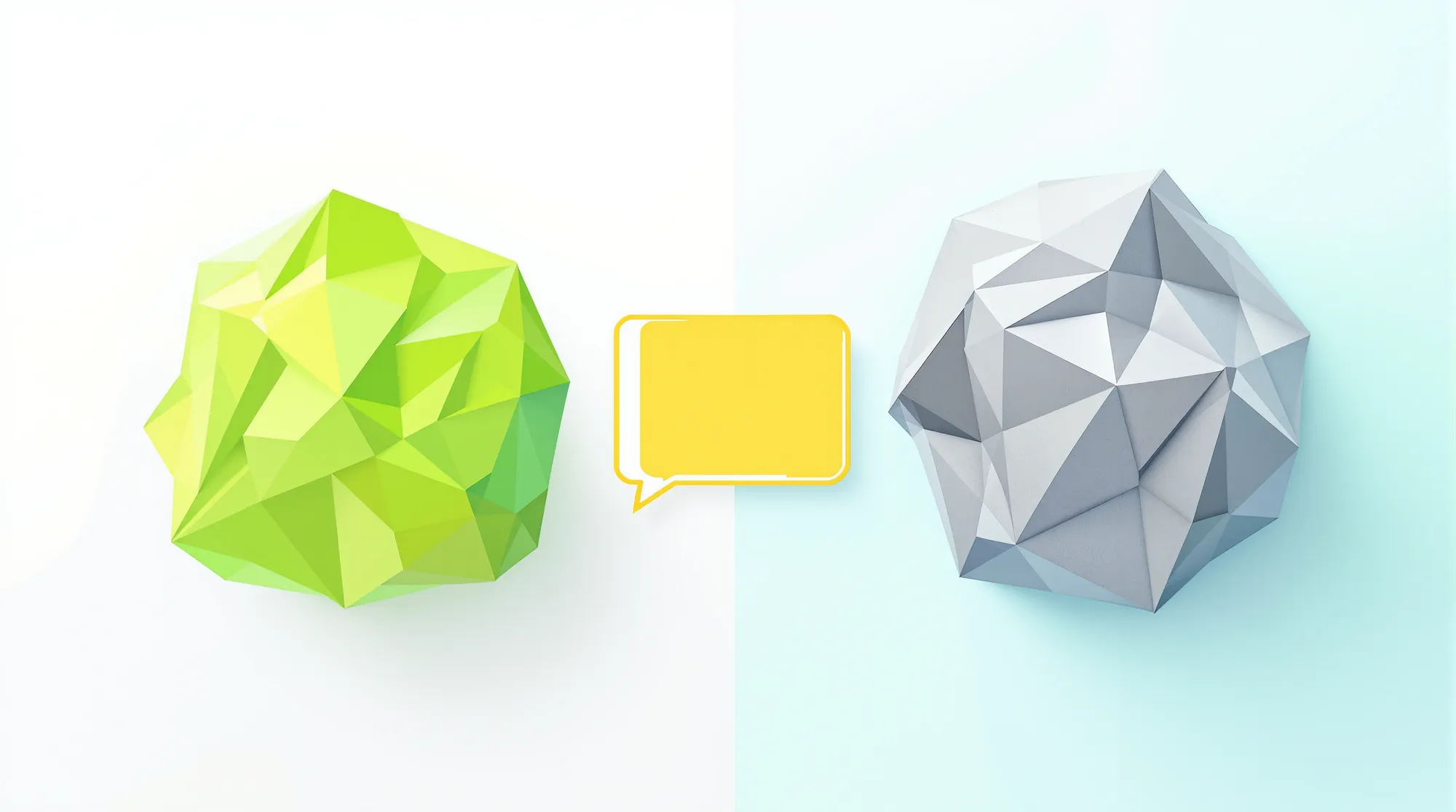
🇬🇧 Duolingo vs Rosetta Stone for English: The Quick Verdict
Learning English is not like learning any other language on these apps, and that single fact changes the whole comparison. With Spanish or French, you are one of millions of English speakers picking a tool. With English, you are the one being taught from a language the app may barely support — and that is where Duolingo and Rosetta Stone split apart in 2026.
Duolingo teaches English from your native language. That works beautifully if you speak Spanish or Portuguese, and badly if you speak Thai, Bengali or Vietnamese, where the English tree is a fraction of the size. Rosetta Stone teaches English from nothing at all — pictures and audio only — so your native language is irrelevant. Whether you speak Korean or Arabic, you get the exact same product.
The quick verdict: if your native language is one of Duolingo's big ones, Duolingo is the better free start. If it is not, or if you care about your accent, Rosetta Stone is the more honest purchase.
But there is a catch that applies to both, and it is the reason so many people arrive in London with a B1 certificate and cannot order a coffee. Duolingo hands you the words to arrange. Rosetta Stone hands you four pictures to choose from. Neither ever asks you to face a blank screen and produce an English sentence that came from your own head.
Important
Duolingo builds the habit. Rosetta Stone builds the ear. Neither builds the ability to speak — which is the only thing your job interview, your visa appointment, or your first day abroad will actually test.
🦉 What Duolingo Offers for English
Duolingo's English courses are the most-used language courses on earth, and for good reason: they are free and they are everywhere. It is a fixture on every list of the Best Apps to Learn English in 2026 (Tested & Ranked).
The Curriculum and Lesson Structure
The English tree is split into units of two-to-five-minute lessons built from four exercise types:
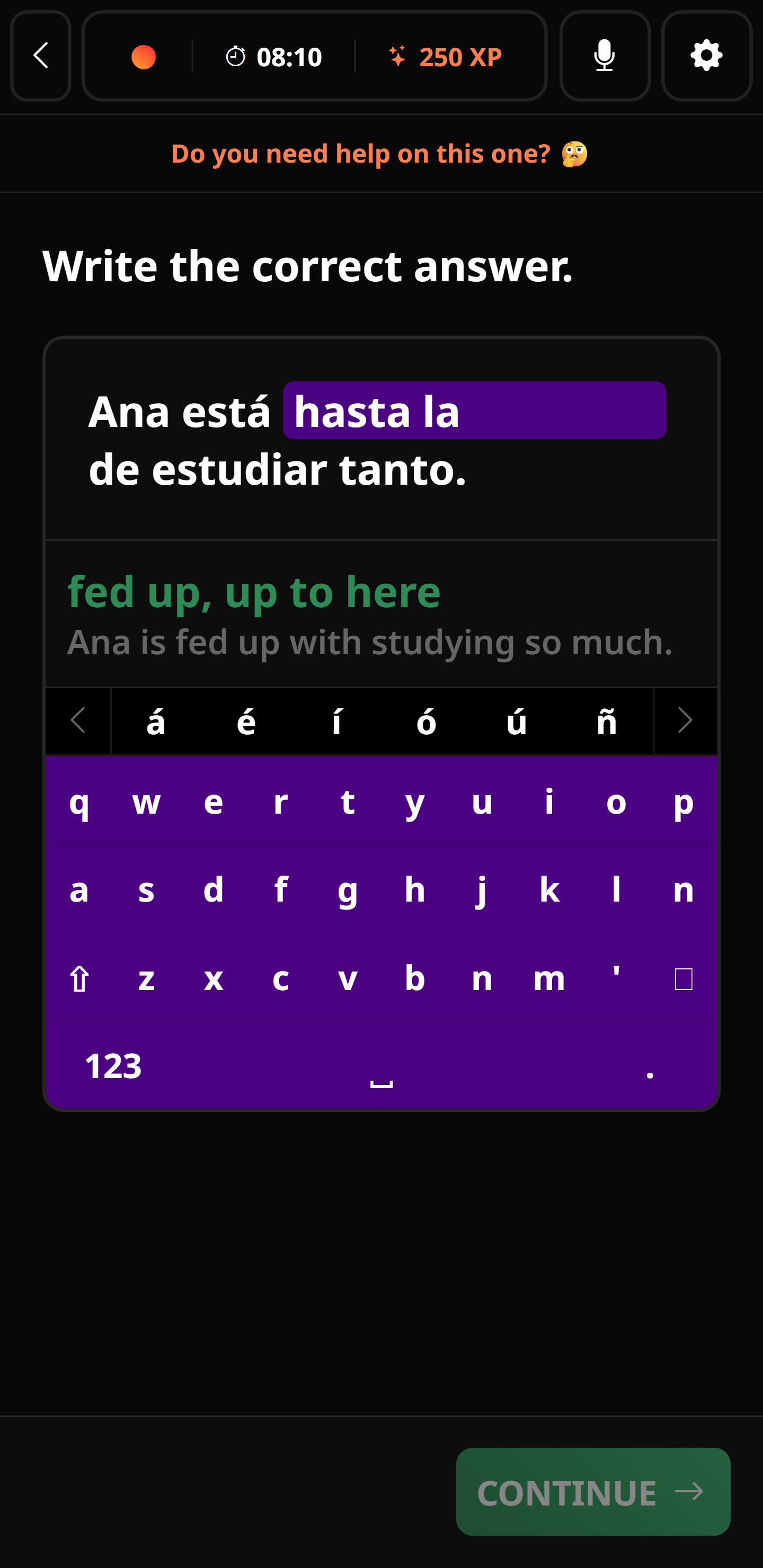
- Word Tiles: You assemble English sentences from a bank of supplied words.
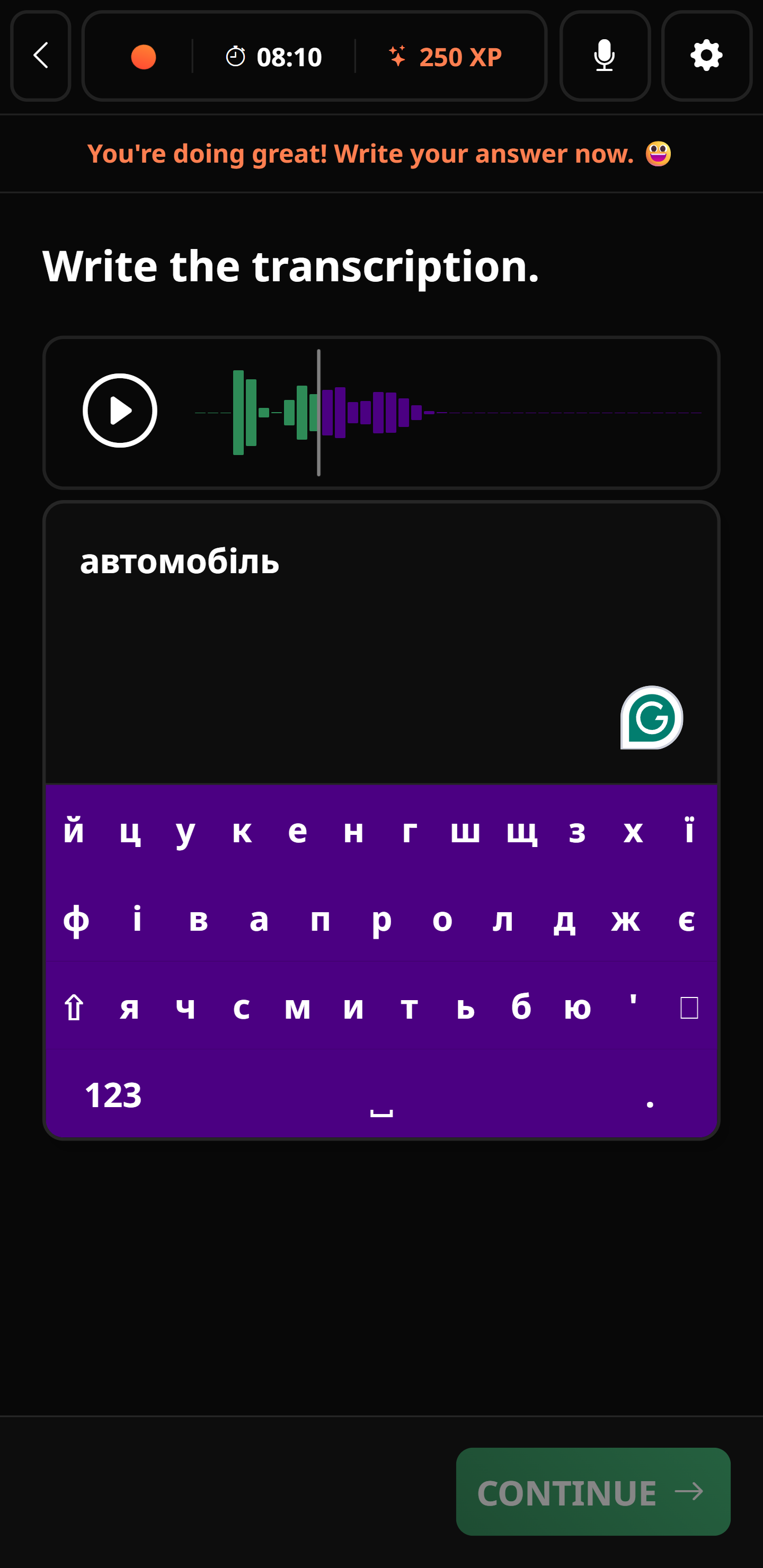
- Listening Drills: A synthetic voice reads a sentence and you type what you heard.
- Translation: English to your language and back.
- Streaks and XP: The gamification loop that keeps you opening the app.
The English-Specific Catch: Your Native Language Decides Everything
This is the detail nobody mentions in comparison articles. Duolingo's "English course" is not one course — it is dozens, one per source language, and they are wildly uneven. The Spanish→English and Portuguese→English trees are mature and enormous. The Thai→English, Bengali→English, Vietnamese→English and Hungarian→English trees are noticeably shorter, with fewer grammar notes and, in several cases, no story content at all.
Check the size of the tree in your own language before you commit to it. Two learners can both "use Duolingo for English" and be using completely different products.
Strengths of Duolingo
- It's Free: The entire English course costs nothing. Ads are the price.
- Habit Formation: The streak works. Most people who studied English every day for a year did it here.
- Low Friction: Two minutes on a bus counts as a lesson.
- Vocabulary Volume: You absorb a large passive word bank over time.
Weaknesses of Duolingo
- Word Tiles Do the Work: When the correct words are already on the screen, you are solving a puzzle, not recalling English.
- Thin Grammar: English articles (a/an/the), the present perfect, and phrasal verbs are exactly the things that break non-native speakers — and each gets a short tip note, not an explanation.
- Odd Sentences: You will learn "the bear drinks milk" long before you learn how to ask a colleague to repeat something.
- No Real Speaking: The speaking exercises ask you to read a sentence aloud. That is pronunciation practice, not conversation.
Notes
Duolingo is a vocabulary and habit tool. Used that way it is excellent. Used as your only English resource, you will plateau — and you will plateau while holding a 400-day streak, which is the frustrating part.
Become bilingual in 30 days with Univext!
Start a lesson with our teacher for free and become bilingual like our 100,000 students!
🗿 What Rosetta Stone Offers for English
Rosetta Stone is the oldest name here and its philosophy has not changed in decades: learn English the way you learned your first language. No translations, no grammar tables, no crutch in your own language.
The Immersive Method
You see four photos. You hear "The boy is eating an apple." You click the right image. Repeat this thousands of times and your brain starts wiring English sounds directly to meanings instead of routing through translation. For vocabulary and listening, it genuinely works.
Why Immersion Is a Real Advantage for English Learners
Here is where Rosetta Stone's stubbornness pays off. Because the method uses no source language at all, the course is identical no matter what you speak. A Vietnamese learner gets exactly the same product as a German one. If Duolingo's tree in your language is thin, this is the gap Rosetta Stone fills.
It also sells American English and British English as separate courses — different vocabulary, different recordings, different accent training. If you are studying for work in one specific country, that choice matters more than most learners realise.
TruAccent Technology
Rosetta Stone's speech engine is its strongest asset and is far stricter than Duolingo's. It targets the sounds that non-native speakers actually struggle with in English: the "th" in think and this, the difference between ship and sheep, the American "r". It will make you repeat until you get there.
Strengths of Rosetta Stone
- Native-Language Independent: Same quality course whatever you speak.
- Best-in-Class Pronunciation: TruAccent is the more demanding accent tool by a wide margin.
- Accent Choice: American or British English as distinct products.
- Serious Tone: No streaks, no cartoon owl. Some learners need that.
- Lifetime Option: A one-time payment instead of a subscription that outlives your motivation.
Weaknesses of Rosetta Stone
- Genuinely Frustrating: With no explanation in your language, English articles and the present perfect are something you are expected to intuit. Many learners simply do not.
- Slow: A rule a teacher explains in 30 seconds takes weeks of picture-matching to emerge.
- Expensive: You pay real money for a method that has not meaningfully evolved.
- Dated Content: The vocabulary is generic. You will learn "the horse is big" long before anything you would say in an office.
Example
Example: to teach the present perfect ("I have lived here for two years"), Rosetta Stone shows you contexts until the pattern clicks. Duolingo gives you a two-line tip, then a word-tile exercise. A tutor explains it in one sentence and then makes you use it about your own life. Only one of those three is how people actually learn to speak.





Join more than 100,000 students learning on Univext
📊 Duolingo vs Rosetta Stone: Side-by-Side Comparison
🗣️ The Real Problem: Recognition Isn't Speaking
Here is what neither app's marketing will tell you. You can hold a 500-day Duolingo streak, finish every Rosetta Stone unit, and still freeze solid when a manager asks you a question in a meeting.
Why? Because both apps are recognition machines. Duolingo gives you the words and asks you to arrange them. Rosetta Stone gives you four pictures and asks you to pick one. In both cases the right answer is already on the screen. Your brain never does the hard part — reaching into an empty space and pulling out an English sentence.
Real conversation is the opposite. Nobody gives you word tiles. You hunt for a word mid-sentence, use the wrong tense, get corrected, and try again. That struggle is the learning, and a tapping interface cannot simulate it. It is the same conclusion we reached comparing the two apps across all languages, and it is sharpest in English, where the gap between passing a test and speaking is widest.
If you want the best app to learn languages in a way that ends with you actually talking, you have to look past both of these.
Become bilingual in 30 days with Univext!
Start a lesson with our teacher for free and become bilingual like our 100,000 students!
🚀 What Actually Works: AI Conversation Practice
This is where Univext changes the equation. Instead of tiles or pictures, you get Umi — an AI tutor that talks with you, in English, about whatever you want, whenever you want.
Umi does not quiz you. It has a conversation with you. Talk about your weekend, rehearse a job interview, practise a phone call you are dreading. There are no word banks. You produce the sentence yourself, and that is the entire point.
Why Univext works where the others stall:
- Real-Time Correction: Say "I am living here since two years" and Umi corrects you to "I have been living here for two years" and explains why English needs the present perfect — at the exact moment you needed it, not in a tip note you skipped.
- It Remembers: Keep dropping articles? Umi quietly works more of them into tomorrow's conversation.
- Zero Judgment: Make every mistake you want. Umi never sighs, never checks the clock, never costs $40 an hour.
- Output From Day One: You build sentences from nothing, which is the only exercise that transfers to a real conversation.
Comparison: The Traditional vs. The Modern
Important
Ready to actually speak English? Univext gives you a 14-day free trial with 30 minutes of conversation a day. Put down the tiles and say something. Register here.
🎯 Which Should You Choose?
Choose Duolingo if:
- Your native language has one of the big English trees (Spanish, Portuguese, French, German, Japanese).
- You need a daily habit more than you need a method.
- You do not want to pay anything to find out whether you will stick with it.
Choose Rosetta Stone if:
- Your native language has a thin Duolingo tree, so immersion levels the field.
- Your accent matters and you want the strictest pronunciation tool available.
- You need specifically American or specifically British English.
Choose Univext if:
- You already understand a lot of English but freeze when it is your turn to talk.
- You have an interview, a move, or a job where speaking is the thing being judged.
- You want a tutor's correction without a tutor's price or calendar.
- You want to speak English out loud every day without being embarrassed.
Join more than 100,000 students learning on Univext
❓ FAQ
Is Duolingo or Rosetta Stone better for learning English? It depends on what you already speak. If your native language has a large Duolingo English tree, start there — it is free. If it does not, Rosetta Stone's immersion gives you the same quality course as everyone else. Neither will get you speaking on its own.
Can you become fluent in English with Duolingo alone? No. Duolingo builds recognition and vocabulary, not production. Learners who become fluent almost always add conversation practice — a tutor, an exchange partner, or an AI tutor like Univext's Umi — on top of it.
Is Rosetta Stone worth the price for English in 2026? For pronunciation and listening, yes, it is still a good tool, and the American/British split is genuinely useful. For grammar and conversation it is outclassed by cheaper options. The lifetime plan makes more sense than the monthly one.
Which is better for English pronunciation? Rosetta Stone, clearly. TruAccent is stricter than Duolingo's speech check and targets the sounds non-native speakers actually miss.
What is the fastest way to actually speak English? Daily output with immediate correction. That means talking — to a human tutor, or to an AI one. Univext's free trial gives you 30 minutes a day of exactly that.
Become bilingual in 30 days with Univext!
Start a lesson with our teacher for free and become bilingual like our 100,000 students!
💡 Bottom Line
Duolingo vs Rosetta Stone for English in 2026 is really two questions. First: does Duolingo even have a proper course in your language? If yes, it is the best free start available. If no, Rosetta Stone's immersion removes the problem entirely and gives you a better accent along the way.
Second, and more important: neither one gives you the thing you actually want, which is answering a question out loud without your mind going blank. That skill only comes from producing English from your own head, being wrong, and being corrected — over and over, until it is automatic.
That is the gap Univext was built for. Keep the streak if you enjoy it. But if you want to speak, you have to start speaking.
Important
Don't just learn English — speak it. Start your 14-day free trial with Univext and get 30 minutes of daily conversation with Umi. Claim your trial here.