
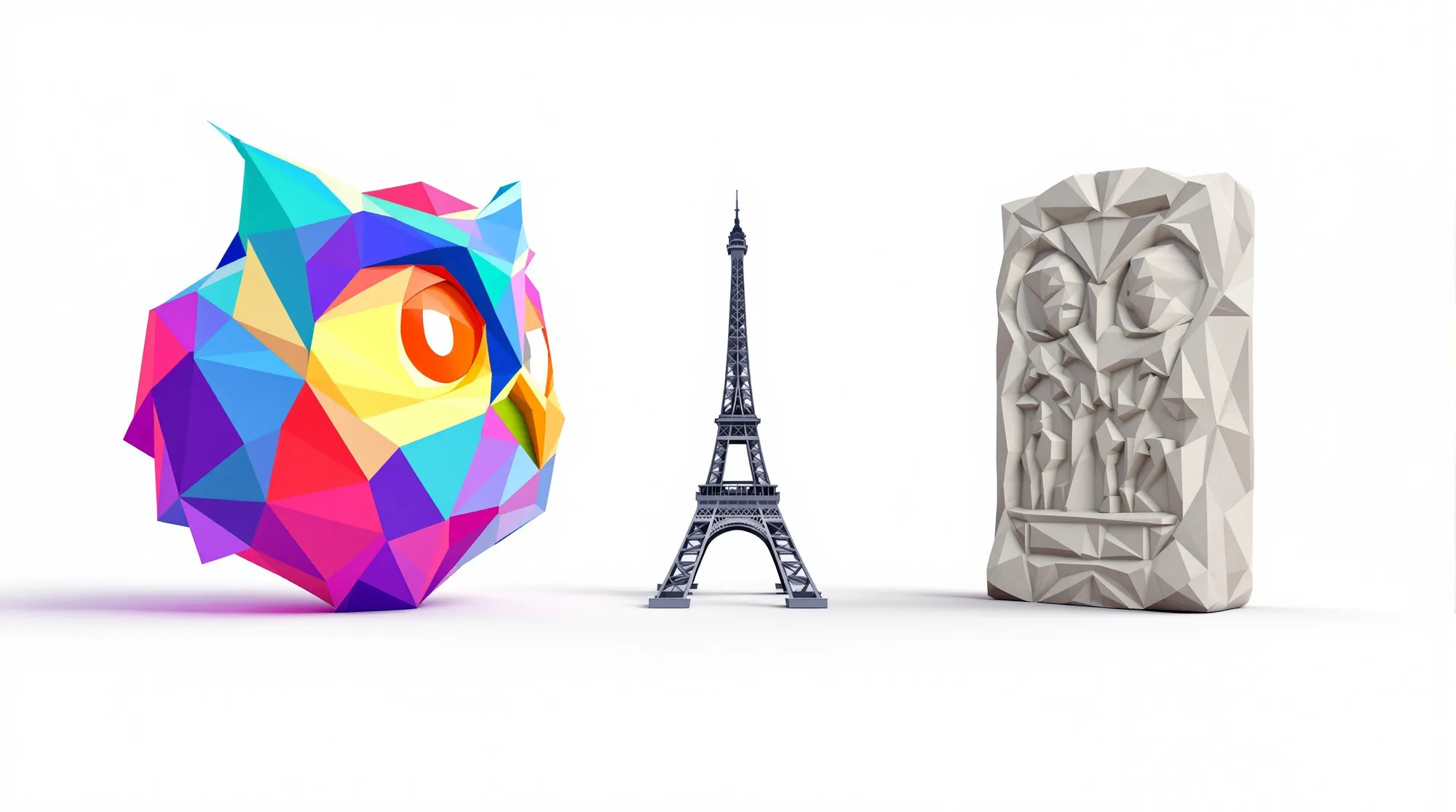
🇫🇷 Duolingo vs Rosetta Stone for French: The Quick Verdict
Duolingo and Rosetta Stone sit at opposite ends of the language-app world, and for French in 2026 the choice comes down to what you actually want from your 20 minutes a day. Duolingo is free, gamified, and addictive — a streak counter that keeps you coming back. Rosetta Stone is the expensive veteran that drops you into French with no English at all and trusts your brain to figure it out.
The quick verdict? If you want to build a daily habit and pick up vocabulary without spending a cent, Duolingo wins. If you want to train your ear and your accent — and French punishes a bad accent harder than most languages — Rosetta Stone is the more serious tool.
But there is a catch that applies to both. Duolingo has you tapping word tiles. Rosetta Stone has you matching pictures. Neither one ever asks you to look at a blank screen and produce a French sentence that came out of your own head. That is the exact skill you need at a counter in Lyon — and it is the one skill neither app trains.
Important
Duolingo builds the habit. Rosetta Stone builds the ear. Neither builds the ability to hold a conversation — that gap is why so many learners stall after a year of daily practice.
🦉 What Duolingo Offers for French
Duolingo's French course is one of the largest and best-resourced on the platform, which is why it consistently shows up among the best apps to learn French. If you're going to use Duolingo for any language, French is one of the two or three where it's genuinely strong.
The Curriculum and Lesson Structure
The French tree is organized into units and short bite-sized lessons, each running two to five minutes:
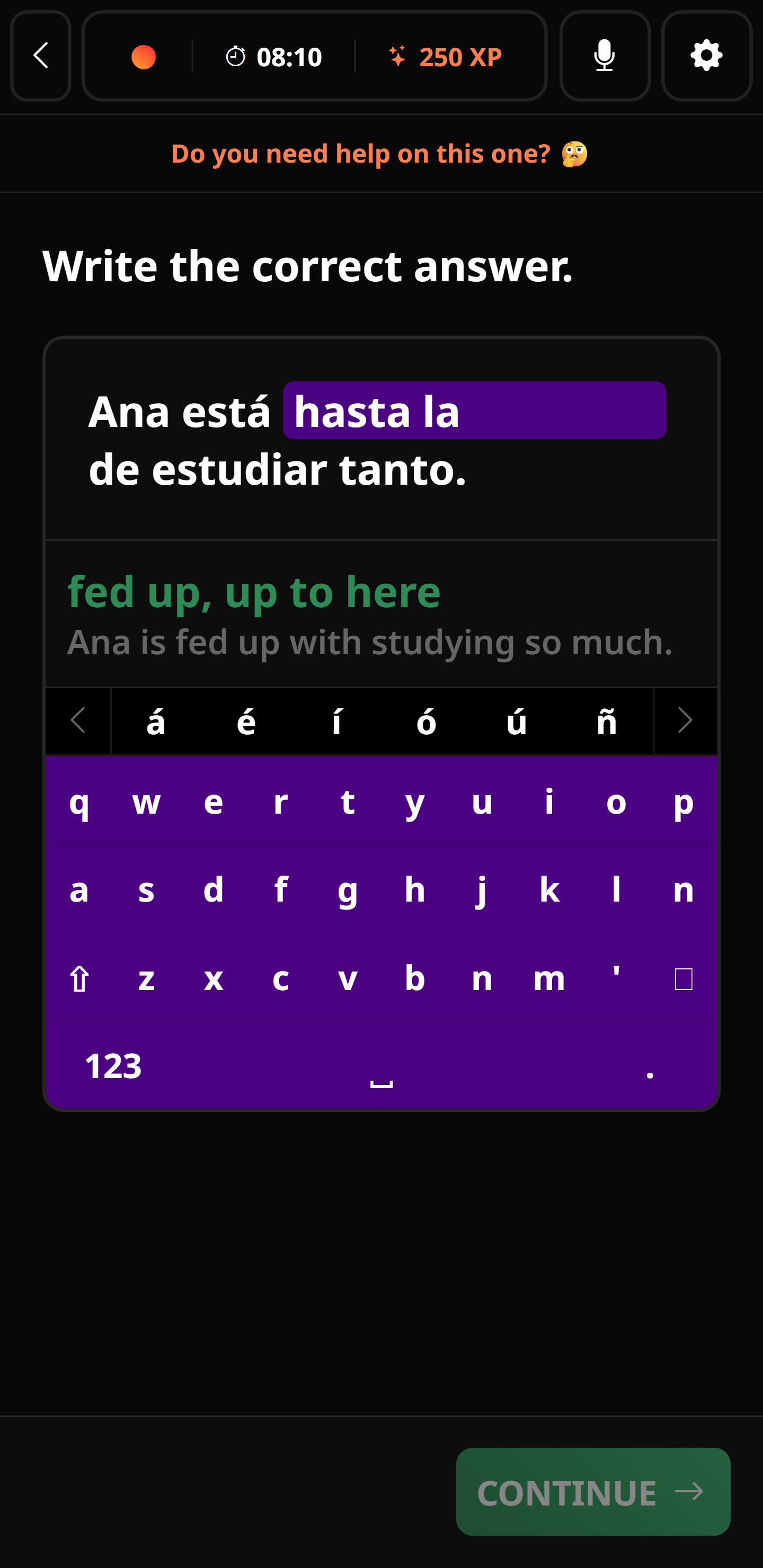
- Word Tiles: You assemble sentences from a bank of pre-supplied words.
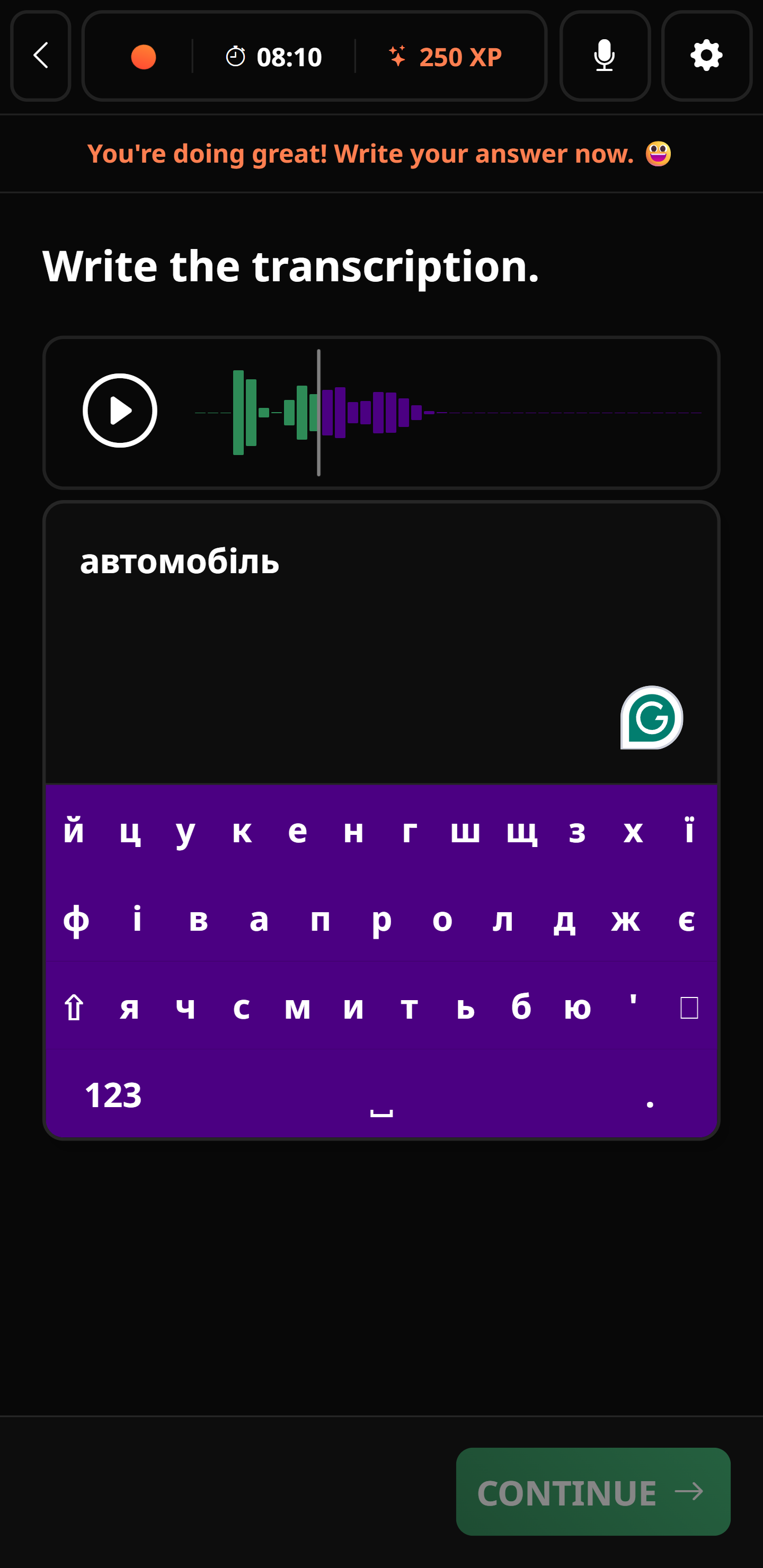
- Listening Drills: A synthetic voice reads a sentence and you type what you heard.
- Translation: You translate French to English and back.
- Streaks and XP: Gamification keeps you returning daily, which is genuinely Duolingo's best trick.
Strengths of Duolingo
- It's Free: The whole French course costs nothing. Ads are the price.
- Habit Formation: The streak is psychologically effective. Most people who studied French every day for a year did it on Duolingo.
- Low Friction: Two minutes on a bus is a real lesson. No setup, no commitment.
- Vocabulary Volume: You'll passively absorb a large word bank over time.
Weaknesses of Duolingo
- Word Tiles Do the Work: When the right words are already on screen, you're solving a puzzle, not recalling French.
- Thin Grammar: The passé composé versus imparfait split — the single hardest thing about French for English speakers — gets a short tip note, not a real explanation.
- Liaison Is Invisible: Duolingo shows you "les amis" as two tidy tiles. It never teaches you that it's spoken as one word, "lezami". Written French and spoken French drift apart, and the app only ever shows you the written one.
- Odd Sentences: You will learn to say "the owl drinks wine" long before you learn to ask for the bill.
- No Real Speaking: The speaking exercises ask you to read a sentence aloud. That's pronunciation practice, not conversation.
Notes
Duolingo is best understood as a vocabulary and habit tool. Used that way, it's excellent. Used as your only French resource, you'll plateau — and you'll plateau while still holding a 400-day streak, which is the frustrating part.
Become bilingual in 30 days with Univext!
Start a lesson with our teacher for free and become bilingual like our 100,000 students!
🗿 What Rosetta Stone Offers for French
Rosetta Stone is the oldest name here, and its philosophy hasn't changed in decades: learn French the way you learned your first language. No translations, no grammar tables, no English crutch.
The Immersive Method
You see four photos. You hear "Le garçon mange une pomme." You click the right image. Repeat this thousands of times and your brain starts wiring French sounds directly to meanings, skipping the English translation step entirely. That's the theory, and for vocabulary and listening it genuinely works.
TruAccent Technology
Rosetta Stone's speech engine is its strongest asset and is noticeably stricter than Duolingo's. French gives it plenty to work with: the guttural "r" in "Paris" that lives in the back of your throat, and the nasal vowels that make "pain", "pin" and "pan" three different words to a French ear and one mushy sound to an English one. TruAccent will make you say them again. For English speakers who want to sound less like a tourist, this is real value.
Strengths of Rosetta Stone
- Pure Immersion: Trains you to stop mentally translating, which is what makes fast spoken French comprehensible.
- Best-in-Class Pronunciation: TruAccent is the most demanding accent tool of the two by a wide margin, and French needs it more than most.
- Serious Tone: No streaks, no cartoon owl, no XP. Some learners need that.
- Lifetime Option: A one-time payment instead of a subscription that outlives your motivation.
Weaknesses of Rosetta Stone
- Genuinely Frustrating: With no English explanation, the passé composé versus imparfait distinction is something you're expected to intuit from context. Many learners simply don't.
- Tu vs Vous Goes Unexplained: Pictures can show you both forms. They cannot tell you that using "tu" with your new boss is a small social accident. That's a cultural rule, and immersion-by-photo has no way to state it.
- Slow: A concept a teacher could explain in 30 seconds takes weeks of picture-matching to emerge.
- Expensive: You're paying real money for a method that hasn't meaningfully evolved.
- Dated Content: The vocabulary skews generic. You'll learn "the horse is big" long before anything you'd say to an actual French person.
Example
Example: To teach when to use "tu" and when to use "vous", Rosetta Stone shows you contexts until the pattern clicks. Duolingo gives you a two-line tip and then a word-tile exercise. A tutor would explain it in one sentence — and then make you get it wrong with them until you stopped. Only one of those three is how humans actually learn to speak.





Join more than 100,000 students learning on Univext
📊 Duolingo vs Rosetta Stone: Side-by-Side Comparison
🗣️ The Real Problem: Recognition Isn't Speaking
Here's what neither app's marketing will tell you: you can hold a 500-day Duolingo streak, finish every Rosetta Stone unit, and still freeze solid when a boulanger in Bordeaux asks what you'd like.
Why? Because both apps are recognition machines. Duolingo hands you the words and asks you to arrange them. Rosetta Stone shows you four pictures and asks you to pick one. In both cases the right answer is already on the screen. Your brain never has to do the hard part — reaching into an empty space and pulling out a French sentence.
French makes this gap worse than most languages. Reading "Qu'est-ce que vous voulez ?" on a screen is easy. Hearing it fired at you as "kesk-vou-voulay" is a completely different task, and no amount of tile-tapping prepares you for it.
Real conversation is the opposite. Nobody gives you word tiles. You search for a word mid-sentence, get the gender wrong, get corrected, and try again. That struggle is the learning. It's also exactly what a tapping interface can never simulate.
If you want the best app to learn languages in a way that ends with you actually talking, you have to look past both of these.
Become bilingual in 30 days with Univext!
Start a lesson with our teacher for free and become bilingual like our 100,000 students!
🚀 What Actually Works: AI Conversation Practice
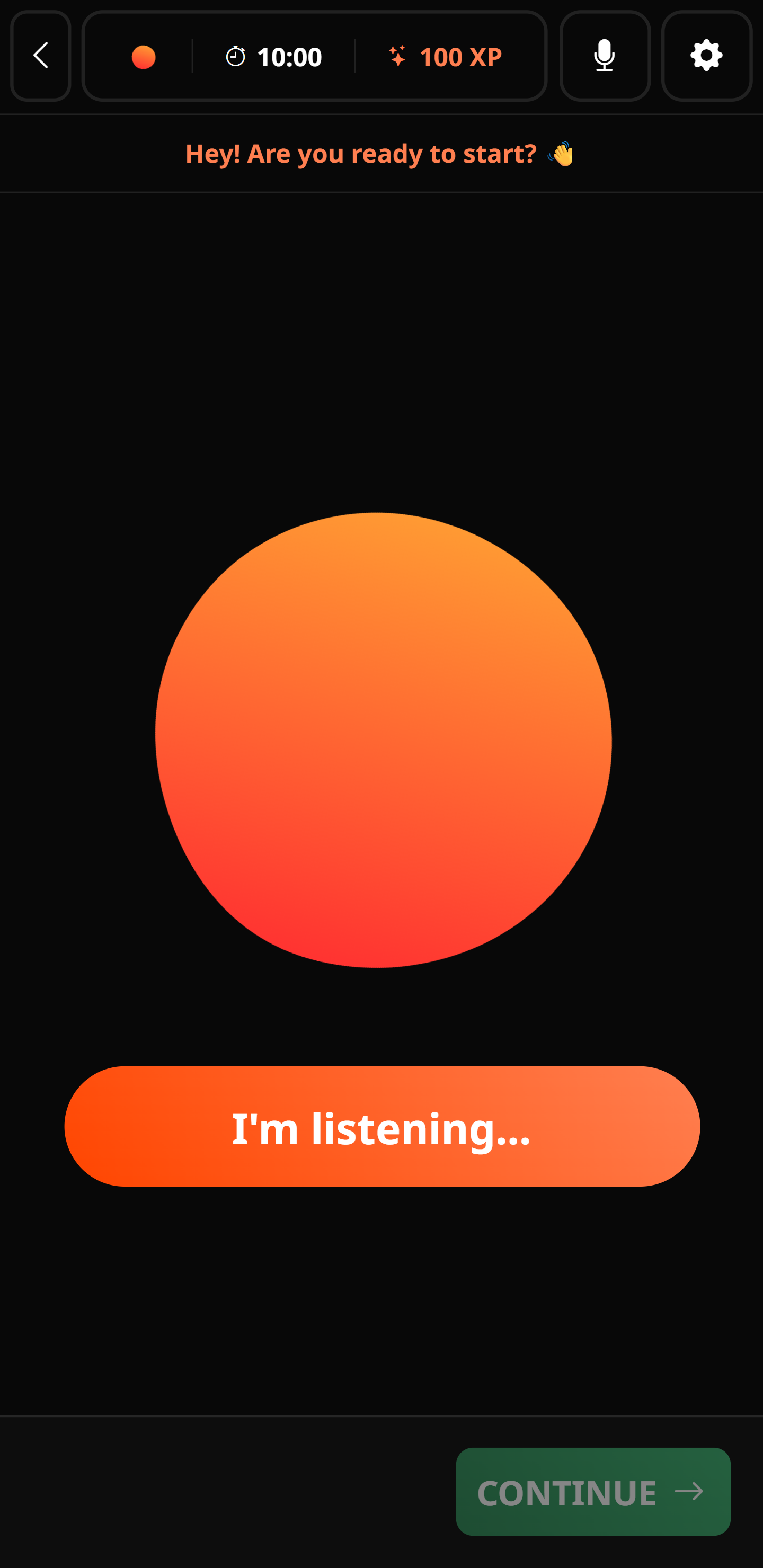
This is where Univext changes the equation. Instead of tiles or pictures, you get Umi — an AI tutor that talks with you, in French, about whatever you want, whenever you want.
Umi doesn't quiz you. It has a conversation with you. Tell it about your weekend, practice ordering at a café in Paris, role-play a job interview in Geneva. There are no word banks. You produce the sentence yourself — and that's the whole point.
Why Univext works where the others stall:
- Real-Time Correction: Say "Je suis 30 ans" and Umi corrects you to "J'ai 30 ans" and explains why French uses avoir for age — in the moment you needed it, not in a tip note you skipped.
- It Remembers: Keep defaulting to the passé composé when the imparfait belongs there? Umi quietly weaves more of it into tomorrow's conversation.
- Zero Judgment: Mispronounce the guttural "r" fifty times. Umi never sighs, never checks the clock, never costs $40 an hour.
- Output From Day One: You build sentences from nothing, which is the only exercise that transfers to a real conversation.
Comparison: The Traditional vs. The Modern
Important
Ready to actually speak French? Univext gives you a 14-day free trial with 30 minutes of conversation a day. Put down the tiles and say something. Register here.
🎯 Which Should You Choose?
Choose Duolingo if:
- You're starting from zero and need a daily habit more than you need a method.
- You don't want to pay anything to find out whether you'll stick with French.
- You want vocabulary volume and you're honest that it's a supplement.
Choose Rosetta Stone if:
- Your accent matters to you and you want the strictest pronunciation tool available — French rewards this more than almost any language.
- You want to train your ear to process spoken French, liaison and all, without translating.
- You have patience and prefer a serious, un-gamified environment.
Choose Univext if:
- You already know French words but freeze when it's your turn to talk.
- You want to reach the point of a real conversation as fast as possible.
- You want a tutor's correction without a tutor's price or calendar.
- You want to speak French out loud every day without being embarrassed.
Join more than 100,000 students learning on Univext
❓ FAQ
Is Duolingo or Rosetta Stone better for French beginners? For an absolute beginner building a habit, Duolingo — it's free, and the streak keeps you showing up. For a beginner who wants a real French accent and can tolerate no English, Rosetta Stone is the better investment. Neither will get you speaking on its own.
Can you become fluent with Duolingo alone? No. Duolingo builds recognition and vocabulary, not production. Learners who become fluent almost always add conversation practice — a tutor, an exchange partner, or an AI tutor like Univext's Umi — on top of it.
Which app is better for French pronunciation? Rosetta Stone, clearly. TruAccent is stricter than anything Duolingo offers, and French pronunciation — nasal vowels, the guttural "r", liaison — is where English speakers lose the most. But strict pronunciation drilling on fixed sentences still isn't speaking.
Is Rosetta Stone worth the price in 2026? For pronunciation and listening, it's still a genuinely good tool. For grammar and conversation, it's outclassed by things that cost less. The lifetime plan makes more sense than the monthly one.
What's the fastest way to actually speak French? Daily output with immediate correction. That means talking — to a human tutor, or to an AI one. Univext's free trial gives you 30 minutes a day of exactly that.
Become bilingual in 30 days with Univext!
Start a lesson with our teacher for free and become bilingual like our 100,000 students!
💡 Bottom Line
Duolingo vs Rosetta Stone for French in 2026 is really a question about what you're missing. Duolingo gives you consistency and a big passive vocabulary for free. Rosetta Stone gives you an ear and an accent for a real price — and with French, an ear is worth more than it is with most languages. Both are legitimate tools and both are worth using for what they're good at.
Neither one gives you the thing you actually want, which is walking into a café in Paris and saying something. That skill only comes from producing French out of your own head, being wrong, and being corrected — over and over, until it's automatic.
That's the gap Univext was built for. Keep the streak if you like it. But if you want to speak, you have to start speaking.
Important
Don't just learn French — speak it. Start your 14-day free trial with Univext and get 30 minutes of daily conversation with Umi. Claim your trial here.