

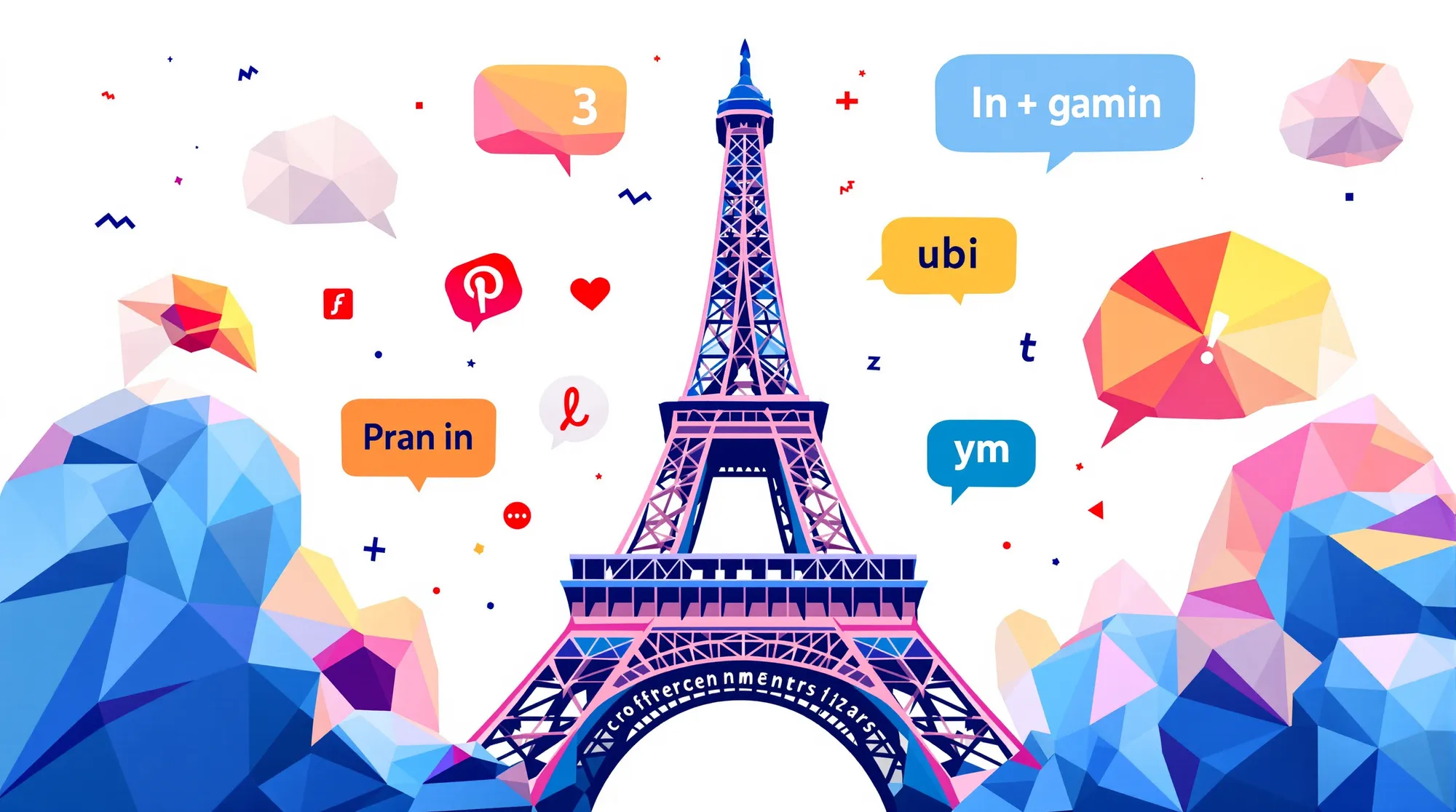
Starting French can feel like standing at the bottom of a mountain — genders, accents, verb endings that shift for every person. But here's the secret every fluent speaker knows: French grammar runs on a handful of patterns you can grasp in an afternoon. Master these building blocks and the rest starts to click into place.
This is your absolute-beginner map — the essential rules that get you speaking, not a 400-page textbook. We'll cover noun gender, articles, present-tense verbs, the two verbs French cannot live without, adjectives, word order, and how to ask questions and say "no." By the end you'll see the shape of the language. Ready to learn it the fast, spoken way? Let's go.
🚺 Nouns Have a Gender (and Why It Matters)
Every French noun is either masculine or feminine — even objects. A table is feminine (la table ), a book is masculine (le livre ). There's no deep logic; it's just part of the word, so learn each noun with its article.
Gender decides the words around the noun — "the," "a," and adjective endings all shift to match. Get the gender and everything else falls in line.
Notes
Rough hint, not a rule: nouns ending in -e, -tion, -té are often feminine; -age, -ment, -eau often masculine. Plenty of exceptions — always learn the article with the word.
📗 Articles: le, la, les, un, une
Articles are the little words for "the" and "a." French has more of them than English because they agree with gender and number.
Before a vowel, le and la both shrink to l' — l'ami (the friend). Small change, big frequency: you'll use it constantly.
Become bilingual in 30 days with Univext!
Start a lesson with our teacher for free and become bilingual like our 100,000 students!
🏃 Present-Tense Verbs: The -er, -ir, -re Families
French verbs sort into three groups by their ending. The biggest by far is -er (about 90% of verbs), and it's beautifully regular. Take parler (to speak): drop -er, add the ending for each person.
Notice something magic: parle, parles, parlent all sound identical — the endings are silent. Learn the -er pattern and you unlock thousands of verbs. The -ir family (finir) and -re family (vendre) follow their own tidy patterns you'll pick up next.





Join more than 100,000 students learning on Univext
⭐ The Two Verbs You Can't Skip: avoir & être
If you learn only two verbs first, make them these. They're irregular, but they power everyday speech — and later, the past tense.
avoir = to have · être = to be
Example
French often uses avoir where English uses "to be": J'ai faim literally means "I have hunger" = "I'm hungry." Same for age: J'ai vingt ans = "I'm twenty."
🎨 Adjectives Agree — and Usually Come After
Two quirks trip up beginners, and both are quick to learn.
1. Adjectives match their noun in gender and number — usually by adding -e for feminine, -s for plural: un chat noir (a black cat) → une voiture noire (a black car).
2. Most adjectives come after the noun, unlike English: une maison blanche = "a white house" (literally "a house white"). A small set of common ones go before — big, small, good, young, old (BAGS): une grande maison .
Become bilingual in 30 days with Univext!
Start a lesson with our teacher for free and become bilingual like our 100,000 students!
🔤 Basic Word Order
Good news: the core sentence order is the same as English — Subject + Verb + Object.
Je mange une pomme = "I eat an apple." If you can build an English sentence, you already know the French skeleton. The differences (adjective placement, pronoun position) are details you layer on top.
❓ Asking Questions & Saying No
Two everyday tools that make you sound real fast.
Questions — the easiest way is to keep the statement and just raise your voice, or add est-ce que in front:
- Tu parles français ? — "You speak French?"
- Est-ce que tu parles français ? — same meaning, a touch more formal.
Negatives — wrap the verb in ne ... pas:
- Je parle → Je ne parle pas = "I don't speak."
- Je ne sais pas = "I don't know" — you'll say this one a lot.
Notes
In casual spoken French, the ne often disappears: Je sais pas. You'll hear it everywhere — but write the full ne ... pas.
Join more than 100,000 students learning on Univext
🧩 It All Fits Together Faster Than You Think
Look how far you've come. You now know the load-bearing walls of French grammar:
- Nouns carry a gender → learn each with le or la
- Articles and adjectives agree with that gender
- -er verbs are regular and everywhere; avoir and être power daily speech
- Word order mirrors English (S-V-O)
- Questions with est-ce que, negatives with ne ... pas
That's genuinely enough to start forming real sentences today. The gap between "I know the rules" and "I can speak" closes with one thing: practice out loud, with instant correction.
Become bilingual in 30 days with Univext!
Start a lesson with our teacher for free and become bilingual like our 100,000 students!
🚀 The Fastest Way to Make It Stick
Reading grammar is step one. Speaking it is where it lodges in your memory — and that's exactly where a solo learner gets stuck, with no one to talk to and no one to fix the little mistakes.
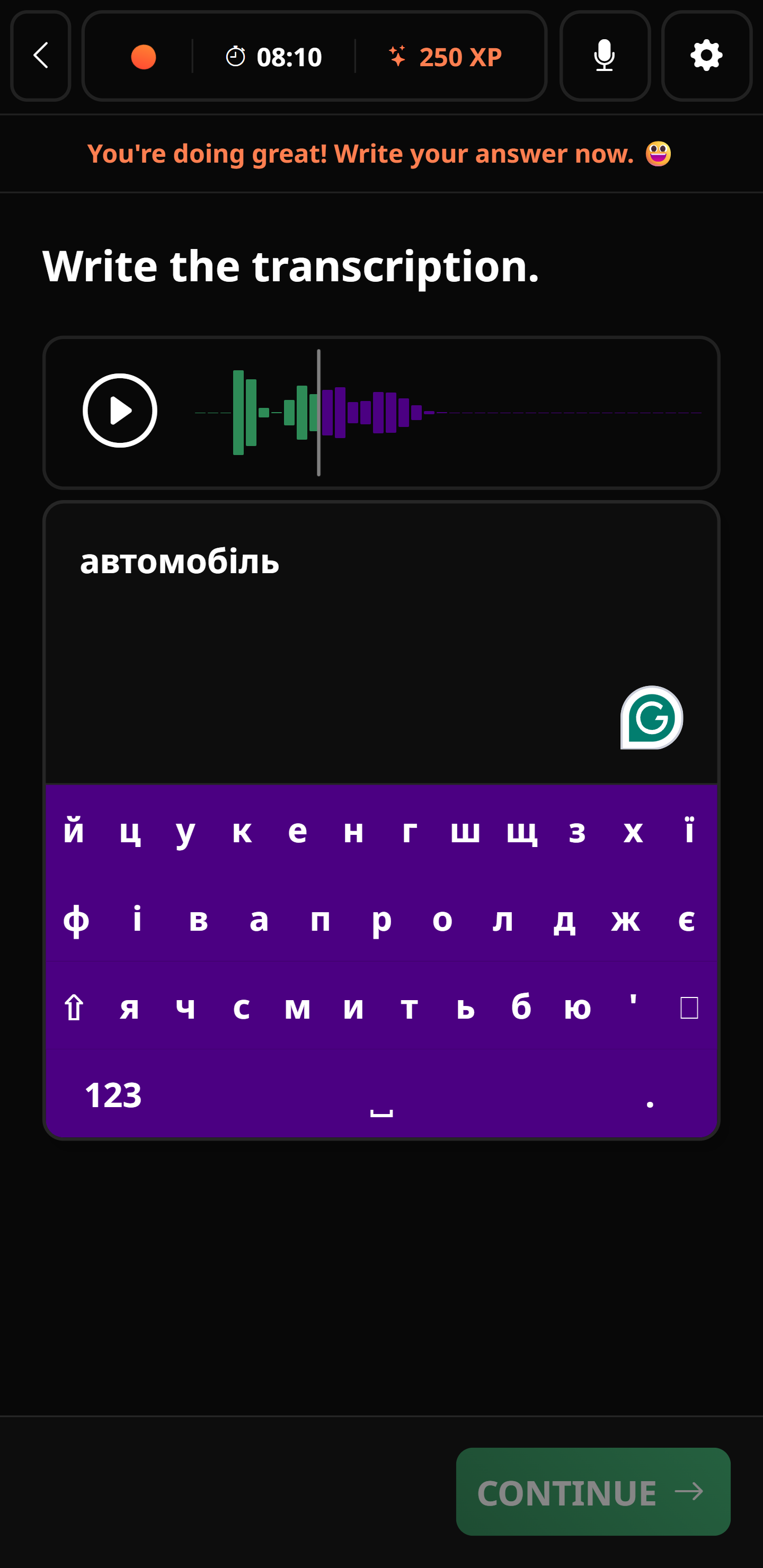
That's what Umi, the AI tutor at Univext, is built for. Umi speaks with you in French from lesson one, corrects your gender and verb endings gently in real time, and adapts to your level — patient, available 24/7, never bored of repeating avoir with you.
Important
Stop reading about French and start speaking it. Try a free lesson with Umi right now — your first conversation is one tap away: Start your free French lesson →
You've got the map. Take the first step while the spark is still hot.