
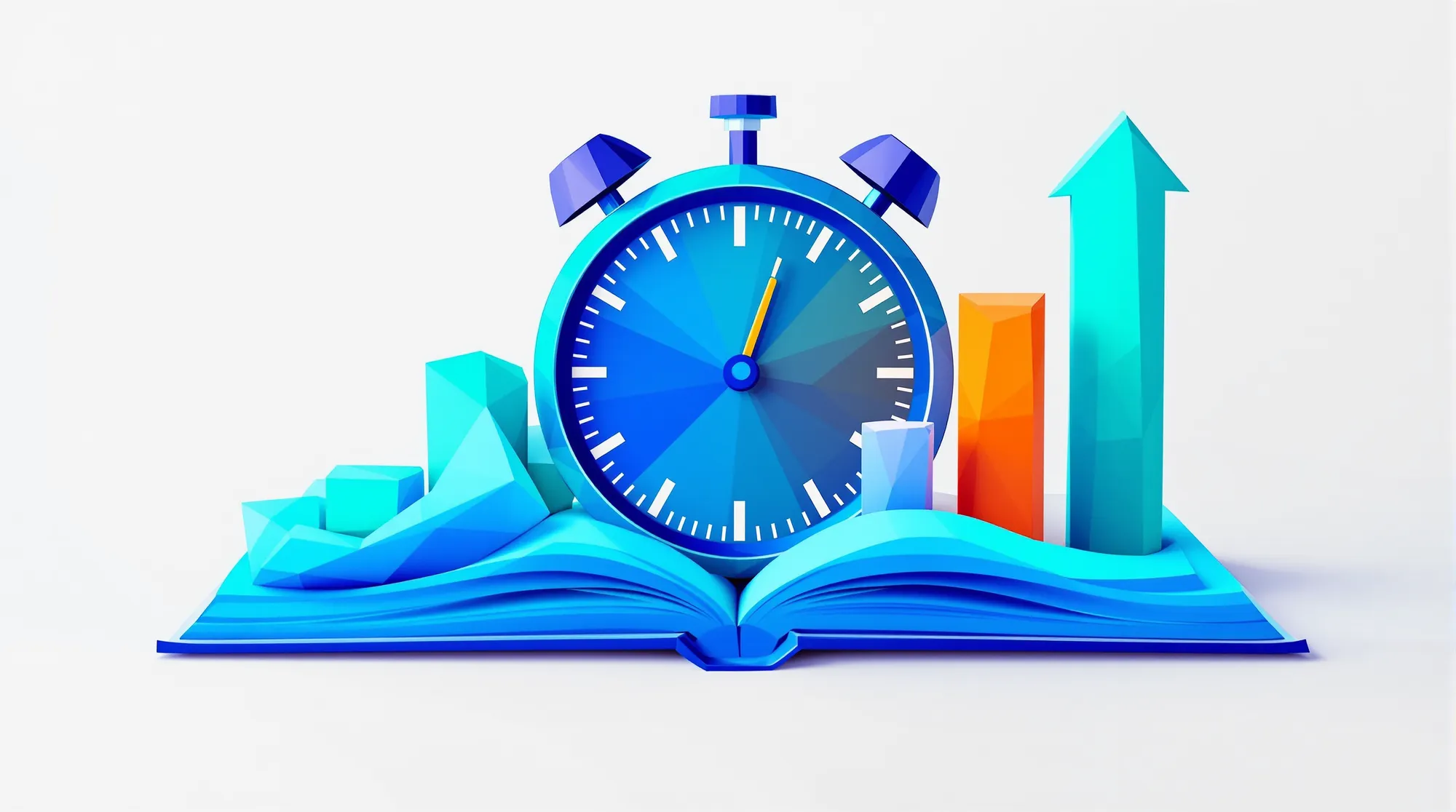
Every English learner asks the same question before they even start: how long is this actually going to take? It''s a fair question — you''re about to invest hundreds of hours, and you deserve an honest answer, not a marketing promise that you''ll be "fluent in 3 months."
The real answer: it depends on the level you want to reach, your native language, and how consistently you show up. But "it depends" is a useless answer, so this guide gives you the actual numbers — level by level, in study hours and in calendar time — plus the factors that quietly double or halve your timeline. Let''s make it concrete.
⏱️ The Short Answer
If you study consistently, here''s roughly what you''re looking at:
- Basic conversation (A2): ~180–200 hours → a few months of steady study
- Independent, confident use (B2) — the level most learners actually want: ~500–600 hours
- Full professional fluency (C1): ~700–800+ hours
- Near-native mastery (C2): 1,000+ hours
Most people who say they want to "learn English" really mean B2 — the level where you can watch a movie without subtitles, handle a job interview, and hold a real conversation without freezing. That''s the target this guide is built around, and it''s reachable in about a year of consistent daily practice.
📊 English Levels and Hours: The CEFR Breakdown
The CEFR (Common European Framework of Reference) is the international standard for measuring language ability, from A1 (absolute beginner) to C2 (mastery). Here''s how many guided learning hours each level typically takes:
Notes
These are cumulative totals, not per-level. Reaching B2 means roughly 500–600 hours from zero — not 500 hours on top of B1.
A crucial detail: hours are not linear in difficulty. The jump from A1 to A2 feels fast because everything is new and every word is useful. The climb from B2 to C1 feels slower — you already communicate fine, so each new hour buys smaller, subtler gains. This is completely normal. Don''t mistake the plateau for failure.
Become bilingual in 30 days with Univext!
Start a lesson with our teacher for free and become bilingual like our 100,000 students!
🧠 The Factors That Change Your Timeline
Two learners can put in the same 500 hours and end up at very different levels. Here''s what actually moves the needle.
Your native language
This is the single biggest variable. If your first language is Dutch, German, or a Scandinavian language, English shares huge amounts of vocabulary and grammar with what you already know — you''ll move noticeably faster. If your native language is Mandarin, Japanese, Korean, or Arabic, English is far more "distant," and the same B2 goal may take considerably more hours. Neither is better or worse — just plan realistically for your starting point.
Consistency beats intensity
Thirty focused minutes every day will take you further than a five-hour cram session every Sunday. Language lives in long-term memory, which is built through spaced repetition — frequent, short exposures. A daily habit also keeps you from the brutal "start over every January" cycle that traps so many learners.
Speaking practice from day one
Learners who only read and do grammar drills build a huge "passive" English they can''t actually use. The ones who speak early — even badly — reach conversational fluency far faster, because speaking is a separate skill that only improves by doing it.
Important
The learners who stall are almost never the ones who lack talent — they''re the ones who never practice speaking out loud. Reading about English is not the same as producing it.
Motivation and immersion
A concrete goal ("pass IELTS by June," "get promoted," "move to Canada") sustains the months of effort that fluency requires. And every hour of real immersion — English shows, English podcasts, English friends — compounds on top of your study time.


Join more than 100,000 students learning on Univext
🗣️ Why Speaking Is the Real Bottleneck
Here''s the uncomfortable truth most apps won''t tell you: you can complete a thousand vocabulary exercises and still be unable to order a coffee.
Understanding English (input) and producing English (output) are two different muscles. Traditional courses and gamified apps drill the first and neglect the second, which is why so many learners have a shockingly large vocabulary but freeze the moment someone actually talks to them. The fear of making mistakes out loud — with a real human who might judge you — keeps people silent for years.
This is exactly the gap that leaves people stuck at "high A2 forever." If you want to see why the most popular app in the world struggles here, read Why Duolingo Doesn't Teach You to Speak. The fix is simple to state and hard to do alone: practice speaking, early and often, in a low-pressure environment where mistakes cost nothing.
📅 Realistic Timelines by Study Pace
Same B2 goal (~550 hours), different daily habits. Here''s how the calendar math works out:
Example
A working adult who studies 1 focused hour a day, five days a week, and adds an English series on the weekend can realistically reach solid B2 conversational English in around 18 months. That''s not a fantasy — that''s a schedule.
The takeaway isn''t "study more hours" (life gets in the way). It''s make the hours you do have count — quality practice with real feedback beats passive scrolling every single time.
Become bilingual in 30 days with Univext!
Start a lesson with our teacher for free and become bilingual like our 100,000 students!
⚡ How to Learn English Faster
You can''t skip the hours, but you can make each one worth more:
- Speak from week one. Don''t wait until you "feel ready" — you never will. Produce English out loud daily.
- Get corrected in real time. A mistake you don''t know about becomes a habit. Immediate feedback is the fastest teacher.
- Prioritize the top 1,000 words. They cover the vast majority of everyday conversation. Fluency in the common stuff beats knowing rare vocabulary.
- Study a little every day, not a lot once a week. Consistency is the whole game.
- Immerse for free. Switch your phone to English, watch shows with English subtitles, think in English while you commute.
The learners who reach B2 in a year aren''t smarter — they just built a daily habit with real speaking practice and real feedback, instead of collecting streaks.
🚀 The Fastest Path: A Tutor Who''s Always Available
The single biggest accelerator is daily conversation practice with instant correction — and that''s exactly what''s historically been the expensive, hard-to-schedule part. A human tutor costs money and lives in a different time zone. Apps are cheap but don''t actually let you talk.
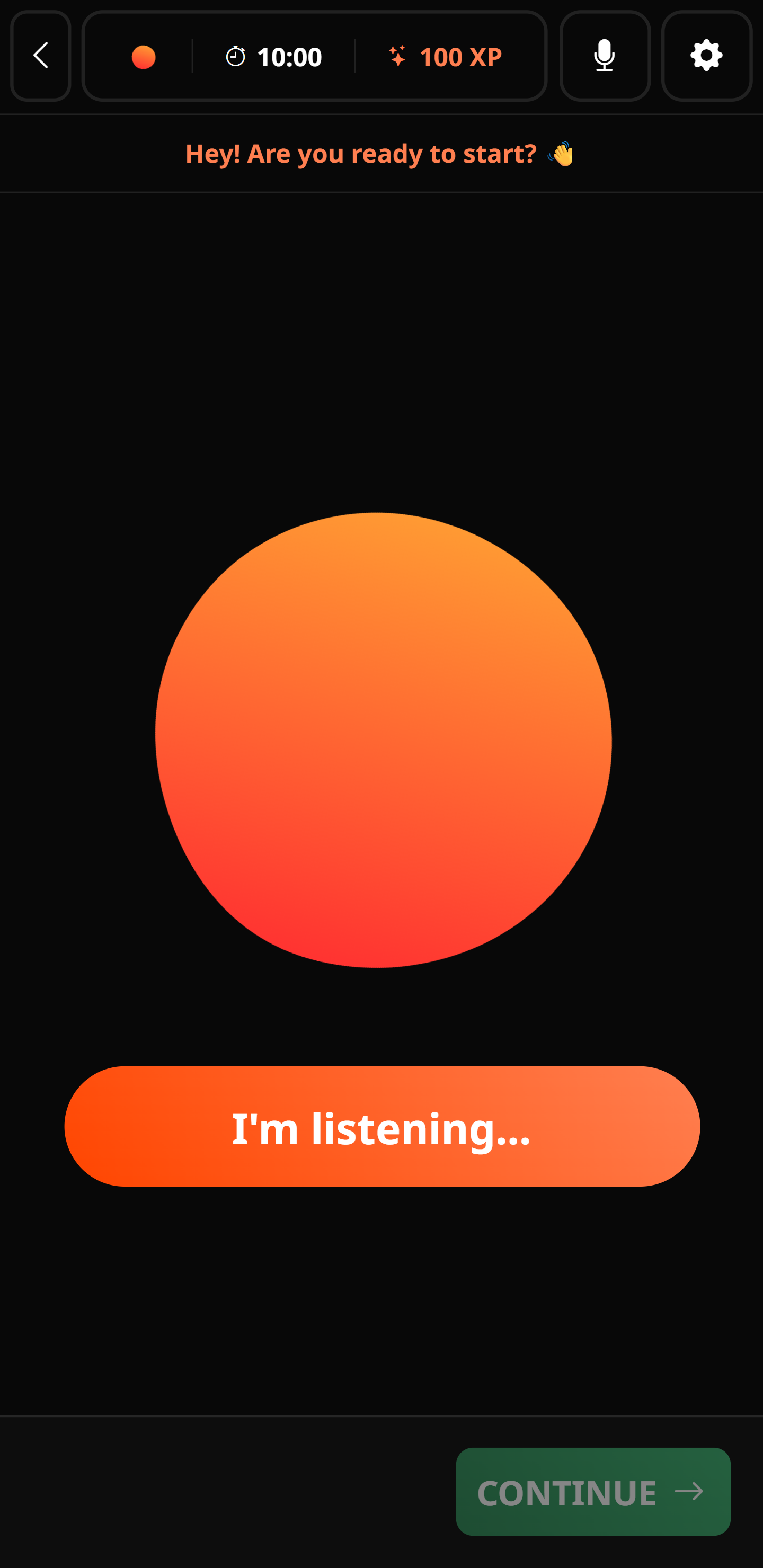
That''s the gap Univext closes. Our AI teacher, Umi, is a patient English tutor available 24/7 — you can have a real spoken conversation at 6 a.m. or midnight, make as many mistakes as you need, and get corrected instantly without ever feeling judged. Every lesson adapts to your level, so you''re always practicing at the edge of your ability, where learning is fastest.
Important
Start free: Univext gives you a 14-day free trial with 30 minutes of practice per day. That''s enough to build the speaking habit that gets you to B2 — before you pay a cent.
Not sure which app is right for you? We compared the field honestly in Best Apps to Learn English in 2026 and covered the AI-tutor angle in Learn English with AI: Best AI Tutors.
Join more than 100,000 students learning on Univext
❓ Frequently Asked Questions
Can I learn English in 3 months? You can reach a functional A2 — basic conversations, everyday survival English — in about 3 months with intensive daily study. True fluency (B2+) takes longer, realistically closer to a year with consistent effort.
How many hours a day should I study English? One focused hour a day is the sweet spot for most committed learners — enough to make steady progress without burning out. If you only have 30 minutes, that''s still enough, as long as it''s every day and includes speaking.
What''s the hardest part of learning English? For most learners it''s speaking confidently and understanding fast native speech. Both improve dramatically with regular conversation practice — which is why daily speaking, not more grammar, is the real unlock.
Is English harder than other languages? English grammar is relatively simple (no genders, few verb endings), but spelling and pronunciation are famously irregular, and phrasal verbs ("get up," "get over," "get by") trip everyone up. It''s very learnable — just budget time for the quirks.
Become bilingual in 30 days with Univext!
Start a lesson with our teacher for free and become bilingual like our 100,000 students!
😎 The Bottom Line
Learning English to confident, conversational B2 takes roughly 500–600 hours — about a year if you practice daily. There''s no magic shortcut, but there is a fastest path: consistent daily practice with real speaking and instant feedback.
The learners who make it aren''t the ones with the most free time or the most talent. They''re the ones who start today, speak from day one, and show up every day. The sooner you begin, the sooner your countdown ends.
Ready to start your first conversation? Try a free lesson with Umi — sign up in under two minutes and speak your first English sentences today.