



🤖 The New Landscape: Why AI Changed Japanese Learning
Japanese has always been one of the most intimidating languages for English speakers. Three writing systems (hiragana, katakana, and thousands of kanji), particles like は, が, and を that have no English equivalent, a subject-object-verb word order that flips every sentence around, and politeness levels (keigo) that can change every verb depending on who you're talking to. Traditional apps tried to tame this with flashcards and tap-the-tile drills — but the underlying experience stayed rote.
AI changed the equation. Since late 2022, large language models have become good enough to hold real conversations in Japanese — correcting your particles, explaining why it's は and not が, reading kanji aloud, and answering your questions on the fly. For the first time, there's a real middle path between a ¥4,000/hour human tutor and a repetitive drill app.
But not all "AI Japanese tutors" are equal. Some are just ChatGPT wrappers with a cute mascot. Some bolt a chatbot onto an old course and call it AI. A few are genuinely built for language learning — and those are the ones worth your time.
This guide tests the best AI-powered options for learning Japanese in 2026, explains where each one genuinely helps, and flags the ones that are mostly marketing. By the end you'll know which tool (or combination) fits your goals.
📊 Quick Comparison: AI Tools for Japanese
Become bilingual in 30 days with Univext!
Start a lesson with our teacher for free and become bilingual like our 100,000 students!
🚀 1. Univext — The AI Japanese Tutor Built for Conversation
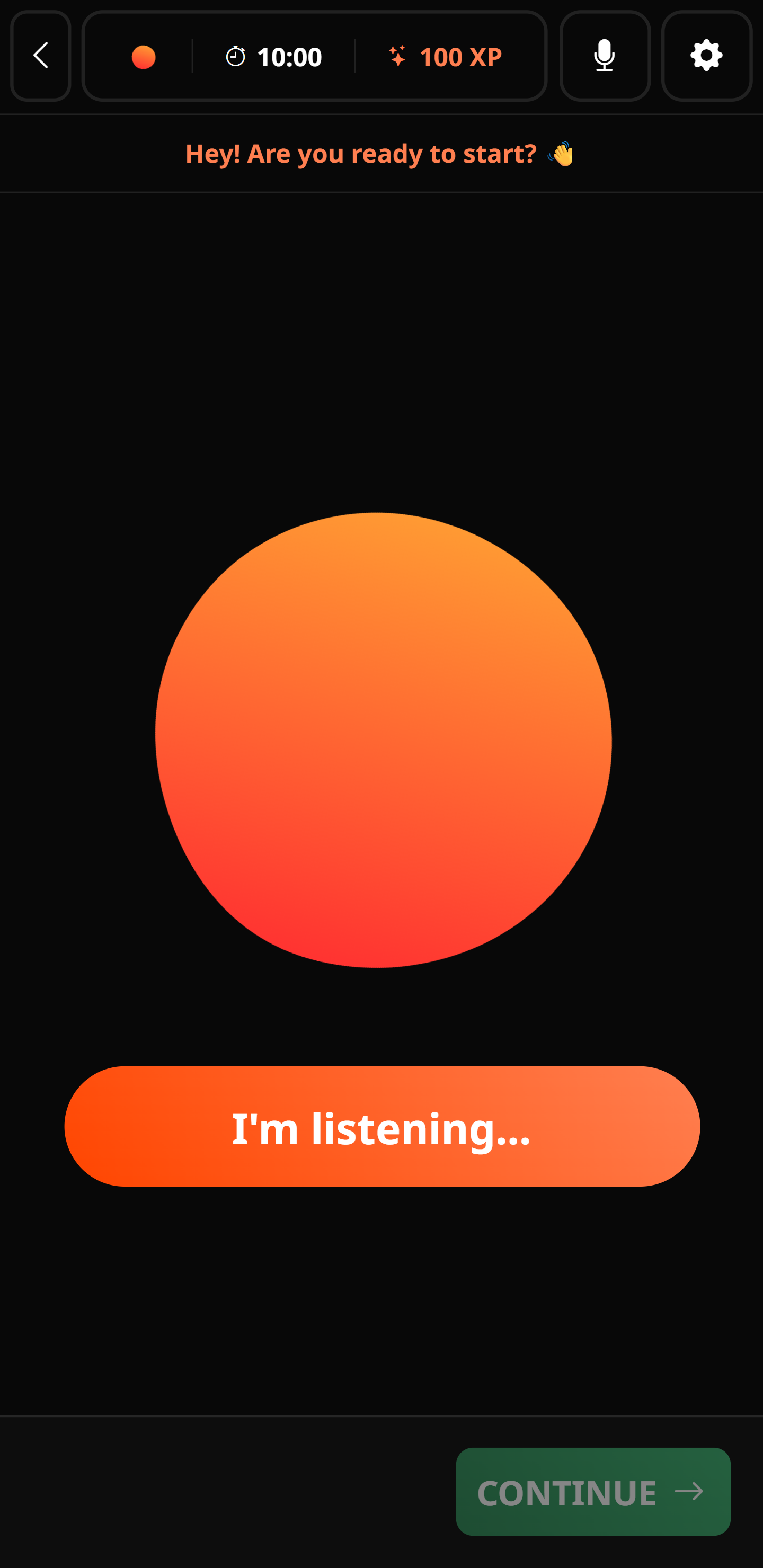
Univext is the closest thing to having a real Japanese tutor in your pocket. Its AI teacher, Umi, holds unscripted conversations with you — by voice or text — in Japanese at whatever level you're at.
What Umi does that generic AI tools don't:
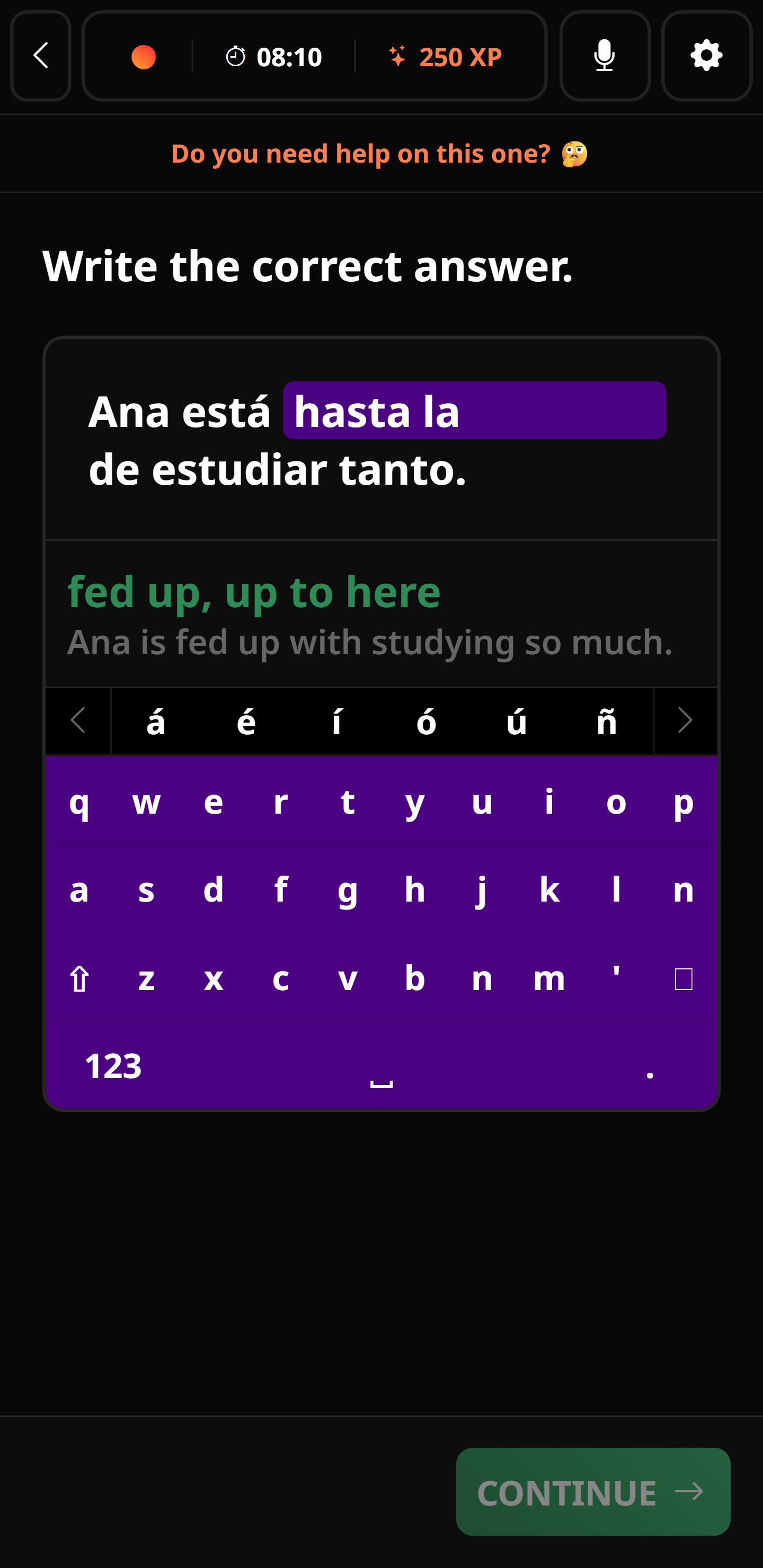
- Real-time particle correction. Say something like "私は寿司を好き" and Umi catches it, explains that 好き takes が (私は寿司が好き), and lets you rephrase. Particles are where almost every learner stalls — and they're exactly what an AI tutor can drill in context.
- Politeness-level awareness. Japanese shifts between casual (だ/だよ), polite (です/ます), and honorific keigo (いらっしゃる, ございます) depending on who you talk to. Umi adapts to the register you're practicing and explains when each one is appropriate.
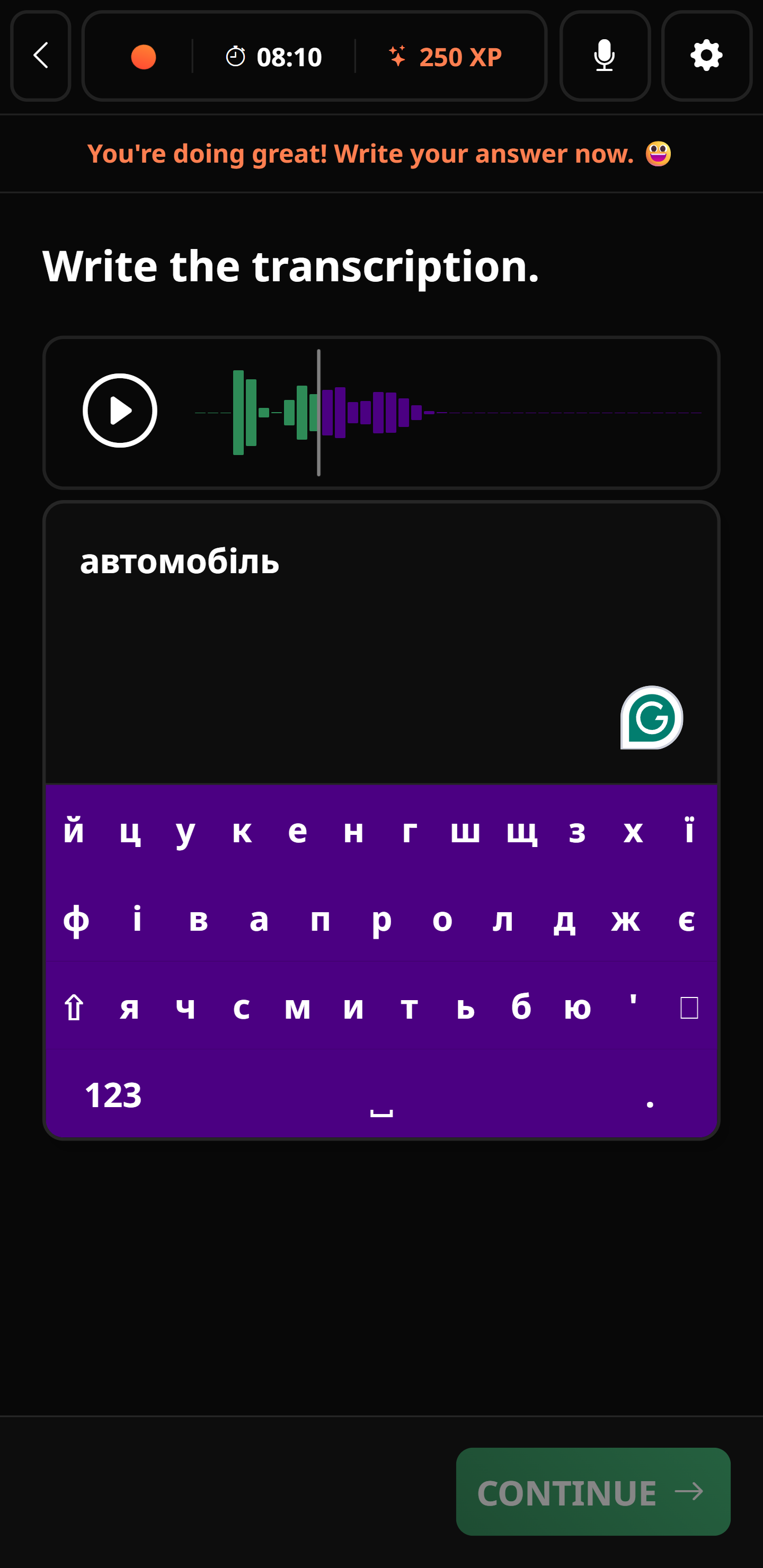
- Kanji and reading support. When a new kanji comes up, Umi can show the reading (furigana), the meaning, and an example sentence — so you build reading ability inside real conversation instead of isolated flashcards.
- Level-adaptive dialogue. As a beginner, Umi keeps to hiragana, simple present-tense sentences, and everyday topics. As you advance, it pushes you into past and conditional forms, opinions, and longer responses — eventually debating you on Japanese film, work culture, and current events at native speed.
- Voice or text, your choice. Some days you want to practice speaking and pitch. Other days you're on a train and want to type. Umi works either way.
Where Univext wins for Japanese specifically: the grammar coaching. Particles, verb conjugation, word order, and keigo are exactly the kind of pattern-heavy system LLMs handle well — detecting your mistakes, explaining the rule, and reinforcing it through natural dialogue. For learners who've plateaued with Duolingo or flashcard apps, switching to conversation-based practice with Umi often unlocks progress that scripted apps can't.
14-day free trial: 30 minutes a day of real conversation practice with Umi, no credit card required to try the lessons themselves.
Important
Try Univext for Japanese — start your first AI Japanese conversation with Umi and see what real speaking practice with an AI tutor feels like.





Join more than 100,000 students learning on Univext
💬 2. ChatGPT (DIY) — Powerful but Unguided
ChatGPT (and Claude, Gemini, and other general-purpose LLMs) can teach Japanese surprisingly well — if you know how to prompt it. The underlying model knows Japanese grammar, can hold conversations, and will correct your mistakes when asked.
What ChatGPT does well for Japanese:
- On-demand grammar answers. "What's the difference between は and が?" gets you a clear explanation with examples.
- Custom roleplay scenarios. "Pretend you're a clerk at a Tokyo convenience store. I'll order in Japanese. Correct me if I make mistakes." — and it works.
- Kanji breakdowns. Ask it to break a kanji compound into its components and readings and you'll get a clean explanation.
- Translation with nuance. Ask "how would a native speaker actually say this?" and you'll get a more natural version than a dictionary translation.
Where ChatGPT falls short as a Japanese tutor:
- No curriculum. It'll happily jump from advanced business keigo to beginner greetings in the same conversation. There's no structure guiding you from zero to fluency.
- Inconsistent correction. Sometimes it catches every particle mistake, sometimes it lets errors slide. Correction quality depends entirely on how you prompt.
- No progress tracking. No spaced repetition, no review of past mistakes, no measurable path forward.
- Voice mode isn't language-learning-optimized. It can hold Japanese conversations, but it won't slow down, enunciate, or repeat itself the way a teacher would.
Verdict: ChatGPT is the most powerful free AI for Japanese, but you have to become your own teacher. Great as a grammar reference and custom-roleplay tool, weak as a structured course.
🦉 3. Duolingo — AI Features Bolted Onto a Classic
Duolingo's premium tier adds AI-powered features like Roleplay (AI conversation scenarios) and Explain My Answer (AI-generated explanations) on top of its well-known Japanese course.
What Duolingo offers for Japanese:
- Solid beginner tree that introduces hiragana, katakana, and basic kanji with the usual gamification — streaks, XP, level progression
- Roleplay scenarios where you chat with an AI character in Japanese about specific topics
- Explain My Answer — tap a wrong answer and get an AI explanation in English
Where it falls short:
- Roleplay stays on narrow rails. Steer the conversation somewhere the scenario didn't anticipate and it falls apart.
- Thin on the "why." Getting one explanation for one question won't fix a real gap in your understanding of particles or verb forms.
- Weak past beginner level. Duolingo's Japanese tree thins out quickly beyond the basics, and the AI features don't carry you to conversational fluency.
Verdict: A good, low-friction way to learn kana and build a daily habit. If you specifically want AI-powered Japanese tutoring, there are better options.
Become bilingual in 30 days with Univext!
Start a lesson with our teacher for free and become bilingual like our 100,000 students!
🗣️ 4. Talkpal — AI Chat, Lightweight Structure
Talkpal is a dedicated AI language chat app with a clean interface and reasonable pricing.
What Talkpal offers:
- AI chat in Japanese with reasonable flow and correction
- Topic-based scenarios (travel, dining, work) as starting points
- Voice input for practicing pronunciation
- Many languages including Japanese
Where it's limited:
- Thin curriculum. No clear beginner→advanced progression. Conversations happen, but there's no sense of building a structured foundation.
- Shallow grammar coaching. Corrections appear but lack the "why" — you fix this sentence but don't learn the underlying rule.
- Weak on Japanese-specific pain points. Particles, keigo, and kanji need systematic support that Talkpal doesn't provide.
Verdict: Fine as a chat-practice tool if you already have foundations from another course. Thin as a standalone Japanese solution.
📘 5. WaniKani (Kanji & Vocabulary SRS)
WaniKani isn't an AI tool, but it's included here because no honest Japanese roundup can skip it. It's a spaced-repetition system (SRS) specifically for learning kanji and vocabulary through radicals and mnemonics.
What WaniKani offers for Japanese:
- Structured kanji path that teaches ~2,000 kanji and 6,000+ words in a logical order
- Mnemonics and radicals that make memorizing kanji genuinely faster
- Proven SRS that schedules reviews at optimal intervals
Where it's limited:
- No conversation, grammar, or speaking. It does one thing — kanji and vocabulary recognition — and does it well, but it won't teach you to speak Japanese.
- No AI. It's a fixed curriculum, not an adaptive tutor.
Verdict: Excellent as a dedicated kanji tool, but it's only one piece of the puzzle. It pairs perfectly with a conversation tutor like Univext — WaniKani for reading, Umi for speaking and grammar.
Join more than 100,000 students learning on Univext
🎯 How to Choose: Match the Tool to Your Goal
For most serious Japanese learners, the best setup in 2026 is:
- Univext for daily real conversation practice with Umi — the core of your speaking and grammar progress
- ChatGPT for free on-demand grammar questions when you get stuck
- WaniKani (optional) for systematic kanji acquisition alongside
This combination gives you real speaking practice (the bottleneck most learners hit), a powerful grammar reference, and a dedicated kanji engine.
Become bilingual in 30 days with Univext!
Start a lesson with our teacher for free and become bilingual like our 100,000 students!
🧠 What to Look For in an AI Japanese Tutor
Not every app that claims "AI-powered" delivers real AI Japanese tutoring. When evaluating tools, ask:
- Does it hold real conversations, or just scripted dialogues? Real means the AI responds to what you say, not what the script expects.
- Does it correct your grammar with explanations? Just flagging a mistake isn't enough — you need to understand why が and not は.
- Does it handle Japanese's specific pain points? Particles, verb conjugation, word order, keigo, and kanji readings. Generic "talking" in Japanese won't move you forward on these.
- Does it adapt to your level? A good AI tutor shouldn't serve the same lesson to a day-one beginner and an intermediate learner.
- Can you speak and type? Some days voice, some days text. A good tool supports both.
Univext was built specifically around these criteria — which is why we recommend it as the first stop for anyone serious about AI-assisted Japanese learning.
❓ Frequently Asked Questions
Can AI really teach me Japanese, or is it just a gimmick?
In 2026, yes — AI can genuinely teach Japanese, especially for speaking and grammar. Modern LLMs understand Japanese well enough to hold real conversations, explain exceptions, and correct your particles. What matters is which AI tool you use. Generic chatbots (ChatGPT) are powerful grammar references. Purpose-built AI tutors like Univext add structure, level-adaptation, and pedagogy on top of that raw capability.
Is an AI Japanese tutor as good as a human tutor?
For most learners, most of the time, yes — at a fraction of the cost. A private Japanese tutor typically costs ¥3,000–¥5,000 per hour. An AI tutor costs a few dollars per month and is available 24/7. Human tutors still have an edge for cultural nuance and intensive exam prep (like the JLPT N2/N1), but for day-to-day speaking practice, AI is the better value.
How does Univext compare to ChatGPT for learning Japanese?
Univext is built for language learning specifically. It has curriculum structure, level adaptation, grammar-focused correction, and voice conversations designed around pedagogy. ChatGPT is a general-purpose tool that can do Japanese tutoring if you prompt it well — but there's no structure, no progress tracking, and no language-learning guardrails. Think of it as: ChatGPT is a powerful Japanese-speaking friend; Univext is a Japanese teacher.
Can I learn Japanese from zero with AI alone?
Yes, if the AI tool has a proper beginner track. Univext's beginner level is designed for zero-start learners, with Umi introducing hiragana, basic vocabulary, and simple sentence structures through guided conversation. ChatGPT alone is harder from zero because it doesn't know what to teach you first.
What about the three writing systems — can AI help with kanji?
Yes. An AI tutor like Umi can show kanji readings and meanings in context as they come up in conversation, which builds reading ability naturally. For systematic kanji memorization, a dedicated SRS like WaniKani complements the conversational practice well.
Which AI is best for Japanese grammar specifically?
For structured coaching in the flow of conversation: Univext. For on-demand questions ("why does this verb take に and not で?"): ChatGPT. Many learners use both — Univext for daily practice, ChatGPT as a free grammar reference when stuck.
✅ The Bottom Line
AI has genuinely changed what's possible for Japanese learners in 2026. For the first time, you can get real speaking practice, unscripted conversation, and on-demand grammar coaching without paying for a human tutor — and the best tools actually work.
But "AI-powered" is a marketing label, not a feature. Some tools use it to dress up the same old scripted drills with a friendly mascot. The ones that actually help are built around real conversation and real feedback.
For most Japanese learners, Univext is the best AI Japanese tutor available right now — with Umi holding unscripted conversations at your level, correcting your particles and keigo in real time, and reinforcing the grammar rules that trip up everyone from beginners to advanced speakers.
Start your free 14-day trial and have your first real Japanese conversation with Umi today.