



It's 9 PM. Your kid is staring at an English worksheet with that frozen look — the one that says I have no idea where to start. You haven't opened a grammar book since school yourself, and the last time you tried to explain why "I have went" is wrong, you ended up saying "it just sounds better the other way." The teacher's correction is sitting there in red ink, the homework is due tomorrow, and neither of you knows how to fix it.
This is the moment most parents reach for a private tutor — €25 to €40 an hour, booked days in advance, gone by the time the next worksheet lands. There's a cheaper, faster option that's available at exactly 9 PM on a school night: an AI English tutor your child can talk to right now. This guide explains what AI homework help actually does well for English, where it falls short, and how to test it tonight for free.
📚 What AI tutoring is genuinely good at for English homework
Not everything. Let's be honest up front — an AI tutor won't replace a teacher who knows your child's specific curriculum. But for the daily grind of English homework, it's remarkably good at the things that actually trip kids up:
- Grammar correction with the why. The killer for non-native kids is the present perfect vs. past simple ("I have went" vs. "I went" vs. "I have gone"). A good AI tutor doesn't just mark it wrong — it explains the rule in plain language, shows three examples, and then asks your child to try a few.
- Essay structure feedback. Paste in a paragraph and the tutor points out where the argument jumps, where a topic sentence is missing, where the tenses drift. It teaches the shape of good writing, not just spelling.
- Vocabulary drills. Ten new words for Friday's test? The tutor quizzes them, uses each in a sentence, and re-tests the ones your child keeps missing.
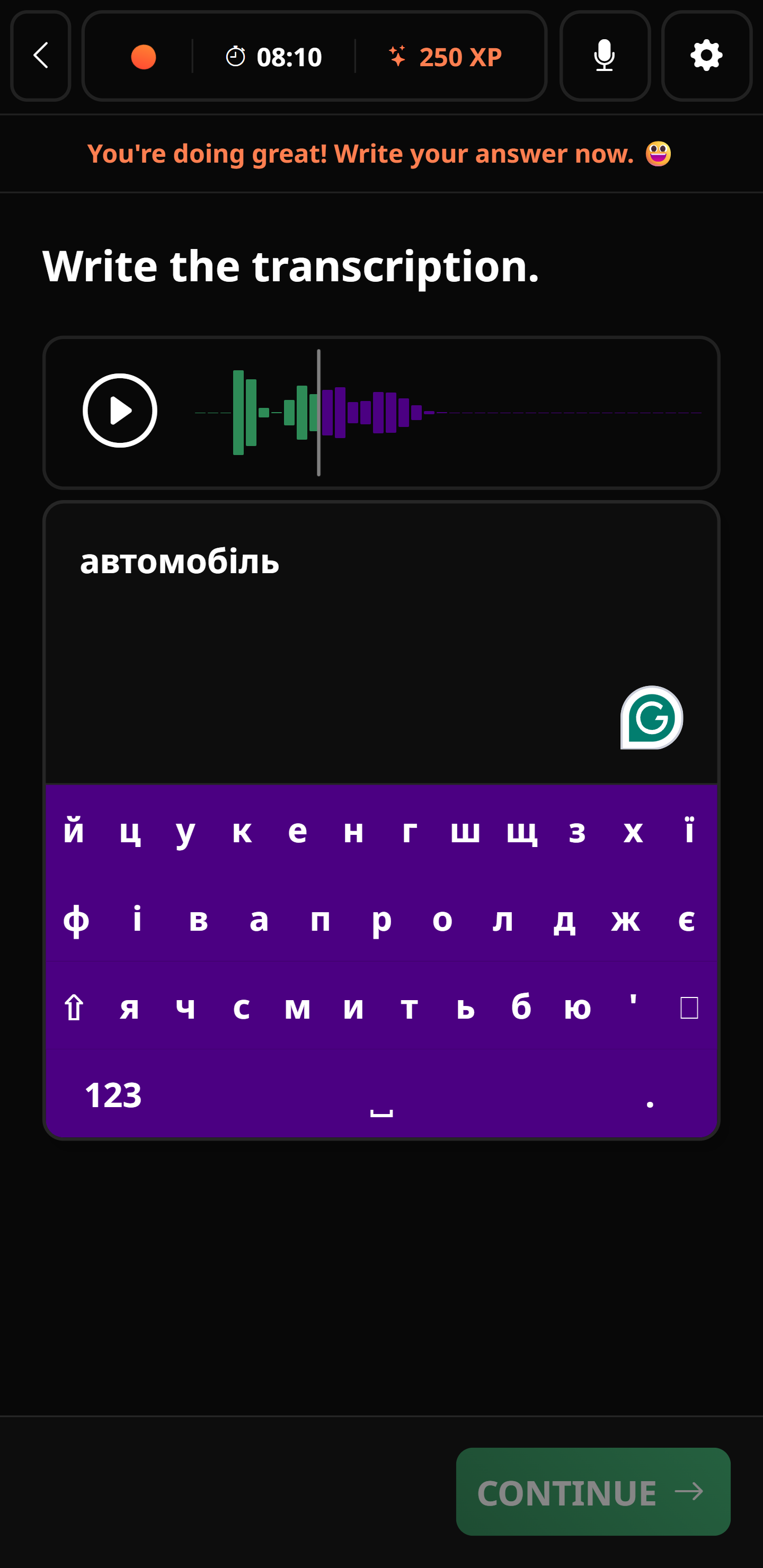
- Pronunciation practice with feedback. Your child speaks, the tutor listens and tells them which sounds were off. Most kids never get this at home because there's no one to speak English with.
- Translation that explains, not just answers. Instead of handing over the finished sentence (which teaches nothing), a good tutor explains why the English word order differs from your home language.
Notes
The pattern to look for: a tool that makes your child do the work and corrects them, not one that does the homework for them. The first builds skill. The second gets caught by the teacher.
📝 The English mistakes an AI tutor fixes fastest
If you've ever looked at your child's marked homework and thought "I sort of know that's wrong but I can't explain it," you're not alone. These are the recurring errors non-native learners make — and the ones an AI tutor is fast at fixing because it can explain the rule and drill it on the spot:
- Tense confusion. "I have went," "I am agree," "Yesterday I go to school." English tenses are a minefield for speakers of languages that handle time differently. The tutor names the rule and gives targeted practice.
- Prepositions. "Good in English" (should be "good at"), "depends of" (should be "depends on"), "married with" (should be "married to"). These almost never follow logic — they have to be learned, and drilling beats memorising a list.
- False friends. Words that look like a word in your home language but mean something different — "actually" (not "currently"), "sensible" (not "sensitive"), "library" (not "bookshop"). The tutor flags them as they come up.
- Word order in questions. "How you say...?" instead of "How do you say...?" Inverting the subject and verb is mechanical once it's explained, but it trips up nearly every beginner.
- Spelling that English makes illogical. "Recieve," "definately," "wich." A tutor that re-tests the words your child keeps missing fixes these faster than a spell-checker that just autocorrects without teaching.
The point isn't that your child is making unusual mistakes — these are the mistakes, the same ones in every classroom. The advantage of an always-available tutor is that each one gets explained and drilled the moment it appears, instead of waiting for a teacher to get to it three worksheets later.
Become bilingual in 30 days with Univext!
Start a lesson with our teacher for free and become bilingual like our 100,000 students!
🤖 Umi vs. the alternatives: a quick comparison
Here's how the realistic options stack up for a parent trying to help with English homework on a budget.
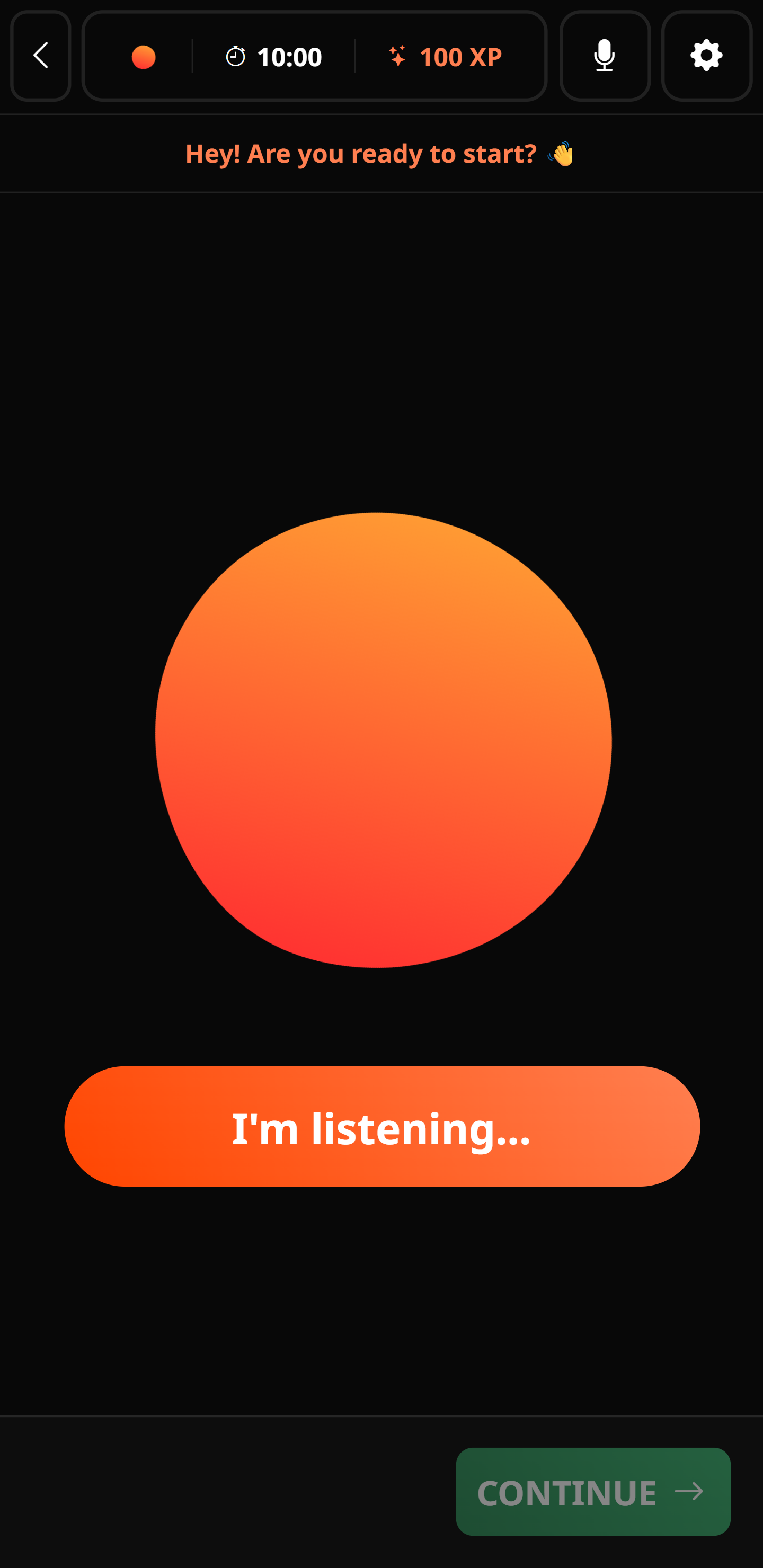
A human tutor is excellent but expensive and scheduled. ChatGPT is free and clever, but it has no curriculum and will happily write the essay for your child if asked — which is exactly what you don't want. Cambly connects you to real teachers but is priced and scheduled like one. Photomath is brilliant for maths and useless for language. Umi sits in the gap: structured like a course, available like an app, and built specifically to teach languages rather than answer questions.





Join more than 100,000 students learning on Univext
⏰ What a real homework session with Umi looks like
Concrete beats abstract. Here's a typical twelve-minute session:
Your child opens Umi and types or says: "I don't understand why my teacher marked 'I have went to London' wrong."
Umi replies that "went" is the past simple, but "have" needs the past participle — "gone." So it's "I have gone to London." Then it explains the difference between the two tenses: past simple ("I went") for a finished action at a known time, present perfect ("I have gone") for an experience with no specific time.
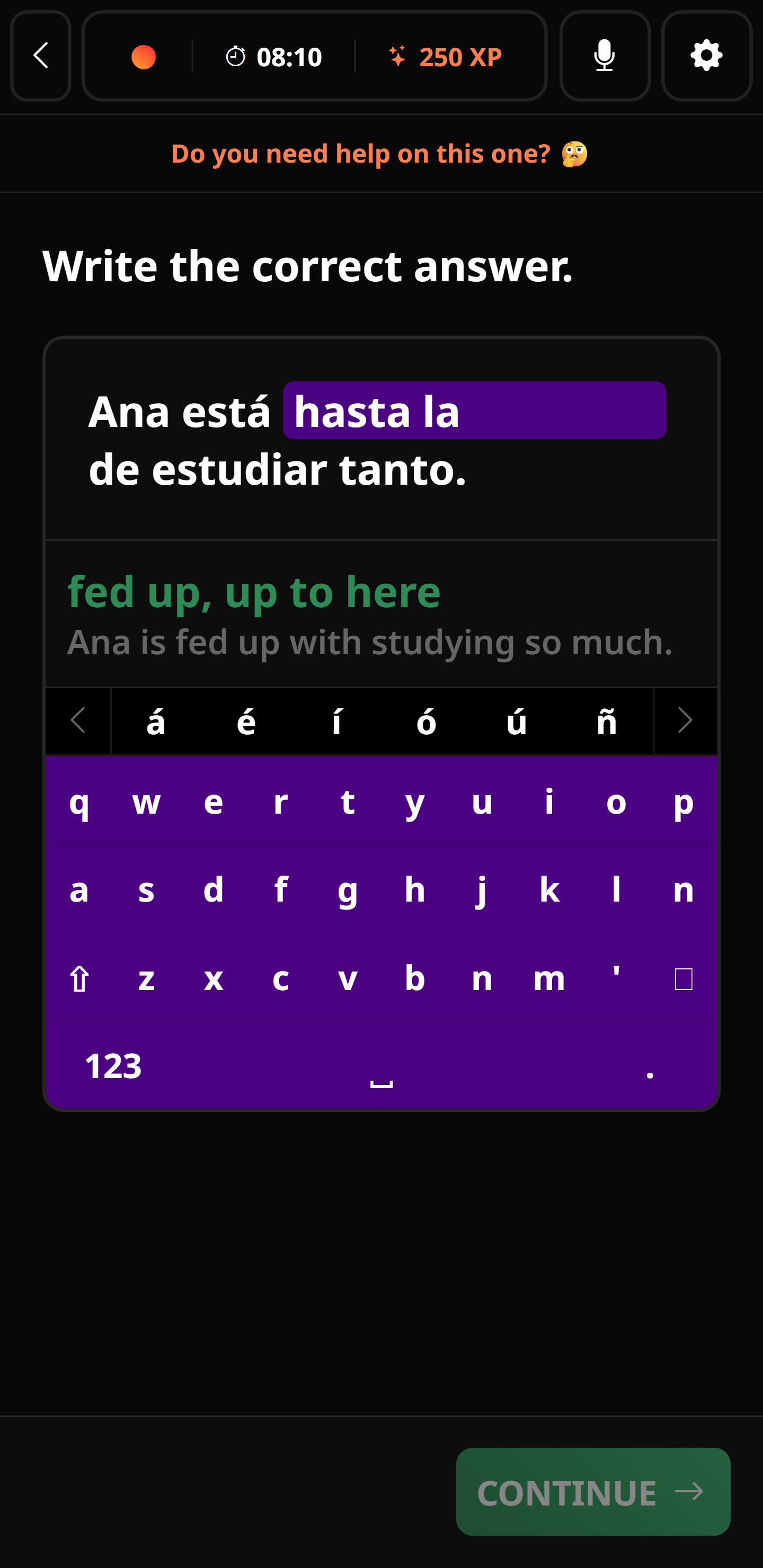
Then it gives five practice sentences:
Example
- Last summer I ___ (go) to Spain.
2. I ___ (never / be) to Japan.
3. She ___ (eat) breakfast at 7 AM today.
4. We ___ (already / finish) the project.
5. They ___ (visit) their grandmother last week.
Your child fills them in. Umi checks each one, praises the right answers, and gently re-explains the one or two that are still wrong. Done in twelve minutes — and your child actually understands the rule now, instead of just copying a correction they'll forget by next week.
💡 What Umi can do that a homework app can't
Most "homework help" apps give your child an answer and move on. That's the trap — answers don't build skill. Umi is built around the things that actually move a struggling student forward:
- Voice practice. Your child can speak English to Umi and get corrected in real time. This is the single biggest gap in most kids' learning — they read and write English at school but never practise speaking, because there's no one to talk to. Umi is always available to talk.
- Real correction with explanation. Not "wrong, try again," but "here's why, here's the rule, now try these three." Understanding beats guessing.
- Level-adaptive, A1 to C1. Whether your child is just starting (A1) or preparing for an oral exam at near-fluent level (C1), the tutor meets them where they are and steps up as they improve.
- A 14-day free trial. You can test all of this with your own child before paying a cent. Have them do tonight's homework with Umi and see if it clicks.
Become bilingual in 30 days with Univext!
Start a lesson with our teacher for free and become bilingual like our 100,000 students!
🎯 Be realistic: what AI homework help can and can't do
A quick reality check, because over-promising helps no one.
Umi is not magic. A child who's fallen behind in English won't catch up in a weekend. Realistically, a struggling student needs 20–30 minutes a day for three to six months to genuinely close the gap. What AI changes is the cost and availability of that practice: it's there every single night, it never gets impatient, and it costs a fraction of a private tutor.
Important
The honest comparison: a human tutor at €25–40/hour, twice a week, runs €200–320 a month. Umi starts with a 14-day free trial and then costs a small fraction of that — and your child can use it every day, not twice a week.
What AI can't replace: a teacher who knows your child's exact textbook, the social motivation of a real person, and the accountability of a scheduled lesson. The smartest setup for many families is AI for daily practice plus the occasional human check-in — most of the hours, a fraction of the cost.
👨👩👧 Which approach fits your child's age
English homework looks very different at 7 than at 17. Here's where to focus.
Primary school (ages 5–10). Keep it playful. Focus on vocabulary games, basic phrases, and pronunciation. At this age, the win is building a positive association with the language — short, fun sessions where your child speaks out loud and hears words pronounced correctly. Sit with them; make it a together activity.
Middle school (ages 11–14). This is where grammar starts to bite — tenses, prepositions, irregular verbs. Use the tutor for grammar drilling, vocabulary expansion, and short essay help. This is the age where a daily 20-minute habit pays off most, because the foundations laid now carry into exam years.
High school (ages 15–18). The stakes rise: essay structure, oral exam preparation, and vocabulary at B2–C1 level. Umi's speaking practice is especially valuable here — oral exams terrify students who've never practised speaking, and AI gives unlimited, judgement-free rehearsal. Essay feedback on structure and argument helps where it counts most.
Join more than 100,000 students learning on Univext
🗓️ How to build a homework routine that actually sticks
A tool is only as good as the habit around it. The families who see real improvement aren't the ones who buy the fanciest app — they're the ones who build a small, boring, daily routine. Here's what works:
- Same time, every day. Tie the session to something that already happens — right after dinner, before screen time. Twenty minutes daily beats two hours on Sunday.
- Start with tonight's actual homework. Don't invent extra work. Use the real worksheet as the session's content, then let the tutor add a few practice questions on whatever your child got wrong.
- Let them speak, not just type. The biggest, fastest gains come from speaking out loud. Even five minutes of talking to the tutor per session builds the confidence that oral exams and real conversations demand.
- Review the weak spots weekly. Once a week, have your child redo the grammar point they struggled with most. Spaced repetition is what turns a one-time correction into permanent knowledge.
- Keep it low-pressure. The goal of the early sessions is for your child to not dread English homework. A tutor that's patient and never sighs at a wrong answer does a lot of quiet work here.
Example
A workable weeknight routine: 5 minutes reviewing yesterday's tricky word or rule → 10 minutes on tonight's actual homework with the tutor explaining as you go → 5 minutes of speaking practice on the day's topic. Twenty minutes, done.
Become bilingual in 30 days with Univext!
Start a lesson with our teacher for free and become bilingual like our 100,000 students!
🔒 Privacy and supervision for parents
A fair question for any tool your child uses. A few practical points:
- You're in control of the account. The simplest, safest setup during the trial is to sit with your child for the first few sessions — you create the account, you see exactly what they're working on, and you decide whether it's a fit.
- It's a learning tool, not a social app. Umi isn't a chat platform where strangers can reach your child. It's a tutor.
- Read the privacy policy before signing up. Univext's privacy policy governs how account data is handled — review it so you're comfortable, the same way you'd check any app your family uses.
For younger children especially, treat the early sessions as a shared activity rather than handing over a device. It's better learning and better supervision.
📲 Try it tonight, before tomorrow's homework is due
Here's the thing about homework help: you need it now, not after a tutor's schedule opens up next Tuesday. That's the whole point of an AI tutor.
Important
Start a free 14-day trial and have your child try a session tonight. Pull up the worksheet that's been causing the standoff, let them work through it with Umi, and see for yourself whether the explanations land. No tutor to book, no waiting — just open it and go. Start your free trial here.
If your child learns more than one language, the same subscription covers English plus French, German, Italian, Spanish, Polish, Portuguese, Russian, and Ukrainian — one account, every course.
❓ Frequently asked questions
How long is the free trial? Fourteen days. That's plenty of time to run several real homework sessions and decide whether it works for your child before paying anything.
What happens after the trial? It becomes a paid subscription at a small monthly rate — a fraction of what a private tutor costs. You can cancel any time before the trial ends if it isn't a fit.
Can I cancel easily? Yes. You cancel from your account settings; there's no phone call or awkward retention process.
Is it really better than a human tutor? For some things, yes — availability (every night, not twice a week), cost, and unlimited speaking practice. For others, a human still wins: knowing your child's exact curriculum and providing real social accountability. Many families use both: AI for daily practice, a human for the occasional check-in.
What age does this work for? Roughly ages 7 and up for independent use, and younger with a parent sitting alongside. The tutor adapts from absolute beginner (A1) to near-fluent (C1).
Will it help with my child's specific textbook? It won't follow a particular national textbook page-by-page, but it covers the same underlying grammar, vocabulary, and writing skills those textbooks teach. Paste in a homework question and it explains the concept behind it.
Won't my child just get the AI to do the homework for them? Umi is built to teach, not to hand over finished answers — it walks your child through the why and makes them do the practice. That's the opposite of pasting a prompt into a generic chatbot. Used as intended, it builds skill the teacher will notice.
Become bilingual in 30 days with Univext!
Start a lesson with our teacher for free and become bilingual like our 100,000 students!
✅ The bottom line
If your child is struggling with English homework, you don't have to choose between an expensive private tutor and leaving them to figure it out alone at 9 PM. An AI English tutor like Umi covers the daily grind — grammar with explanations, essay feedback, vocabulary drills, and the speaking practice most kids never get — for a fraction of the cost, available the moment your child sits down.
Start with the free trial tonight. Worst case, you lose nothing. Best case, the red ink stops coming home.
Want to go deeper? Read Learn English with AI: Best AI Tutors (2026) for the full picture of how AI tutoring works, compare the field in Best Apps to Learn English in 2026 (Tested & Ranked), or see how the whole category stacks up in Best Language Learning Apps in 2026 (Tested).