


🗣️ Why Conversation Practice Is the #1 Skill Gap for French Learners
You've been studying French for months. You can conjugate verbs, read articles, understand podcasts. Then someone asks you "Qu'est-ce que tu fais dans la vie?" and your mind goes blank.
This is the conversation gap — and it's the most common frustration French learners face. The reason is simple: most study methods build comprehension skills (understanding French) but not production skills (speaking French). These are fundamentally different cognitive processes, and one doesn't automatically lead to the other.
The fix is straightforward: you need dedicated conversation practice. Not pronunciation drills. Not repeat-after-me exercises. Actual, unscripted conversation where you listen, process, and respond in real time.
This guide covers the seven best ways to get that practice in 2026 — from free options to the most effective paid methods.
🤖 Method 1: AI Conversation Partners (Best for Daily Practice)
Cost: Low | Flexibility: 24/7 | Effectiveness: ★★★★★
The biggest innovation in language learning over the past two years is AI-powered conversation practice. Instead of waiting until you can afford a tutor or find an exchange partner, you can practice speaking French any time with an AI that adapts to your level.
Univext (Recommended)
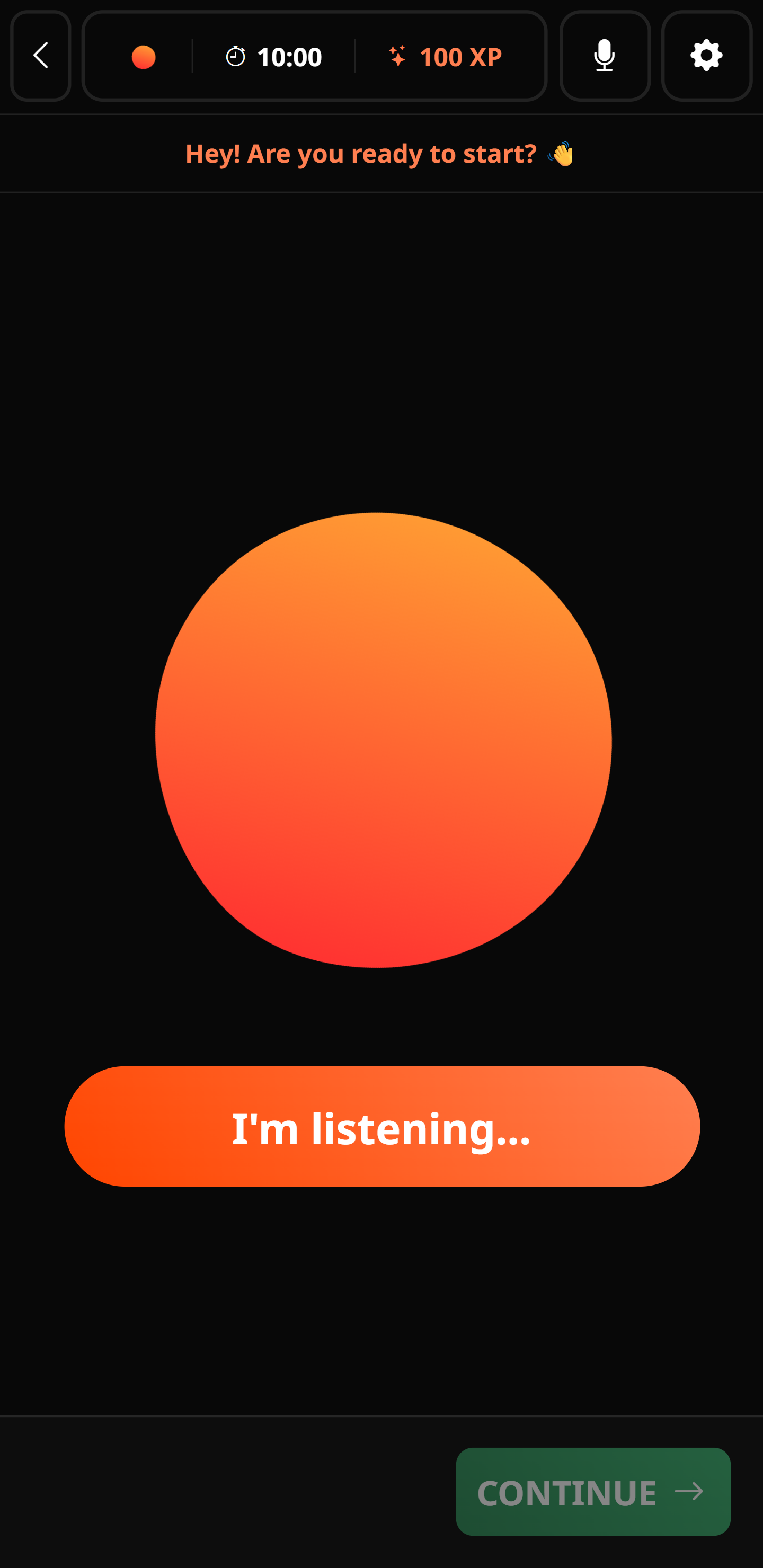
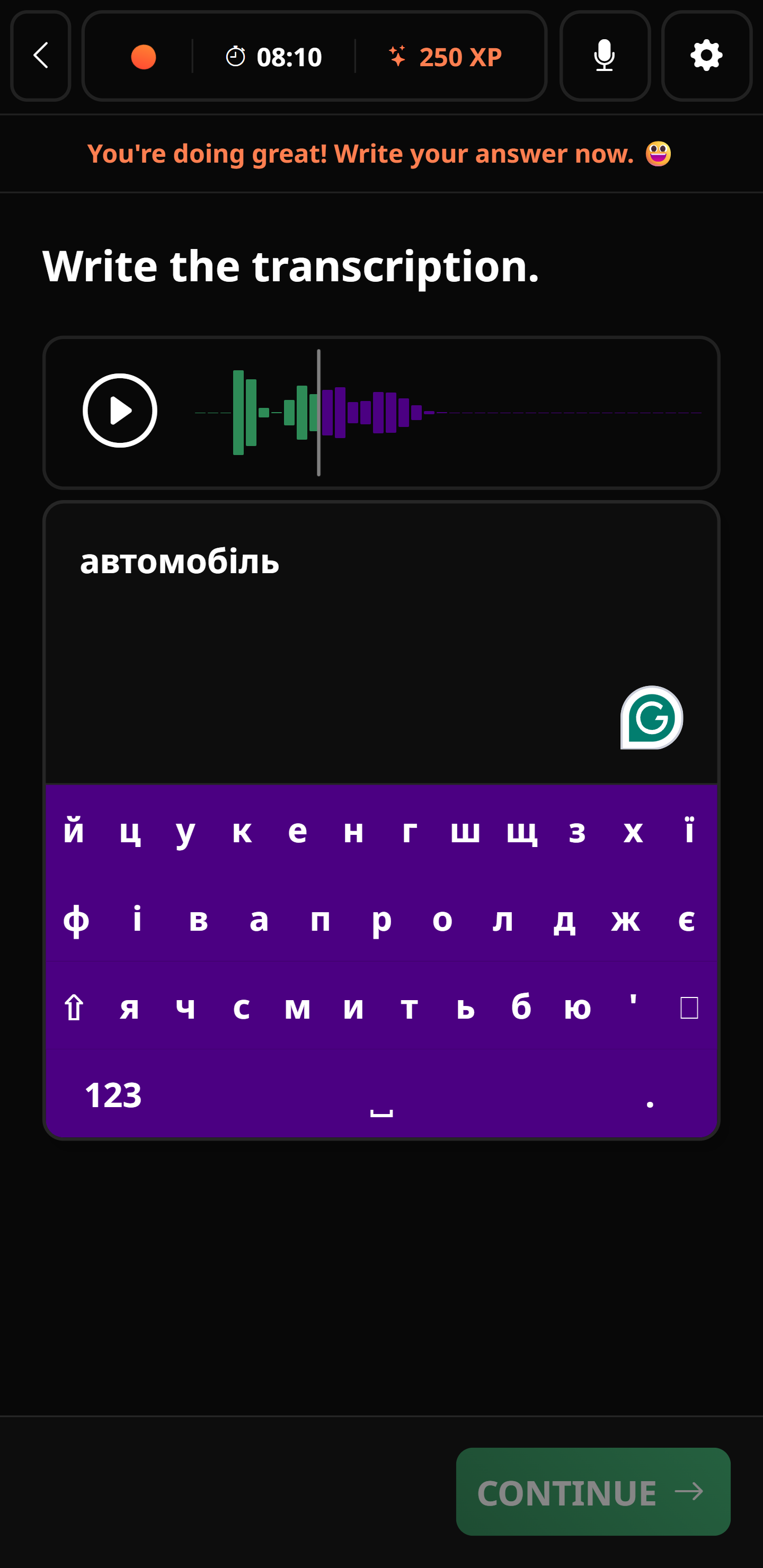
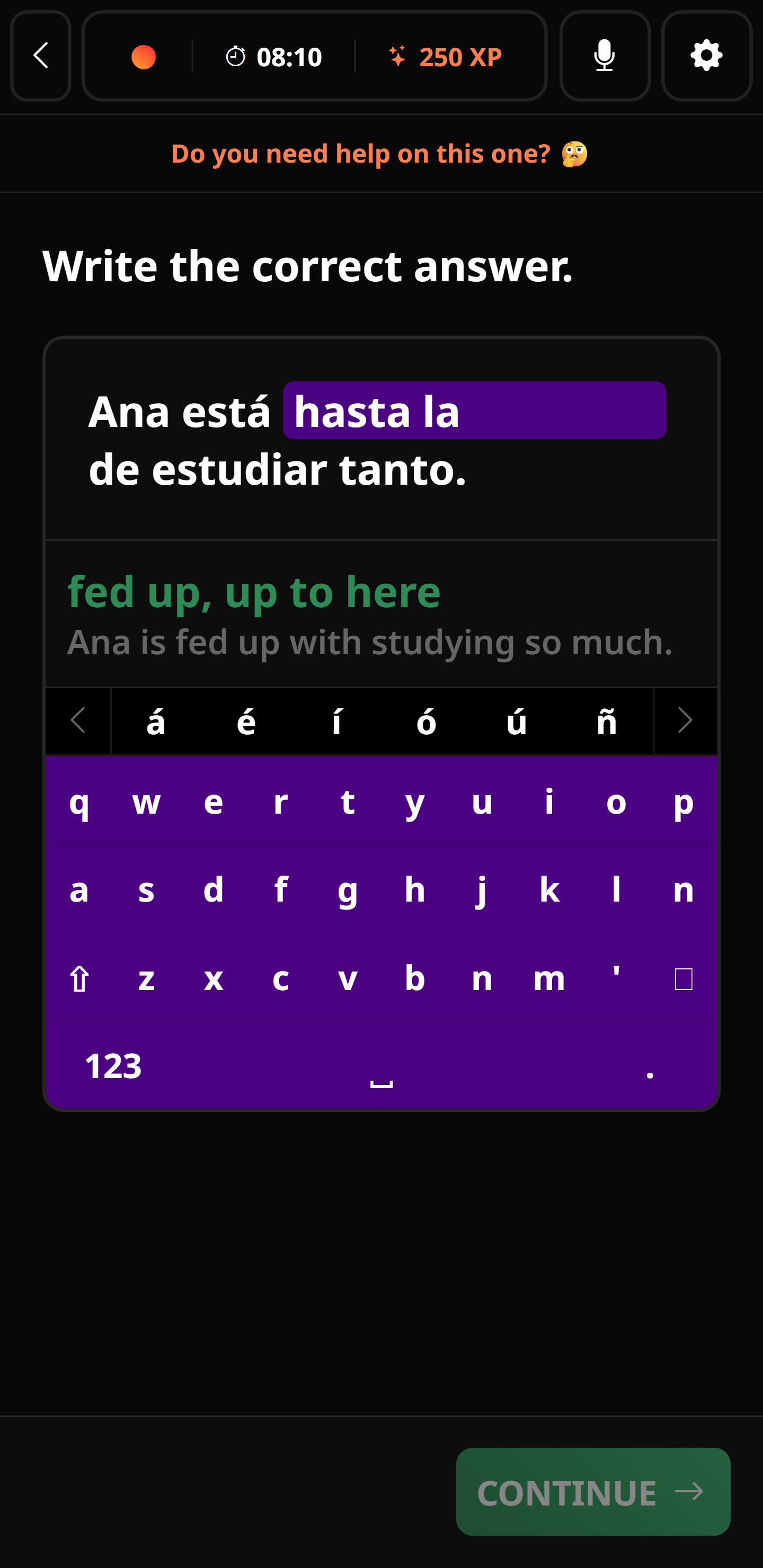
Univext's AI tutor Umi is purpose-built for language conversation. Unlike general AI chatbots, Umi is designed specifically to teach through conversation:
- Adapts to your exact level — from absolute beginner to advanced
- Corrects errors naturally — explains why, not just what's wrong
- Introduces new vocabulary gradually during conversation
- Native-quality French voice — practice both speaking and listening
- 14-day free trial with 30 minutes of daily conversation
A typical session: Umi asks about your weekend plans in French. You respond. Umi notices you used the wrong preposition, corrects it briefly, then continues the conversation. After 15 minutes, you've practiced more active French speaking than in a week of Duolingo.
Best for: Daily practice, building confidence, overcoming speaking anxiety, all levels.
Example
Umi: "Qu'est-ce que tu as fait ce weekend?" You: "J'ai allé au cinéma avec mes amis." Umi: "Presque parfait ! Avec le verbe aller, on utilise l'auxiliaire être : 'Je suis allé au cinéma.' C'est un des verbes de mouvement. Qu'est-ce que tu as regardé comme film ?" — The conversation flows naturally while corrections happen in context.
Become bilingual in 30 days with Univext!
Start a lesson with our teacher for free and become bilingual like our 100,000 students!
👥 Method 2: Language Exchange Partners (Best for Cultural Immersion)
Cost: Free | Flexibility: Scheduled | Effectiveness: ★★★★☆
Language exchanges pair you with a French speaker who wants to learn your language. You spend half the time speaking French, half speaking English (or your native language). It's free and provides authentic cultural exchange.
Best Platforms
- Tandem — large community, video/voice/text, built-in correction tools
- HelloTalk — text-focused with voice messages, moments feed like social media
- ConversationExchange.com — simple, focused, good for finding local partners
- Speaky — clean interface, quick matching
Tips for Effective Exchanges
- Set clear time splits — 25 min French, 25 min English, stick to it
- Prepare topics beforehand so you're not scrambling
- Don't be afraid to correct each other — that's the whole point
- Find someone near your level in the other language for balanced conversations
Limitations: Quality varies enormously. Some partners are flaky, conversations can default to the stronger speaker's language, and scheduling across time zones is tricky. Great as a supplement, unreliable as your primary practice method.




Join more than 100,000 students learning on Univext
👨🏫 Method 3: Professional Online Tutors (Best for Structured Progress)
Cost: $10-50/hour | Flexibility: Scheduled | Effectiveness: ★★★★★
Human tutors remain the gold standard for personalized language instruction. For French, the options are excellent:
Best Platforms
- iTalki — largest marketplace, community tutors from $8/hr, professional teachers from $20/hr
- Preply — curated tutors with structured lesson plans
- Verbling — video-first platform with good French teacher selection
When Human Tutors Shine
- Complex grammar — explaining the subjunctive, advanced sentence structures
- Cultural nuance — slang, formality levels, regional differences
- Exam preparation — DELF, DALF, TCF specific coaching
- Pronunciation refinement — subtle corrections that AI might miss
- Accountability — a scheduled session you've paid for is hard to skip
The catch: Cost adds up fast. Two 60-minute sessions per week at $25/hour = $200/month. For most learners, the optimal approach is daily AI practice + weekly human tutor sessions, which provides high-volume reps (AI) plus nuanced instruction (human).
🎙️ Method 4: Conversation Groups and Meetups (Best for Social Learners)
Cost: Free to low | Flexibility: Weekly | Effectiveness: ★★★☆☆
Group conversation practice is available in most cities:
- Alliance Française — French cultural centers worldwide offer conversation groups
- Meetup.com — search "French conversation" in your city
- Library groups — many public libraries host free language practice sessions
- French cafés/restaurants — some host conversation evenings
Pros: Social, motivating, fun, real human interaction, often free. Cons: Uneven skill levels, limited individual speaking time (the more people, the less you talk), schedule-dependent, not available everywhere.
Become bilingual in 30 days with Univext!
Start a lesson with our teacher for free and become bilingual like our 100,000 students!
📱 Method 5: Shadowing and Imitation (Best for Pronunciation)
Cost: Free | Flexibility: Anytime | Effectiveness: ★★★☆☆ (for pronunciation specifically)
Shadowing means listening to French audio and repeating it simultaneously — matching rhythm, intonation, and pronunciation as closely as possible. It's a technique used by professional interpreters and it's remarkably effective for developing natural-sounding French.
How to Shadow
- Choose audio slightly above your level (podcasts, audiobooks, YouTube)
- Listen to a sentence
- Immediately repeat it, mimicking everything: speed, tone, pauses
- Repeat the same sentence 3-5 times until it feels natural
- Move to the next sentence
Best resources for shadowing:
- InnerFrench podcast (clear, natural speed, interesting topics)
- Français Authentique (YouTube — great for intermediate)
- Any French audiobook narrated by a clear speaker
Limitation: Shadowing builds pronunciation and listening skills, but it's not conversation — you're reproducing someone else's words, not generating your own.
📺 Method 6: Talking to Yourself in French (Seriously)
Cost: Free | Flexibility: Anytime | Effectiveness: ★★★☆☆
This sounds ridiculous but it works. Narrate your daily life in French:
- Making coffee: "Je fais du café. D'abord, je mets de l'eau dans la cafetière..."
- Walking: "Il fait beau aujourd'hui. Je vais au parc. Il y a beaucoup de gens..."
- Cooking: "J'ai besoin de deux œufs et un peu de beurre..."
This practice forces you to produce language spontaneously — exactly the skill you need for conversation. When you hit a word you don't know, look it up immediately. Those are high-value vocabulary acquisitions because they're personally relevant.
Best combined with: AI conversation practice. Use self-talk to warm up, then practice with Univext's Umi for actual back-and-forth dialogue.
Join more than 100,000 students learning on Univext
📻 Method 7: French Media + Active Engagement (Supporting Practice)
Cost: Free to low | Flexibility: Anytime | Effectiveness: ★★☆☆☆ (for speaking specifically)
Watching French shows, listening to podcasts, and reading articles build comprehension — the foundation conversation sits on. But they're passive input, not active production.
To make media consumption more conversation-like:
- Pause and respond — when a character asks a question, answer out loud in French
- Summarize out loud — after a podcast segment, explain what you heard in French
- Argue with the content — express your opinion in French about what you just read/heard
- Discuss with Umi — tell Univext's AI tutor about the show you watched or article you read, in French
Become bilingual in 30 days with Univext!
Start a lesson with our teacher for free and become bilingual like our 100,000 students!
📊 Methods Compared
The standout metric is speaking time per session. AI tutoring and self-talk give you the most production time per minute invested. For building conversational fluency, volume of practice is the strongest predictor of progress.
🎯 The Optimal French Conversation Practice Routine
Here's what a highly effective weekly practice schedule looks like:
Daily (non-negotiable):
- 15-30 min AI conversation with Univext's Umi
- 5 min self-talk in French (narrate an activity)
3-4 times per week:
- 15-20 min French podcast (InnerFrench, Coffee Break French)
Weekly:
- 1 language exchange session (30-60 min) OR 1 human tutor session
Monthly:
- 1 French film or series binge (with French subtitles)
This routine totals roughly 3-4 hours per week of active French practice, with conversation making up the majority. It's sustainable, effective, and affordable.
❓ Frequently Asked Questions
How can I practice French conversation if I'm a complete beginner?
AI tutors like Univext's Umi adapt to absolute beginners — starting with basic greetings and building from there. You don't need to wait until you're "ready." Starting conversation practice early, even with just a handful of words, dramatically accelerates learning.
Where can I practice speaking French for free?
Language exchange apps (Tandem, HelloTalk) are free. Self-talk is free. Conversation meetups at libraries and Alliance Française chapters are usually free. For structured practice, Univext offers a 14-day free trial with 30 minutes daily.
How often should I practice French conversation?
Daily is ideal — even 10-15 minutes. Consistency matters more than session length. If daily isn't possible, aim for at least 4-5 sessions per week. Below 3 sessions per week, progress slows dramatically.
Is conversation practice better than grammar study?
They serve different purposes, but conversation practice has a bigger impact on fluency. Grammar study helps you understand why things work; conversation practice automates your ability to use them. For most learners, the ratio should be 70% conversation / 30% study.
Become bilingual in 30 days with Univext!
Start a lesson with our teacher for free and become bilingual like our 100,000 students!
✅ Start Practicing French Conversation Today
The single biggest thing holding most French learners back isn't vocabulary, grammar, or pronunciation — it's insufficient speaking practice. Every method listed above will help, but the most accessible and effective option in 2026 is AI conversation practice.
Start your free 14-day trial with Univext and have a real French conversation with Umi today. Thirty minutes a day, from whatever level you're at. That's the practice that turns knowledge into fluency.