



🤖 Can You Actually Learn Spanish with ChatGPT?
Short answer: yes — if you know how to use it. ChatGPT is surprisingly good at Spanish. It understands grammar, it handles both European and Latin American varieties, it corrects your mistakes when asked, and it can hold natural conversations at almost any level. A lot of self-taught learners have made real progress with it in 2026.
But ChatGPT was never built to teach languages. It's a general-purpose assistant that happens to speak Spanish fluently. Treat it like a language course and it'll fail you — no curriculum, no progress tracking, no guarantee it corrects every mistake. Treat it like a free conversation partner and grammar reference, and it's one of the most useful tools you can add to your Spanish learning stack.
This guide shows you exactly how to use ChatGPT to learn Spanish in 2026 — which prompts actually work, where it falls short, and how to combine it with a purpose-built AI tutor like Univext to fill the gaps.
📋 What ChatGPT Can and Can't Do for Spanish
Become bilingual in 30 days with Univext!
Start a lesson with our teacher for free and become bilingual like our 100,000 students!
🎯 The Best ChatGPT Prompts for Learning Spanish
The quality of what you get from ChatGPT depends almost entirely on how you prompt it. Here are the prompts that actually work for Spanish learners, organized by what you're trying to do.
1. Conversation Practice at Your Level
You are my Spanish tutor. I'm at A2 level (beginner/pre-intermediate).
Have a conversation with me about [weekend plans / food / travel / my job].
Speak mostly in Spanish at A2 level.
Correct any mistakes I make in my native language.
Ask me follow-up questions to keep the conversation going.
Why it works: You're setting the level, the topic, and the correction language. Without the level, ChatGPT often defaults to B2+ vocabulary that overwhelms beginners. Without the correction instruction, it'll often let mistakes slide to keep the conversation "flowing."
2. Grammar Explanation in Context
Explain the difference between "ser" and "estar" using 10 example sentences,
and explain why each sentence uses one or the other.
Include at least one tricky case where the same adjective changes meaning
depending on which verb you use.
Why it works: You're asking for examples and explanation, not just the rule. ChatGPT is much better at showing you patterns than lecturing you with grammar tables.
3. Custom Vocabulary Lists at Your Level
Give me 20 Spanish words related to [cooking / travel / office work] at B1 level.
For each: the Spanish word, its English meaning, and one example sentence in Spanish.
Why it works: Specific topic + specific level + specific format = focused, usable output.
4. Writing Practice with Corrections
I'm going to write a short paragraph in Spanish about my day.
Please correct any mistakes, explain each correction in English,
and then rewrite my paragraph the way a native Spanish speaker would say it.

Here's my paragraph:
[your text]
Why it works: Asking for three things — corrections, explanations, and a native-style rewrite — gives you a complete learning loop from one exercise.
5. Regional Spanish (Spain vs Latin America)
I want to learn Mexican Spanish specifically. Translate this phrase into natural
Mexican Spanish, and tell me if it would sound weird in Spain:
"[English phrase]"
Why it works: ChatGPT knows regional differences but won't volunteer them unless you ask. Specify the country (Mexico, Spain, Argentina, Colombia) for best results.
6. Listening Practice (with voice mode)
Read the following Spanish text aloud at a natural pace, like a native speaker
from Madrid would, not slowed down. Then ask me three comprehension questions in Spanish.
Why it works: Voice mode will narrate Spanish text. By asking for "natural pace" you avoid the slowed-down default.




Join more than 100,000 students learning on Univext
❌ Where ChatGPT Falls Short for Spanish
After using ChatGPT for Spanish practice for a while, most learners run into the same limitations:
1. No Structured Curriculum
ChatGPT will happily teach you anything, but it won't tell you what to learn next. You can ask it "what should I study next at A2?" but its answer will be generic. A real course maps out what to learn when. ChatGPT doesn't.
2. Inconsistent Correction
Sometimes ChatGPT catches every mistake. Sometimes it lets them slide to keep the conversation flowing, especially if you're being expressive. You can never fully trust that an uncorrected sentence was actually correct.
3. No Memory Between Chats
By default, each new ChatGPT conversation starts fresh. Your mistakes, weak points, and progress from yesterday don't carry over. That makes it hard to build a coherent learning journey.
4. Voice Mode Isn't Language-Teaching-Grade
ChatGPT's voice mode is impressive, but it's designed for general use. It won't automatically slow down for a beginner, repeat itself, or give targeted pronunciation feedback the way a dedicated language teacher would.
5. Grammar Blind Spots
ChatGPT generally knows Spanish grammar well, but for some subtle areas — the subjunctive after certain conjunctions, leísmo/laísmo, vosotros vs ustedes — it occasionally produces inconsistent or dialect-mixed output. A dedicated Spanish course won't make those mistakes.
6. You Have to Drive Everything
ChatGPT is reactive. It won't initiate anything. You have to know what to ask, how to ask it, and when to change topics. Beginners who don't already know what they don't know will struggle to make it useful.
🚀 The Missing Piece: A Purpose-Built AI Tutor
ChatGPT solves some problems for Spanish learners. The rest — curriculum, progression, reliable correction, voice-first pedagogy — is exactly what a purpose-built AI Spanish tutor handles.
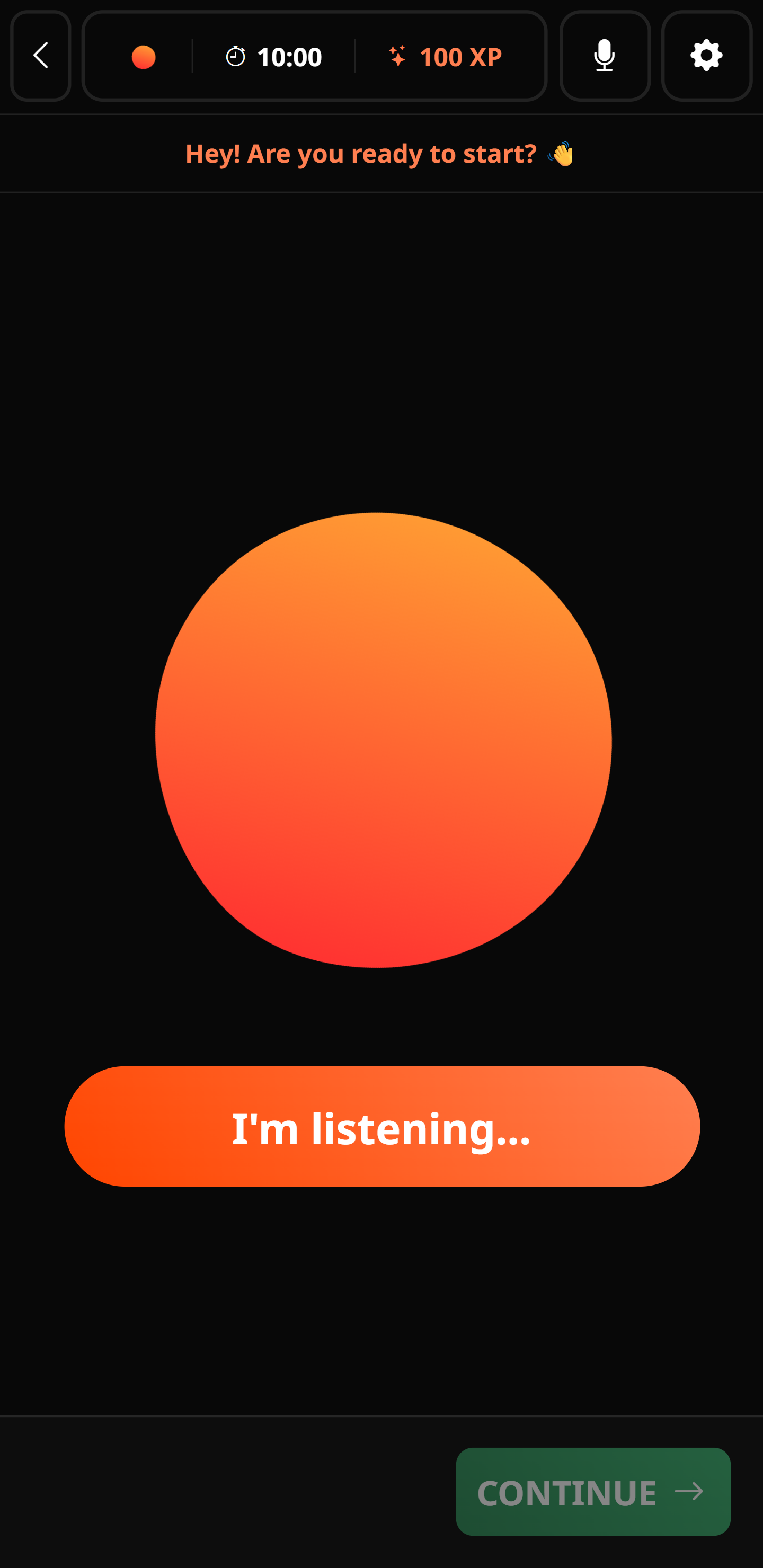
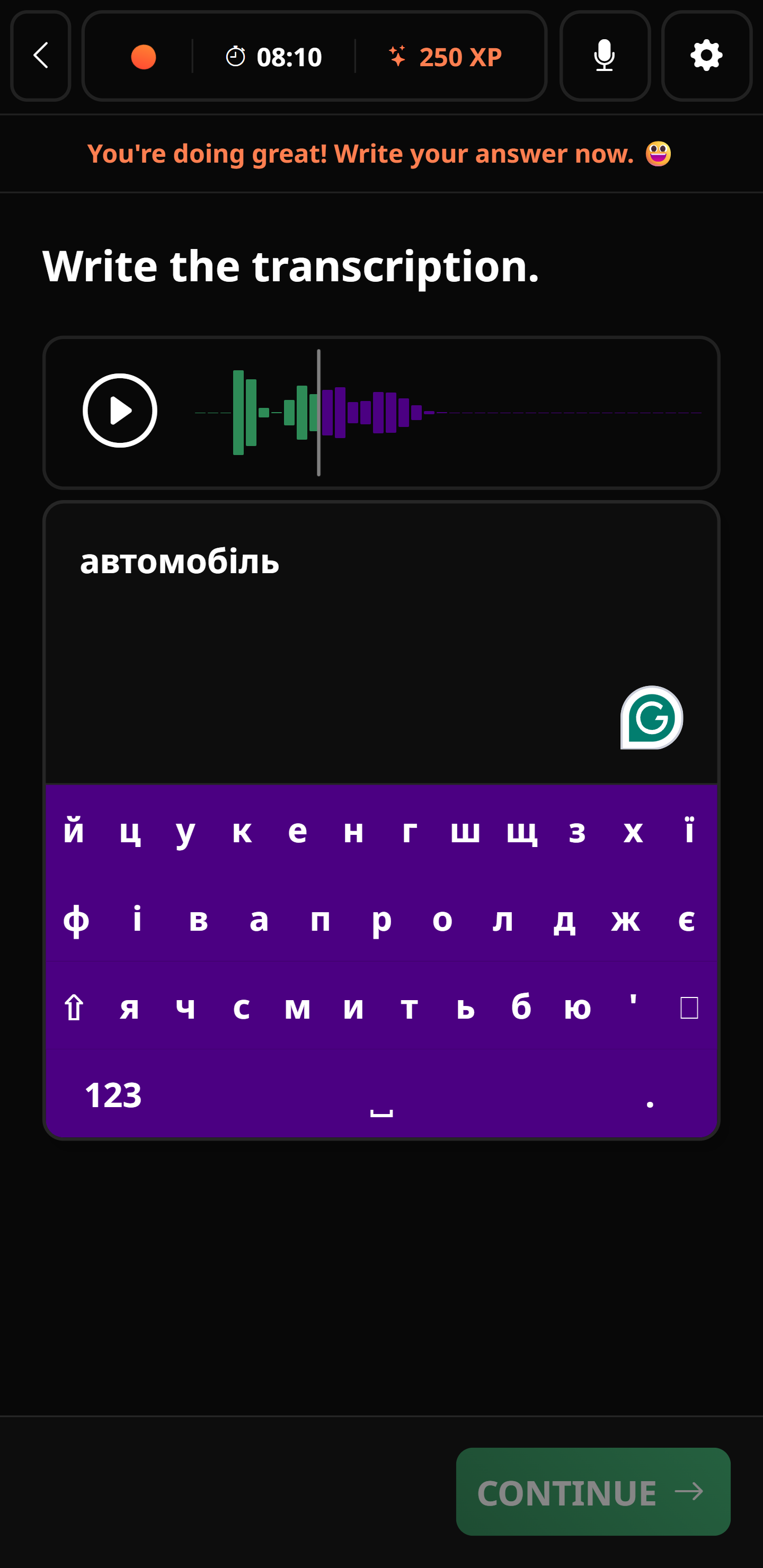
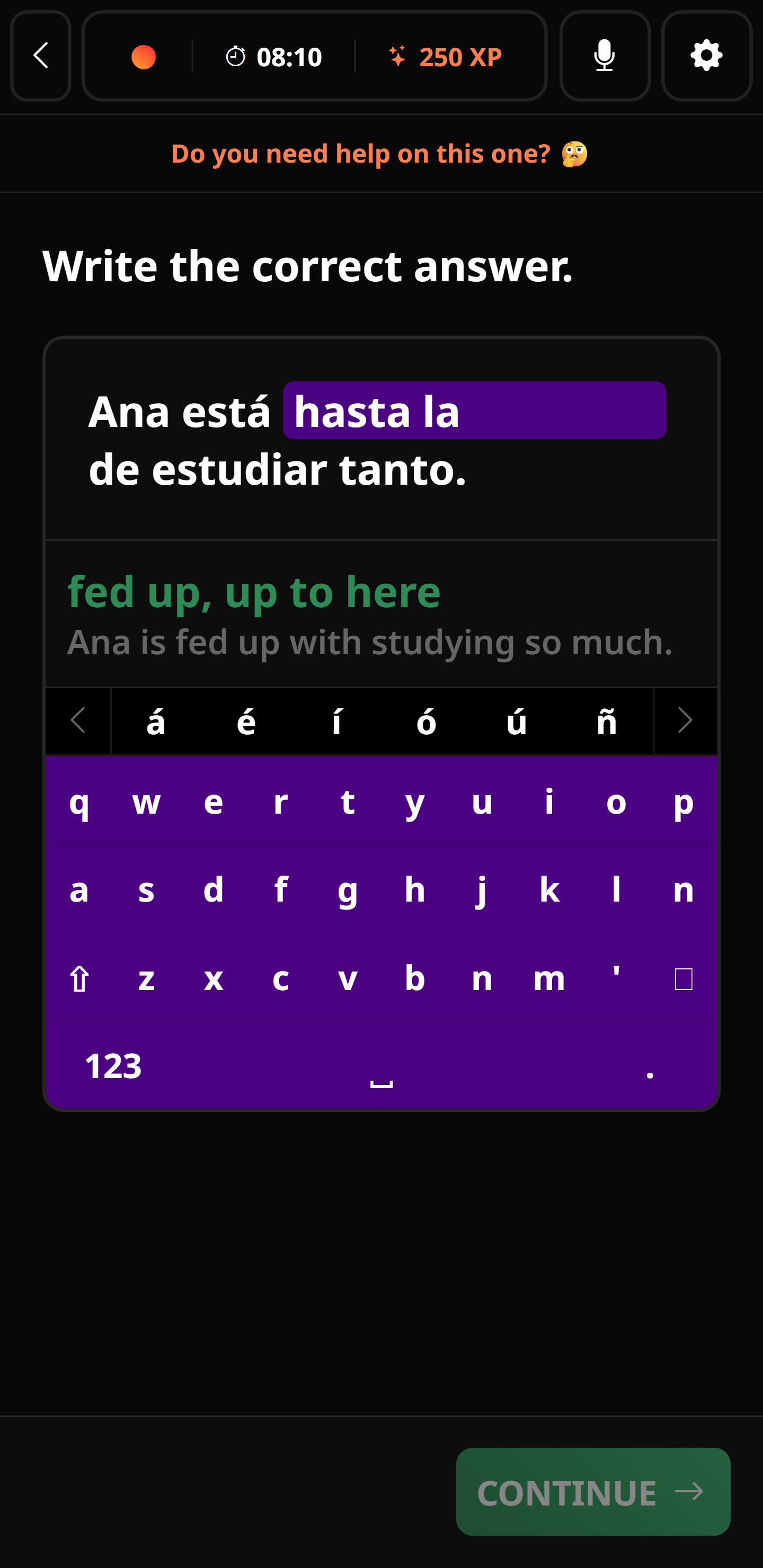
That's where Univext comes in. Univext was built specifically for language learning, with an AI teacher called Umi who handles the things ChatGPT can't.
What Umi does that ChatGPT doesn't:
- Structured A1 → C1 curriculum. Umi knows what you should learn next at your level. You don't have to design your own syllabus.
- Voice-first, language-learning-optimized. Umi is tuned to speak at pedagogically appropriate speeds, slow down for beginners, and repeat things when asked naturally.
- Reliable correction. Umi catches mistakes consistently because that's literally the job it's built for. No more wondering whether your sentence was actually right.
- Progress tracking across sessions. Umi remembers where you are in your Spanish journey, what you've struggled with, and what to reinforce next time.
- Spanish-specific pedagogy. Umi handles ser/estar, por/para, subjunctive triggers, and preterite/imperfect distinctions as a first-class teaching priority, not as ad-hoc grammar answers.
- Real-time corrections in your native language. Make a mistake, get the explanation in English (or your UI language), and keep going.
How ChatGPT and Univext compare for Spanish:
Important
The best setup for most Spanish learners in 2026: use Univext for daily guided practice with Umi, and keep ChatGPT open in another tab as a free on-demand grammar reference when you get stuck.
Become bilingual in 30 days with Univext!
Start a lesson with our teacher for free and become bilingual like our 100,000 students!
💡 The Hybrid Workflow That Actually Works
Here's the approach most successful self-taught Spanish learners use in 2026:
Daily (15–30 minutes)
Open Univext and have a guided Spanish conversation with Umi at your level. This is your core speaking practice.
When You Get Stuck on Grammar
Open ChatGPT and ask a pointed grammar question: "Why does the subjunctive appear after 'para que' but not 'porque'? Give me 5 examples."
Weekly Review
Ask ChatGPT to quiz you on topics you've been weak on. "Quiz me on ser vs estar with 10 fill-in-the-blank sentences, and correct my answers."
When Writing Something Important
Use ChatGPT to draft, then refine. "Correct this Spanish email to my landlord and tell me what I got wrong."
For Listening Practice
Ask ChatGPT to narrate Spanish news summaries at natural speed, then use Univext to practice responding out loud in a real conversation.
This way you get real structured speaking practice (Univext), on-demand grammar reference (ChatGPT), and targeted drills (ChatGPT) — without trying to force one tool to do everything.
🌍 Regional Spanish: Which Does ChatGPT Use?
By default, ChatGPT produces a somewhat neutral Latin American Spanish — leaning toward Mexican conventions but not committed to any one region. This is fine for beginners but can cause confusion if you're specifically targeting Spain (vosotros, leísmo, distinct vocabulary) or Argentina (voseo, Italian-influenced pronunciation).
To get region-specific Spanish from ChatGPT:
From now on, respond in Spanish as if you were from [Madrid / Buenos Aires / Mexico City / Bogotá].
Use the vocabulary, expressions, and grammar of that region. Use "vosotros" if appropriate.
For dedicated regional practice, Univext lets you tell Umi which regional variety you want and keeps it consistent across lessons — an advantage over ChatGPT, which occasionally drifts back to neutral Latin American when you're not looking.
Join more than 100,000 students learning on Univext
❓ Frequently Asked Questions
Is ChatGPT actually good enough to learn Spanish from zero?
Technically yes, but it's an uphill battle. ChatGPT doesn't know what to teach a total beginner first, so you end up googling "what should I learn first in Spanish" and feeding it to ChatGPT. A structured beginner course like Univext (A1 level) is a much better starting point. Use ChatGPT after you've built some foundations.
Is Spanish on ChatGPT free?
Mostly yes. ChatGPT's free tier (GPT-4o mini and GPT-4o access with limits) handles Spanish conversations and grammar questions well. The paid tier ($20/month for ChatGPT Plus) gives you higher message limits, longer voice conversations, and priority access. For most learners, the free tier is enough.
Can ChatGPT replace a human Spanish tutor?
For most day-to-day practice, yes — and so can Univext. Human tutors still have an edge for exam prep (DELE B2/C1), cultural nuance, and accountability. But for building conversational ability at a fraction of the cost, AI tools have closed most of the gap in 2026.
Which is better: ChatGPT or Univext for Spanish?
They solve different problems. Univext is a purpose-built Spanish course with a structured curriculum and voice-first AI teaching. ChatGPT is a general-purpose AI that happens to speak Spanish well. For structured daily practice, Univext wins. For free grammar questions and custom drills, ChatGPT wins. Most serious learners use both.
What if I want to learn Spanish from Spain specifically?
Tell ChatGPT you want European Spanish ("as if you were from Madrid"), or choose the European Spanish setting in Univext. Both handle regional varieties, but Univext is more consistent about sticking to your choice.
Can I use ChatGPT voice mode to practice Spanish speaking?
Yes, and it works. Voice mode will carry on a natural conversation in Spanish, correct your pronunciation when asked, and even roleplay scenarios. The main limitation is that it's not specifically designed for language teaching — it won't slow down for beginners automatically, won't drill grammar systematically, and won't track your progress. For dedicated voice speaking practice, a purpose-built tutor like Umi in Univext gives you more structure.
How do I know if ChatGPT is correcting my Spanish mistakes?
Assume it isn't unless you explicitly ask. ChatGPT often lets small mistakes slide to keep the conversation natural. Always include a prompt like "correct all my mistakes in English before responding in Spanish." Even then, verification matters — an inconsistency-prone tool won't catch everything every time.
Become bilingual in 30 days with Univext!
Start a lesson with our teacher for free and become bilingual like our 100,000 students!
✅ The Bottom Line
ChatGPT can teach you a lot of Spanish — more than most people realize. It's a powerful free grammar reference, a flexible conversation partner, and a quick way to drill vocabulary at your exact level. Every Spanish learner in 2026 should have it in their toolkit.
But ChatGPT isn't a Spanish course. It has no curriculum, no progress tracking, inconsistent correction, and no language-learning pedagogy. Treating it as your only Spanish tutor means becoming your own teacher — which most learners aren't equipped to do.
The best setup in 2026 is a purpose-built AI Spanish tutor for your daily practice, plus ChatGPT for free on-demand grammar help. That's exactly what Univext is built for — structured A1 to C1 Spanish with Umi, an AI teacher who handles the curriculum, correction, and voice pedagogy that ChatGPT wasn't designed to deliver.
Start your free 14-day trial and have your first real Spanish conversation with Umi today. Keep ChatGPT in the tab next door for when you need a quick grammar answer — the two tools together are stronger than either one alone.
For a broader look at Spanish learning options, see our full guide: Best Apps to Learn Spanish in 2026.