



🤖 Can You Actually Learn Russian with ChatGPT?
Short answer: partly. ChatGPT is a genuinely useful Russian study tool and a poor Russian course, and the difference between those two things is where most learners go wrong.
What it is very good at is on-demand explanation. Ask why a noun took a particular ending and you get a clear, patient answer in seconds — the kind of answer that would cost you a tutor's time or twenty minutes of forum searching. For a language like Russian, where the grammar generates constant small questions, that alone is valuable.
What it is not is a curriculum, a memory, or a reliable corrector. It will not notice that you have avoided the instrumental case for three weeks. It will not remember what you studied yesterday. And it will sometimes let a mistake pass entirely, because it understood what you meant.
This guide covers the prompts that genuinely work for Russian, the specific places ChatGPT fails Russian learners, and the hybrid workflow that gets the value without the blind spots.
📋 What ChatGPT Can and Can't Do for Russian
Become bilingual in 30 days with Univext!
Start a lesson with our teacher for free and become bilingual like our 100,000 students!
🎯 The Best ChatGPT Prompts for Learning Russian
1. Conversation Practice at Your Level
"Let's have a conversation in Russian. I'm an A2 beginner. Keep your sentences short, use only present and past tense, and after each of your replies, list any mistakes I made with the correct form."
The final clause is what makes this work. Without an explicit instruction to correct you, ChatGPT will simply chat — politely ignoring your errors because it understood you anyway.
2. Case Explanation in Context
"In the sentence 'Я иду в магазин', explain why магазин is in the accusative case and not the prepositional. Give me three more examples of the same rule."
This is ChatGPT at its strongest. Ask about a sentence you actually wrote and the explanation lands, because it is attached to something you were trying to say.
3. Custom Vocabulary Lists
"Give me 20 Russian words for visiting a doctor, with the nominative and genitive forms, English translations, and one example sentence each. Format as a table."
Specify the forms you want. Russian vocabulary is far less useful without at least the genitive, and ChatGPT will give you bare nominatives unless told otherwise.
4. Writing Practice with Corrections
"I'll write a short paragraph in Russian. Correct it, then show a corrected version and explain each change in English."
Written correction is more reliable than conversational correction, because you have explicitly framed the task as editing rather than talking.
5. Aspect Pair Drilling
"Give me 10 pairs of Russian verbs in perfective and imperfective form for daily activities. For each pair, give one sentence showing when you'd use each."
Aspect is the concept Russian learners struggle with longest, and seeing minimal pairs side by side helps more than any rule.
6. Cyrillic Reading Practice
"Write a 100-word story in Russian for an A1 learner, then give a transliteration and an English translation below it."
Useful in the first weeks, when decoding Cyrillic is still the bottleneck.




Join more than 100,000 students learning on Univext
❌ Where ChatGPT Falls Short for Russian
1. No Structured Curriculum
ChatGPT answers what you ask. It cannot tell you what to ask next, and Russian more than most languages needs a deliberate order — cases introduced gradually, aspect after tense, motion verbs once the basics are stable. Left to your own devices you will over-study what interests you and quietly avoid what does not.
2. Inconsistent Correction
This is the most damaging failure. Say "Я иду в магазине" and ChatGPT will usually understand you and reply naturally, without flagging that you used the prepositional where the accusative was needed. Errors you are never told about become habits. A tool that corrects you 60% of the time is teaching you that your Russian is 40% better than it is.
3. No Memory Between Chats
Every new conversation starts cold. It does not know that you have mastered the genitive and keep collapsing on the dative, so it cannot target anything. You are re-explaining yourself constantly, or accepting generic practice.
4. Voice Mode Is Not Pronunciation Training
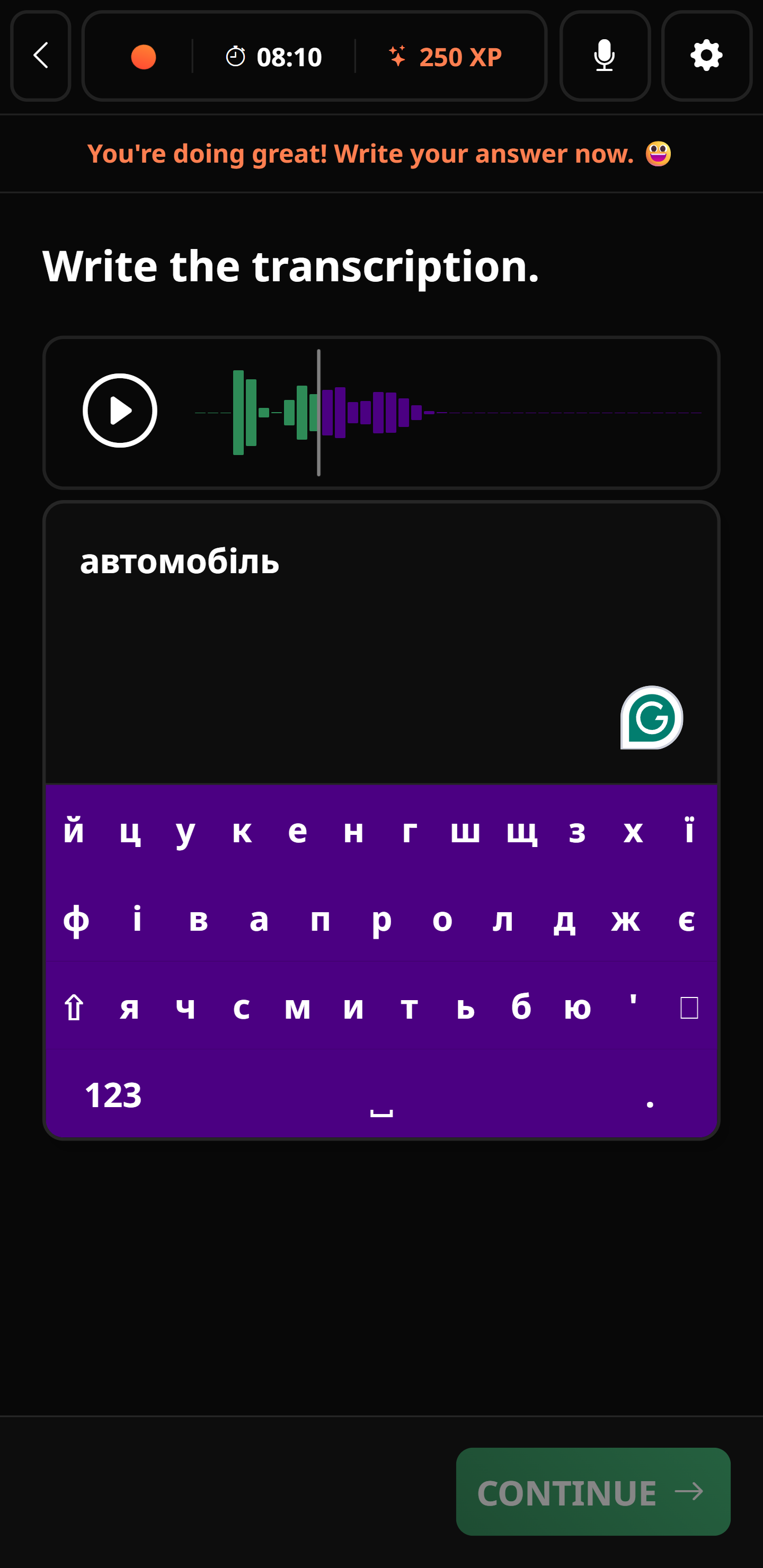
Russian word stress is unpredictable and changes meaning — замо́к is a lock, за́мок is a castle. Voice mode will generally understand you regardless of where you put the stress, which is precisely the problem: it cannot tell you that you said the wrong word.
5. Grammar Blind Spots
ChatGPT is fluent-sounding on Russian grammar and occasionally wrong with total confidence, especially on aspect and verbs of motion. A beginner cannot distinguish a correct explanation from a plausible one — which makes the errors more dangerous than an honest "I don't know" would be.
6. You Have to Drive Everything
Every session requires you to decide what to practise, write the prompt, and enforce the corrections. That is a meaningful amount of activation energy, and on the days you are tired it is the reason you skip practice entirely.
🚀 The Missing Piece: A Purpose-Built AI Tutor
ChatGPT is a general-purpose model that can discuss Russian. It was not built to teach it, and the gaps above are all consequences of that.
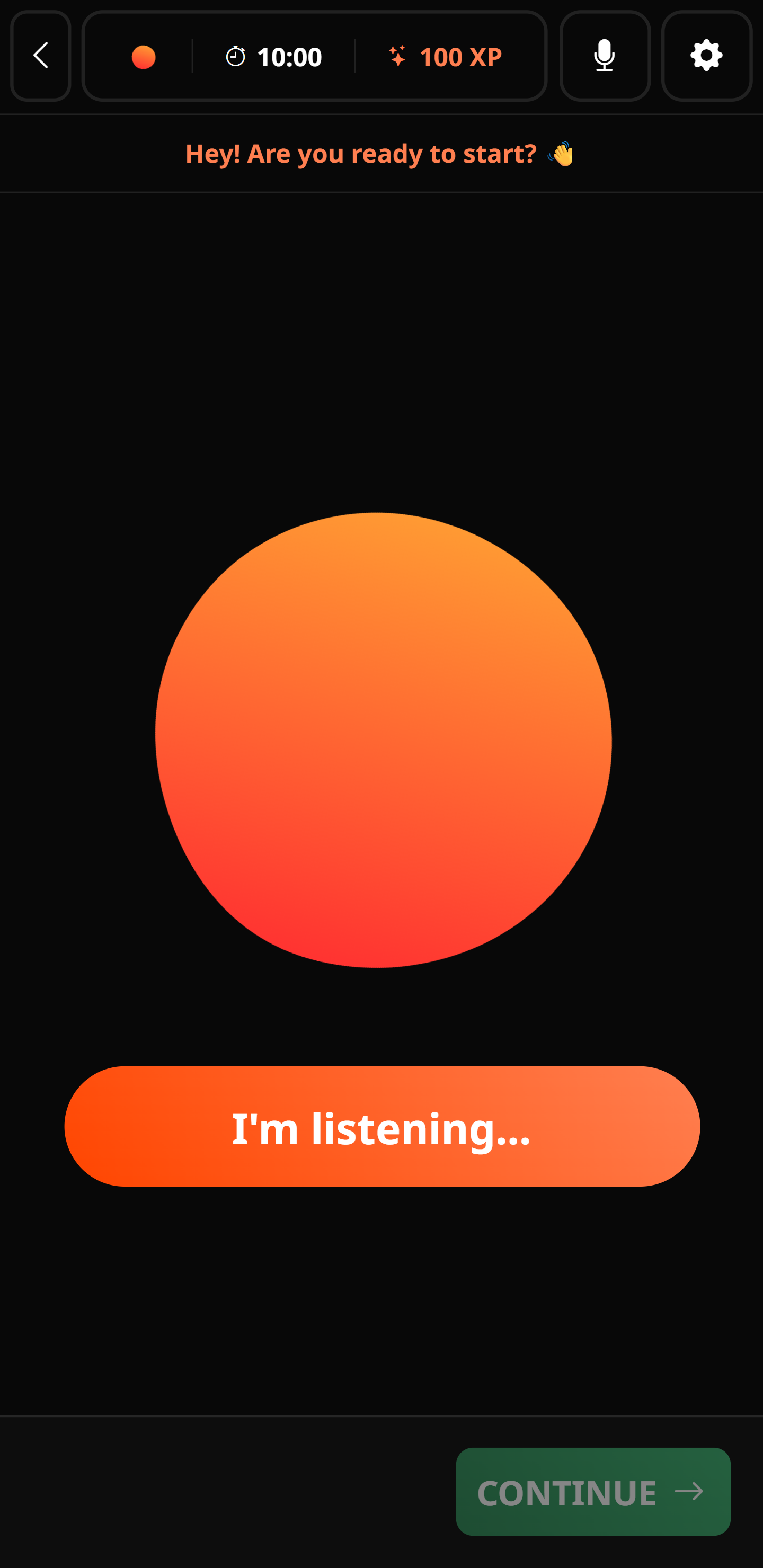
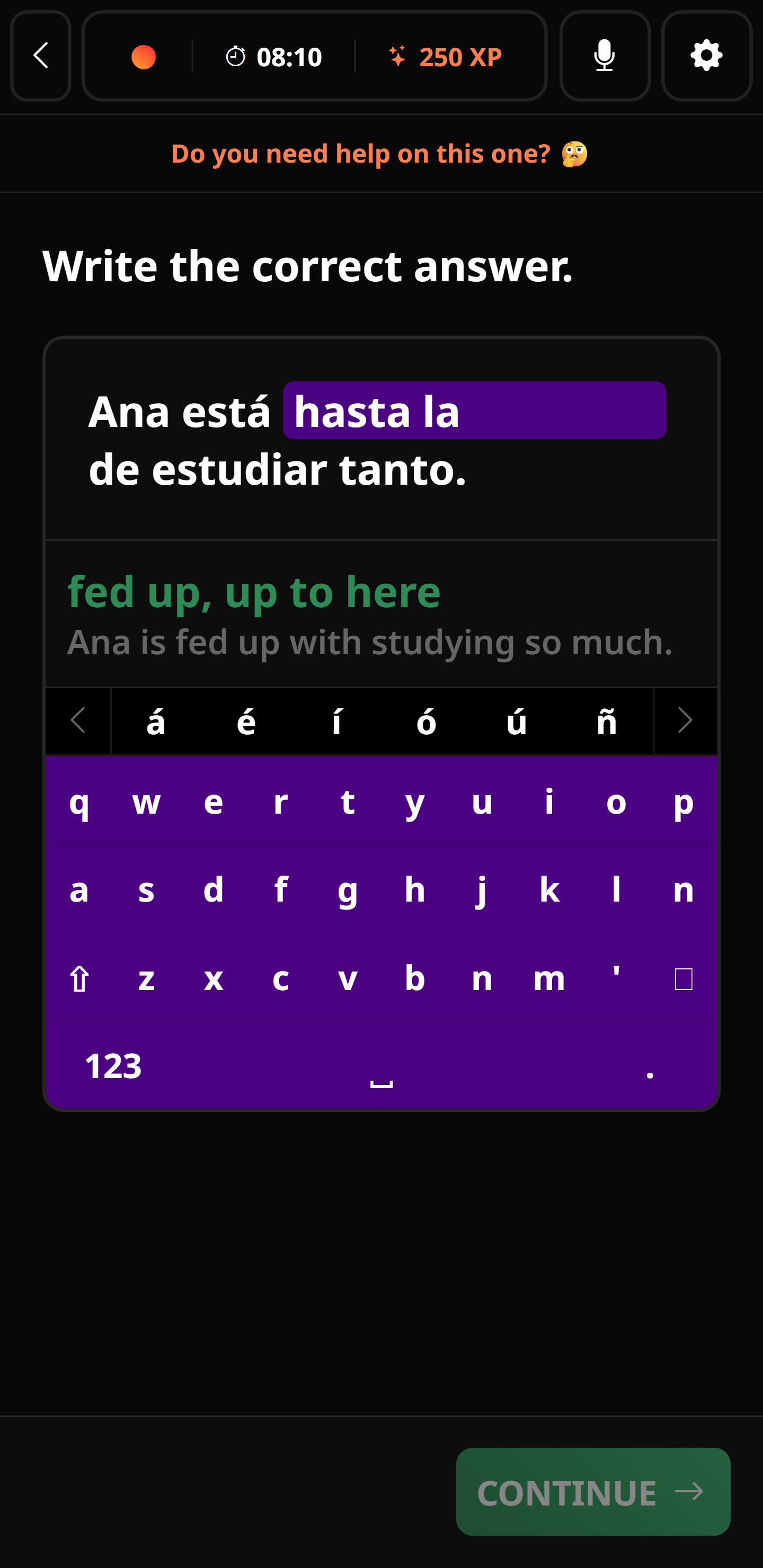
Univext is built for the job. Its AI teacher, Umi, corrects every error rather than the ones it happens to notice, remembers your history across sessions, follows an actual curriculum, and gives real pronunciation guidance — including stress, which ChatGPT cannot assess. You do not write prompts or enforce your own corrections; you have a conversation and the teaching happens inside it.
The practical difference is that Umi knows what you have not learned. If you have been avoiding the instrumental case, it notices and steers you into it — the single thing a general-purpose chatbot structurally cannot do.
Important
Try Univext free for 14 days with 30 minutes of daily practice. Real Russian conversations with an AI teacher that remembers your progress and corrects every mistake.
Start your free 14-day trial →
Become bilingual in 30 days with Univext!
Start a lesson with our teacher for free and become bilingual like our 100,000 students!
💡 The Hybrid Workflow That Actually Works
You do not have to choose. ChatGPT is a good reference tool alongside a structured course.
Daily (15–30 minutes)
Do your structured practice in a real course, where the sequencing and correction are handled for you. This is the part that actually builds the language.
When You Get Stuck on Grammar
Take the specific sentence to ChatGPT and ask for an explanation. This is its best use — a patient reference that never tires of your questions.
Weekly Review
Ask ChatGPT to generate example sentences for whatever you studied that week, then translate them cold to test yourself.
When Writing Something Important
Draft in Russian, ask ChatGPT to correct it and explain the changes. Written correction is where it is most reliable.
For Pronunciation
Do not use ChatGPT. Use a tool that assesses stress and gives corrective feedback, or a native speaker.
❓ Frequently Asked Questions
Can ChatGPT teach me Russian from scratch?
Not well. It has no curriculum, no memory and inconsistent correction, so a complete beginner ends up with fragmented knowledge and undetected bad habits. It works far better as a reference tool alongside a structured course like Univext.
Is ChatGPT's Russian grammar accurate?
Usually, but not always — and it is confidently wrong often enough to matter, especially on verb aspect and verbs of motion. Verify anything surprising against a second source.
Can ChatGPT help with Cyrillic?
Yes, this is a genuine strength. Ask for graded reading passages with transliteration and translation. For the first few weeks of learning to decode Cyrillic it is a useful drill generator.
Is ChatGPT better than Duolingo for Russian?
They fail differently. Duolingo has structure but no explanation; ChatGPT has explanation but no structure. Neither gives real conversation practice with reliable correction. See our Duolingo vs Babbel for Russian comparison for more.
How long does it take to learn Russian?
The US Foreign Service Institute estimates roughly 1,100 hours to professional proficiency. With daily practice most learners reach basic conversational ability in 8-14 months — faster with consistent speaking practice, slower with passive study alone.
Join more than 100,000 students learning on Univext
✅ The Bottom Line
ChatGPT is a good Russian reference and a bad Russian teacher. Use it for explanations, example sentences, vocabulary lists and written corrections — the things it does genuinely well. Do not rely on it for structure, consistent correction, pronunciation, or knowing what you should study next, because it cannot do any of those.
Russian is hard enough that undetected mistakes compound quickly. Pair ChatGPT's explanatory strength with a tool built to actually teach — one that corrects every error and remembers where you left off. For a full rundown of Russian learning tools, see our Best Apps to Learn Russian in 2026 guide.
Ready to practice Russian with an AI teacher that remembers you? Try Univext free for 14 days →