

Russian is a linguistic gateway to an entire world of culture, history, and strategic opportunity. With over 250 million speakers globally—spanning from the heart of Eurasia to massive diaspora communities in New York, Berlin, and Tel Aviv—mastering the language of Dostoevsky and Tolstoy is a pursuit that pays dividends. Whether you are "Cyrillic-curious" or aiming to navigate high-stakes international business, Russian offers a depth of expression that few other languages can match. However, it is essential to approach this journey with realistic expectations. The Foreign Service Institute (FSI) classifies Russian as a "Category III" language for English speakers. This means it requires approximately 1,100 hours of intensive study to reach professional proficiency—nearly double the time required for Spanish or French. Because the learning curve is significantly steeper, the choice of your primary learning tool is the most consequential decision you will make. While a subpar app might cost you a few weeks of progress in an easier language, the wrong tool for Russian can lead to months of frustration, grammatical confusion, and eventually, burnout. Picking an app that prioritizes the right pillars—active speaking, grammatical logic, and authentic input—is the only way to bridge the gap between "learning about" Russian and actually speaking it.
Here's what we found.
🇷🇺 Why Russian Apps Need More Than Vocabulary Drills
Most language apps were built for Romance languages like Spanish or Italian, where you can often swap words one-for-one and still be understood. Russian doesn’t work that way. The primary challenge isn't just memorizing words; it’s understanding how those words change shape. Russian utilizes six grammatical cases (Nominative, Accusative, Genitive, Dative, Instrumental, and Prepositional), meaning the ending of every noun, adjective, and pronoun shifts based on its role in the sentence.
Furthermore, you have to contend with "verbal aspect"—the distinction between completed (perfective) and ongoing (imperfective) actions—and a Cyrillic alphabet that, while beautiful, requires immediate immersion to master. Traditional apps that rely on simple flashcards or "matching" games fail Russian learners because they treat the language like a vocabulary list. To truly speak Russian, you need an environment that simulates the gulf between written text and spoken reality. If your app isn't forcing you to construct sentences from scratch and navigate the case system in real-time conversations, you aren't learning to communicate; you're just playing a digital puzzle.
Notes
Struggling to move past simple vocabulary? Check out our deep dive: Why Duolingo Doesn't Teach You to Speak
Since 2025, nearly every app on this list has bolted an AI chatbot onto its existing course. So the question in 2026 is no longer whether an app has AI — it is whether that AI actually makes you talk, or just generates more text for you to read.
📊 The Ranking (TL;DR)
Become bilingual in 30 days with Univext!
Start a lesson with our teacher for free and become bilingual like our 100,000 students!
🥇 1. Univext — Best Overall for Russian
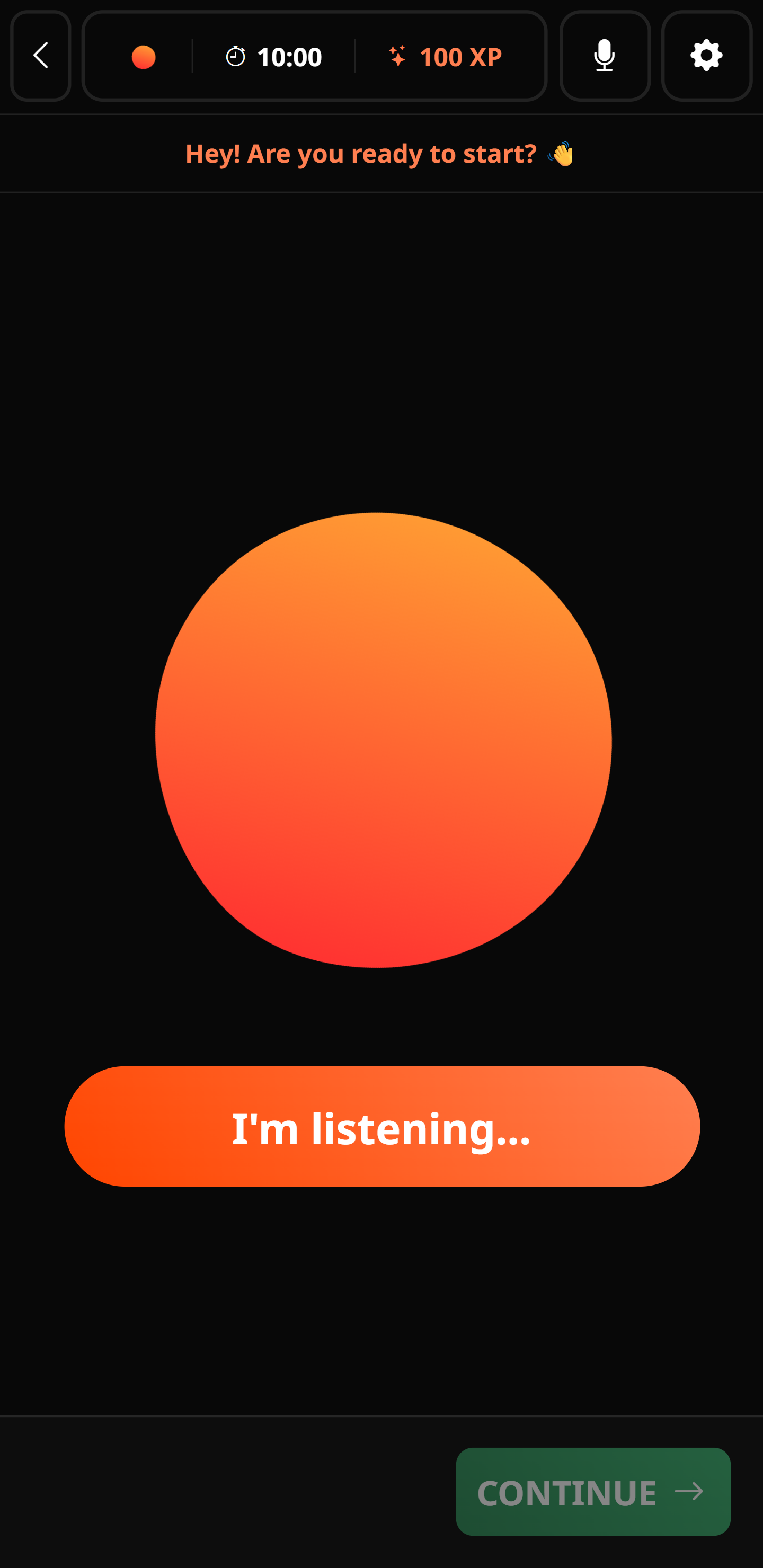
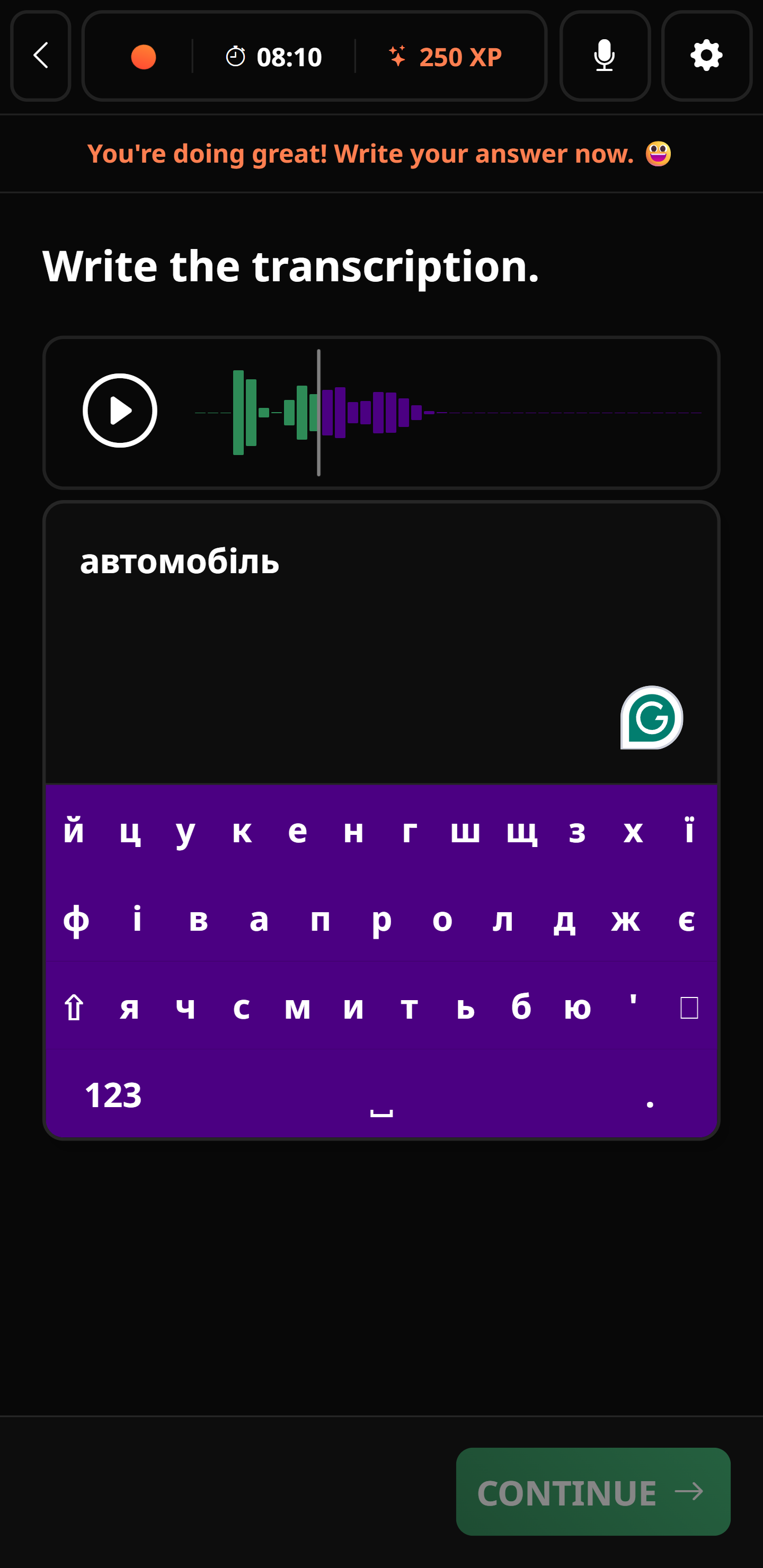
Univext represents a paradigm shift for Russian learners by introducing Umi, an AI tutor designed to replicate the experience of living in a Russian-speaking country. Unlike static apps that follow a rigid tree of lessons, Univext places you into dynamic, voice-based conversations from day one. Umi understands that Russian grammar can be overwhelming, so it introduces the complexities of the case system through context rather than dry lectures. It’s the difference between memorizing a declension table and actually using the Genitive case to tell someone you don't have any coffee.
What makes it work:
- Real Voice Conversations: You speak directly to Umi in Russian, receiving instant feedback on your pronunciation and syntax.
- Gradual Case Integration: Umi introduces grammatical cases organically, ensuring you master one before being buried by the next five.
- No Transliteration Crutches: From the very first lesson, you interact with Cyrillic script, forcing your brain to stop translating "Privet" into English letters and start reading Russian properly.
- Adaptive Learning: If you struggle with verbs of motion—a notoriously difficult part of Russian—Umi detects the friction and adjusts the conversation to provide more practice in that area.
- Unlimited Speaking: During your trial, you can practice speaking as much as you want within your daily time limit, building the muscle memory required for fluency.
Important
Try a free Russian lesson with Umi — 14 days free, no commitment. Start your trial →
Where it's weakest:
- No Flashy Gamification: You won't find leaderboards, "lingots," or cartoon characters. Univext is for learners who want to speak, not play games.
Pricing: Univext offers a 14-day free trial with 30 minutes of conversation time per day. After the trial, users transition to the quarterly Ultra plan, which provides full access to all language features and Umi’s personalized tutoring.





Join more than 100,000 students learning on Univext
🥈 2. Pimsleur — Best for Pronunciation Drills
Pimsleur is the "old guard" of language learning, and for Russian, it remains a heavyweight. The method relies on the "graduated interval recall" system, where you hear a Russian phrase and are prompted to repeat it or translate it back within a specific timeframe. It is perhaps the best tool for nailing the difficult "Yery" (ы) sound and the soft/hard consonants that define a Russian accent.
Pros:
- Excellent for developing an authentic Russian accent.
- Completely hands-free; great for commuting or multitasking.
- Forces you to think quickly and respond under pressure.
Cons:
- Almost entirely ignores the Cyrillic alphabet; you’ll be illiterate if this is your only tool.
- The vocabulary can feel outdated (lots of talk about "Mr. Johnson" and "the embassy").
- Very repetitive, which can lead to boredom over long sessions.
- Expensive: the all-access subscription runs around $20/month in 2026.
Verdict: Pimsleur is a fantastic supplementary tool for perfecting your "Russian tongue," but you must pair it with a script-focused app like Univext or LingQ to learn to read.
🥉 3. RussianPod101 — Best for Listening Variety
If you want to immerse yourself in the sound of the language, RussianPod101 is the gold standard for audio content. It features thousands of podcast-style lessons ranging from absolute beginner to advanced native levels. The instructors are native speakers who break down cultural nuances and slang that you won't find in textbooks.
Pros:
- Enormous library of content covering everything from business Russian to slang.
- Detailed PDF lesson notes and grammar breakdowns.
- Excellent for learning about Russian culture alongside the language.
Cons:
- Very little opportunity for active speaking practice.
- The dashboard can be cluttered and overwhelming for new users.
- Much of the "learning" is passive—listening rather than doing.
- Paid tiers range from roughly $8 to $42/month depending on plan and commitment length.
Verdict: A top-tier resource for building your listening comprehension and cultural IQ, but it won't help you construct your own sentences in a real-life conversation.
Become bilingual in 30 days with Univext!
Start a lesson with our teacher for free and become bilingual like our 100,000 students!
4. Babbel — Best for Grammar Foundations
Babbel’s Russian course is professionally designed and feels like a digital version of a high-quality classroom textbook. It does a solid job of explaining why the language works the way it does, making it a good choice for learners who need to understand the logic of grammar before they feel comfortable speaking.
Pros:
- Clear, concise explanations of the six Russian cases.
- Lessons are bite-sized and easy to fit into a busy schedule.
- Useful, real-world vocabulary (travel, work, food).
Cons:
- The voice recognition for speaking practice is notoriously finicky and basic.
- The course doesn't go as deep into the advanced levels as other Babbel languages (like Spanish).
- Can feel a bit "dry" and academic compared to AI-driven tools.
- Roughly $8-15/month depending on how long a plan you commit to.
Verdict: A reliable "entry-level" grammar guide, but you’ll likely outgrow it within a few months of serious study.
5. Duolingo — Most Popular, Least Effective for Russian
Duolingo is often the first stop for learners, but for Russian, it is frequently criticized by the community. While the "gamified" approach works for some, the Russian course is known for having a strange vocabulary (learning about "apples" and "circuses" before useful verbs) and, most crucially, for not explaining the case system.
Notes
Thinking about using the owl? Read this first: Why Duolingo Doesn't Teach You to Speak
In 2026 the "hearts" system has been replaced on iOS and Android by "energy" — a pool of roughly 25 units per day that every single answer drains, right or wrong. Free learners now hit a wall mid-lesson instead of after five mistakes, and the constant notifications still prioritize daily streaks over actual retention. For a language as complex as Russian, clicking "The cat is in the taxi" five times doesn't prepare you for the reality of Russian syntax.
Join more than 100,000 students learning on Univext
🎯 How to Pick the Right App for You
Still deciding? If what you want is something that talks back instead of another set of drills, see the AI tutors we tested for Russian.
Become bilingual in 30 days with Univext!
Start a lesson with our teacher for free and become bilingual like our 100,000 students!
🚀 Getting Started with Russian
Russian is a marathon, not a sprint, but it is a race that rewards every bit of persistence. Many beginners are intimidated by the Cyrillic alphabet, but here is a secret: it is a one-week barrier, not a one-year one. Most learners can master the alphabet in just a few days of focused practice. Once the "code" is cracked, the real beauty of the language reveals itself—the precision of its verbs, the rhythm of its poetry, and the warmth of its speakers once the formal barriers are broken.
The key to success is avoiding the "input trap." Don't just listen and don't just click. To learn a Category III language, you must engage your vocal cords and your brain's logic centers simultaneously. Pick a tool that treats you like a speaker, not a student.
Important
Ready to actually speak Russian? Start your 14-day free trial of Univext → — 30 minutes per day, no credit card surprises, no flashcard games. Just real conversations in Russian.
🌍 Learning Other Languages?
Exploring more than just Russian? Check out our other expertly tested rankings for 2026:
- Best Apps to Learn Spanish in 2026
- Best Apps to Learn French for Beginners
- Best Apps to Learn German for Beginners
- Best Apps to Learn Italian for Beginners
- Best Apps to Learn English for Beginners
- Russian Alphabet: The Complete Cyrillic Guide
One subscription, every language. The same Umi who teaches you to order pelmeni in Moscow will teach you to order tapas in Madrid.
❓ FAQ
How hard is Russian for English speakers? It is considered a "moderately difficult" language. While the grammar (cases and verb aspects) is complex, Russian is very phonetic—once you learn the alphabet, you can read almost anything. It takes roughly 1,100 hours to reach high-level fluency.
Do I need to learn Cyrillic first? Yes. You should never use "transliteration" (Russian written in English letters) for more than the first day. It creates a mental crutch that will prevent you from reading real Russian signs, books, or menus.
How long until I can hold a conversation in Russian? With an AI-driven tool like Univext, most learners can handle basic "survival" conversations (ordering food, introducing themselves, asking for directions) within 30 to 45 days of consistent daily practice.
Can I learn Russian for free? You can learn the basics for free using YouTube and apps like Duolingo, but to reach a level where you can actually speak and understand native speakers, you will eventually need a structured, high-quality curriculum or a tutor.
Russian rewards anyone who puts in the work. Pick an app that actually makes you speak — and start today.