


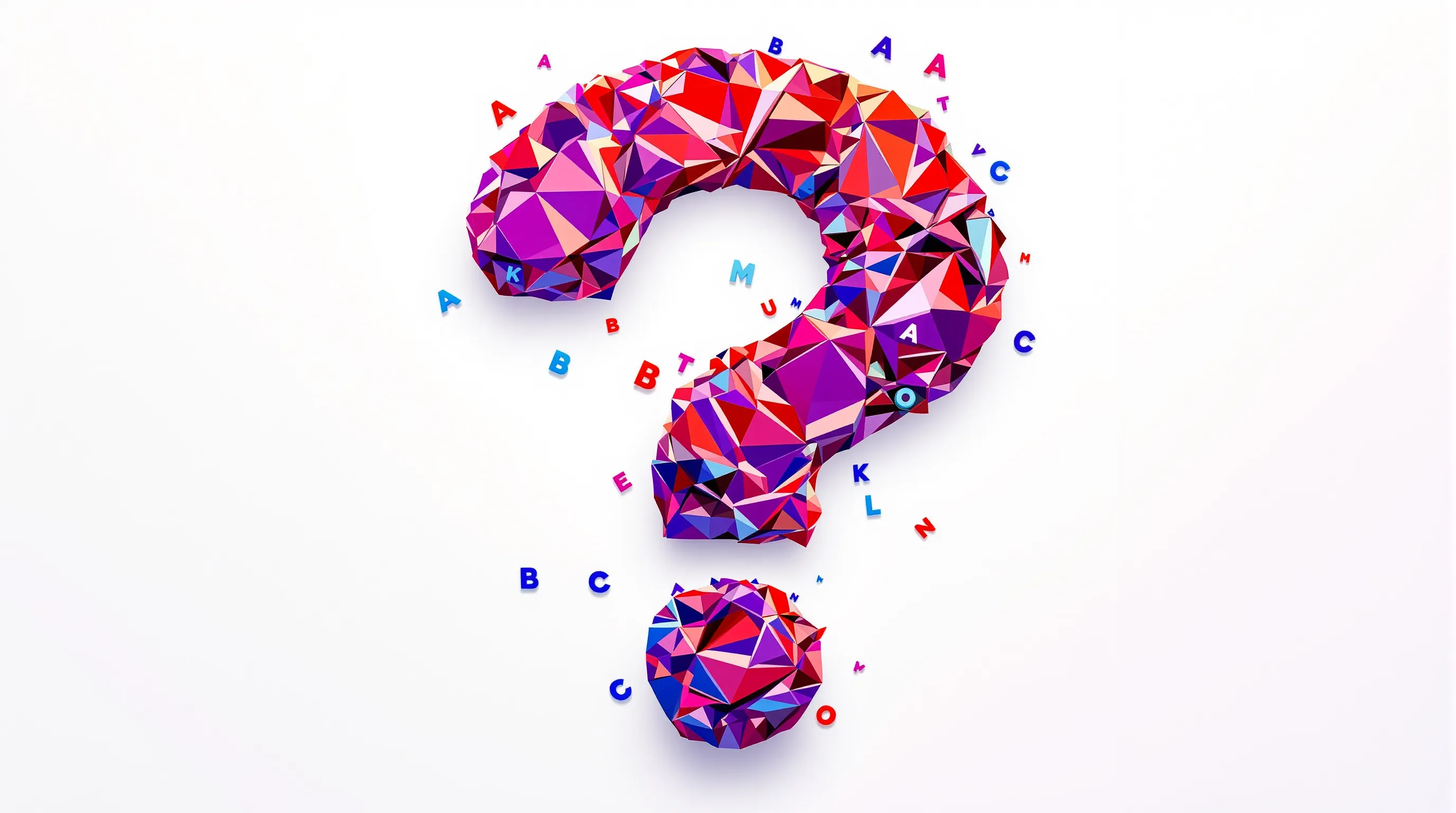
😤 Why Is English So Hard? You're Not Alone
It's 11pm. You just failed a test, got corrected by a colleague in front of everyone, or spent 20 minutes trying to understand a movie scene. And now you're staring at your phone, typing:
Important
If that's you right now — take a breath. You're not dumb. English is genuinely one of the most inconsistent, rule-breaking, exception-filled languages on the planet. Over 1.5 billion people are learning English worldwide, and virtually all of them have asked the exact same question you're asking.
The difference between those who quit and those who become fluent isn't talent — it's understanding why English feels so hard and knowing what to do about it. If you're ready to take action, also read our guides on how to improve your English and how to speak English fluently.
Let's break it down.
🧩 The 7 Real Reasons English Is So Difficult
1. English Spelling Makes No Sense
Consider these words — all with the same letters "ough" but completely different pronunciations:
Notes
This happens because English borrowed words from Latin, French, German, Norse, Greek, and dozens of other languages over 1,500 years — and kept many of their original spellings while changing the pronunciation. The result? A spelling system that's essentially a historical artifact, not a logical system.
Why this matters: If your native language has consistent spelling-to-sound rules (like Spanish, Italian, Turkish, or Polish), English feels like chaos. You can't English words the way you can in most other languages.
2. Grammar Rules Have More Exceptions Than Rules
English grammar teachers love to say things like . Sounds simple, right?
Now consider: , , , , , , , , , ...
Ask a native speaker why we say and not — they'll tell you it "just sounds right." That's because English adjective order follows an unwritten rule that native speakers absorb unconsciously:
English also has roughly 200 irregular verbs. Here are some of the most confusing:
3. Phrasal Verbs Are a Nightmare
Phrasal verbs are the single biggest frustration for English learners. The word alone has over 30 different meanings:
Important
You can only learn phrasal verbs through massive exposure and practice. Reading, listening, and conversing in English is the only way to internalize them. AI tutors like Univext's Umi naturally use phrasal verbs in conversation and explain them when you're confused — which is exactly how native speakers learned them as children.
4. Pronunciation Is Unpredictable
In Spanish, every letter is pronounced the same way, always. In English? Not even close.
The word "read" can be pronounced two different ways depending on tense:
- (present — sounds like "reed")
- (past — sounds like "red")
Same spelling. Different pronunciation. No way to tell without context.
And then there are silent letters:
Notes
These exist because English preserved old spellings while pronunciation evolved. There's no rule — you just have to learn them through exposure.
5. Articles (a/an/the) Don't Exist in Many Languages
If your native language is Russian, Polish, Ukrainian, Japanese, Chinese, Turkish, or Korean — you grew up without articles. Then English asks you to choose between , , and in every single sentence:
Example
For native speakers, this is unconscious. For learners from article-free languages, it's a constant source of errors and frustration. The worst part? Getting articles wrong rarely causes misunderstanding, but it always sounds "off" to native ears.
6. Tenses Are Overwhelming
English has 12 tenses (some linguists count up to 16). Most languages have far fewer:
And the differences between them are subtle:
Notes
Choosing the wrong tense doesn't usually break communication, but it marks you as a non-native speaker instantly. The good news: with enough speaking practice, you'll develop an intuition for the right tense.
7. Idioms and Slang Change Constantly
Just when you think you've mastered English, someone says:
Notes
English idioms are deeply cultural and change every year. What was cool slang in 2020 sounds outdated in 2026. And every English-speaking country has its own set — British, American, Australian, Indian English all have unique expressions.
Become bilingual in 30 days with Univext!
Start a lesson with our teacher for free and become bilingual like our 100,000 students!
💡 So English Is Hard... Now What?
Here's the thing: knowing why English is hard is actually half the battle. Once you understand that English spelling is broken, phrasal verbs require exposure, and articles need intuition — you can stop blaming yourself and start using strategies that actually work.
Stop Trying to Understand Every Rule
You will never memorize all the exceptions. Native speakers don't know the rules either — they just have thousands of hours of exposure. Your goal should be exposure and practice, not memorization.
Embrace Mistakes as Learning
Every mistake you make is your brain testing a hypothesis:
This is exactly how children learn, and it's how adults learn too — if they're willing to make mistakes.
Practice with AI That Never Judges
The #1 reason people stop practicing English is embarrassment. They're afraid of sounding stupid in front of native speakers, classmates, or tutors.
Important
This is where AI tutoring changes everything. With Univext, you practice speaking with Umi — an AI teacher who never judges you for mistakes, corrects you gently and explains why, adapts to your level automatically, is available 24/7, and costs a fraction of a private tutor. Try it free for 14 days with 30 minutes of daily practice.





Join more than 100,000 students learning on Univext
📊 What Makes English Easier Than You Think
Despite all the difficulties, English has some genuine advantages:
Notes
So yes, English spelling and phrasal verbs are brutal. But the core grammar is actually simpler than most European languages. You don't need to memorize noun genders, case endings, or complex verb tables.
🎯 5 Strategies to Make English Feel Easier
1. Focus on Patterns, Not Rules
Instead of memorizing grammar rules, notice patterns. After hearing enough times, you'll naturally say it correctly without thinking about the present perfect continuous tense.
2. Learn the 100 Most Common Phrasal Verbs
These cover about 80% of everyday conversation. Master these first:
3. Use Shadowing for Pronunciation
Listen to a native speaker, then immediately repeat exactly what they said, copying their rhythm and intonation. 10 minutes of is worth an hour of pronunciation theory.
4. Consume English Content You Love
If you hate grammar textbooks, don't use them. Watch English YouTube, play video games in English, follow English meme pages, read English comics. Your brain doesn't care where the input comes from — it just needs volume.
5. Speak Every Day, Even If It's Bad
Important
The biggest mistake is waiting until you're to speak. You'll never feel ready. Start now, make mistakes, get corrected, and improve. Univext's Umi is the perfect practice partner — patient, available, and always ready to help you improve. Start practicing now →
Become bilingual in 30 days with Univext!
Start a lesson with our teacher for free and become bilingual like our 100,000 students!
❓ Frequently Asked Questions
Is English the hardest language to learn? No. For most speakers, languages like Mandarin Chinese, Arabic, Japanese, and Hungarian are considered harder. English is medium difficulty — hard spelling and phrasal verbs, but simple grammar structure.
Why can I understand English but not speak it? This is called the . Understanding requires recognition; speaking requires production. They're different skills. The fix is simple: speak more. Read our full guide on how to speak English fluently.
How long until English stops feeling hard? Most learners report a "click" moment around B2 level (upper intermediate), usually after 6-12 months of consistent practice. Read more about the journey to fluency in our guide on how to become fluent in English in 2026.
Should I learn British or American English? Whichever you hear more. The differences are smaller than people think — mostly accent, a few vocabulary words ( vs , vs ), and minor spelling (colour/color). Both are understood worldwide.
What's the best way to learn English in 2026? A combination of daily speaking practice (AI tutoring or conversation partners), immersion (English content you enjoy), and active vocabulary building. Check out our complete guide on the 5 Best Apps to Learn English in 2026, the 5 Best AI Apps to Learn English, or find the best English tutor online.
✅ Conclusion: English Is Hard — But You're Harder
Yes, English is messy, inconsistent, and frustrating. Yes, has five pronunciations and phrasal verbs make no sense. Yes, you'll feel stupid sometimes.
But here's what matters: every fluent English speaker you admire went through the exact same frustration you're feeling right now. They didn't have better brains — they just didn't quit.
Important
And in 2026, you have something previous generations didn't: AI tutors that let you practice speaking 24/7 without embarrassment, apps that adapt to your level, and unlimited English content at your fingertips. The question isn't whether English is hard. It is. The question is: are you going to let that stop you? Try Univext free for 14 days — practice English with Umi, no judgment, no awkwardness →