
🤖 The New Landscape: Why AI Changed French Learning
French looks elegant on the page and feels brutal in the mouth. You learn that eaux is pronounced "oh," that half the letters in beaucoup are decorative, and that vous and tu are two different relationships disguised as two different pronouns. Then come the conjugations — present, imparfait, passé composé, futur simple, conditionnel, plus-que-parfait, and the one everyone dreads, the subjonctif — spread across roughly sixteen tenses and moods. Add gender agreement on every noun, adjective, and past participle, plus liaison rules that glue words together out loud but not on paper, and you understand why so many learners stall at "Bonjour, je voudrais un café."
Traditional apps tackled this by chopping it into tidy drills: tap the right tile, match the gender, repeat the phrase, collect the streak. Useful for vocabulary, almost useless for the thing that actually breaks people — speaking in real time without a script.
AI changed the equation. Since late 2022, large language models have been fluent enough to hold genuine conversations in French: correcting your gender agreement, explaining why it's je suis allé and not j'ai allé, untangling tu versus vous on the fly, and never once sighing at your accent. For the first time there's a real middle path between a €35/hour human tutor and a repetitive tap-the-tile app.
But "AI French tutor" is now a label slapped on very different things. Some products are thin ChatGPT wrappers with a beret-wearing mascot. Some bolt a chatbot onto an old course and call it innovation. A few are genuinely built for language learning — and those are the ones worth your minutes.
This guide tests the best AI-powered options for learning French in 2026, shows where each one genuinely helps, and flags the ones that are mostly marketing. French is unusual in one respect worth naming up front: it has a deep, competitive human-tutor market (Cambly, italki, Preply are flooded with native French teachers), so any AI tool has to justify itself against cheap, real human conversation. We'll be honest about where AI wins and where a human still beats it.
📊 Quick Comparison: AI Tools for French
Read the rest of this guide before you pick — the table tells you what each tool is, but the deep-dives below tell you who each one is actually for.
Become bilingual in 30 days with Univext!
Start a lesson with our teacher for free and become bilingual like our 100,000 students!
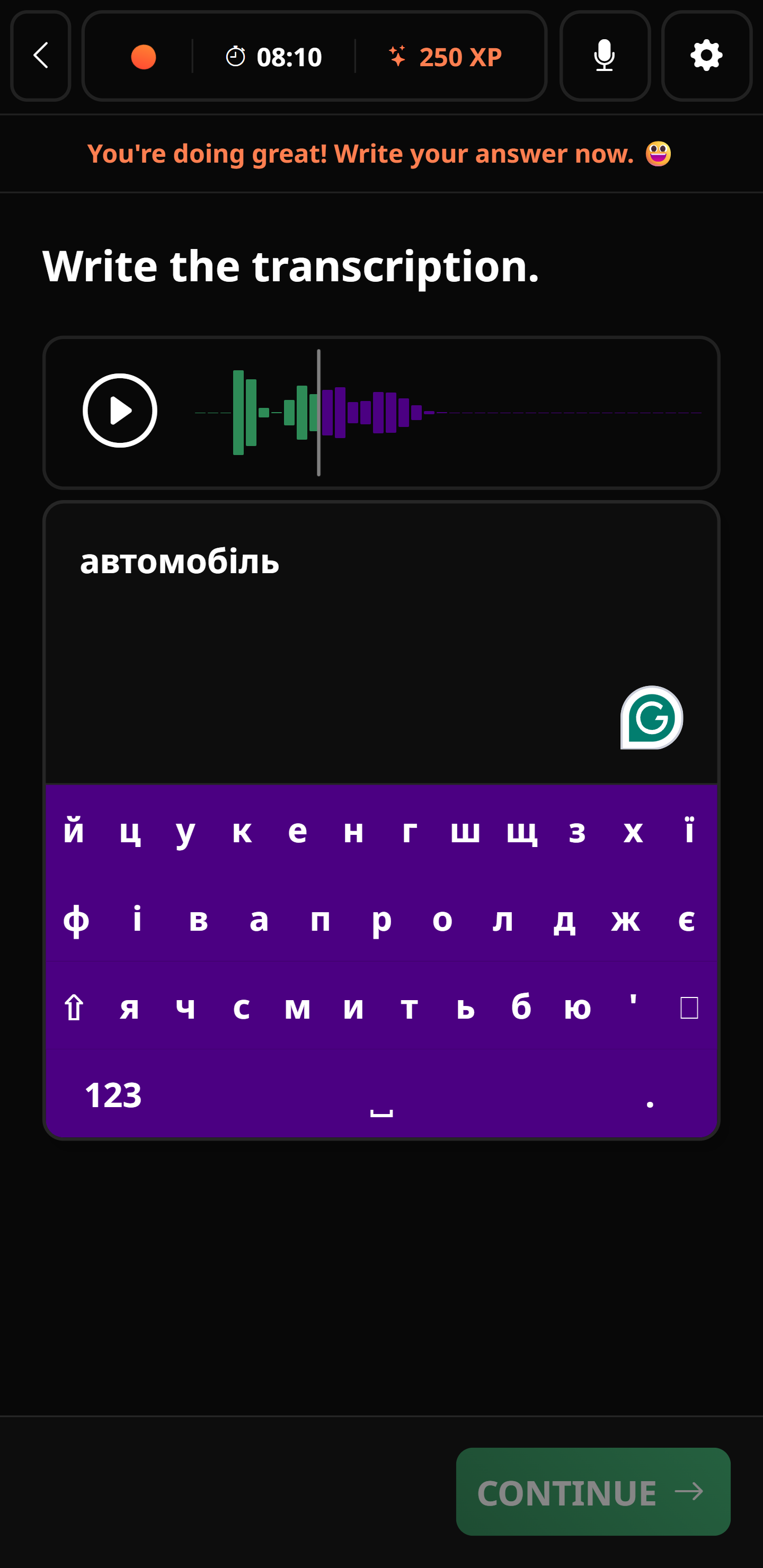
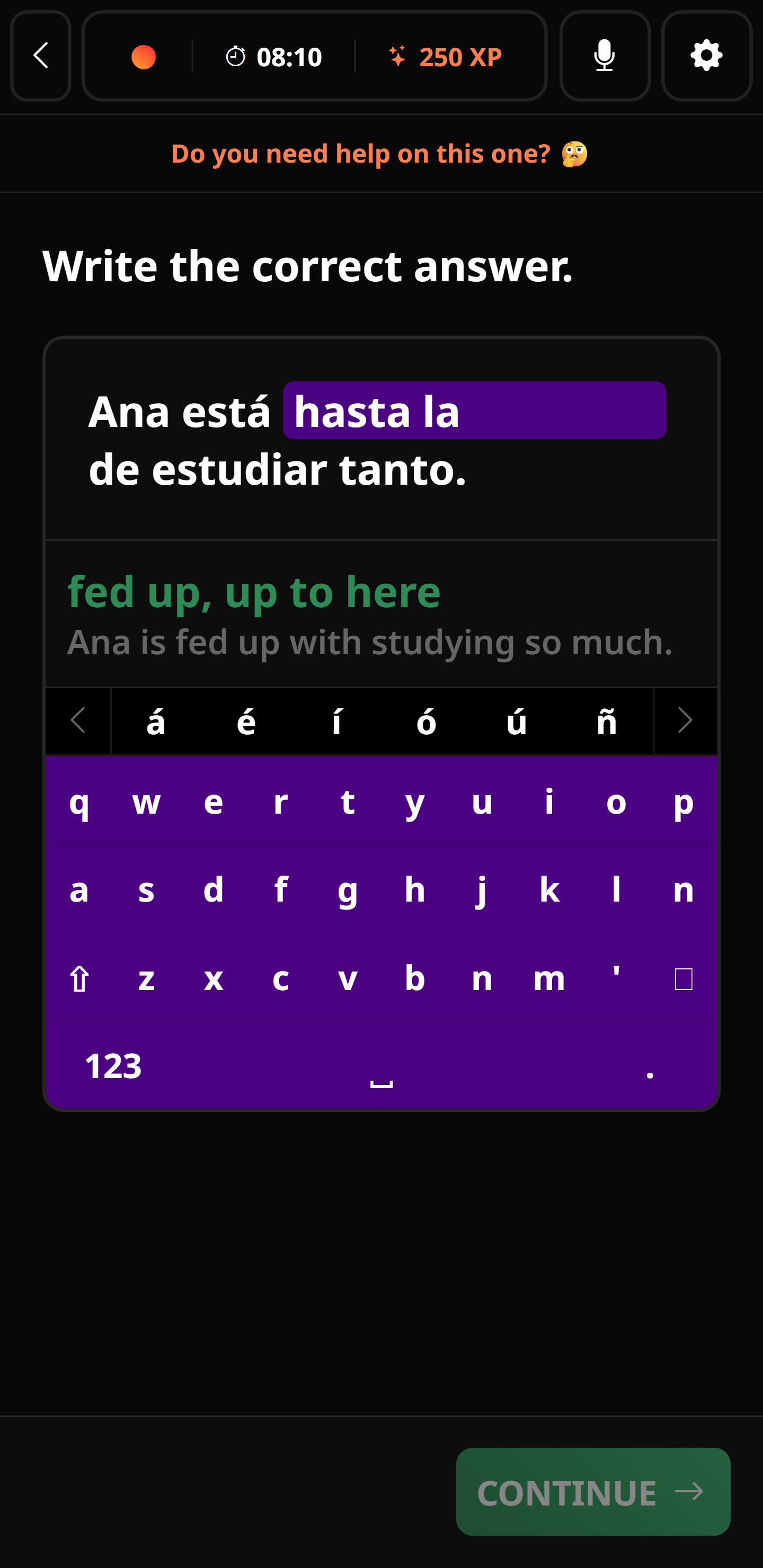
🥇 1. Univext — The AI French Tutor Built for Conversation
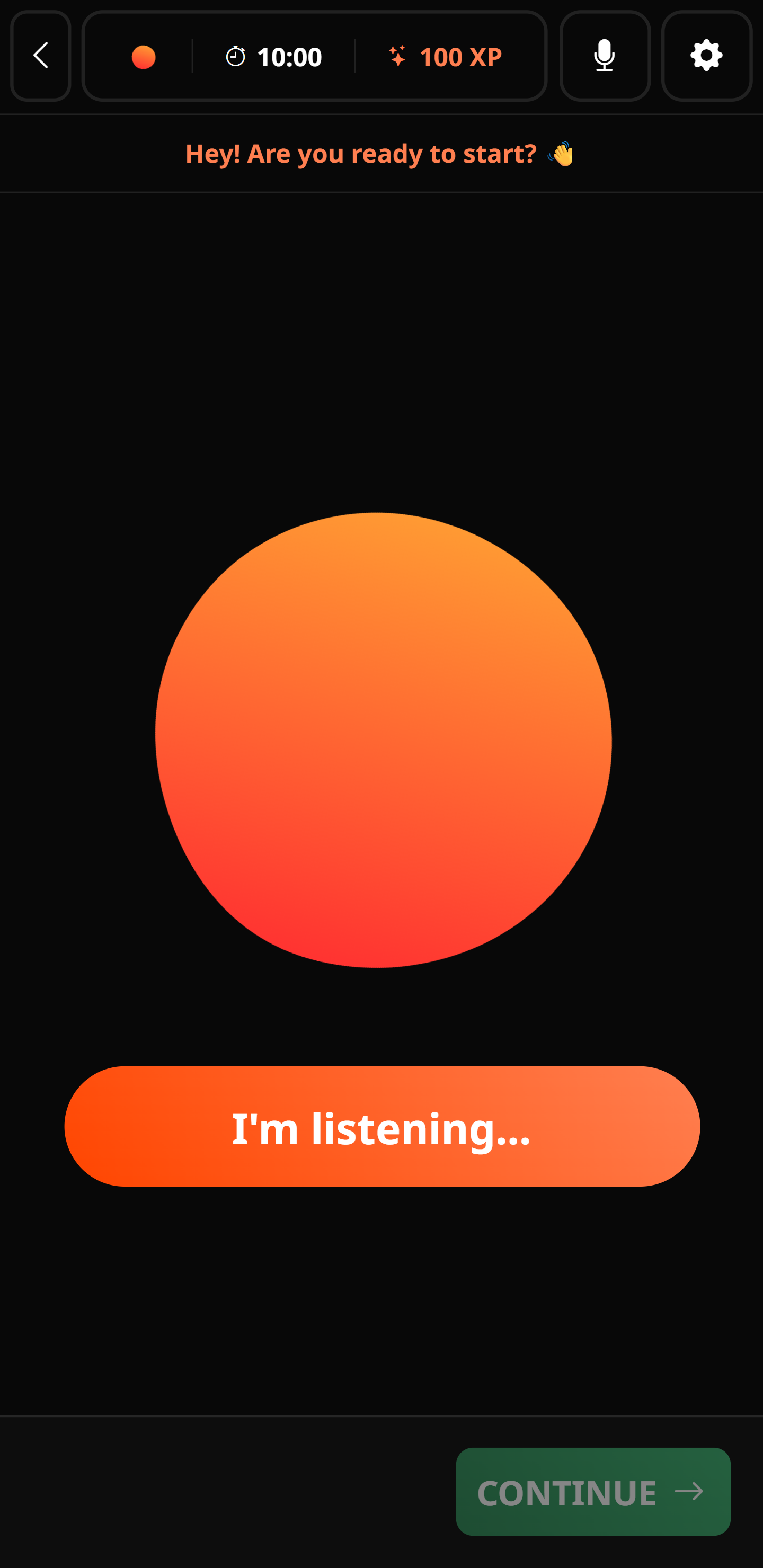
Univext is the closest thing to having a patient French tutor living in your phone. Its AI teacher, Umi, holds unscripted conversations with you — by voice or by text — in French, at whatever level you're actually at, for as long as you want, without ever getting bored of repeating itself.
What Umi does that generic AI tools don't:
- Real-time grammar correction with the why. Say "Je suis allé au magasin hier et j'ai acheté des pain" and Umi catches the agreement and the article: "du pain" (uncountable), and reminds you that aller takes être in the passé composé so the participle agrees with the subject. You don't just get a red underline — you get the rule, in the flow of talking.
- Gender and agreement tracking in context. French gender is where most learners quietly give up. Umi notices when you say "une problème" (it's un problème, despite the -e) or forget to agree an adjective ("une voiture bleu" → "bleue") and reinforces the pattern instead of just flagging one mistake.
- Tu / vous coaching. Umi adapts register to the scenario. Ordering at a café? It models vous. Chatting with a friend? It switches to tu and explains when each is expected — the social rule that textbooks describe but never let you practice.
- Level-adaptive dialogue. At A1, Umi stays in the present tense with everyday topics. At B1 it pushes you into the passé composé, the imparfait, and giving opinions. At C1 it'll argue with you about French cinema, laïcité, or the latest at the Assemblée nationale — at native speed.
- The subjunctive, finally demystified. Instead of memorizing a list of triggers, you produce "il faut que je fasse" and "je veux que tu viennes" inside real sentences until the mood stops feeling like a trap.
- Voice or text, your choice. Practice pronunciation and liaison out loud one day; type quietly on the train the next. Umi works both ways.
Where Univext wins for French specifically: the conversational grammar coaching. French's gender system, participle agreement, register, and tense ladder are exactly the kind of pattern-heavy material LLMs handle beautifully — detecting your recurring errors, explaining the exception, and reinforcing it through natural dialogue. For learners who plateaued on Duolingo or Babbel after the beginner tree, switching to conversation-based practice with Umi is often what finally unlocks actual speaking.
14-day free trial: 30 minutes a day of real conversation with Umi, no credit card required to try the lessons themselves.
Important
Try Univext for French — start your first AI French conversation with Umi and feel what real, unscripted speaking practice with an AI tutor is actually like. Start your free trial.




Join more than 100,000 students learning on Univext
💬 2. ChatGPT (DIY) — Powerful but Unguided
ChatGPT (and Claude, Gemini, and other general-purpose LLMs) can teach French surprisingly well — if you know how to prompt it. The underlying model knows French grammar cold, holds conversations, and corrects you when asked.
What ChatGPT does well for French:
- On-demand grammar answers. "Why is it 'je me suis lavé les mains' and not 'lavées'?" gets a clear explanation of why the participle doesn't agree when the object follows the verb.
- Custom roleplay on demand. "You're a boulangère in Lyon. I'll order in French. Correct my mistakes and use vous*."* — and it works.
- Vocabulary expansion. Ask for 20 French cooking words at B1 level with example sentences and you'll get a clean, usable list.
- Idiomatic translation. "How would a real French person say this?" beats any dictionary for natural phrasing.
Where ChatGPT falls short as a French tutor:
- No curriculum. It'll jump from B2 business French to A1 greetings in the same chat if you let it. Nothing guides you from zero to B2 in order.
- Inconsistent correction. Sometimes it catches every gender slip; sometimes it lets three slide. Without a learning system behind it, correction quality depends entirely on your prompt discipline.
- No progress tracking. No spaced repetition, no memory of the -e you keep forgetting, no measurable path.
- Voice mode isn't pedagogy. Voice ChatGPT chats in French fine, but it won't slow down, drill your liaison, or repeat a phrase ten times the way a teacher would.
Verdict: ChatGPT is the most powerful free AI for French, but you have to be your own teacher. Excellent as a grammar reference and roleplay sandbox; weak as a structured course.
🎓 3. Cambly — Real Human Tutors, On Demand
Cambly isn't AI at all — it's a marketplace of real native French speakers you video-call on demand. It belongs in this guide precisely because, for French, the human option is unusually strong and cheap, and you deserve an honest comparison.
What Cambly offers for French:
- Live conversation with native speakers, available at almost any hour
- Real cultural nuance — slang, regional accents, the exact moment to switch from vous to tu socially
- Accountability — a scheduled human is harder to skip than an app
- Recordings of your sessions to review later
Where it's limited:
- Cost. Per-minute or subscription pricing adds up fast compared to an AI tutor's flat monthly fee. Daily practice gets expensive.
- Inconsistency. Tutor quality varies; not every friendly native speaker is a trained teacher who can explain why the subjunctive shows up after bien que.
- Scheduling friction. Time zones, availability, and booking add resistance to a daily habit — and daily is what actually moves the needle.
Verdict: For a few intensive sessions before a trip, an interview, or an oral exam, a human on Cambly or italki is genuinely worth it. For daily reps — the volume that actually builds fluency — an AI tutor you can open at 6 a.m. or midnight, for the price of one café, wins on consistency and cost. Many serious learners do both: AI daily, a human weekly.
Become bilingual in 30 days with Univext!
Start a lesson with our teacher for free and become bilingual like our 100,000 students!
🦉 4. Duolingo Max — AI Features Bolted Onto a Classic
Duolingo Max is Duolingo's premium tier with AI features: Roleplay (AI conversation scenarios) and Explain My Answer (AI-generated explanations of why your answer was right or wrong).
What Duolingo Max offers for French:
- The familiar Duolingo French tree with streaks, XP, and level progression
- Roleplay scenarios where you chat with an AI character about a set topic (ordering food, asking directions)
- Explain My Answer — tap a wrong answer for an AI explanation in English
Where it falls short:
- Roleplay is scripted at the edges. The AI hugs the topic rails; steer off-script and it deflates.
- "Explain My Answer" patches single mistakes but doesn't teach the system — one explanation won't fix a shaky grasp of gender or the passé composé.
- Price. Max is significantly pricier than Super Duolingo, and the AI layer is thin next to a dedicated tutor.
Verdict: If you already love Duolingo's gamification and want a light dusting of AI, Max is a reasonable upgrade. If your actual goal is AI French tutoring, there are better tools.
🗣️ 5. Talkpal — AI Chat, Lightweight Structure
Talkpal is a dedicated AI language-chat app. Clean interface, working conversation feature, reasonable price.
What Talkpal offers:
- AI chat in French with decent flow and correction
- Topic-based scenarios (travel, dining, work) as conversation starters
- Voice input for pronunciation practice
- Many languages, French included
Where it's limited:
- Thin curriculum. No clear A1 → C1 progression; conversations happen but nothing builds a structured foundation.
- Shallow grammar coaching. Corrections appear without the why — you fix this sentence but don't learn the rule.
- Weak on French-specific pain points. French needs heavy reinforcement on gender, agreement, and register. Talkpal doesn't drill those systematically.
Verdict: Fine as a chat-practice layer if you already have foundations from another course. Thin as a standalone way to learn French.
Join more than 100,000 students learning on Univext
🎯 How to Choose: Match the Tool to Your Goal
For most serious French learners, the best setup in 2026 is:
- Univext for daily real conversation with Umi — the core of your speaking progress
- ChatGPT as a free on-demand grammar reference when you get stuck
- Optionally a human (Cambly/italki) once a week, or before a deadline, for cultural polish and accountability
That combination gives you daily reps (the bottleneck most learners hit), a powerful grammar reference, and human contact when it matters most — without paying human rates seven days a week.
Become bilingual in 30 days with Univext!
Start a lesson with our teacher for free and become bilingual like our 100,000 students!
🧠 What to Look For in an AI French Tutor
Not every "AI-powered" badge means real AI French tutoring. When you evaluate a tool, ask:
- Does it hold real conversations, or just scripted dialogues? Real means the AI responds to what you say, not what the script expects.
- Does it correct your grammar with explanations? Flagging a mistake isn't enough — you need to understand why belle and not beau.
- Does it handle French's specific pain points? Gender, participle agreement, tu/vous, the tense ladder, the subjunctive, liaison. Generic "talking in French" won't fix these.
- Does it adapt to your level? A good tutor never serves the same lesson to an A1 beginner and a B2 intermediate.
- Can you speak and type? Some days voice, some days text. A good tool supports both.
Univext was built specifically around these criteria — which is why we recommend it as the first stop for anyone serious about AI-assisted French.
⏳ What AI Can (and Can't) Realistically Do in 6 Months
Let's set honest expectations. French sits in the FSI's "Category I" — among the easier languages for English speakers — at roughly 600–750 classroom hours to professional working proficiency. With 30 focused minutes of real conversation a day, here's a realistic arc:
What AI does brilliantly: volume. The single biggest reason adults fail at French is they never get enough speaking reps — a weekly class is one hour; an AI tutor is thirty minutes every single day. That consistency compounds. AI is also tireless on the boring fundamentals: gender, agreement, and conjugation drilling that a human would (reasonably) find tedious to repeat for the hundredth time.
What AI can't do (yet): fully replace the social stakes of speaking to a real human who might judge you — that pressure is part of what makes real-world French stick. It also won't sit a DELF examiner's chair for you. For exam-bound learners, AI is the daily training partner, not the final coach.
Important
Heading for a French exam? AI is the most patient daily training partner you'll ever have. Pair it with a clear plan — see How to Pass the DELF/DALF Exam with AI — and start practicing today with a free 14-day Univext trial.
❓ Frequently Asked Questions
Can AI really teach me French, or is it a gimmick?
In 2026, yes — AI can genuinely teach French, especially speaking and grammar. Modern LLMs understand French well enough to hold real conversations, explain exceptions, and correct your mistakes. What matters is which tool you use. Generic chatbots (ChatGPT) are powerful grammar references; purpose-built tutors like Univext add structure, level-adaptation, and pedagogy on top of that raw capability.
Is an AI French tutor as good as a human tutor?
For most learners, most of the time, yes — at a fraction of the cost. A native French tutor on Cambly or italki runs roughly €15–€35 per hour; an AI tutor costs a few euros a month and is available 24/7. Humans still win for cultural nuance, accountability, and intensive oral-exam prep. The smart move for French specifically — where good human tutors are cheap and plentiful — is AI for daily volume, a human for occasional polish.
How does Univext compare to ChatGPT for learning French?
Univext is built for language learning specifically: curriculum structure, level adaptation, grammar-focused correction, and voice conversations designed around pedagogy. ChatGPT is a general-purpose tool that can tutor French if you prompt it well — but there's no structure, no progress tracking, no learning guardrails. Think of it this way: ChatGPT is a brilliant French-speaking friend; Univext is a French teacher.
Can I learn French from zero with AI alone?
Yes, if the tool has a proper beginner track. Univext's A1 level is designed for zero-start learners, with Umi introducing pronunciation, gender, and simple sentence structures through guided conversation. ChatGPT alone is harder from zero because it doesn't know what to teach you first.
What's the hardest part of French, and can AI help with it?
Most learners name three: gender (is it le or la?), the subjunctive, and pronunciation/liaison. AI helps enormously with the first two — they're pattern-and-rule problems an LLM explains and drills tirelessly. Pronunciation is improving fast with voice models, though a human ear still catches subtleties AI sometimes misses.
What about Duolingo's new AI features?
Duolingo Max adds AI roleplay and answer explanations. The roleplay is fun but narrow — it works inside set scenarios rather than open conversation. Worth trying if you already subscribe, but it's not in the same category as a dedicated AI tutor.
Which AI is best for French grammar specifically?
For coaching in the flow of conversation: Univext. For one-off questions ("why is this the subjunctive?"): ChatGPT. Many learners use both — Univext for daily practice, ChatGPT as a free reference when stuck.
Become bilingual in 30 days with Univext!
Start a lesson with our teacher for free and become bilingual like our 100,000 students!
✅ The Bottom Line
AI has genuinely changed what's possible for French learners in 2026. For the first time you can get real speaking practice, unscripted conversation, and on-demand grammar coaching without paying human rates — and the best tools actually work.
But "AI-powered" is a marketing label, not a feature. Some tools use it to dress up the same scripted drills with a friendly mascot. The ones that actually help are built around real conversation and real feedback.
For most French learners, Univext is the best AI French tutor available right now — Umi holds unscripted conversations at your level, corrects your French in real time, and drills down on the gender, agreement, and subjunctive rules that trip up everyone from beginners to advanced speakers. France's deep human-tutor market is a genuine alternative for occasional intensive sessions, but for the daily reps that actually build fluency, a tireless AI you can open any hour for the price of a coffee is hard to beat.
Important
Ready to actually speak French? Start your free 14-day Univext trial and have your first real French conversation with Umi today — 30 minutes a day, no credit card needed to try the lessons.
For a broader look at the French learning landscape beyond AI tools, see Best Apps to Learn French in 2026. Comparing across languages? Read Best Language Learning Apps in 2026.